
Did you know that businesses using projecting signs can increase street-level visibility by up to 60 percent compared to flat signage? In crowded city centres, capturing attention from every direction can mean the difference between getting noticed or blending in. Projecting signs not only offer greater exposure but also let brands stand out in busy environments with visual impact that draws customers in from afar.
Table of Contents
- Defining Projecting Signs And Their Benefits
- Types Of Projecting Signs For Businesses
- Key Features And Illumination Options
- Compliance, Safety, And Legal Requirements
- Installation Factors And Practical Considerations
- Comparing Projecting Signs With Other Signage
Table of Contents
Key Takeaways
| Point | Details |
|---|---|
| Increased Visibility | Projecting signs capture attention from multiple directions, enhancing brand recognition in crowded urban settings. |
| Diverse Options | Various types of projecting signs, such as illuminated and custom-shaped designs, cater to different business needs and aesthetics. |
| Compliance Importance | Adhering to local regulations regarding size, height, and safety is crucial for the successful installation of projecting signs. |
| Professional Installation | Engaging experienced signage experts ensures optimal performance and compliance, maximizing the sign’s impact over time. |
Defining Projecting Signs and Their Benefits
A projecting sign is a unique signage solution mounted perpendicular to a building’s facade, strategically designed to capture attention from multiple directions. These signs extend outward from walls, creating maximum visibility in busy urban environments.
Historically known as “pub signs,” these signs have a rich heritage in commercial communication. Projecting signs are typically mounted on decorative brackets at right angles to building fronts, offering double-sided exposure that attracts customer interest from significant distances. Their design allows businesses to communicate their brand effectively even in crowded streetscapes.
Key advantages of projecting signs include:
- Increased visibility from multiple angles
- Enhanced street-level brand recognition
- Ability to stand out in competitive commercial areas
- Flexible mounting options for different architectural styles
Shop signs London installations that incorporate a projecting sign alongside a fascia sign consistently achieve greater visibility than fascia-only installations, particularly on narrower streets where pedestrian traffic approaches from the side rather than directly facing the shopfront.
Types of Projecting Signs for Businesses
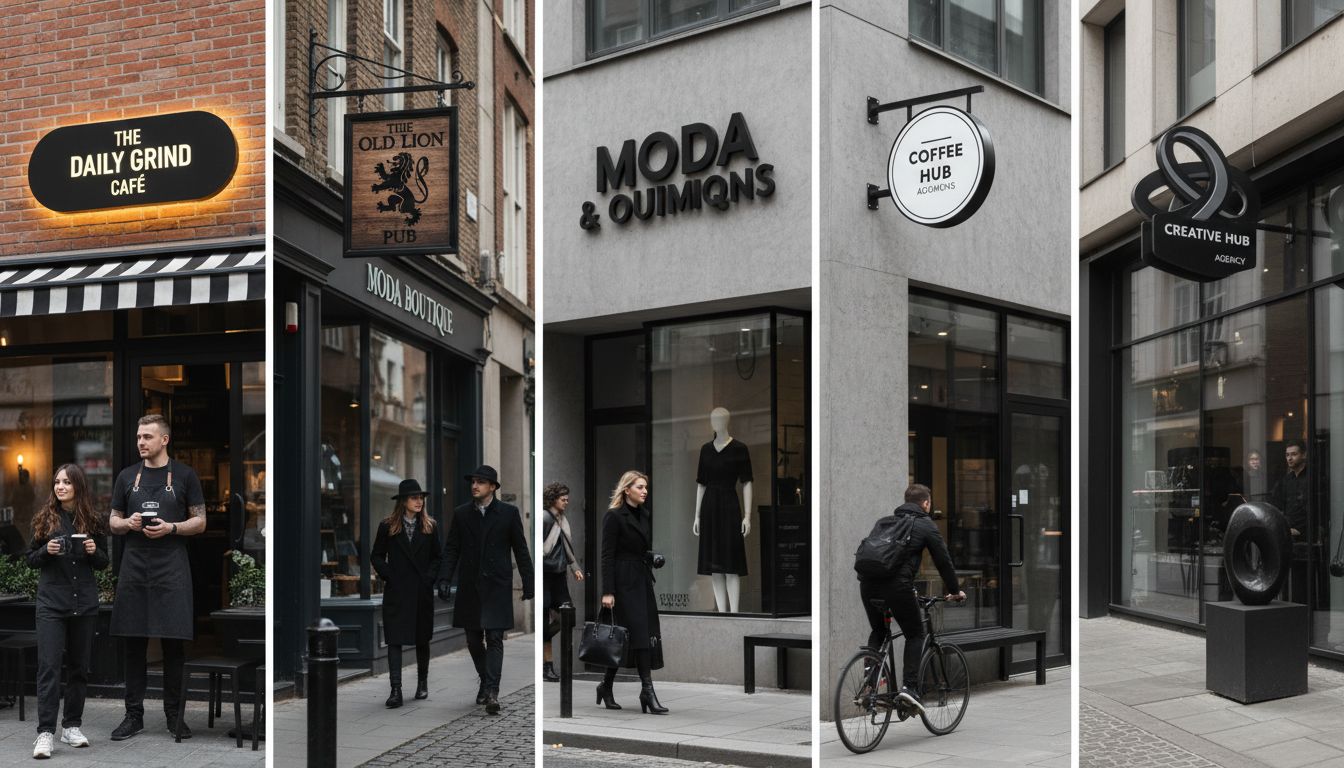
Businesses have numerous projecting sign options to showcase their brand and attract potential customers. These versatile signage solutions include flat panel signs, hanging signs, illuminated signs, box (lightbox) signs, and custom-shaped designs that cater to diverse aesthetic and functional requirements.
The range of available styles includes traditional hanging signs, 3D signs, circular and square blade signs, and double-sided options. Each type offers unique advantages for different business contexts and branding strategies.
Here is a comparison of the most popular types of projecting signs and their key characteristics:
| Sign Type | Key Features | Best For |
|---|---|---|
| Illuminated Signs | LED or neon lighting, visible day & night | Night-time visibility, busy high streets |
| Hanging Signs | Suspended design, traditional brackets | Pubs, cafés, historic settings |
| 3D Signs | Raised elements, visual depth | Contemporary shops, stand-out branding |
| Double-Sided Signs | Visible from both sides | High foot traffic areas |
| Custom-Shaped Signs | Unique contours, brand shapes | Creative industries, bespoke branding |
| Metal & Acrylic Signs | Modern finish, durable materials | Modern businesses, outdoor use |
When selecting a projecting sign, businesses should consider their specific needs, architectural context, and brand identity. The right sign can transform street visibility, creating a memorable visual impact that distinguishes your business from competitors.
Business signs London specialists can advise on which projecting sign format will work best for your specific building type, planning constraints, and brand aesthetic before any design work begins.
Key Features and Illumination Options
Projecting signs offer remarkable versatility in materials and illumination techniques. These signs can be crafted from robust materials like aluminium, acrylic, and PVC, providing businesses with multiple options to match their specific aesthetic and durability requirements.
Illumination plays a critical role in sign effectiveness. Several key lighting approaches maximise visibility:
- Internal LED Lighting: Energy-efficient and modern
- External Lighting Arms: Traditional and versatile
- Neon Lighting: Classic and eye-catching
- Backlit Designs: Soft, sophisticated glow
- Solar-Powered Options: Environmentally friendly
By carefully selecting materials and illumination strategies, businesses can create projecting signs that not only communicate their brand but also attract attention during day and night. The right combination of material and lighting can transform a simple sign into a powerful marketing tool that stands out in any urban landscape. Our illuminated signage guide provides comprehensive advice on choosing the most effective lighting approach for your specific location and trading hours.
Compliance, Safety, and Legal Requirements
Projecting signs are subject to complex legal regulations that businesses must carefully navigate to ensure compliance and safety. While specific requirements can vary by location, general guidelines focus on protecting public spaces and maintaining urban aesthetic standards.
Key legal requirements typically include:
- Size Limitations: Maximum sign area restrictions
- Height Clearance: Minimum vertical clearance above pedestrian areas
- Projection Distance: Maximum horizontal extension from building facade
- Mounting Safety: Secure installation preventing potential hazards
- Visibility Standards: Ensuring signs do not obstruct traffic or pedestrian movement
Businesses must proactively research local municipal regulations, as sign ordinances can differ significantly between jurisdictions. Consulting with local authorities or professional signage companies London helps ensure full compliance, avoiding potential fines or mandatory sign removals. Safety and legal adherence are not just regulatory checkboxes but crucial aspects of responsible business communication. Our signage compliance guide provides a detailed breakdown of the requirements most relevant to London businesses.
Installation Factors and Practical Considerations
Installing a projecting sign requires careful planning and consideration of multiple technical and aesthetic factors. Businesses must evaluate critical elements such as structural support, material selection, and mounting techniques to ensure optimal performance and longevity.
Material selection plays a crucial role in sign durability and appearance. Key installation considerations include:
- Material Selection: Aluminium, steel, timber, stainless steel
- Structural Support: Ensuring robust fixing points
- Weight Distribution: Balanced mounting to prevent stress
- Illumination Strategy: LED or external lighting options
- Environmental Resistance: Weatherproofing and durability
- Aesthetic Alignment: Matching sign design to building architecture
Professional installation is paramount. Businesses should work with experienced signage experts who understand local building regulations, can assess structural integrity, and ensure the sign not only looks impressive but remains securely mounted in various environmental conditions.
Custom signs London teams experienced in projecting sign installation will carry out a structural survey of the proposed fixing points before fabrication begins, ensuring the bracket design and wall fixing specification matches the actual building fabric — a step that prevents costly amendments after manufacture.
Comparing Projecting Signs With Other Signage
Projecting signs represent a significant advancement in business signage, offering unique advantages over traditional flat wall signs. These dynamic signs provide enhanced visibility from multiple directions, making them especially effective in challenging urban environments with limited display space.
Comparative advantages over alternative signage options include:
- Directional Visibility: Double-sided exposure unlike flat signs
- Foot Traffic Attraction: More effective in capturing pedestrian attention
- Space Utilisation: Optimal for narrow streets and compact storefronts
- Design Flexibility: Adaptable to traditional and modern business aesthetics
- Illumination Potential: Greater options for night-time visibility
- Dimensional Impact: Creates stronger visual presence compared to flat signage
Unlike standard wall-mounted signs that blend into building facades, projecting signs stand out literally and figuratively. They transform business communication from a passive display to an active engagement tool, ensuring your brand message reaches potential customers from multiple angles and distances.
Large format printing London graphic panels can be integrated into projecting sign frames as a cost-effective way to update messaging seasonally without replacing the structural bracket and frame, giving businesses greater flexibility over the lifetime of the installation. Our interior vs exterior signage guide covers how projecting signs compare with other exterior options in more detail.
Elevate Your Brand with Custom Projecting Signs
Projecting signs offer a compelling way to overcome visibility challenges and create a memorable street presence. If you are struggling to capture attention from multiple directions or need signage that works day and night, understanding the benefits of illuminated, double-sided, or custom-shaped projecting signs is crucial. These signs not only increase foot traffic but also build brand recognition in crowded cityscapes.
At Promo Signs, we specialise in designing, producing, and installing bespoke projecting signs tailored to your business needs across London, Essex, and Kent. With expert knowledge of materials, illumination options, and compliance, we ensure your sign is both eye-catching and fully compliant with local regulations.
Ready to boost your visibility with a projecting sign that truly represents your business? Visit Promo Signs to explore your options and get a free consultation and bespoke quote tailored to your unique requirements.
Frequently Asked Questions
What are the benefits of using projecting signs for my business?
Projecting signs enhance visibility from multiple angles, improve street-level brand recognition, stand out in competitive areas, and offer flexible mounting options that can match various architectural styles.
What types of projecting signs are available for businesses?
Common types of projecting signs include illuminated signs, hanging signs, 3D signs, double-sided signs, and custom-shaped signs, each catering to different branding strategies and environmental contexts.
How do I choose the right projecting sign for my business?
Consider factors such as your specific branding needs, architectural context, the level of visibility required, and the aesthetics of the sign. Each type of projecting sign comes with unique features that can complement your business identity.
What safety and legal requirements should I be aware of when installing a projecting sign?
Businesses must consider size limitations, height clearance for pedestrian spaces, projection distance from building facades, secure mounting practices, and visibility standards to comply with local regulations and ensure public safety.
Recommended
- What is a Projecting Sign? Guide for UK Businesses 2025 – PromoSigns.co.uk
- Projecting Sign Benefits for London Businesses in 2025 – PromoSigns.co.uk
- Projecting Signs London | Hanging Double Sided Projecting Signs
- Benefits of Using Attractive 3D Letter Signs | Promo Signs
