
Did you know that some large format printers produce graphics wider than 100 inches, transforming spaces with visuals bigger than many walls? As businesses compete for attention in crowded markets, striking oversized prints offer an edge that smaller formats simply cannot match. Understanding how large format printing works gives you the tools to create bold displays, choose the right materials, and avoid costly mistakes so every project stands out.
Table of Contents
- What Is Large Format Printing? Key Concepts
- Types of Large Format Printing and Materials
- How Large Format Printing Works: Process Steps
- Business Applications Across Industries
- Costs, Risks, and Common Printing Mistakes
Table of Contents
Key Takeaways
| Point | Details |
|---|---|
| Definition of Large Format Printing | A high-quality printing method capable of producing visuals on materials wider than traditional sizes, typically 18 to 100 inches. |
| Variety of Applications | Used across various industries for impactful visual communications including signage, posters, and exhibition graphics. |
| Material Selection | Choosing the right substrate is crucial for achieving desired durability and aesthetic for specific applications. |
| Common Mistakes | Businesses must avoid pitfalls such as poor image resolution and incorrect material choice to ensure quality outcomes. |
What Is Large Format Printing? Key Concepts
Large format printing is a sophisticated printing technology capable of producing high-quality graphics and visuals on oversized materials far beyond standard office printer dimensions. These printers can print on an impressive array of materials including photographic paper, film, cloth, plastic, PVC, acrylic, glass, ceramic, metal, wood, and leather.
Large format printing typically refers to printing on materials wider than traditional A3 or A4 sizes, usually ranging from 18 to 100 inches in width. This specialised printing method enables businesses to create expansive visual communications like:
- Large-scale marketing banners
- Architectural blueprints
- Exhibition graphics
- Vehicle wraps
- Retail signage
- Construction site hoardings
- Window graphics
The technology behind large format printing London utilises advanced inkjet techniques that provide exceptional detail and colour reproduction. Specialised printers use fine papers classified by weight, brightness, smoothness, and opacity to achieve superior print quality.
Businesses across various sectors leverage large format printing for creating impactful visual communications that grab attention and convey messages effectively. Whether you are an architect needing precise technical drawings, a retailer wanting eye-catching storefront displays, or an event organiser requiring stunning exhibition graphics, large format printing offers unparalleled versatility and visual impact.
Types of Large Format Printing and Materials
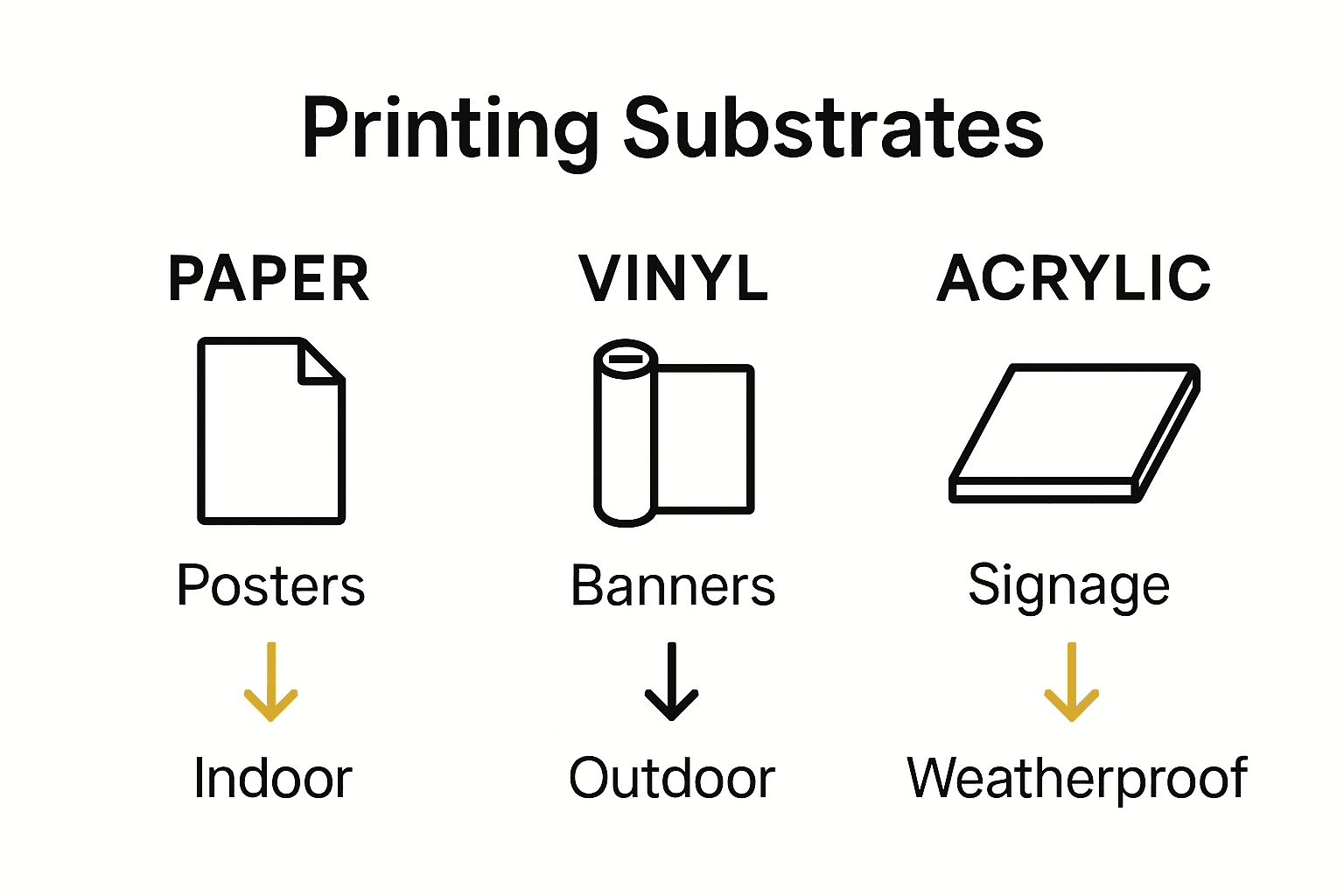
Large format printing encompasses a diverse range of printing techniques and materials designed to create visually stunning, high-impact graphics for various business applications. Common media types include paper, glossy photo paper, matte photo paper, satin paper, vinyl, canvas, and film, each tailored for specific professional needs.
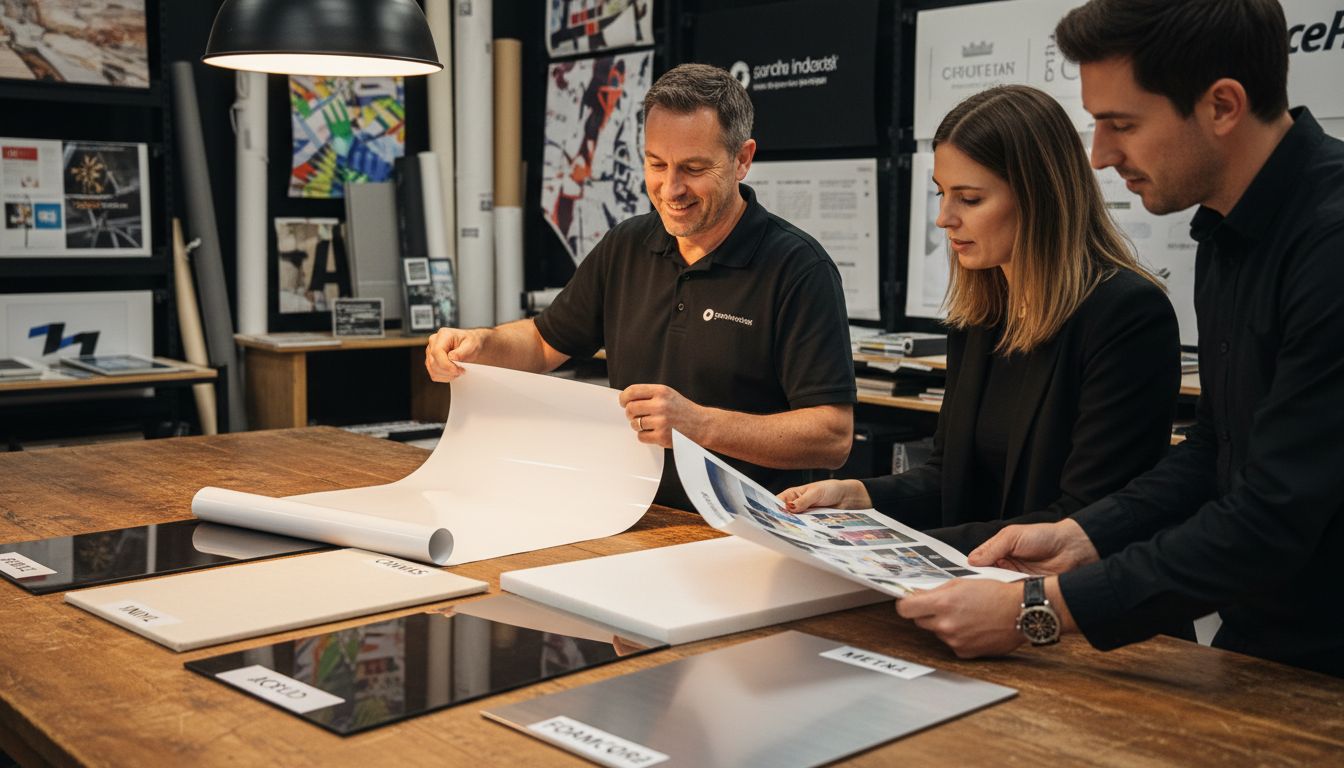
The material selection is crucial in large format printing, with each substrate offering unique characteristics. Several popular materials are widely used for large-scale graphics:
- White PVC: Durable and versatile
- Smooth Banner: Ideal for outdoor displays
- Removable Vinyl: Perfect for temporary signage
- Styrene: Lightweight and rigid
- Foamcore: Excellent for indoor presentations
- Acrylic: Provides a sleek, professional finish
Businesses can choose materials based on their specific requirements, such as indoor versus outdoor use, durability needs, and visual aesthetic. For instance, vinyl sticker printing London works brilliantly for vehicle wraps, window graphics, and exterior signage, while canvas might be preferred for artistic representations or gallery displays.
How Large Format Printing Works: Process Steps
Large format printing is a sophisticated digital printing process that transforms creative designs into expansive, high-quality visual communications. The technology encompasses several advanced printing methods, including:
- Inkjet Printing: Most common method
- Dye-Sublimation Printing: Best for fabric materials
- UV Printing: Excellent for rigid surfaces
- Solvent Printing: Ideal for outdoor graphics
- Latex Printing: Environmentally friendly option
A standard large format printing workflow includes these fundamental steps:
- Design Preparation: Creating high-resolution digital artwork
- File Optimisation: Ensuring image quality and print compatibility
- Material Selection: Choosing appropriate substrate
- Printer Calibration: Adjusting settings for specific material
- Printing Process: Applying ink using selected printing technique
- Finishing: Trimming, laminating, or additional treatments
Mesh banner printing London uses a specialised solvent or latex process to print onto perforated mesh vinyl, making it the preferred choice for outdoor installations where wind resistance and weight are key considerations.
Business Applications Across Industries
Large format printing has become a transformative technology enabling businesses across diverse sectors to create powerful visual communications. The technology offers high-quality prints with excellent colour saturation and durability, making it versatile for various industrial applications.
Different industries leverage large format printing in unique and innovative ways:
- Retail: Window displays, in-store graphics, promotional banners
- Construction: Site hoardings, architectural plans, safety signage
- Hospitality: Menu boards, wayfinding signs, event backdrops
- Real Estate: Property marketing materials, billboard advertisements
- Healthcare: Informational graphics, directional signage, patient education materials
- Education: Campus signage, exhibition displays, learning resources
Banner printing London solutions using white PVC and smooth banner materials are particularly popular for outdoor advertising, trade show displays, and promotional materials. These versatile printing solutions allow businesses to create eye-catching visual communications that capture attention and convey messages effectively.
From small startups to large corporations, companies are discovering the power of large format printing to enhance brand visibility, communicate complex information, and create immersive visual experiences. Exhibition stands London displays increasingly rely on large format fabric and rigid print panels to create fully immersive, branded environments at trade shows and events.
Costs, Risks, and Common Printing Mistakes
Large format printing involves complex considerations that can significantly impact your project’s success and budget. Understanding essential printing fundamentals is crucial to avoid costly mistakes and ensure high-quality outputs.
Common printing mistakes that businesses often encounter include:
- Poor Image Resolution: Resulting in blurry or pixelated prints
- Incorrect Material Selection: Choosing unsuitable substrates
- Colour Inconsistency: Variations between digital design and final print
- Improper File Formatting: Incompatible file types or settings
- Overlooking Finishing Requirements: Neglecting lamination or edge treatments
Selecting the appropriate printing method is essential to mitigate potential risks. Cost considerations typically involve:
- Setup Costs: Initial design and preparation expenses
- Material Expenses: Substrate and ink pricing
- Print Volume: Per-unit pricing variations
- Finishing Requirements: Additional treatment costs
- Potential Reprint Expenses: Addressing errors or quality issues
Businesses can minimise financial risks by carefully reviewing design specifications and consulting printing professionals before committing to large-scale production. For practical insights into avoiding common printing pitfalls, explore our guide on common mistakes in custom banner printing.
Elevate Your Business Impact with Expert Large Format Printing
Navigating the complexities of large format printing can be overwhelming with so many choices of materials, printing methods, and finishing options to consider. Whether you are concerned about selecting the right substrate like vinyl or acrylic, ensuring crisp high-resolution prints, or avoiding common pitfalls like colour inconsistency or improper file formatting, these challenges directly affect your brand’s visibility and message clarity.
At Promo Signs, we understand how crucial it is for London, Essex, and Kent businesses to deliver standout visual communications that create lasting impressions. From custom shop signs to illuminated displays and expansive banners, we combine expert design, production, and installation services to bring your vision to life with precision and quality you can trust.
Ready to make a bold statement that converts attention into customers? Get in touch with our expert team now and discover how our custom large format printing solutions can remove any uncertainty and deliver flawless results every time. Visit Promo Signs to start your project with confidence.
Frequently Asked Questions
What is large format printing?
Large format printing refers to printing on materials that exceed the dimensions of traditional office printers, typically ranging from 18 to 100 inches in width. It is used to create high-quality graphics for various applications such as banners, signage, and exhibition graphics.
What materials can be used for large format printing?
Materials used in large format printing include paper, vinyl, canvas, acrylic, PVC, cloth, and more. Each material has unique properties suitable for different applications, such as outdoor displays or artistic representations.
What are the key printing methods used in large format printing?
The primary printing methods include inkjet printing, dye-sublimation, UV printing, solvent printing, and latex printing. Each technique is tailored for specific materials and applications, ensuring optimal print quality and durability.
What are common mistakes businesses make in large format printing?
Common mistakes include poor image resolution, incorrect material selection, colour inconsistencies, improper file formatting, and overlooking finishing requirements. Understanding these pitfalls can help businesses avoid costly reprints and ensure high-quality outputs.
Recommended
- Large Format Printing Explained: Essential Guide for London Businesses 2025 – PromoSigns.co.uk
- Large Format vs Small Format Printing: London 2025 Guide – PromoSigns.co.uk
- Top Large Format Printing Uses for London Businesses 2025 – PromoSigns.co.uk
- Large Format Printing Basics 2025: Essential Guide for London Businesses – PromoSigns.co.uk
- Step by Step Apparel Printing for Custom Branded Clothing – Recent blog posts
