
A shop sign does more than mark your location. It is often the first thing customers notice, shaping opinions within just seconds. Research shows nearly 70 percent of shoppers judge a business by its sign. With so much riding on this first impression, choosing the right sign is a big decision for any business owner. This guide breaks down the steps that lead to a standout sign, helping you create something memorable and true to your brand.
Table of Contents
Quick Summary
| Key Point | Explanation |
|---|---|
| 1. Understand your business requirements | Identify your brand identity and visual communication needs for an effective sign design. |
| 2. Define visual branding goals | Create a style guide that reflects your brand’s personality and ensures design consistency. |
| 3. Choose appropriate sign types and materials | Select materials that enhance visibility, represent your brand, and withstand local conditions. |
| 4. Ensure compliance with local regulations | Familiarize yourself with legal signage guidelines to avoid fines and ensure accessibility. |
| 5. Evaluate sign visibility and placement | Strategically position your sign for maximum visibility from various angles and times of day. |
Step 1: Assess your business requirements
Choosing the perfect shop signs London installation starts with a thorough understanding of your unique business requirements. In this crucial first step, you will map out the precise visual communication needs that will help your storefront make a powerful first impression.
Begin by examining your brand identity and core messaging. Effective design relies on carefully analysing your visual identity, target audience, and industry positioning. Ask yourself key questions: What emotional response do you want customers to experience when they see your sign? What colours, fonts, and design elements best represent your business personality?
Next, consider the practical dimensions of your signage. Measure your storefront carefully and assess visibility angles from different approach directions. Think about lighting conditions throughout the day and how your sign will appear during morning, afternoon, and evening hours. Maintaining graphic consistency across different media is crucial for preserving your brand’s integrity.
Pro Tip: Document your requirements in writing. A clear, structured brief will help sign designers understand your vision precisely.
Once you have a comprehensive understanding of your business requirements, you will be perfectly positioned to move forward with selecting the ideal shop sign design that truly represents your brand.
Step 2: Define your visual branding goals
Transforming your shop sign from mere signage to a powerful brand statement requires a strategic approach to visual branding. In this critical stage, you will crystallise the visual language that communicates your business identity and captures potential customers’ attention.
Building an effective visual branding strategy involves developing a comprehensive style guide that ensures consistency across all platforms. Begin by articulating your brand’s core personality. Are you professional and sleek? Warm and welcoming? Innovative and modern? These characteristics will directly influence your sign’s design elements.
Building on this foundation, consider how your colour palette, typography, and graphic elements can reflect your business ethos. Will bold, geometric fonts convey your tech startup’s innovation? Or will soft, rounded shapes better represent a community café?
Custom signs London specialists can help you define your brand’s mission, vision, values, and positioning to create a cohesive visual identity across every sign type you use.
Pro Tip: Create a mood board that captures your brand’s visual essence. This tangible reference will guide designers and keep your branding consistent.
By meticulously defining your visual branding goals, you are setting the stage for a shop sign that does far more than identify your business — it tells your unique brand story.
Step 3: Select suitable sign types and materials
Selecting the right sign type and materials is a critical decision that will directly impact your business visibility and brand perception. In this step, you will explore the various options that can transform your storefront into a compelling visual communication platform.
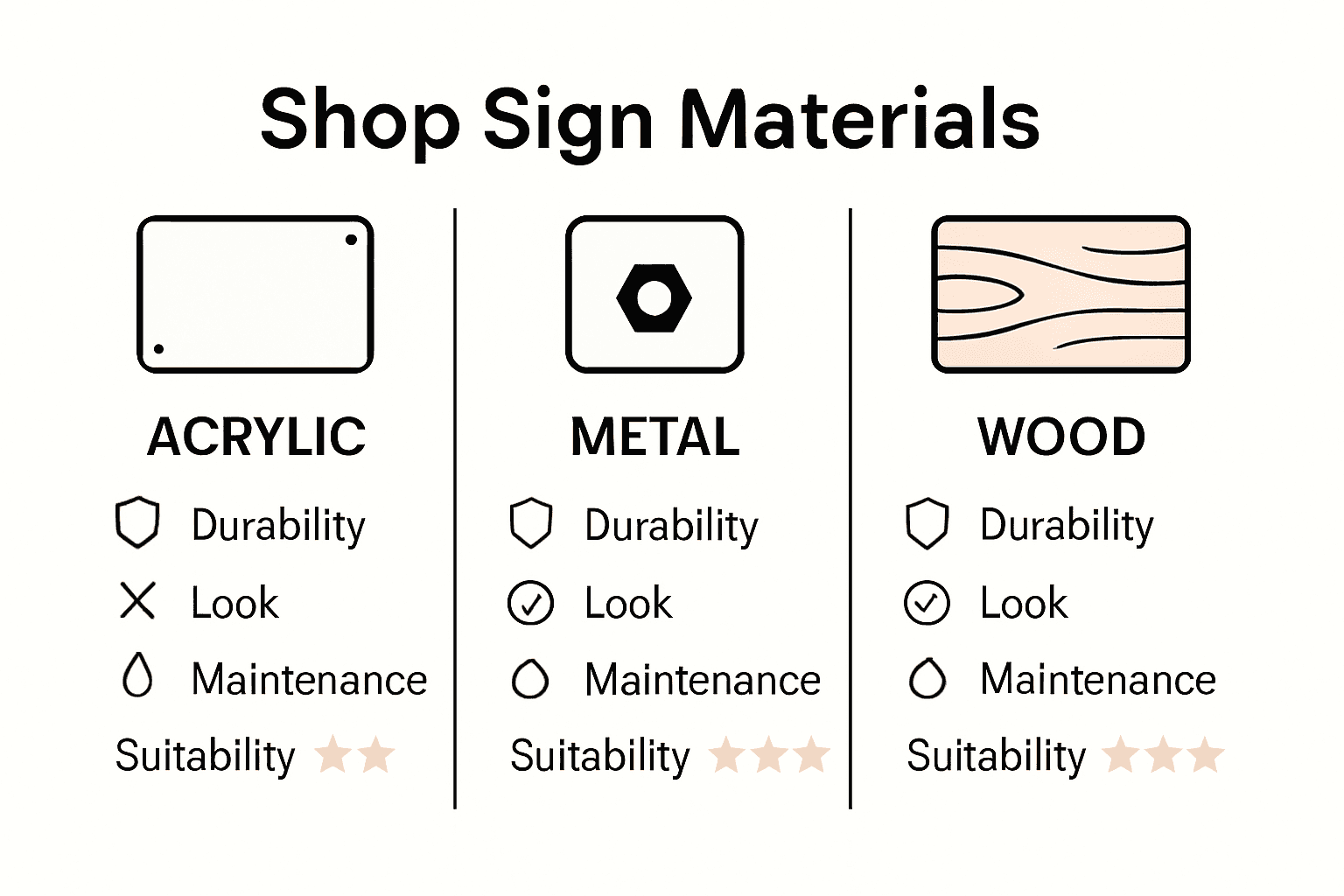
Research emphasises the profound impact of colour on customer attention and purchasing decisions. When choosing materials, consider how different surfaces and colours interact with light and environment. Acrylic signs offer a sleek modern look, while wooden signs might convey warmth and tradition. Metal signs provide durability and a professional aesthetic.
For businesses seeking maximum visual impact, consider foamex signs printing London which produces high-resolution graphics perfect for illuminated and non-illuminated displays, ensuring your signage stands out even in crowded urban environments. Consider factors like weather resistance, maintenance requirements, and how the material reflects your brand personality.
Pro Tip: Request material samples and view them in different lighting conditions to ensure they truly represent your brand vision.
By carefully selecting sign types and materials that align with your brand identity, you are creating a powerful first impression that speaks volumes about your business.
Step 4: Ensure compliance with local regulations
Navigating the complex landscape of local signage regulations is crucial to avoid potential legal complications and ensure your shop sign meets all necessary requirements. This step will help you understand and implement the essential compliance guidelines that protect your business investment.
Effective signage standards go beyond mere visual communication and must prioritise compliance with accessibility guidelines. This means considering regulations that mandate specific requirements for sign visibility, height, contrast, and readability. Ensure your sign has clear lettering, appropriate font sizes, and meets colour contrast standards that make it readable for individuals with visual impairments.
Language regulations can also play a significant role in signage compliance. In the UK, check with your local council about specific signage regulations that might apply to your business location, including any requirements relating to bilingual signage or heritage area restrictions.
Working with professional signage companies London ensures all permit applications and compliance requirements are handled correctly from the outset, saving time and avoiding costly enforcement notices.
Pro Tip: Always keep a copy of local signage regulations on hand and consult with a local signage expert to ensure full compliance.
By meticulously addressing regulatory requirements, you protect your business from potential fines and demonstrate your commitment to professional, inclusive business practices.

Step 5: Evaluate sign visibility and placement
Selecting the perfect sign goes far beyond design — it is about strategic positioning that maximises customer engagement and brand exposure. In this crucial step, you will learn how to evaluate your signage placement to ensure maximum visual impact and attract potential customers.
Research reveals how colour and strategic placement can significantly influence customer emotions and attention. Consider viewing angles from multiple perspectives — pedestrian walkways, approaching traffic, and adjacent businesses. Test your sign by walking across the street and assessing its legibility from different distances and angles. Pay attention to potential visual obstructions like trees, street furniture, or neighbouring signage that might reduce your sign’s effectiveness.
Illuminated business signs London can be particularly powerful for capturing attention during different times of day. Consider how natural and artificial lighting will interact with your sign throughout morning, afternoon, and evening hours. Think about reflective materials or backlighting that can enhance visibility during low light conditions.
Pro Tip: Take photographs of your proposed sign location at different times of day to understand how lighting and surrounding environment might impact visibility.
By carefully evaluating sign visibility and placement, you transform your signage from a mere identifier to a powerful marketing tool that speaks directly to potential customers.
Step 6: Verify final design and quality
The final verification of your shop sign is the critical moment where design meets precision — ensuring your visual branding translates perfectly from concept to reality. This step will help you meticulously review every detail before your sign goes live.
Establishing professional design standards is paramount. Create a comprehensive checklist that covers every aspect of your sign. Examine colour accuracy by comparing digital proofs with physical colour swatches. Verify that typography is crisp and legible from various distances. Check that your logo appears exactly as intended with precise proportions and alignment.
Maintaining brand integrity requires consistent and correct usage of design elements. Request a physical mockup or prototype of your sign to assess how it looks in real world conditions. Examine how different lighting conditions impact your design colours and visibility. Pay close attention to material texture, finish, and how graphics appear when mounted.
Pro Tip: Have someone unfamiliar with your brand review the sign. Fresh eyes can spot potential design issues you might have overlooked.
By conducting a thorough final verification, you transform your shop sign from a mere graphic into a powerful representation of your brand’s professional standards and visual identity.
Elevate Your Shop Signage for Unforgettable Business Impact
Choosing the right shop sign involves more than just design — during the process you must address challenges like matching your brand identity, ensuring visibility, and meeting local regulations. At Promo Signs, we understand how important it is to capture your business personality and create a sign that speaks directly to your target audience. Whether you are seeking custom illuminated signs or durable materials that suit your storefront and lighting needs, we offer tailored solutions that enhance your brand’s story and maximise customer attraction.
Ready to transform your storefront into an eye-catching marketing asset? Take the next step with us at Promo Signs. Our expert team will guide you through every stage from design to installation so your sign fully embodies your visual branding goals and complies with all local standards. Don’t wait to make a powerful first impression — contact us today and discover how our shop signs and illuminated signage can help your business stand out across London, Essex, and Kent.
Frequently Asked Questions
How do I assess my business requirements for a shop sign?
Start by analysing your brand identity and core messaging, considering what emotional response you want from customers. Document your requirements in writing for clarity, which will help you communicate your vision effectively to designers.
What visual branding goals should I define for my shop sign?
Define your brand’s personality and create a mood board to guide the design elements such as colour and typography. This will ensure your sign not only identifies your business but also tells a compelling brand story.
What types of materials are suitable for my shop sign?
Choose materials based on your desired aesthetic and durability, such as acrylic for a modern look or wood for a warm feel. Request material samples to evaluate how they reflect your brand in different lighting conditions.
How can I ensure compliance with local signage regulations?
Familiarise yourself with local signage laws, including accessibility guidelines for font size and contrast visibility. Keep a copy of these regulations handy and consult a local expert to avoid potential legal issues.
How do I evaluate sign visibility and placement for maximum impact?
Assess visibility from various angles and distances, considering pedestrian and vehicle traffic. Take photographs of the location at different times of the day to analyse how lighting affects your sign’s legibility.
What steps should I take to verify the final design quality of my shop sign?
Create a checklist to review every design detail, including colour accuracy and typography legibility. Request a physical mockup to see how the sign looks in real-world conditions before finalising the design.
Recommended
- How to Choose the Right Commercial Sign for Your Business – PromoSigns.co.uk
- What Makes A Great Shop Sign – PromoSigns.co.uk
- 10 Creative Outdoor Shop Sign Ideas to Attract More Customers – PromoSigns.co.uk
- How to Choose Signage: Best Tips for London Businesses 2025 – PromoSigns.co.uk
