
In competitive commercial environments where visibility determines success, double-sided signage delivers exceptional value by capturing attention from multiple directions. This strategic approach doubles exposure opportunities, maximizes foot traffic capture, and provides superior return on investment compared to single-faced alternatives.
This comprehensive guide explores the benefits, applications, design considerations, and practical implementation of double-sided signage across diverse business environments.
Table of Contents
Understanding Double-Sided Signage
What Is Double-Sided Signage?
Double-sided signage (also known as two-sided or dual-faced signage) features graphics, messaging, or branding visible from opposite directions, typically mounted perpendicular to foot or vehicle traffic flow.
Core Characteristics:
- Visibility from two opposing viewpoints
- Perpendicular mounting to traffic flow
- Independent or identical face designs
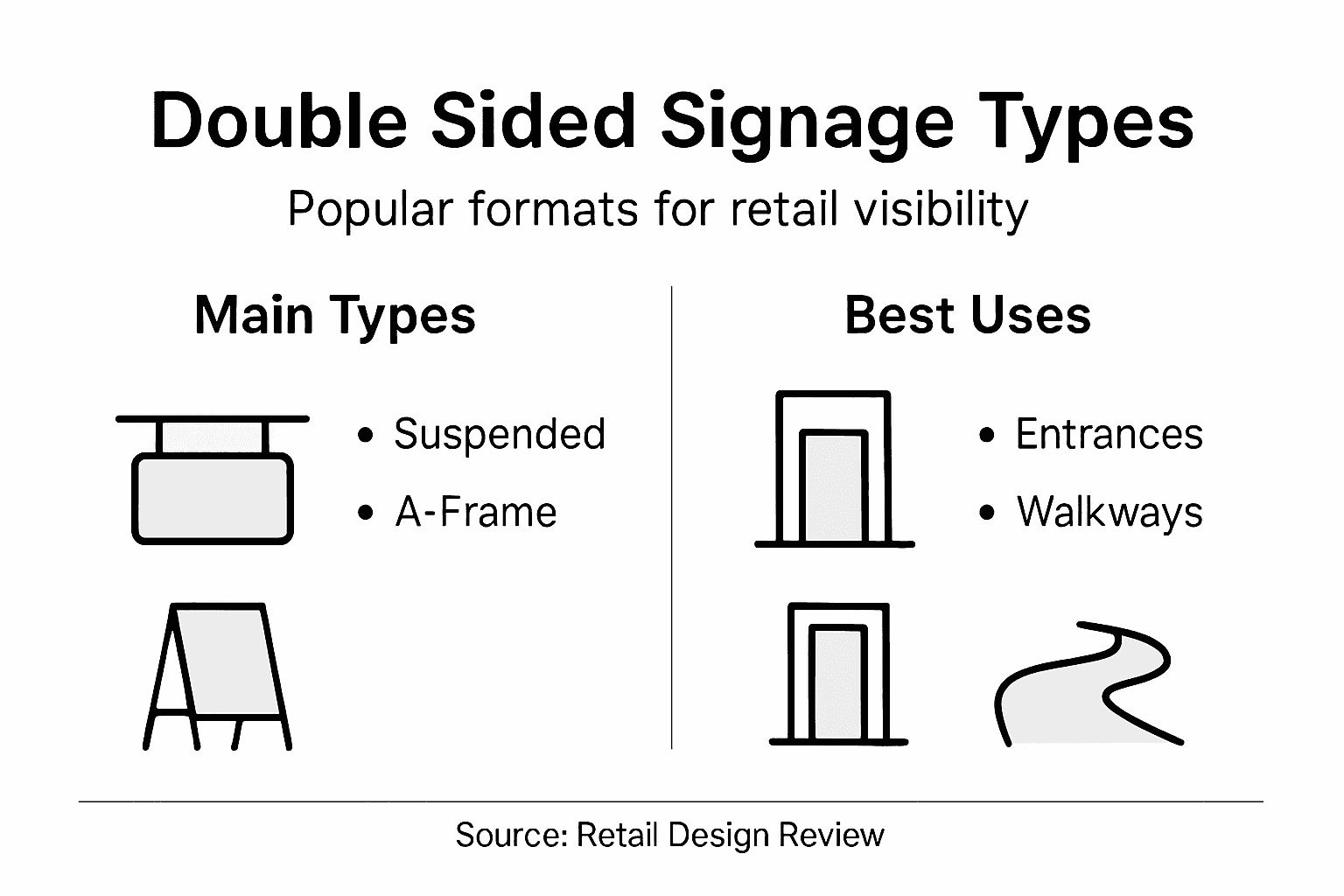
- Suspended, pole-mounted, or projecting installation
- Maximum exposure optimization
Common Applications:
- High street projecting signs
- A-board pavement signs
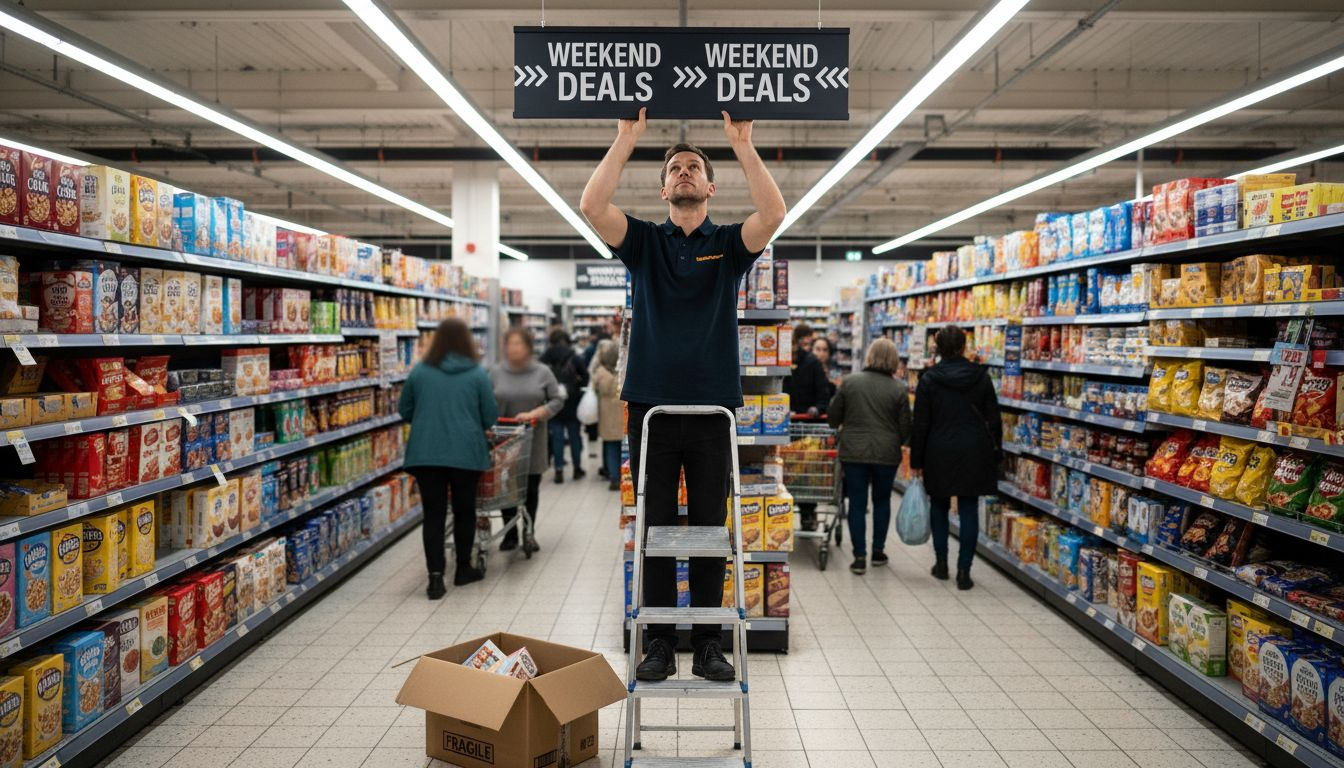
- Suspended hanging signs
- Pole-mounted directional signs
- Exhibition banners and displays
- Retail window displays
Why Double-Sided Solutions Outperform Single-Faced
Visibility Advantages:
- Captures traffic from both directions (100% coverage vs. 50%)
- Earlier customer awareness (approach from either direction)
- Extended viewing opportunity (visible during approach and departure)
- Reduced blind spots in high-traffic areas
- Superior pedestrian and vehicle attention
Commercial Benefits:
- Approximately 2× impression opportunities
- Higher cost-efficiency (less than 2× single-sided cost)
- Stronger competitive presence
- Improved brand recall through repeated exposure
- Enhanced property and location value
Types of Double-Sided Signage
Projecting Signs (Blade Signs)
Traditional High Street Solution: Mounted perpendicular to building facades, projecting signs maximize visibility:
Key Features:
- Extends 500mm-1200mm from building
- Visible from both pedestrian directions
- Traditional character and heritage appeal
- Professional craftsmanship showcase
- Planning permission typically required
Material Options:
- Traditional timber construction
- Powder-coated aluminum frames
- Acrylic sign panels (modern, backlit)
- Metal fabrication (premium durability)
- Illuminated or non-illuminated
Design Considerations:
- Building architecture harmony
- Local planning regulations
- Structural fixing requirements
- Wind load calculations
- Historical area appropriateness
A-Board Pavement Signs
Portable, Versatile Marketing: A-boards offer immediate double-sided visibility:
Advantages:
- No planning permission required (with restrictions)
- Portable and repositionable
- Daily message updates possible
- Cost-effective solution
- Multiple format options
Common Formats:
- Chalkboard (traditional, flexible messaging)
- Snap-frame (professional, changeable graphics)
- Poster display (promotional campaigns)
- Digital screens (dynamic content)
- Sandwich boards (budget option)
Regulatory Compliance:
- Maximum size restrictions (typically 60cm × 80cm)
- Placement distance from building (often 1 meter maximum)
- Pedestrian clearance requirements (minimum 1.5m passage)
- Insurance and liability considerations
- Time restrictions (display hours)
Suspended Hanging Signs
Interior and Arcade Applications: Ceiling or structure-mounted signs provide comprehensive visibility:
Strategic Uses:
- Shopping center wayfinding
- Airport and station directories
- Exhibition hall navigation
- Retail department identification
- Multi-level venue guidance
Construction Methods:
- Lightweight aluminum frames
- Tension fabric graphics
- Acrylic panel systems
- Rigid board substrates
- Cable suspension systems
Pole-Mounted Double-Sided Signs
Freestanding Visibility: Ground-mounted poles support elevated signage:
Applications:
- Car park directional signs
- Campus wayfinding systems
- Industrial estate navigation
- Hotel and restaurant identification
- Multi-tenant property directories
Height Considerations:
- Low-level (1.5-2.5m): Pedestrian focus
- Mid-level (2.5-4m): Mixed traffic
- High-level (4m+): Vehicle visibility (planning required)
Key Takeaways
| Point | Details |
|---|---|
| Strategic Communication Tool | Double sided signage enhances brand visibility by allowing retailers to engage customers from multiple angles, increasing marketing impact. |
| Diverse Applications | Different types of double sided signage can be utilised across various retail environments to guide traffic and promote products effectively. |
| Design Considerations | Effective signage relies on high-contrast designs and visibility optimisation to capture attention across diverse lighting conditions. |
| Durability and Compliance | Choosing high-quality materials and adhering to local regulations are essential for long-term performance and cost-effectiveness in signage investment. |
Design Principles for Double-Sided Signage
Mirror vs. Different Messaging
Identical Face Design: Most common approach featuring same graphics both sides:
Advantages:
- Consistent brand presentation
- Simplified production
- Lower design costs
- Unified messaging
- Easier approval process
When to Use:
- Brand identification primary goal
- Simple, clear messaging
- Budget optimization
- Directional wayfinding
- Professional services
Different Face Designs: Alternative messaging on each side for strategic purposes:
Applications:
- Approaching vs. departing messages
- Multiple service offerings
- Directional information (arrows pointing opposite ways)
- Multilingual environments
- Varied target audiences
Example Scenarios:
- “Welcome” (approaching) / “Thank You, Visit Again” (departing)
- Service A (facing direction A) / Service B (facing direction B)
- Entrance information / Exit information
Readability at Distance
Viewing Angle Considerations: Double-sided signs often viewed at acute angles:
Design Adaptations:
- Larger typography than wall-mounted equivalents
- Simplified graphics for quick comprehension
- High-contrast color combinations
- Bold, clear letterforms
- Minimal text content (3-7 words ideal)
Distance Formula: Apply the 100:1 ratio:
- 100mm letter height visible from 10 meters
- 500mm letter height visible from 50 meters
- Account for viewing angle reduction (add 20-30%)
Color and Contrast Optimization
High-Visibility Combinations:
- Black on yellow (maximum contrast)
- Dark blue on white
- White on dark colors
- Red on white (attention-commanding)
- High-saturation brand colors
Lighting Considerations:
- Day and night appearance variation
- Natural vs. artificial light effects
- Backlit vs. externally lit options
- Shadow and glare management
- Seasonal light angle changes
Materials and Construction
Substrate Options
Acrylic (Perspex): Premium choice for professional applications:
Advantages:
- Excellent light transmission (illuminated signs)
- Weather and UV resistance
- Impact resistant
- High-quality finish
- Versatile fabrication options
Applications:
- Illuminated projecting signs
- Premium shop signs
- Corporate signage
- Healthcare facilities
- Professional services
Aluminum Composite (Dibond): Durable, lightweight alternative:
Benefits:
- Superior flatness and rigidity
- Weather resistance
- Lightweight (easy installation)
- Professional finish options
- Cost-effective for larger signs
Timber: Traditional choice for heritage and character properties:
Characteristics:
- Authentic, traditional appearance
- Hand-carved capability
- Premium craftsmanship showcase
- Regular maintenance requirements
- Heritage area suitability
Foamex (PVC): Budget-friendly option for temporary or indoor use:
Uses:
- Short-term promotions
- Interior signage applications
- Event and exhibition displays
- Budget-conscious projects
- Frequent message changes
Illumination Options
Internal LED Illumination: Modern, energy-efficient solution:
Features:
- Even, consistent lighting both sides
- 80% energy savings vs. traditional
- 50,000+ hour lifespan
- Minimal heat generation
- Superior color rendering
- Programmable control options
External Spotlighting: Alternative lighting approach:
Applications:
- Traditional timber signs
- Solid substrate materials
- Architectural feature highlighting
- Listed building requirements
- Dramatic visual effects
Halo Backlighting: Premium, sophisticated appearance:
Characteristics:
- Letters/logos illuminated from behind
- Dimensional depth creation
- Modern, upscale aesthetic
- Higher fabrication costs
- Exceptional visual impact
Installation Methods and Considerations
Wall-Mounted Projecting Signs
Structural Requirements:
- Building fabric assessment
- Load-bearing capacity verification
- Brick vs. stone vs. concrete considerations
- Historic building special requirements
- Professional engineering calculations
Fixing Systems:
- Through-bolted steel brackets
- Chemical anchor systems
- Stainless steel fixings (corrosion resistance)
- Rubber bushings (vibration dampening)
- Regular inspection access provision
Safety Compliance:
- Wind load certification
- Structural engineer approval
- Public liability insurance
- Regular maintenance schedule
- Emergency contact details
Freestanding A-Board Installation
Stability Considerations:
- Base weight requirements
- Wind resistance capability
- Secure closure mechanisms
- Anti-theft provisions
- Daily deployment procedures
Best Practices:
- Morning setup consistency
- Evening retrieval protocol
- Weather condition assessment
- Placement optimization
- Condition monitoring
Suspended Sign Installation
Ceiling and Structure Mounting:
- Load-bearing point identification
- Suspension cable specification
- Height adjustment mechanisms
- Safety secondary suspension
- Electrical integration (if illuminated)
Safety Standards:
- Regular inspection regimes
- Secure fixing verification
- Public area safety compliance
- Emergency evacuation considerations
- Insurance requirements
Planning Permission and Regulations
UK Advertisement Consent
When Permission Required: Most double-sided signage needs approval:
Projecting Signs:
- Local authority application necessary
- Design specification submission
- Conservation area restrictions
- Listed building consent (if applicable)
- Neighbor consultation possible
Deemed Consent Exceptions: Limited scenarios allow installation without consent:
- Business nameplates (specific size limits)
- Directional signs (strict criteria)
- Temporary event signage (conditions apply)
Size and Projection Restrictions
Typical Local Authority Limits:
- Maximum projection: 1 meter from building
- Minimum height above footpath: 2.5 meters
- Maximum sign area: Often 1.0-1.5 square meters per face
- Illumination restrictions: Time limits, brightness controls
- Number per premises: Frequently limited to one
Conservation Areas:
- Stricter design criteria
- Traditional materials expectation
- Heritage-appropriate styling
- Enhanced scrutiny process
- Possible total prohibition
A-Board Regulations
Highway Obstruction Laws: Pavement signs must comply with:
Spacing Requirements:
- Minimum 1.5m clear passage (Equality Act)
- Maximum 1m from building face
- No placement on designated clearways
- Removal outside business hours (some areas)
Liability Considerations:
- Public liability insurance essential
- Business responsibility for accidents
- Regular condition inspection
- Secure in adverse weather
- Compliance documentation
| Signage Type | Typical Location | Notable Benefit |
|---|---|---|
| Suspended Display | Shopping centres | Enhances overhead visibility |
| Freestanding A-frame | Pavements/entrances | Attracts passing foot traffic |
| Wall-mounted Panel | Interior hallways | Guides in-store navigation |
| Window-integrated System | Shop windows | Dual indoor/outdoor promotion |
Pro tip: Invest in professional design consultation to ensure your double sided signage balances aesthetic appeal with practical communication objectives.
Business Applications and Benefits
Retail Environments
High Street Shops: Double-sided signage maximizes retail visibility:
Strategic Advantages:
- Captures window shoppers from both directions
- Earlier brand recognition (extended approach time)
- Competitive differentiation in dense retail areas
- Professional credibility establishment
- Impulse visit encouragement
Shopping Centers and Malls:
- Directional wayfinding efficiency
- Store identification from multiple approaches
- Promotional messaging visibility
- Brand presence maximization
- Customer navigation improvement
Hospitality Sector
Restaurants, Cafés, and Pubs: Double-sided solutions drive footfall:
Benefits:
- Menu and offer visibility from both directions
- Opening hours communication
- Special event promotion
- Sidewalk seating area identification
- Brand atmosphere creation
Professional Services
Offices, Clinics, and Consultancies: Professional signage establishes credibility:
Applications:
- Practice identification from either approach
- Multi-tenant building directories
- Parking and entrance guidance
- Professional image projection
- Client confidence building
Events and Exhibitions
Temporary Double-Sided Solutions: Exhibition applications benefit from:
Versatility:
- Freestanding banner displays
- Suspended wayfinding signs
- Registration area identification
- Sponsor visibility maximization
- Easy repositioning capability
Cost Considerations and ROI
Investment Ranges (UK)
A-Board Pavement Signs:
- Budget chalkboard: £30-£80
- Professional snap-frame: £80-£200
- Premium metal construction: £150-£400
- Digital screen models: £400-£1,500
Projecting Signs:
- Small non-illuminated: £400-£800
- Standard illuminated: £800-£2,000
- Premium crafted: £2,000-£5,000
- Large, complex installations: £5,000-£15,000+
Suspended Signs:
- Simple directional: £150-£400
- Professional wayfinding: £400-£1,200
- Large-scale exhibition: £1,200-£5,000
Return on Investment
Measurable Benefits:
- Double exposure vs. single-sided (100% increase)
- Modest cost premium (typically 30-50% more, not 100%)
- Extended equipment lifespan (same as single-sided)
- Superior cost-per-impression ratio
- Enhanced brand recall through repeated exposure
Typical Payback:
- Increased foot traffic: 15-25% average
- Improved conversion rates
- Enhanced brand recognition
- Competitive advantage
- Property value contribution
To assist planning, here is a summary of key durability and compliance factors to check for double sided signage:
| Aspect | Critical Consideration | Business Impact |
|---|---|---|
| Material Quality | Use weather resistant materials | Reduces maintenance costs |
| Regulatory Fit | Meet local safety regulations | Avoids fines and legal delays |
| Energy Use | Select efficient lighting | Ensures lower running expenses |
| Certification | Secure required documentation | Enables smooth installation |
Maintenance and Longevity
Regular Inspection Requirements
Monthly Checks:
- Structural integrity assessment
- Fixing security verification
- Graphics condition evaluation
- Illumination functionality (if applicable)
- Cleaning requirements identification
Annual Professional Service:
- Detailed structural inspection
- Electrical system testing (illuminated signs)
- Component replacement as needed
- Repainting or refinishing
- Compliance documentation update
Cleaning and Preservation
Maintenance Protocols:
- Regular cleaning (monthly minimum)
- Appropriate cleaning products (non-abrasive)
- Illumination component care
- Weather damage prompt repair
- Professional refinishing when required
Expected Lifespan:
- Acrylic illuminated signs: 10-15 years
- Aluminum composite: 12-18 years
- Timber (well-maintained): 15-25 years
- Graphics replacement: 5-7 years (outdoor)
Choosing Professional Signage Providers
Selection Criteria
Essential Capabilities:
- Double-sided signage expertise
- Planning permission navigation
- Structural engineering access
- Quality manufacturing facilities
- Professional installation teams
- Ongoing maintenance support
Portfolio Assessment:
- Similar application examples
- Heritage and listed building experience
- Illumination expertise
- Custom fabrication capability
- Long-term client relationships
Comprehensive Service
Full-Service Providers Offer:
- Initial consultation and site survey
- Design and visualization services
- Planning application support
- Professional manufacture
- Expert installation
- After-sales maintenance
- Warranty and support
Future Trends and Innovations
Digital Double-Sided Displays
Emerging Technology:
- LED screen double-sided units
- Dynamic content rotation
- Daylight-readable displays
- Remote content management
- Real-time information updates
Applications:
- Retail promotional rotation
- Restaurant menu boards
- Transport information
- Event scheduling
- Emergency messaging
Sustainable Solutions
Environmental Considerations:
- LED energy efficiency (vs. traditional)
- Recyclable material selection
- Solar-powered options
- Long-life component design
- Responsible disposal programs
Conclusion
Double-sided signage represents one of the most cost-effective visibility investments available to businesses, delivering approximately double the exposure for significantly less than double the cost. From traditional projecting signs that grace historic high streets to modern A-boards that attract passing trade, dual-faced solutions maximize marketing impact while optimizing budget efficiency.
Success requires understanding your specific application, selecting appropriate materials and construction, ensuring regulatory compliance, and partnering with experienced professionals who combine design expertise with technical knowledge and installation proficiency.
Whether implementing heritage-appropriate projecting signs, versatile pavement displays, or sophisticated illuminated solutions, the fundamental advantages remain consistent: enhanced visibility, superior return on investment, and powerful competitive differentiation.
For businesses seeking to maximize their signage impact through strategic double-sided solutions, partnering with experienced signage specialists ensures access to design innovation, regulatory expertise, quality manufacturing, and professional execution that transforms visibility challenges into marketing opportunities.
Recommended
- 9 Key Types of Retail Signage That Can Transform Your Store
- What Makes A Great Shop Sign – PromoSigns.co.uk
- The Modern Age Visual Displays For Branding – PromoSigns.co.uk
- Retail POP Display Signage Solutions for London Businesses in 2025 – PromoSigns.co.uk
- Banners & Signage – Custom T-Shirts and Printed Merch in Utah | Pulse Merch
