
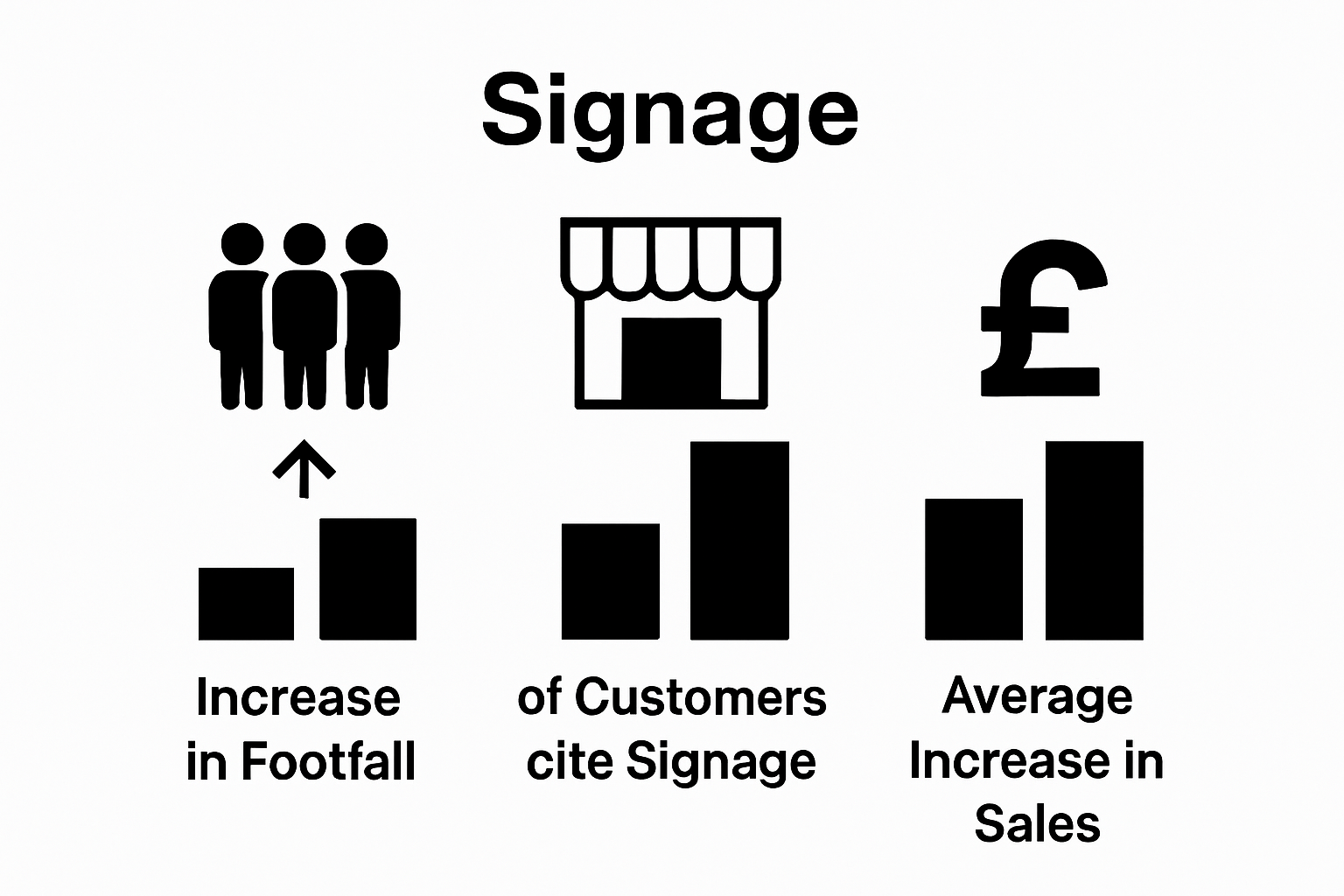
Signage does much more than simply hang above a shopfront. Its design and placement can determine whether a business stands out or disappears into the background. You might think a sign is just about a name and a logo. Actually, well-designed signage can increase business visibility by up to 40 percent, putting it among the most powerful tools for attracting foot traffic and shaping first impressions.
Table of Contents
- What Is Signage And Its Role In Business Visibility?
- Understanding The Core Purpose Of Signage
- The Strategic Impact Of Visual Communication
- Why Signage Matters For Increasing Foot Traffic
- The Psychology Of Visual Attraction
- Transforming Potential Into Actual Customer Engagement
- How Signage Influences Customer Behaviour And Decisions
- Cognitive Triggers In Visual Communication
- Navigating Psychological Decision Pathways
- Key Concepts Of Effective Signage Design And Placement
- Design Fundamentals And Visual Hierarchy
- Strategic Placement And Environmental Context
- Real-World Examples Of Successful Signage Strategies
- Retail And Consumer Engagement Strategies
- Strategic Signage In Different Business Contexts
Table of Contents
Quick Summary
| Takeaway | Explanation |
|---|---|
| Effective signage attracts customers | Well-designed signs increase visibility and draw potential foot traffic to businesses. |
| Visual communication influences decisions | Signs create emotional connections and impact consumer behaviour, enhancing engagement and sales. |
| Strategic placement is crucial | Proper positioning maximises visibility and aligns with customer movement patterns, guiding them effectively. |
| Signage communicates brand identity instantly | Clear and visually appealing signs convey professionalism and brand values within moments. |
| Design elements drive effectiveness | Key factors like typography, colour, and clarity determine how information is received by customers. |
What is Signage and Its Role in Business Visibility?
Signage represents a critical communication tool that businesses use to visually convey information, attract attention, and guide potential customers. Beyond mere visual markers, signs serve as powerful marketing instruments that communicate brand identity, provide essential information, and create first impressions for businesses across various industries.
Understanding the Core Purpose of Signage
At its fundamental level, signage functions as a silent yet eloquent communicator. Business owners looking to enhance their commercial visibility understand that effective signage does more than simply display a business name. These visual communication tools perform multiple strategic functions:
- Attract potential customers and draw foot traffic
- Communicate brand personality and professional image
- Provide critical wayfinding and directional information
- Create memorable visual experiences that distinguish a business from competitors
Research demonstrates that well-designed signage can increase business visibility by up to 40%, making it an essential marketing investment for companies of all sizes. For London businesses seeking maximum street-level impact, investing in professionally designed shop signs London remains one of the highest-return decisions a shopowner can make.
The Strategic Impact of Visual Communication
Signage represents more than a passive information display. It acts as a dynamic marketing tool that communicates brand values, professionalism, and aesthetic sensibility. Effective signage transforms anonymous commercial spaces into recognisable, memorable destinations. By combining graphic design, typography, colour psychology, and strategic placement, businesses can create signs that not only inform but also emotionally connect with their target audience.
Commercial signs serve multiple objectives simultaneously. They function as navigation aids, brand ambassadors, and silent salespeople. A meticulously crafted sign can convey trust, expertise, and quality before a potential customer even enters a business premises.
Whether it is a small retail shop, a corporate office, or a large entertainment venue, signage provides the first tangible interaction point between a business and its potential customers.
Why Signage Matters for Increasing Foot Traffic
Signage plays a pivotal role in attracting potential customers and transforming casual passersby into engaged consumers. The visual appeal and strategic positioning of signs can dramatically influence customer behaviour and foot traffic, making them an essential marketing tool for businesses seeking to maximise their commercial visibility.
The Psychology of Visual Attraction
Customers are inherently drawn to visually compelling and informative signs. Business owners can leverage strategic signage techniques to create an immediate connection with potential customers. The psychological impact of well-designed signage goes beyond mere information display, tapping into deeper cognitive processes that drive consumer engagement:
- Create immediate visual interest and curiosity
- Communicate brand personality and value proposition
- Trigger emotional responses that encourage exploration
- Provide clear, instantaneous communication about business offerings
Strategic signage can significantly influence human behaviour, demonstrating how visual communication impacts decision-making processes. Signs that are clear, strategically placed, and visually appealing can effectively guide potential customers towards a business, increasing the likelihood of foot traffic and potential sales. Retailers that complement their primary signage with high-quality retail signs signage across their interior and exterior spaces create a consistent visual journey that keeps customers engaged from the pavement to the point of sale.
Transforming Potential into Actual Customer Engagement
Effective signage acts as a silent salesperson, bridging the gap between potential customers and business offerings. By combining aesthetic design, strategic placement, and clear messaging, businesses can transform anonymous street-level spaces into inviting commercial destinations. Signs that communicate professionalism, creativity, and value proposition can entice customers to step inside, turning casual interest into genuine commercial engagement.
The power of signage extends beyond mere attraction. It serves as a critical touchpoint that communicates a business’s brand identity, quality, and unique selling points within seconds. A meticulously crafted sign can overcome initial customer hesitation, creating an inviting atmosphere that encourages exploration and potential purchase.
How Signage Influences Customer Behaviour and Decisions
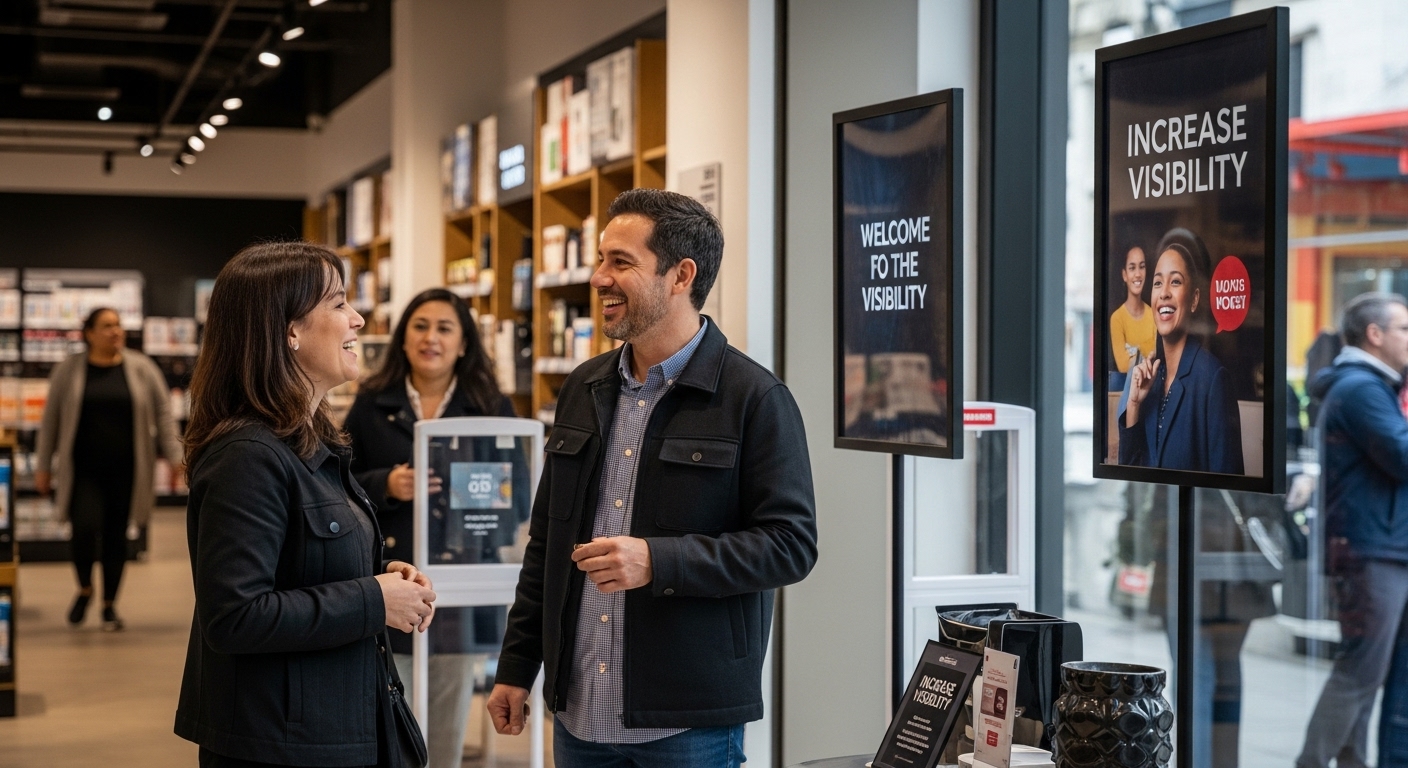
Signage functions as a sophisticated psychological tool that subtly guides customer perceptions, decisions, and actions. By strategically leveraging visual communication, businesses can profoundly impact consumer behaviour without direct verbal interaction. The subtle art of signage design transforms passive visual information into powerful behavioural triggers.
Cognitive Triggers in Visual Communication
Customer decision-making processes are heavily influenced by visual stimuli, with signs serving as critical environmental cues. Business owners seeking to understand consumer psychology can utilise strategic signage to create immediate cognitive responses:
- Generate subconscious emotional connections
- Communicate brand values instantaneously
- Reduce cognitive friction in customer navigation
- Create perceived value and trustworthiness
Research indicates that humans process visual information approximately 60,000 times faster than textual information. This neurological efficiency means that well-designed signs can communicate complex messages within milliseconds, influencing customer perceptions and behaviours before conscious deliberation occurs.
Navigating Psychological Decision Pathways
Signs act as silent persuaders, guiding customers through sophisticated psychological decision-making processes. They do more than provide information; they create environmental narratives that shape consumer expectations and actions. By understanding colour psychology, typography, and strategic placement, businesses can design signs that subconsciously direct customer attention, interest, and ultimately, purchasing decisions.
The intricate relationship between visual communication and consumer psychology reveals that signs are not merely informational tools but complex behavioural intervention mechanisms. A meticulously crafted sign can reduce uncertainty, build trust, and create an inviting atmosphere that naturally encourages customer engagement and exploration. Window-level communication plays a particularly powerful role in this process — businesses that invest in well-designed shop window graphics can influence purchasing decisions before a customer even reaches the door.
Key Concepts of Effective Signage Design and Placement
Creating impactful signage involves a nuanced blend of design principles, strategic positioning, and psychological understanding. Successful signage transcends mere visual communication, serving as a strategic business asset that attracts, informs, and influences potential customers.
Design Fundamentals and Visual Hierarchy
Businesses seeking to optimise their visual communication strategies must master several critical design elements that determine sign effectiveness:
- Clarity and legibility of typography
- Strategic use of colour psychology
- Appropriate scale and proportion
- Consistent brand representation
The fundamental goal of sign design is to communicate information rapidly and memorably. Research indicates that human perception processes visual information exponentially faster than text, making every design choice critical in capturing audience attention within milliseconds.
Strategic Placement and Environmental Context
Signage effectiveness depends not just on design, but on intelligent spatial integration. Placement involves understanding environmental dynamics, traffic flow, viewing angles, and potential visual obstructions. Successful sign placement considers multiple perspectives:
- Maximum visibility from various approach angles
- Compatibility with surrounding architectural elements
- Consideration of lighting conditions
- Alignment with natural customer movement patterns
By thoughtfully considering these placement strategies, businesses can transform signs from passive information displays into active engagement tools that guide and attract potential customers. For campaigns that need to dominate a location visually — including hoardings, banners, and large exterior graphics — large format printing London delivers the scale and print quality needed to command attention across busy streets and high-footfall areas.
| Aspect | Design Fundamentals | Strategic Placement |
|---|---|---|
| Core Objective | Ensure clarity, legibility, and rapid messaging | Maximise visibility and alignment with movement |
| Key Elements | Typography, colour psychology, scale, branding | Viewing angles, lighting, traffic flow |
| Focus Area | Visual impact and instant recognition | Integration with architectural and environmental context |
| Main Outcome | Effective communication of information and values | Enhanced customer guidance and engagement |
| Practical Application | Design choices capture attention and inform swiftly | Placement ensures signs are noticed and accessible |
Real-World Examples of Successful Signage Strategies
Real-world signage strategies demonstrate the transformative power of strategic visual communication across diverse business environments. Successful signage goes beyond aesthetic appeal, functioning as a sophisticated marketing tool that drives customer engagement and business growth.
Retail and Consumer Engagement Strategies
Businesses can learn valuable lessons from innovative signage approaches that have revolutionised customer interactions. Interactive digital displays have emerged as a particularly compelling strategy, with brands implementing cutting-edge visual communication techniques:
- Creating immersive customer experiences
- Providing real-time product information
- Personalising marketing messages
- Increasing in-store engagement
Global retail studies show that brands implementing sophisticated signage strategies have witnessed significant improvements in customer attraction and retention. Interactive displays, for instance, can generate notable increases in sales by transforming passive visual communication into dynamic customer interactions.
Strategic Signage in Different Business Contexts
Effective signage transcends industry boundaries, adapting to unique business environments and customer expectations. Different sectors demonstrate remarkable innovation in leveraging visual communication:
- Hospitality venues using wayfinding signs to enhance guest experience
- Financial institutions creating trust through professional signage design
- Healthcare facilities improving navigation with clear, compassionate signage
- Educational institutions communicating institutional values through strategic visual branding
These examples illustrate that successful signage is not a one-size-fits-all solution but a nuanced approach tailored to specific business objectives, target audiences, and environmental contexts. Regardless of sector, working with an expert team of business signs London specialists ensures that design, material, and placement decisions are all informed by real-world experience of what drives footfall and engagement in London’s competitive commercial environment.
| Business Sector | Signage Strategy Emphasis | Intended Effect |
|---|---|---|
| Retail | Interactive digital displays, immersive experiences | Increase customer engagement and sales |
| Hospitality | Wayfinding signs | Enhance guest experience and navigation |
| Financial Institutions | Professional visual design | Build trust and credibility |
| Healthcare | Clear, compassionate signage | Improve navigation and comfort |
| Education | Strategic visual branding | Communicate institutional values |
Ready to Turn Footfall Into Real Growth?
Struggling to attract the right customers to your shopfront or business location? This article shows that simply having a sign is not enough — it must be visually compelling, expertly designed, and strategically placed to truly increase foot traffic. Many business owners find that poor signage can lead to missed opportunities and lost sales because people simply walk by without noticing their business.
Do not let your next potential customer pass you by. At PromoSigns, we specialise in custom shop signs, illuminated features, and large format printing to help your business stand out. Our track record in enhancing business visibility can give you the advantage you need. If you want to see your footfall grow fast, let us design and install signage that makes every passerby want to step inside. Visit PromoSigns now to start your transformation.
Frequently Asked Questions
What is the role of signage in increasing foot traffic?
Signage serves as a crucial tool in attracting potential customers by providing clear, visually appealing information that guides and entices them to engage with a business.
How does effective signage impact consumer behaviour?
Effective signage can influence consumer behaviour by creating immediate visual interest, communicating brand values, and triggering emotional responses that encourage customers to explore further.
What design principles are important for effective signage?
Key design principles include clarity and legibility of typography, strategic use of colour psychology, appropriate scale and proportion, and consistent brand representation to ensure rapid communication of information.
How does the placement of signage affect its effectiveness?
The strategic placement of signage maximises visibility and ensures that it integrates well with environmental dynamics, such as traffic flow and viewing angles, making it more likely to attract and engage potential customers.
Recommended
- Signage and Brand Recognition
- What Makes A Great Shop Sign
- Exhibition Signage Basics 2025
- 9 Key Types of Retail Signage That Can Transform Your Store
