
Effective designer briefing ensures project success, prevents costly revisions, aligns expectations, and delivers signage that meets business objectives through clear communication of requirements, constraints, and goals. Strategic briefing investment maximizes design quality, streamlines production timelines, optimizes budgets, and creates signage solutions that enhance brand presence while satisfying practical operational needs.
This comprehensive guide explores effective signage design briefing, covering essential information requirements, brand guidelines communication, technical specifications, approval processes, budget discussions, timeline expectations, and collaboration approaches that transform design relationships into productive partnerships delivering exceptional results.
Table of Contents
Quick Summary
| Key Point | Explanation |
|---|---|
| 1. Define Clear Objectives | Clearly outline measurable goals for your signage to inform the designer’s approach and ensure integrated business strategy. |
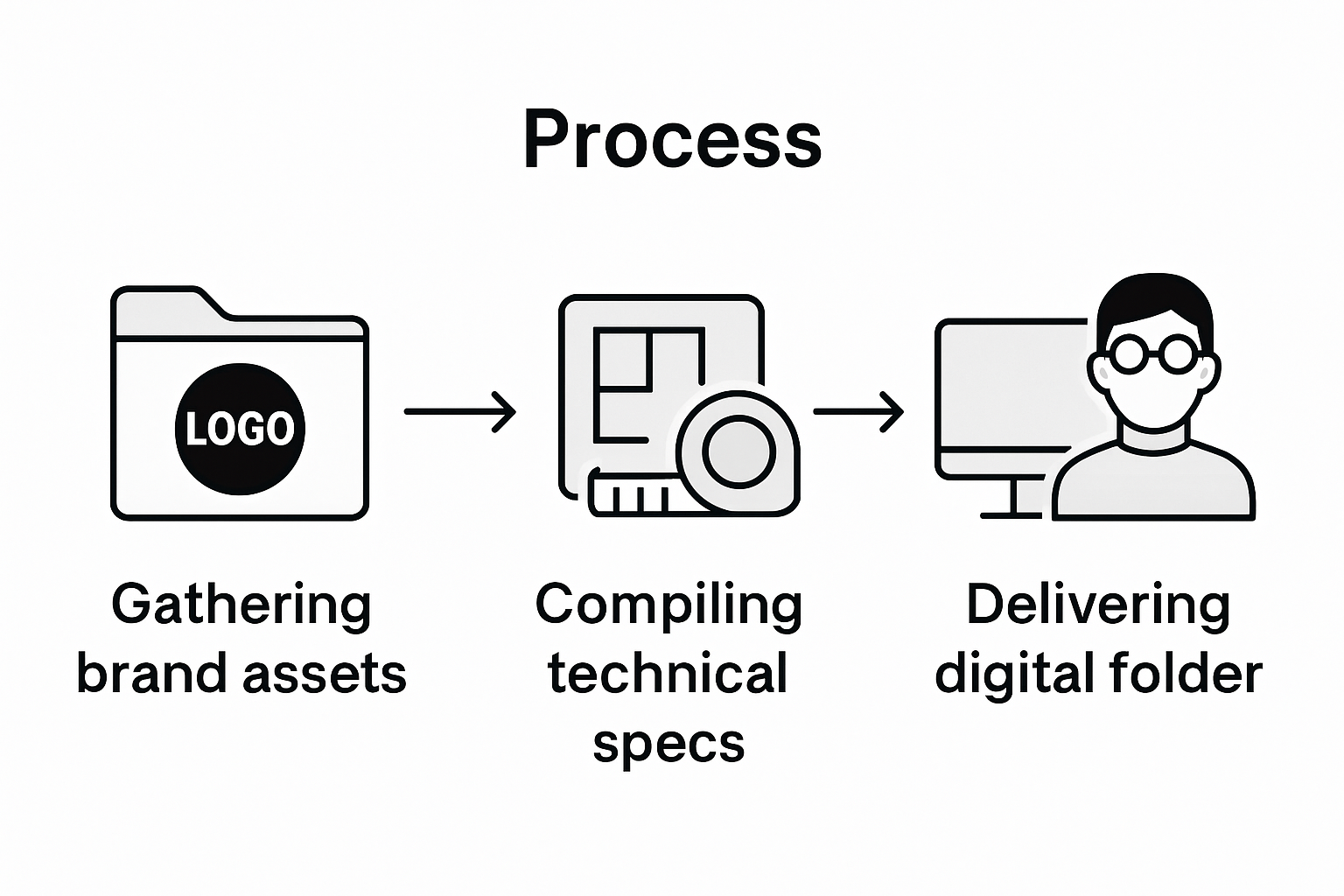
| 2. Gather Brand Assets | Compile essential brand materials like logos, colours, and typography to ensure consistent design that reflects your business identity. |
| 3. Specify Technical Details | Provide exact measurements and material specifications to enable accurate implementation and optimal design effectiveness. |
| 4. Communicate Installation Needs | Share detailed installation requirements including site specifics and potential challenges to avoid misunderstandings during the process. |
| 5. Review Design Proposals Thoroughly | Systematically evaluate final designs for brand consistency and functionality, allowing for constructive feedback to achieve your vision. |
Why Effective Briefing Matters
Project Success Foundation
Critical First Step: Briefing quality determines outcomes:
Well-Briefed Projects:
- First-round approval (minimal revisions)
- Timeline adherence (predictable delivery)
- Budget accuracy (cost certainty)
- Objective achievement (requirements met)
- Stakeholder satisfaction (expectations exceeded)
Poor Briefing Consequences:
- Multiple revision rounds (time waste, frustration)
- Timeline delays (cascading impacts)
- Budget overruns (scope creep)
- Compromise solutions (mediocre results)
- Relationship strain (communication breakdown)
Designer Empowerment
Creative Excellence: Information enables inspiration:
Designer Needs:
- Business context (strategic understanding)
- Brand parameters (identity framework)
- Technical constraints (practical limitations)
- Success criteria (objective clarity)
- Decision authority (approval process)
Briefing Benefits:
- Focused creativity (targeted innovation)
- Appropriate solutions (context-relevant)
- Confident recommendations (informed proposals)
- Efficient process (reduced guesswork)
Cost and Time Efficiency
Investment Protection: Briefing saves resources:
Time Savings:
- Reduced revision cycles (clear direction)
- Parallel workstreams (comprehensive brief enables simultaneous progress)
- Decision speed (criteria clarity)
Cost Control:
- Accurate quotations (scope definition)
- Scope management (creep prevention)
- Efficient production (specification clarity)
Essential Brief Components
1. Business and Brand Context
Strategic Foundation: Context informs design decisions:
Business Information:
Company Overview:
- Industry sector (competitive context)
- Business model (B2B, B2C, hybrid)
- Company size (scale indication)
- Market position (premium, value, specialist)
- Unique selling propositions (differentiation)
Target Audience:
- Demographics (age, income, location)
- Psychographics (values, lifestyle, preferences)
- Behavior patterns (shopping habits, decision factors)
- Pain points (problems solved)
- Aspirations (desires fulfilled)
Brand Personality:
- Tone of voice (formal, casual, technical, playful)
- Values (authenticity, innovation, tradition, sustainability)
- Visual style (contemporary, classic, minimalist, bold)
- Emotional positioning (trustworthy, exciting, sophisticated, friendly)
Competitive Context:
- Key competitors (market landscape)
- Differentiation strategy (standing out)
- Market gaps (opportunities)
- Category conventions (norms to follow/break)
2. Project Objectives
Clear Goals: Measurable success definition:
Primary Objectives: What must the signage achieve?
Examples:
- Increase foot traffic (visibility, attraction)
- Enhance brand recognition (consistency, prominence)
- Improve wayfinding (navigation clarity)
- Communicate specific offers (promotional messaging)
- Establish premium positioning (quality perception)
- Comply with regulations (legal requirements)
Success Metrics: How will success be measured?
- Visitor numbers (footfall increase)
- Sales conversion (purchase rates)
- Customer feedback (satisfaction scores)
- Brand recall (awareness research)
- Planning approval (regulatory success)
3. Technical Specifications
Practical Parameters: Physical and operational details:
Location Information:
Site Characteristics:
- Address and site photos (context documentation)
- Building architecture (style, materials, age)
- Mounting surface (brick, render, glass, metal, timber)
- Viewing distances (pedestrian, vehicle)
- Viewing angles (perpendicular, oblique, elevated)
- Surrounding context (neighboring signage, visual clutter)
Environmental Factors:
- Weather exposure (sheltered, exposed, coastal)
- Sun orientation (glare considerations, fading)
- Lighting conditions (natural, artificial, variable)
- Wind exposure (structural considerations)
Dimensional Constraints:
Available Space:
- Maximum dimensions (height, width, depth)
- Minimum dimensions (visibility requirements)
- Mounting height (eye level, overhead)
- Clearance requirements (projection, pedestrian safety)
Structural Limitations:
- Load-bearing capacity (weight restrictions)
- Fixing points (available/restricted)
- Access requirements (installation considerations)
- Services availability (electrical, if illuminated)
Regulatory Context:
Planning Status:
- Conservation area (enhanced scrutiny)
- Listed building (heritage restrictions)
- Article 4 Direction (withdrawn deemed consent)
- Previous consents (established precedent)
Existing Signage:
- Current installations (replacement context)
- Approved signage (precedent)
- Competitor signage (benchmarking)
4. Brand Guidelines
Identity Consistency: Existing standards communication:
Logo Specifications:
- Primary logo (standard version)
- Alternative versions (stacked, horizontal, icon-only)
- Minimum sizes (legibility threshold)
- Clear space (isolation zone)
- Color variations (full-color, monochrome, reversed)
- Incorrect usage (what to avoid)
- File formats (vector files essential: EPS, AI, PDF)
Color Palette:
- Primary colors (brand core: Pantone, CMYK, RGB, HEX)
- Secondary colors (supporting palette)
- Approved combinations (harmonious pairings)
- Material matching (physical color standards, samples)
- Finish specifications (gloss, matte, metallic)
Typography:
- Primary fonts (brand typefaces: licenses provided)
- Secondary fonts (hierarchy system)
- Hierarchy rules (size relationships)
- Fallback fonts (if brand fonts unavailable for certain applications)
Imagery Style:
- Photography direction (subject, treatment, tone)
- Illustration approach (style consistency)
- Icon system (symbol library)
- Graphic elements (patterns, shapes)
Existing Guidelines: Provide complete brand manual if available.
5. Budget and Timeline
Resource Clarity: Financial and temporal parameters:
Budget Information:
Budget Range: Realistic cost expectations:
- Approximate budget (ballpark figure)
- Budget flexibility (fixed vs. adjustable)
- Value priorities (quality vs. cost balance)
- Payment structure (deposit, staged, completion)
Cost Inclusions: What’s included in budget?
- Design fees (creative services)
- Production costs (manufacturing)
- Installation (fixing, labor)
- Project management (coordination)
- Permits/consents (planning fees)
Timeline Requirements:
Key Dates:
- Project start (design commencement)
- Design presentation (concept review)
- Approval deadline (decision point)
- Installation deadline (completion required)
- Opening/launch date (operational necessity)
Flexibility:
- Hard deadlines (immovable dates: opening, event)
- Flexible dates (preferred timing)
- Rush capability (expedited possible if needed)
6. Content Requirements
Message Communication: What needs to be said:
Text Content:
Essential Information:
- Business name (primary identification)
- Tagline/descriptor (brand message)
- Contact information (phone, website, social media)
- Operating hours (if required)
- Services/products (key offerings)
- Regulatory text (if required: license numbers, disclaimers)
Message Hierarchy:
- Primary message (most prominent)
- Secondary information (supporting details)
- Tertiary details (fine print)
Tone and Style:
- Language (English, Welsh, multilingual)
- Formality (professional, casual, technical)
- Messaging approach (benefits, features, emotional, factual)
Visual Content:
Required Elements:
- Product images (high-resolution files)
- Lifestyle photography (context imagery)
- Icons/symbols (custom or library)
- Decorative graphics (patterns, textures)
Image Specifications:
- Resolution (300 DPI minimum for print)
- Format (TIFF, PSD preferred for editing)
- Usage rights (ownership, licensing confirmation)
Approval Process Definition
Decision-Making Authority
Clear Structure: Who approves what:
Stakeholder Identification:
- Primary decision-maker (final approval)
- Secondary reviewers (input contributors)
- Consultation requirements (board, franchisees, partners)
- Approval hierarchy (sequential or parallel)
Feedback Consolidation:
- Single point of contact (designer liaison)
- Feedback aggregation (consolidated response, not multiple individual feedbacks)
- Decision timeline (response expectations)
Revision Expectations
Scope Definition: Included revisions:
Standard Agreements:
- Concept presentations (2-3 directions typical)
- Revision rounds (2-3 rounds standard)
- Minor tweaks (color, sizing, positioning)
- Major changes (triggers additional fees)
Change Management:
- Scope changes (additional work definition)
- Timeline impacts (delay communication)
- Cost implications (extra charges)
Reference Materials
Inspirational Examples
Design Direction: Visual references guide style:
Helpful References:
- Admired competitors (design aspiration)
- Other industries (cross-sector inspiration)
- Specific elements (typography, color, layout preferences)
- Style descriptors (contemporary, traditional, minimal, bold)
Clear Communication:
- What you like specifically (and why)
- What you don’t like (and why)
- Non-negotiables (must-haves)
- Open elements (designer discretion)
Physical Samples
Material Understanding: Tangible references:
Sample Types:
- Existing signage (current installations to match/avoid)
- Material samples (preferred substrates, finishes)
- Color swatches (physical color matching)
- Competitor examples (photographed locally)
Communication Best Practices
Documentation
Written Brief: Comprehensive documentation:
Benefits:
- Reference document (ongoing clarity)
- Shared understanding (alignment verification)
- Accountability (scope definition)
- Project continuity (team consistency)
Format:
- Brief template (structured format)
- Supporting documents (guidelines, photos, samples)
- File sharing (accessible cloud storage)
Ongoing Dialogue
Collaborative Relationship: Partnership approach:
Effective Communication:
- Regular check-ins (progress updates)
- Question encouragement (clarification welcomed)
- Feedback promptness (timeline respect)
- Openness (constraint honesty, challenge acknowledgment)
Designer Input:
- Professional recommendations (expert guidance)
- Alternative approaches (creative solutions)
- Technical insights (production expertise)
- Problem-solving (obstacle navigation)

Common Briefing Mistakes
Insufficient Information
Vague Briefs: Problematic approaches:
Examples:
- “Make it look good” (no parameters)
- “I’ll know it when I see it” (subjective, iterative guesswork)
- “Something modern” (undefined style)
- Omitting budget (impossible scoping)
Impact:
- Designer guesswork (misalignment risk)
- Revision cycles (time waste)
- Frustration (both parties)
Unrealistic Expectations
Common Issues:
Budget-Quality Mismatch:
- £500 budget for £5,000 signage (unrealistic scope)
- Premium expectations with economy budget
Timeline Compression:
- “Need it tomorrow” (insufficient production time)
- Ignoring approval/consent timelines (regulatory delays)
Scope Creep:
- Continuous additions (changing requirements)
- “Just one more thing” (expanding brief)
Resolution: Honest conversation about constraints and priorities.
Approval Process Confusion
Decision Complications:
Multiple Approvers:
- Conflicting feedback (contradictory directions)
- Approval delays (sequential reviews)
- Diluted vision (committee compromise)
Best Practice: Designate primary decision-maker with clear authority.
Brief Template Structure
Recommended Format
Section Outline:
1. Project Overview:
- Business name and contact
- Project type (new, replacement, refurbishment)
- Urgency level (standard, rush)
2. Business Context:
- Company description (2-3 paragraphs)
- Target audience (demographics, psychographics)
- Brand personality (adjectives, tone)
- Competitive positioning (differentiation)
3. Project Objectives:
- Primary goals (3-5 key objectives)
- Success metrics (measurement criteria)
4. Technical Details:
- Site location (address, photos)
- Dimensions (maximum, minimum)
- Materials (preferences, restrictions)
- Environmental factors (exposure, lighting)
5. Regulatory Context:
- Planning status (conservation, listed, etc.)
- Existing approvals (precedent)
- Consent requirements (known constraints)
6. Brand Guidelines:
- Logo files (vector formats)
- Color specifications (Pantone, etc.)
- Fonts (licensed files)
- Style references (manual, examples)
7. Content Requirements:
- Text (exact copy or draft)
- Images (files or specifications)
- Message hierarchy (importance order)
8. Budget & Timeline:
- Budget range (realistic figure)
- Key dates (milestones)
- Flexibility (fixed vs. moveable dates)
9. Approval Process:
- Decision-makers (names, roles)
- Review process (stages, timelines)
- Feedback method (consolidated, single point)
10. References:
- Inspiration examples (links, images)
- Likes/dislikes (specific preferences)
- Non-negotiables (must-haves)
11. Questions/Concerns:
- Known challenges (obstacles)
- Areas of uncertainty (guidance needed)
- Special considerations (unique factors)
Working with Professional Designers
Selecting a Designer
Evaluation Criteria:
Portfolio Review:
- Relevant experience (signage expertise, sector knowledge)
- Design quality (aesthetic merit)
- Solution variety (creative range)
- Problem-solving (challenge navigation)
Process Understanding:
- Brief comprehension (listening skills)
- Question quality (depth of inquiry)
- Timeline realism (honest scheduling)
- Budget transparency (cost clarity)
Professional Standards:
- Qualifications (credentials, memberships)
- Insurance (professional indemnity, public liability)
- References (client testimonials)
- Terms of service (contract clarity)
Designer Value
Professional Benefits:
Expertise:
- Technical knowledge (materials, production, regulations)
- Design principles (typography, color, composition)
- Problem-solving (creative solutions to constraints)
- Trend awareness (contemporary approaches)
Efficiency:
- Process streamlining (established workflows)
- Supplier relationships (production connections)
- Regulatory navigation (consent experience)
Objectivity:
- Customer perspective (audience focus)
- Brand consistency (identity protection)
- Quality standards (excellence maintenance)
Conclusion
Effective signage designer briefing transforms project outcomes through comprehensive information sharing, clear objective definition, realistic constraint communication, and collaborative partnership establishment. From brand context through technical specifications and approval processes, strategic briefing investment maximizes design quality while streamlining timelines and protecting budgets.
Success requires balancing detail with designer creativity, honesty about constraints with openness to expertise, and clarity about objectives with flexibility in execution. Whether briefing for Shop Signs London installations or comprehensive wayfinding systems, thorough preparation and ongoing communication deliver signage solutions that exceed expectations while satisfying practical business requirements.
For businesses seeking optimal signage design outcomes, investing time in comprehensive briefing, selecting experienced professionals, and maintaining collaborative relationships ensures access to creative excellence, technical expertise, and project management capabilities that transform signage requirements into exceptional brand assets.
Recommended
- How to Design Door Signs: Create Impactful Designs Easily – PromoSigns.co.uk
- Planning a Signage Project: Elevate Your Business Identity – PromoSigns.co.uk
- Custom Sign Design Process for London Businesses: 2025 Guide – PromoSigns.co.uk
- Graphic Design Tips for Signage: 2025 Guide for London Businesses – PromoSigns.co.uk
- What’s The Number One Tool for Sales Pitches? – Kicker Video
