
Most businesses are surprised to learn that the average British company could face fines reaching thousands of pounds for ignoring signage laws. The strict rules around public signs serve a vital purpose, ensuring that towns and cities across the United Kingdom maintain a unified look while safeguarding public welfare. By understanding the essentials of British sign regulations, businesses can avoid costly mistakes and create eye-catching displays that respect community standards.
Table of Contents
Table of Contents
- What Are UK Sign Regulations
- Types Of Signs And Consent Requirements
- How Advertisement Consent Works
- Design And Illumination Restrictions
- Risks And Compliance Pitfalls
Key Takeaways
| Point | Details |
|---|---|
| Understanding Sign Regulations | UK sign regulations govern the display of external advertisements, aiming to balance business communication with public safety and aesthetic standards. |
| Consent Requirements Vary | Different types of signs have distinct consent requirements, with urban centres facing more stringent regulations than rural areas. |
| Rigorous Compliance is Essential | Non-compliance can lead to severe penalties, including fines and mandatory sign removal, making proper adherence crucial for businesses. |
| Professional Consultation Recommended | Businesses should seek expert advice to navigate the complexities of sign regulations and ensure compliance with local planning guidelines. |
What Are UK Sign Regulations
UK sign regulations represent a comprehensive legal framework designed to control and manage how businesses display external advertisements and signage across public and private spaces. These regulations aim to maintain visual consistency, protect public safety, and prevent visual pollution while enabling businesses to effectively communicate their brand and services. The Town and Country Planning (Control of Advertisements) Regulations provide the primary legal foundation for understanding these requirements.
Under UK law, signs are categorised into different types with varying levels of regulatory oversight. Commercial signs generally require planning permission depending on their size, location, and potential visual impact. Local authorities have significant discretion in determining whether a proposed sign meets acceptable standards. Factors such as proximity to highways, historical districts, conservation areas, and residential zones can dramatically influence sign approval processes. Businesses must navigate these complex guidelines carefully to ensure compliance and avoid potential legal penalties.
The key aspects of UK sign regulations typically encompass several critical dimensions:
- Size restrictions for external signage
- Placement guidelines relative to public spaces
- Material and illumination standards
- Conservation area specific requirements
- Safety considerations for pedestrian and vehicular traffic
Specifically for businesses, understanding outdoor signage regulations becomes crucial. Different commercial zones have unique requirements, with urban centres like London often having more stringent rules compared to rural areas. Retail establishments, restaurants, offices, and industrial sites must each comply with specific guidelines tailored to their particular environment and potential visual impact.
Navigating these regulations requires careful planning and often professional consultation. While the rules might seem complex, they ultimately serve to create harmonious urban environments that balance commercial communication with aesthetic and safety considerations. Businesses that invest time in understanding these regulations can not only avoid potential legal complications but also design signage that effectively represents their brand while respecting community standards.
Types Of Signs And Consent Requirements
In the United Kingdom, signs are categorised into distinct types with varying consent requirements, creating a nuanced regulatory landscape for businesses. Advertisement consent guidelines establish clear frameworks for determining when permission is necessary. Commercial signage typically falls under several key classifications, each with specific regulatory considerations that businesses must carefully navigate.
The primary categories of signs include:
- Illuminated Signs: Require special permissions due to potential light pollution and visual impact
- Fascia Signs: Generally attached directly to business premises
- Projecting Signs: Extended from building frontages
- Freestanding Signs: Located separately from main building structures
- Poster Advertisements: Temporary displays with distinct consent rules
Under UK regulations, outdoor advertisement classifications determine consent requirements through a complex system of exemptions and approvals. Some signs receive deemed consent, meaning automatic permission if specific criteria are met, while others necessitate explicit application through local planning authorities. Factors influencing consent include sign size, location, illumination intensity, proximity to highways, and potential visual impact on surrounding environments.
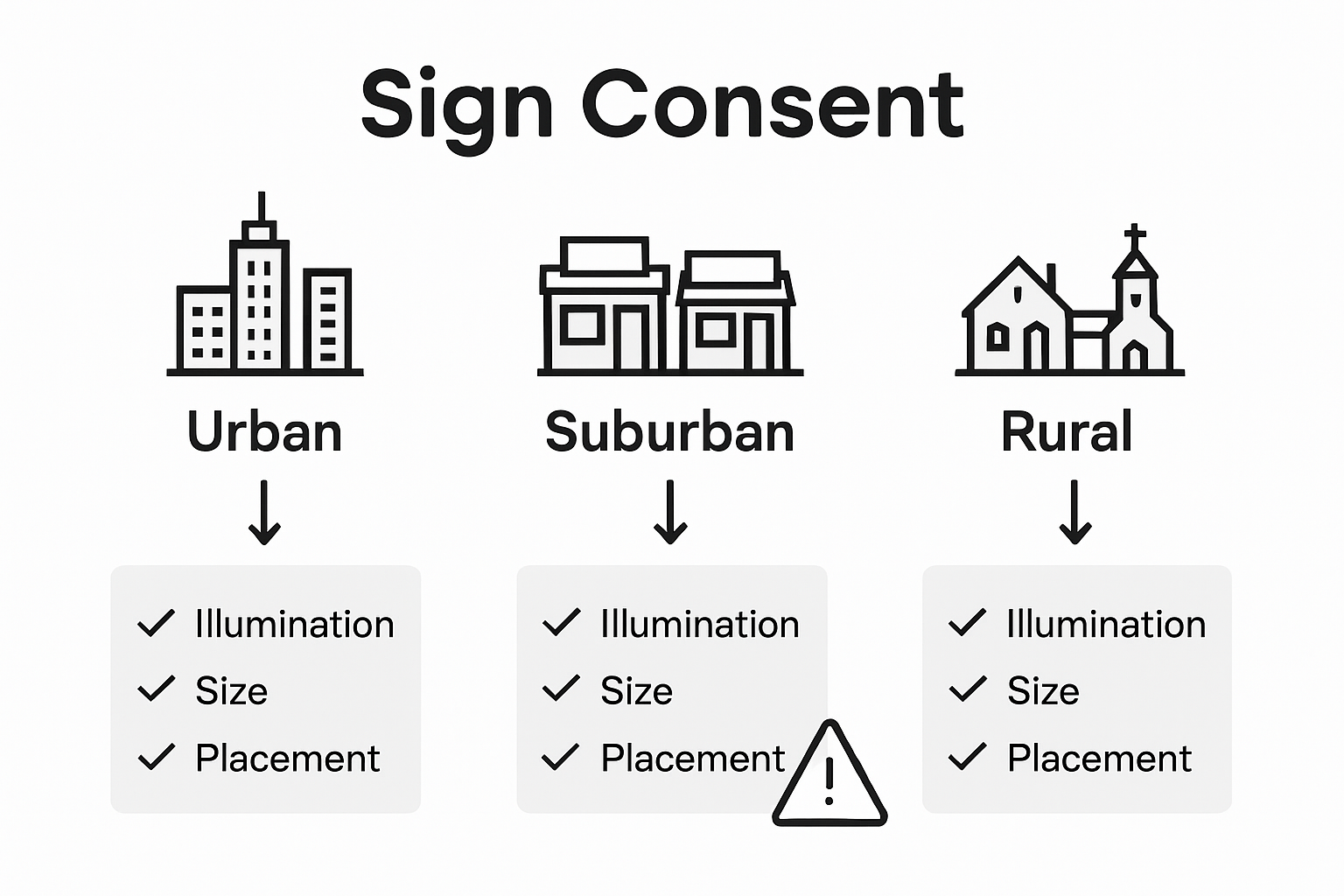
Businesses must recognise that consent requirements vary significantly across different zones. Urban centres like London often implement more stringent regulations compared to rural areas, with conservation districts and heritage sites having particularly strict signage controls. Professional consultation becomes crucial for businesses seeking to ensure full compliance, as misunderstanding these nuanced regulations can result in potential enforcement actions, financial penalties, or mandatory sign removal.
How Advertisement Consent Works
The process of obtaining advertisement consent in the United Kingdom is a structured and carefully regulated procedure designed to ensure visual consistency and protect public spaces. Advertisement consent application guidelines provide businesses with a comprehensive framework for navigating the complex permissions landscape. Local planning authorities serve as the primary gatekeepers, evaluating each advertisement proposal against a set of stringent criteria that consider visual impact, safety, and environmental harmony.
The consent process typically involves several key steps:
- Initial application submission to local planning authority
- Detailed documentation of proposed signage
- Assessment of sign’s visual and environmental impact
- Consideration of location-specific regulations
- Potential requests for modifications
- Final approval or rejection decision
Businesses must understand that different types of signs attract varying levels of scrutiny. Deemed consent applies to certain standardised signs meeting predefined criteria, while more complex or prominent advertisements require explicit permission. Factors influencing the consent decision include the sign’s size, illumination, proximity to highways, potential obstruction of sight lines, and aesthetic compatibility with the surrounding urban or rural environment.
In situations where an advertisement consent application is rejected, businesses are not without recourse. Appeals against advertisement consent decisions provide a structured mechanism for challenging local authority determinations. The appeal process allows businesses to present additional evidence, address concerns raised in the initial assessment, or demonstrate how their proposed signage meets regulatory requirements. Typically, appeals must be lodged within specific timeframes and require comprehensive documentation explaining why the original decision should be reconsidered.
Design And Illumination Restrictions
Designing signage in the United Kingdom requires meticulous attention to detailed regulations that govern aesthetic and functional aspects of commercial displays. Outdoor advertisement design guidelines provide comprehensive frameworks for businesses to navigate complex visual communication requirements. Illumination restrictions play a crucial role in determining the acceptability of commercial signage, with local authorities implementing strict standards to protect public amenity and maintain visual harmony.
Key design and illumination considerations include:
- Maximum luminance levels for illuminated signs
- Colour temperature restrictions
- Minimum and maximum size requirements
- Proximity limitations to residential areas
- Light spillage prevention guidelines
- Anti-glare design specifications
- Material durability standards
The technical specifications for sign design are particularly stringent in sensitive areas such as conservation zones, historic districts, and locations with significant architectural heritage. Planning regulations for advertisement consent emphasise the importance of visual compatibility, requiring businesses to demonstrate how their proposed signage will integrate harmoniously with the existing urban or rural landscape. Illumination must not only meet technical standards but also contribute positively to the visual environment.
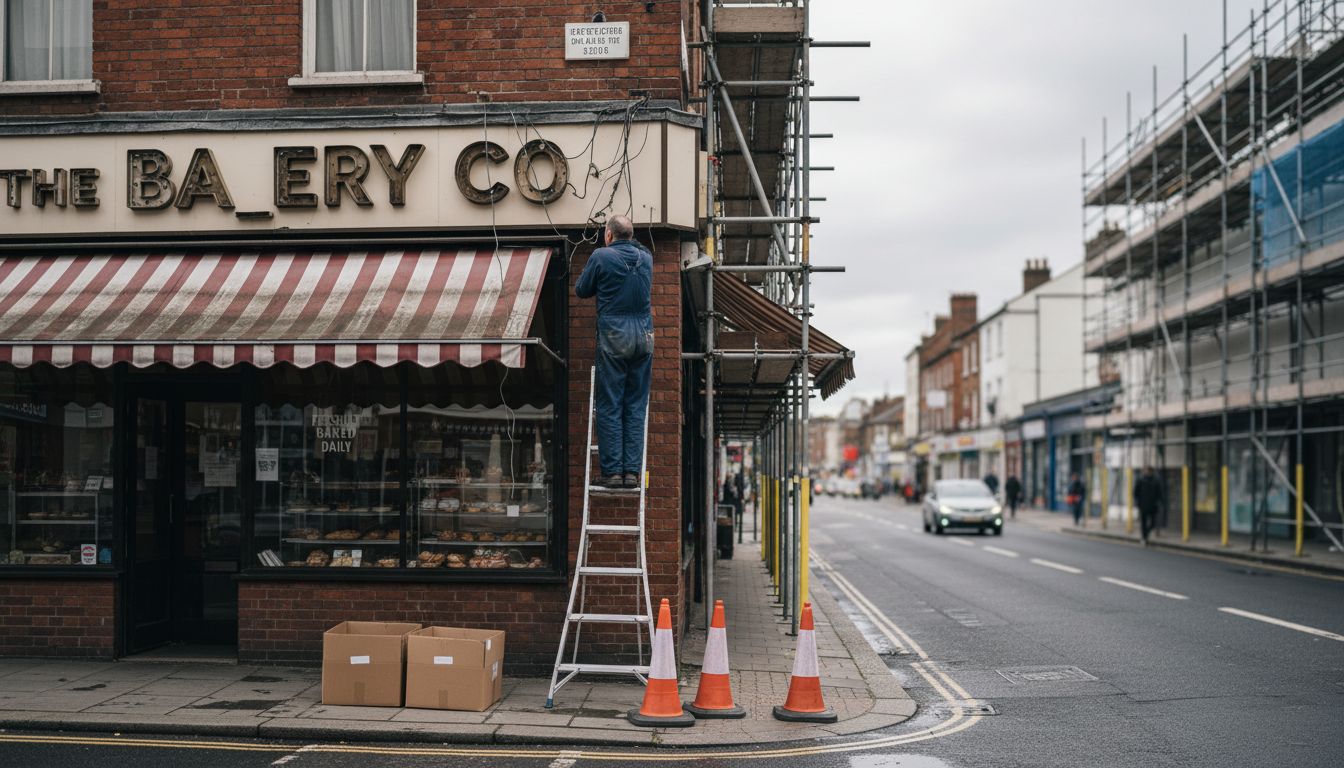
Businesses must recognise that design and illumination restrictions are not merely bureaucratic hurdles but essential mechanisms for maintaining public safety, reducing visual pollution, and preserving the aesthetic integrity of shared spaces. Illuminated signs must balance commercial communication needs with environmental sensitivity, requiring careful consideration of light intensity, direction, and potential impact on surrounding buildings, traffic safety, and residential comfort. Professional consultation and thorough understanding of local planning guidelines become critical in successfully navigating these complex regulatory landscapes.
Risks And Compliance Pitfalls
Businesses navigating the complex landscape of UK sign regulations face significant potential risks if they fail to adhere to strict compliance requirements. Outdoor advertisement guidelines highlight the critical importance of understanding and implementing precise regulatory standards to avoid substantial legal and financial consequences. Non-compliance penalties can range from modest fines to complete sign removal and potential legal enforcement actions that could severely disrupt business operations.
The primary compliance risks include:
- Unauthorized sign installation without proper consent
- Exceeding permitted size and illumination limits
- Displaying signs in restricted conservation areas
- Failing to obtain necessary planning permissions
- Ignoring local authority specific regulations
- Using non-compliant materials or design specifications
- Neglecting periodic consent renewals
Local planning authorities maintain rigorous oversight of signage regulations, with enforcement mechanisms designed to quickly identify and address non-compliant commercial displays. Businesses that inadvertently breach regulations may face immediate enforcement notices requiring sign removal, substantial financial penalties, and potential legal proceedings. The financial implications extend beyond direct fines, potentially including restoration costs, legal expenses, and reputational damage that can significantly impact a business’s operational effectiveness.
Mitigating these risks requires a proactive and comprehensive approach to regulatory compliance. Businesses must invest time in understanding local planning guidelines, maintaining detailed documentation of sign designs and permissions, and establishing regular review processes to ensure ongoing adherence to evolving regulatory standards. Professional consultation with planning experts or specialised signage compliance consultants can provide crucial insights, helping businesses navigate the intricate landscape of UK sign regulations while minimising potential legal and financial risks.
Ensure Your Business Stands Out While Staying Fully Compliant
Navigating UK sign regulations can be a daunting task for any business, especially with strict rules on advertisement consent, size limits, and illumination restrictions. Avoid costly penalties or legal hurdles by choosing expert help to design and install signage that perfectly balances your brand impact with legal compliance. At Promo Signs, we understand the challenges of meeting planning authority requirements across London, Essex, and Kent.

Take control of your outdoor advertising with customised shop signs, illuminated signs, and large format printing solutions crafted to meet all UK regulatory standards. Don’t risk unauthorised installations or non-compliant designs. Visit our website Promo Signs today and discover how our professional team can guide you through the consent process and deliver stunning signs that enhance your business image while respecting local guidelines. Act now to protect your investment and make your brand truly shine.
Frequently Asked Questions
What are the key aspects of sign regulations businesses must comply with?
Businesses must adhere to size restrictions, placement guidelines, material and illumination standards, specific requirements for conservation areas, and safety considerations for pedestrian and vehicular traffic.
How does the advertisement consent process work for commercial signage?
The advertisement consent process involves submitting an application to the local planning authority, providing documentation of the proposed sign, and undergoing assessment based on visual impact, safety, and location-specific regulations.
What types of signs require special consent under UK regulations?
Illuminated signs, projecting signs, freestanding signs, and poster advertisements generally require special consent due to their potential visual impact and different regulatory requirements based on their categorization.
What are the risks of non-compliance with sign regulations?
Non-compliance can lead to unauthorized sign installation, exceeding permitted size and illumination limits, and potential enforcement actions such as fines or mandatory removal of the signage, damaging business operations and reputation.
Recommended
- Retail Signage Compliance Guide 2025 for London Businesses – PromoSigns.co.uk
- Illuminated Sign Regulations: Key Rules for Businesses in 2025 – PromoSigns.co.uk
- Signage Size Guidelines 2025: The Essential Guide for London Businesses – PromoSigns.co.uk
- Shop Signage Basics 2025: Essential Tips for London Businesses – PromoSigns.co.uk
- Understanding Business Moving Legal Requirements Clearly – Schott Removals
