
Stopping most sign vandalism comes down to four things working together: durable materials or protective films, visible deterrents such as lighting and CCTV, sensible environmental design, and a rapid removal routine when something does happen. Miss any one of these and the others work harder than they should.
If you manage a shopfront or commercial premises, here’s where to start this week:
- Fit or check external lighting so no part of the sign sits in shadow after dark.
- Apply an anti-graffiti coating or film to any glazing, fascia, or flat panel within easy reach to help reduce vandalism.
- Add clear CCTV or “premises monitored” signage, even if cameras are already in place.
- Clear sightlines by removing bins, planters, or anything that gives a vandal a boost or a hiding spot.
- Set a 24 to 48 hour removal rule so any mark gets cleaned before it becomes a target for repeat attacks.
If your sign has been hit more than once, that’s usually a sign the retrofit needs professional attention rather than another quick fix.
Table of Contents
Which materials and coatings resist sign vandalism best?
The substrate you choose does most of the defensive work before a single deterrent goes up. Aluminium composite panels and UV-stable acrylics shrug off scratching and weathering far better than painted timber or basic PVC, and they hold their branding colours under repeated cleaning. That matters because every wipe-down with solvent is a small stress test on the surface, and cheaper materials fade or dull noticeably after a handful of treatments.
Anti-graffiti coatings fall into two camps. Permanent coatings bond to the surface and let you remove paint with standard solvents without damaging the finish underneath. Sacrificial coatings work differently: they form a barrier layer that gets stripped away with the paint and needs reapplying after each clean. Products such as Rocan PureProtect AGC are breathable, low-odour, and typically cover a moderate coverage per litre depending on how porous the substrate is, so a single treatment often extends across a full shopfront run.
Anti-graffiti films offer similar protection for glass. Etching fluid and acid pens cause permanent damage to glazing, but a film absorbs that damage and gets swapped out at a fraction of the cost of replacing a pane. Barrier coatings and access-prevention measures like these are widely regarded as cost-effective for commercial building owners when applied to known hotspots rather than every surface.
Before committing to a retrofit, run through this checklist:
- Test the coating on a small, hidden section first to confirm compatibility with the substrate.
- Pre-clean thoroughly. Coatings applied over dirt or old grime fail early.
- Apply in the manufacturer’s recommended conditions (temperature and humidity matter more than most people expect).
- Photograph and log the treatment date so you know when reapplication is due.
Pro Tip: Ask your signmaker for a maintenance sheet listing exactly which coating was used and when. Six months later, that record saves you guessing which cleaning product is safe to use.
How do lighting and CCTV deter vandals from signage?
Vandalism is largely an opportunity crime, and opportunity depends on cover. A blank wall behind a bin store, a fascia sign that sits in shadow after 6pm, or an alley with no line of sight from the street. All of these read as low-risk to someone with a spray can. Motion-activated lighting removes that cover instantly, and well-maintained lighting combined with clear sightlines is repeatedly identified as one of the strongest deterrents against opportunistic tagging.
CCTV works best when it’s monitored, not just recorded. A camera nobody watches still deters because most vandals won’t gamble on being caught, but pairing it with visible signage sharpens that deterrent considerably. Formal signs stating “CCTV in operation” or an intent to prosecute do genuine behavioural work: signage that visibly states active management signals to a passer-by that the owner will act, which measurably reduces casual tagging.
A few practical points worth checking on site:
- Position cameras to eliminate blind spots created by signage, planters, or bin stores.
- Combine lighting with landscaping so foliage doesn’t create new shadows at night.
- Confirm any CCTV signage meets ICO transparency requirements for surveillance in a commercial setting.
- Review footage angles after any building works. Scaffolding and new fixtures change sightlines quickly.
If you’re reworking your shopfront layout, our guide on overcoming common sign installation challenges covers how to position signage to reduce tampering opportunities from the outset.
Can site layout and planting reduce vandalism risk?
Physical access is the real variable here. Fences, thorny planting such as pyracantha or berberis, and trellis along vulnerable walls all raise the effort required to reach a sign, and removing “stepping stone” objects like crates or low walls closes off the easiest routes up. Crime prevention through environmental design guidance treats these access barriers as a first line of defence, not an afterthought.
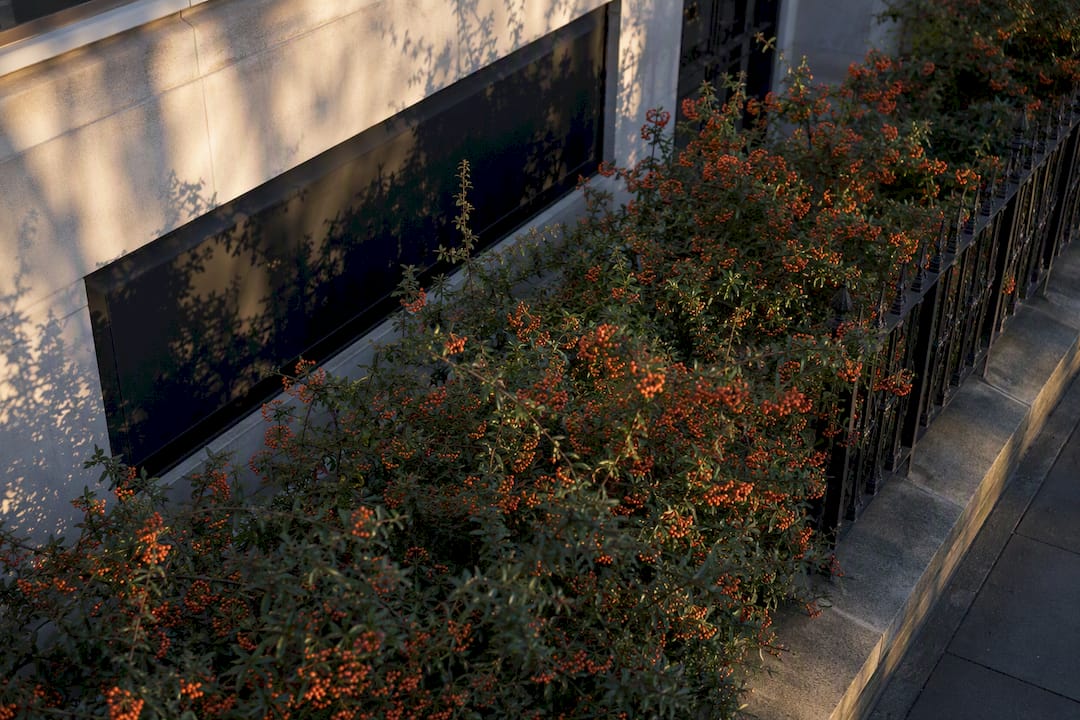
Large, flat, single-colour panels also act as a blank canvas that invites tagging. Breaking that surface up with texture, a mural, or varied panel widths makes a sign feel less anonymous and less inviting to deface.
Where recessed doorways or hidden fascia positions can’t be avoided, Secured by Design commercial guidance recommends compensating with extra lighting, a protective coating, and CCTV coverage on that specific spot.
- Remove bins, crates or low walls that offer a boost to reach signage.
- Use thorny or dense planting along ground-level access points.
- Break up large blank panels with texture or mural work rather than leaving a single flat surface.
Pro Tip: If your sign sits in a recessed doorway, treat that spot as higher risk and budget extra lighting and coating there rather than spreading the same budget evenly across the whole shopfront.
What’s the right maintenance and response routine after vandalism?
A repeatable routine matters more than any single product. Detection starts with staff doing a quick visual sweep at opening and closing, backed up by camera alerts or a simple public reporting line for passers-by to flag anything overnight. Offensive content should be triaged immediately and treated as urgent, ahead of ordinary tagging.
Once something’s spotted, the response follows a consistent sequence:
- Document the damage with clear, dated photographs from multiple angles before touching anything.
- Report it to the police for a reference number, and notify your insurer if the damage looks likely to exceed your excess.
- Clean it within 24 to 48 hours. This window is widely regarded as the most effective standard for discouraging repeat attacks, since leaving marks visible longer signals the site isn’t actively managed.
- Re-protect the surface, reapplying sacrificial coating or film where it was disturbed.
- Log the incident, the cleaning method used, and the cost, so patterns across sites or over time become visible.
Cleaning methods vary by substrate: solvent-based removers suit permanent-coated aluminium, while acrylic and glass often need a specialist to avoid clouding the surface. Our durability guide for outdoor signage covers substrate-specific care in more detail. This detect, document, clean, re-protect cycle is what practitioners call the “buff cycle,” and it works precisely because it’s repeated consistently rather than run once after a bad month.
How should you prioritise your vandalism prevention budget?
Start with the cheapest, highest-impact fixes: adjusting existing lighting, clearing sightlines, removing stepping-stone obstacles, and putting up clear CCTV signage cost little and address the most common triggers.
Medium spend covers sacrificial films, upgraded substrates, and a scheduled cleaning contract, all of which pay back through fewer emergency call-outs. Reserve higher spend, full perimeter fencing, monitored CCTV, or commissioned mural work, for sites with a genuine repeat-attack history. Map each option against cost, durability, ease of cleaning, and how it affects your branding before committing.
- Cheap and fast: lighting, sightlines, signage.
- Medium: films, durable substrates, cleaning contracts.
- Higher cost: perimeter work, monitored CCTV, mural commissions.
When should you bring in a professional signmaker?
Repeated attacks, structural damage, etched glass, or complex illuminated signage are the clearest signals that DIY fixes have run their course. Heritage facades and listed shopfronts add planning constraints that most business owners simply don’t have time to research properly.
A professional signmaker brings substrate knowledge that avoids expensive mismatches: the wrong coating on the wrong material can peel, discolour, or void a warranty within months. They also handle secure mounting and insured installation, which matters if a fixing failure ever leads to a claim. Specifying durable materials with professional installation reduces both repair frequency and the risk of minor vandalism escalating into structural damage.
Before commissioning work, ask:
- What warranty covers the coating or film, and how long does it last?
- Is there a maintenance agreement, and what’s included?
- What’s the policy if the coating needs reapplying after a clean?
- Does the quote include insured installation?
- Can they show previous anti-vandal retrofit work on similar shopfronts?
Our step-by-step guide to professional sign installation sets out what a proper installation process should look like from quote to sign-off.
Do alarms and motion detectors actually stop sign vandalism?
Technology adds a layer that lighting and CCTV alone can’t cover, particularly overnight when foot traffic drops and monitoring gaps widen. Motion detectors linked to lighting or an audible alarm interrupt an attack in progress rather than just recording it afterwards, which matters because most graffiti and etching takes only a few minutes to complete.
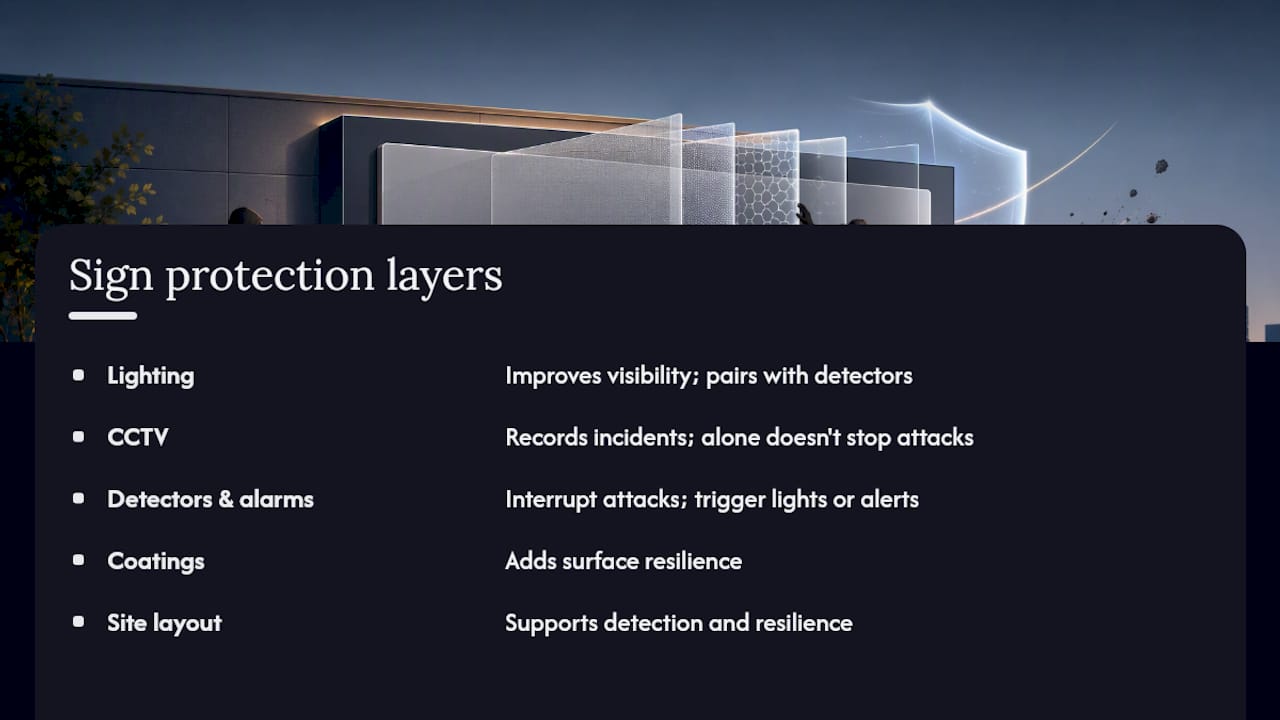
Battery-powered PIR sensors are the simplest option for smaller premises, triggering a floodlight or a chime that’s often enough to make someone move on. For higher-risk sites, a monitored alarm system linked to a keyholder or security firm adds a real response rather than just a deterrent. Vibration sensors are worth considering on glazed signage specifically, since they detect the tapping or scratching that precedes etching before real damage occurs.
The limitation worth knowing: motion detectors and alarms work best as one layer in a wider system, not a standalone fix. A sensor without adequate lighting or a monitored response still catches the moment but doesn’t prevent it. Pairing detection technology with the environmental design and coating measures covered earlier gives you both interruption and resilience, so a triggered alert isn’t your only line of defence if someone does get to the surface. Cost varies significantly depending on whether you want a simple standalone sensor or full integration with an existing CCTV and alarm setup, so it’s worth discussing scope with whoever installs your security system alongside your signage.
A signmaker’s honest take
After years fitting shopfronts, the same mistakes recur: coatings left unreapplied, the wrong substrate chosen to save money, or signs tucked into a recessed spot nobody thought to light. Do this: walk your frontage after dark this week and note every shadow.
Get your signage protected properly
Coatings, films, and lighting all help, but the biggest factor in how well a sign resists vandalism is whether it was specified and installed correctly in the first place. Promosigns designs, manufactures, and installs shopfront and illuminated signage across London, Essex, and Kent, and we build anti-vandal thinking into the project from day one rather than bolting it on afterwards.

Our anti-vandal work covers:
- Durable substrates such as aluminium composite and UV-stable acrylic, selected for your specific site risk.
- Anti-graffiti coatings and anti-scratch finishes applied during manufacture, not as an afterthought.
- Professional, insured installation with secure mounting.
- Ongoing maintenance contracts covering inspection, cleaning, and coating reapplication.
If your current shopfront has been hit more than once, or you’re planning a new sign and want it built to resist the problem from the outset, get in touch through our shop signs Barnet page to arrange an inspection and quote.
Frequently asked questions
What’s the fastest way to stop sign vandalism at a shopfront?
Improve lighting and clear sightlines first. Both are cheap, quick to action, and remove the cover that makes a sign an easy target.
How long should graffiti stay on a sign before it’s removed?
Aim for 24 to 48 hours. Leaving marks visible longer signals the site isn’t actively managed and invites repeat attacks.
Are anti-graffiti coatings worth the cost for a small shop?
Yes, if the shopfront has glazing or flat panels within reach. A sacrificial film or coating usually costs far less than repairing etched glass or a scratched panel later.
Does CCTV actually reduce vandalism, or is it just for evidence afterwards?
Both. Monitored CCTV combined with visible warning signage acts as a genuine deterrent, not just a record for police reports after the fact.
When does sign vandalism become a matter for the police rather than just a clean-up job?
Report every incident for a reference number, even minor tagging, since a pattern of reports strengthens any later insurance claim and helps local police prioritise patrols in that area.
Sources
- Graffiti prevention strategies: a 2026 evidence-based guide
- Graffiti prevention: 6 best practices for commercial building owners and occupiers – See Brilliance
- Commercial guide (Secured by Design) — 2023 commercial guidance
Recommended
- Outdoor Signs Can Attract Customers – PromoSigns.co.uk
- DIY shop sign mistakes: 13 fixes for UK shopkeepers – PromoSigns.co.uk
- How to Choose the Right Commercial Sign for Your Business – PromoSigns.co.uk
- Blog Business Signs Work | Promo Signs LTD
