
Lightbox signs deliver exceptional visibility, professional appearance, brand consistency, and 24/7 marketing presence through internally illuminated panels that combine durable construction, even LED lighting, and vibrant graphics creating distinctive business identification. Strategic lightbox implementation maximizes street presence, enhances brand perception, extends operational marketing hours, and provides cost-effective illumination through energy-efficient technology and minimal maintenance requirements.
This comprehensive guide explores lightbox signage solutions, covering construction methods, LED technology, graphic applications, sizing options, installation approaches, maintenance requirements, and cost considerations that enable businesses to select, specify, and implement professional illuminated signage delivering sustained visibility and marketing impact.
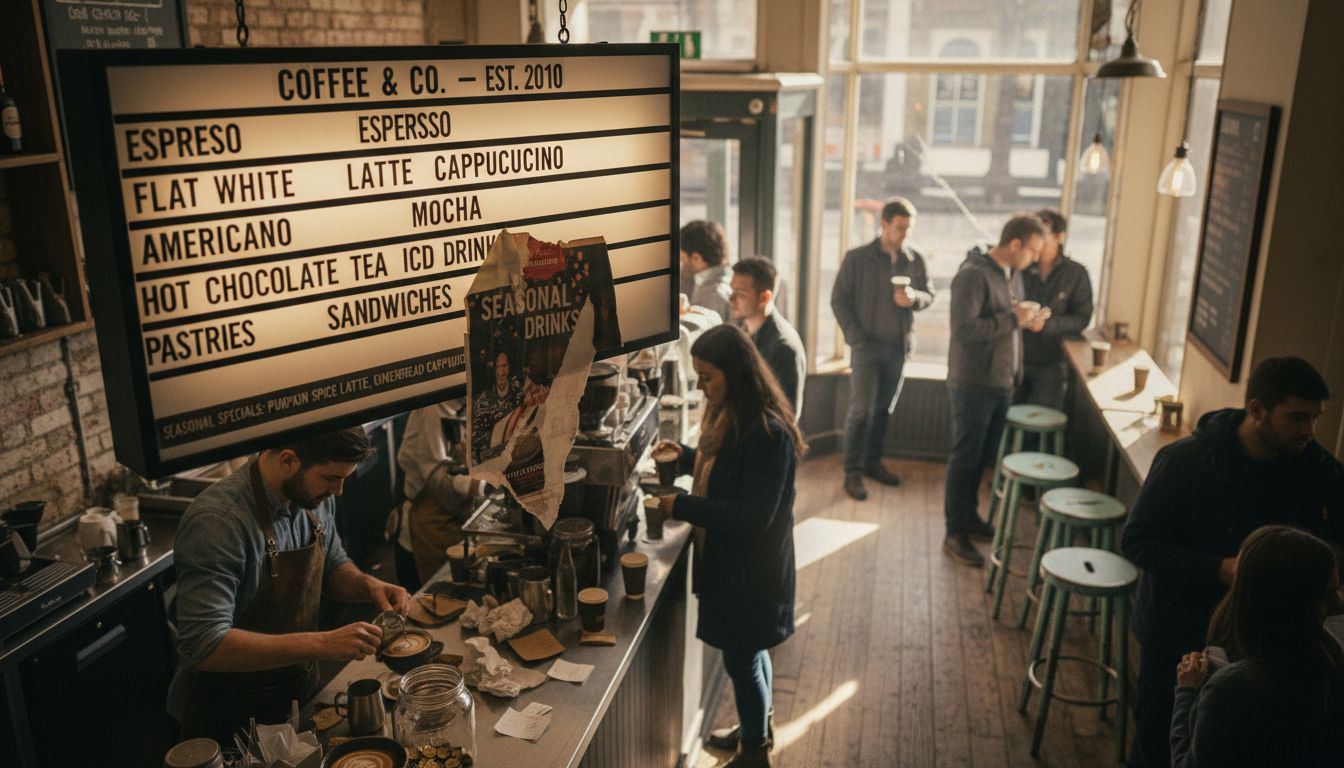
Table of Contents
What Are Lightbox Signs?
Basic Construction
Core Components: Internally illuminated display system:
Essential Elements:
Cabinet/Housing:
- Aluminum frame (lightweight, weatherproof, durable)
- Depth: 50-150mm typical (LED module accommodation)
- Finish: Powder-coated (color-matched, weather-resistant)
- Mounting: Wall-fixed, projecting, freestanding options
Face Panel:
- Acrylic (Perspex/Plexiglass: light-transmitting, durable)
- Thickness: 3-5mm standard (structural + optical properties)
- Opal/translucent (even light diffusion, glow uniformity)
- Clear options (transparent, window-appropriate)
Illumination:
- LED modules (energy-efficient, long-life, even brightness)
- Spacing: 50-100mm typical (uniform illumination)
- Color temperature: 4000-6500K (daylight white standard)
- Power supply: 12V/24V LED drivers (transformer, electrical safety)
Graphics:
- Printed vinyl (full-color, photographic quality)
- Applied to face (internal or external application)
- Reverse printing (internal protection option)
How They Work
Illumination Process: Light transmission creates visibility:
Function:
- LED modules emit light (internal cabinet)
- Light travels through translucent acrylic (diffusion)
- Vinyl graphics become visible (backlighting reveals design)
- Even glow appearance (professional, consistent brightness)
Benefits:
- 24/7 visibility (day + night marketing)
- Weather-independent (rain, fog, darkness operation)
- Consistent brightness (even illumination, no hotspots)
- Graphic protection (internal mounting shields from weather)
Why Choose Lightbox Signs?
Visibility Advantages
Extended Marketing Hours: After-dark presence captures evening economy:
Nighttime Impact:
- 40-60% of foot traffic occurs after sunset (winter months, urban areas)
- Illuminated signs 3-5× more visible at night (vs. non-lit alternatives)
- £10,000-£50,000+ annual revenue from evening visibility (location dependent)
- Safety perception (lit entrance, welcoming atmosphere)
Weather Performance: Visibility maintained in adverse conditions:
- Rain/fog penetration (brightness cuts through, maintains visibility)
- Consistent appearance (weather-independent, reliable presence)
- All-season operation (winter darkness, summer evenings)
Professional Appearance
Quality Perception: Investment signals brand commitment:
Psychological Impact:
- 68% judge business quality by signage (illumination suggests investment)
- Premium positioning (professional execution, established business)
- Brand confidence (bold presence, market leadership)
- Customer trust (quality signage = quality service/products)
Energy Efficiency
LED Technology: Operational cost optimization:
Efficiency Comparison:
LED (Modern Standard):
- Energy: 20-50W typical (1m² panel)
- Annual cost: £10-£25 (at £0.15/kWh, 12 hours daily)
- Lifespan: 50,000-100,000 hours (5-11 years continuous)
- Maintenance: Minimal (decade+ operation typical)
Fluorescent (Legacy):
- Energy: 80-150W (equivalent size)
- Annual cost: £40-£75
- Lifespan: 10,000-20,000 hours (1-2 years continuous)
- Maintenance: Frequent (tube replacement, ballast issues)
Cost Saving:
- 70-80% energy reduction (LED vs. fluorescent)
- 5× longer lifespan (reduced replacement frequency)
- Lower maintenance (less downtime, fewer service calls)
| Key Benefit | Business Advantage | Typical Example |
|---|---|---|
| 24/7 Visibility | Increases footfall after hours | Illuminated shopfront display |
| Energy Efficiency | Reduces electricity costs | LED-backlit promotional sign |
| Customisable Graphics | Reflects current branding | Seasonal menu lightbox |
| Durability | Withstands harsh weather | Exterior retail signage |
Types of Lightbox Signs
Fascia Lightboxes
Building-Mounted Identification: Primary business signage for Custom Signs London locations:
Characteristics:
- Wall-mounted (building front, above entrance)
- Rectangular/shaped (custom profiles possible)
- Single/double-sided (building wall vs. canopy)
- Size: 0.5m × 2m to 2m × 10m typical
Applications:
- Retail storefronts (high street, shopping centers)
- Restaurants (menu boards, brand identification)
- Service businesses (professional offices, healthcare)
Construction:
- Aluminum tray (powder-coated, weather-sealed)
- Acrylic face (opal white standard, brand colors possible)
- Internal LED (even illumination, energy-efficient)
- Vinyl graphics (full-color capability, brand identity)
Investment: £800-£8,000 (size, complexity, illumination dependent)
Projecting Lightboxes
Perpendicular Visibility: Dual-direction street presence:
Characteristics:
- Building-mounted (perpendicular projection, 90° to wall)
- Double-sided (visibility both street directions)
- Depth: 100-300mm (dimensional presence, visibility)
- Projection: 500-1,200mm (building line extension, sightline)
Advantages:
- Long-distance visibility (advance notice, approach identification)
- Both directions (complete street coverage)
- Heritage appeal (traditional high street, architectural integration)
- Nighttime landmark (lit feature, meeting point)
Regulatory:
- Planning consent usually required (advertisement control)
- Highway license (if over public land: structural certification)
- Height clearance (2.5m minimum pedestrian, building regulations)
Investment: £1,500-£12,000 (size, structural requirements, installation height)
Freestanding/Totem Lightboxes
Ground-Mounted Identification: Site entrance, roadside presence:
Characteristics:
- Post-mounted (single/dual posts, structural support)
- Height: 2-8m typical (visibility, regulations)
- Single/multi-tenant (directory capability, business parks)
- Foundation: Concrete base (structural stability, wind resistance)
Applications:
- Business parks (multi-tenant directories, navigation)
- Retail parks (brand visibility, roadside identification)
- Hotels (roadside visibility, brand presence)
- Petrol stations (forecourt identification, price displays)
Construction:
- Steel/aluminum posts (structural, powder-coated)
- Lightbox panel (single/double-sided, shaped profiles)
- Foundation: 600-1,200mm depth (structural engineer specification)
- Electrical: Underground supply (weatherproof installation)
Investment: £3,000-£25,000 (height, size, foundation complexity)
Illuminated Signs Window Displays
Glass-Mounted Lightboxes: Retail window integration:
Characteristics:
- Slim profile (25-100mm depth, window-appropriate)
- Acrylic construction (lightweight, frameless options)
- Edge-lit or backlit (technology dependent)
- Sizes: A4 to 2m × 3m (window-scale flexibility)
Applications:
- Menu displays (restaurants, cafes, takeaways)
- Product showcases (retail windows, promotional)
- Estate agent displays (property details, illuminated)
- Opening hours (clear visibility, professional)
Advantages:
- Internal mounting (theft protection, weather shielding)
- Easy graphic changes (snap frames, magnetic systems)
- Minimal space (shallow depth, window-compatible)
Investment: £200-£3,000 (size, technology, framing system)
Building Signs Monumental Lightboxes
Architectural Integration: Large-scale landmark presence:
Characteristics:
- Substantial scale (3m × 2m to 10m × 5m+)
- Architectural design (building-integrated, landmark quality)
- Premium materials (aluminum composite, stainless steel, quality finishes)
- Complex illumination (zoned LED, color-changing capability)
Applications:
- Corporate headquarters (brand statement, prestige)
- Flagship stores (architectural feature, destination)
- Hotels (elevated visibility, brand presence)
- Entertainment venues (distinctive identity, wayfinding)
Investment: £15,000-£150,000+ (scale, complexity, architectural integration)
LED Technology
Advantages
Modern Standard: LED dominates contemporary lightbox construction:
Key Benefits:
Energy Efficiency:
- 70-80% reduction vs. fluorescent (operational cost saving)
- Low heat generation (reduced cooling, safe operation)
- Environmental benefit (lower carbon footprint, sustainability)
Longevity:
- 50,000-100,000 hour lifespan (5-11 years continuous, 10-20 years typical usage)
- Minimal degradation (consistent brightness, reliable performance)
- Reduced replacement (infrequent service, lower maintenance cost)
Quality:
- Even illumination (no dark spots, uniform brightness)
- Instant operation (no warm-up time, immediate full brightness)
- Dimming capability (programmable, energy-saving, atmospheric)
- Color consistency (stable color temperature, brand-appropriate)
Reliability:
- Solid-state technology (no filaments, robust construction)
- Vibration resistant (vehicle mounting, high-traffic areas)
- Temperature tolerant (-20°C to +50°C operation)
Color Temperature
Light Quality Selection: Atmospheric and brand-appropriate:
Options:
Warm White (2700-3000K):
- Appearance: Yellowish, inviting, cozy
- Applications: Hospitality, restaurants, traditional retail
- Psychology: Welcoming, comfortable, intimate
Neutral White (4000-4500K):
- Appearance: Natural, balanced, professional
- Applications: General retail, offices, healthcare
- Psychology: Trustworthy, clean, efficient
Cool White (5000-6500K):
- Appearance: Bluish, crisp, modern
- Applications: Tech retail, contemporary brands, industrial
- Psychology: Energetic, alert, modern
Recommendation: 4000-4500K neutral white (versatile, professional, brand-neutral)
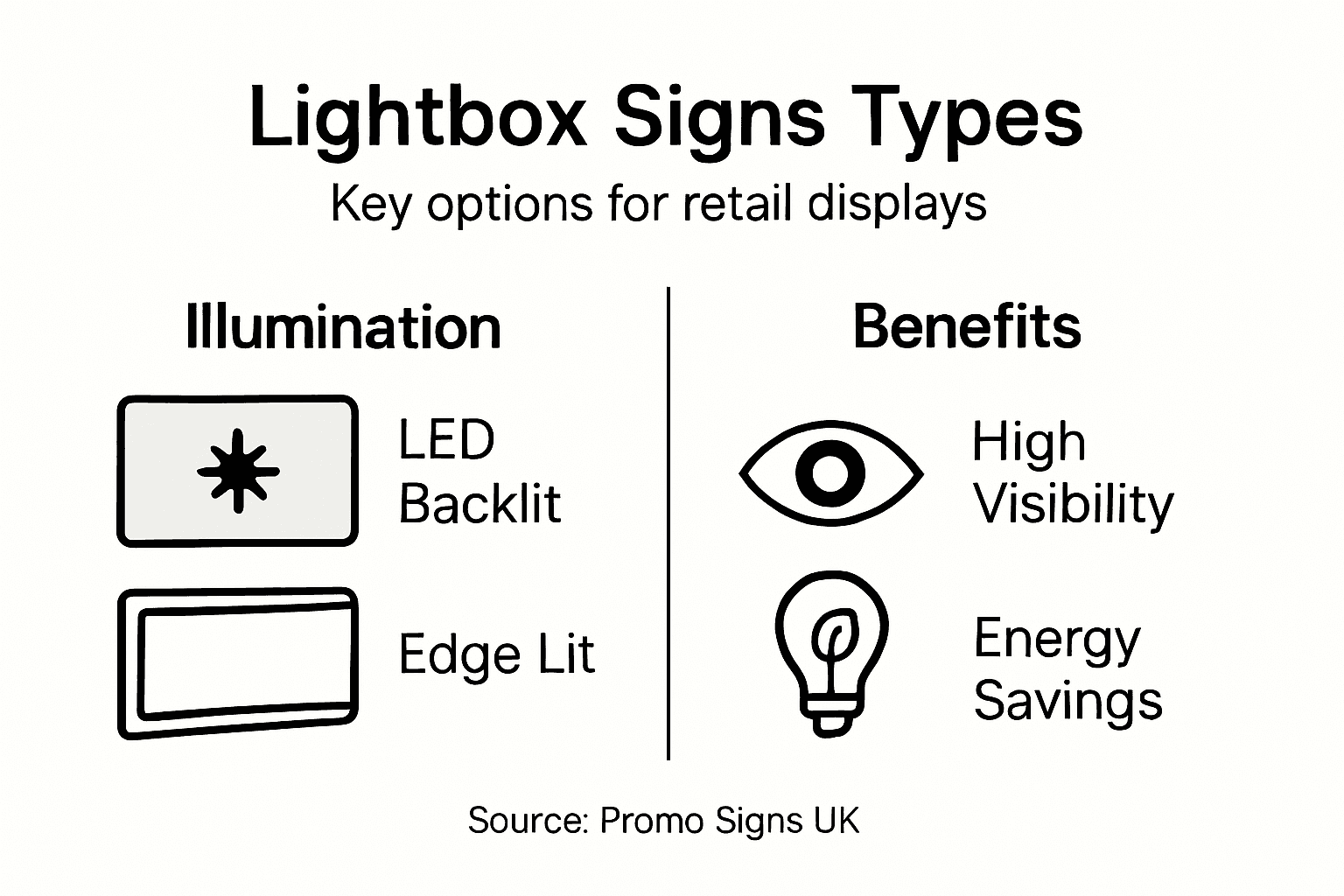
Below is a comparison of LED, edge-lit, and fluorescent illumination methods for shop signage:
| Illumination Method | Visual Appearance | Energy Consumption | Maintenance Needs |
|---|---|---|---|
| LED Backlit | Even, bright, contemporary look | Very low | Minimal |
| Edge-Lit | Slim, luminous edge, subtle effect | Low | Occasional cleaning |
| Fluorescent | Consistent yet bulkier illumination | Moderate to high | Tube replacement |
Graphic Applications
Design Considerations
Effective Visual Communication: Lightbox-specific design principles:
Key Principles:
Simplicity:
- Minimal text (3-7 words maximum, distance readability)
- Bold graphics (strong shapes, clear imagery)
- High contrast (dark graphics on light background, readability)
- Negative space (breathing room, visual clarity)
Color Selection:
- Vibrant colors (backlit enhancement, saturation boost)
- Avoid: Very dark colors (block light, dull appearance)
- Avoid: Very light colors (low contrast, poor visibility)
- Transparent areas (acrylic glow, light passage for background)
Typography:
- Sans-serif fonts (clarity, modern, readable)
- Bold weights (visibility, light penetration)
- Large sizing (distance viewing, street-level)
- Adequate spacing (letter + word spacing, readability)
Production Methods
Graphic Creation: Professional quality standards:
Vinyl Graphics: Most common method:
Process:
- Design creation (vector artwork, print-ready specification)
- Digital printing (large-format eco-solvent/latex, full-color photographic)
- Vinyl application (internal or external face mounting)
- Protection (lamination optional for external, UV resistance)
Advantages:
- Full-color capability (photographic, gradients, brand accuracy)
- Cost-effective (economical production, quick turnaround)
- Easy replacement (graphic updates, seasonal campaigns)
- Weather-resistant (external application with lamination)
Alternative: Direct Print: Advanced option:
- Direct UV printing (onto acrylic face, permanent integration)
- Higher durability (scratch-resistant, integrated graphics)
- Premium cost (specialized equipment, higher investment)
Installation Methods
Wall-Mounting
Standard Fascia Installation: Building face attachment:
Process:
1. Site Survey:
- Wall condition (substrate strength, surface preparation)
- Fixing points (structural identification, load distribution)
- Electrical supply (location, capacity, safe routing)
- Access requirements (scaffolding, cherry picker, ladder work)
2. Preparation:
- Template creation (precise positioning, fixing mark-up)
- Wall drilling (appropriate fixings, wall-plug selection)
- Cable routing (concealed where possible, weatherproof glands)
3. Installation:
- Cabinet mounting (secure fixing, level checking)
- Electrical connection (qualified electrician, Part P compliance)
- Testing (illumination verification, brightness checking)
- Finishing (sealant application, cable concealment)
Fixing Types:
- Masonry: Resin anchors, expansion bolts (brick/stone/concrete)
- Timber: Coach screws (structural timber framing)
- Metal: Self-tapping or threaded fixings (steel framework)
Projecting Installation
Perpendicular Mounting: Structural engineering:
Requirements:
- Structural calculations (wind loading, cantilever forces, building attachment)
- Building regulations (structural approval, safety certification)
- Highway license (if projecting over public land, authority permission)
- Professional installation (structural expertise, height safety)
Fixing:
- Back plate (substantial wall mounting, load distribution)
- Bracket arms (galvanized steel, engineered support)
- Cabinet attachment (secure connection, maintenance access)
Maintenance
Routine Care
Longevity Preservation: Systematic maintenance extends lifespan:
Maintenance Schedule:
Monthly:
- Visual inspection (damage checking, brightness verification)
- Cleaning (face wiping, dirt removal, appearance maintenance)
- Illumination check (all LEDs functioning, consistent brightness)
Quarterly:
- Detailed cleaning (frame cleaning, seal inspection)
- Electrical check (connection security, no flickering)
- Weather seal inspection (gasket condition, water ingress prevention)
Annual:
- Professional inspection (comprehensive assessment, electrical testing)
- Deep cleaning (face removal optional, thorough cleaning)
- Component check (driver operation, LED degradation assessment)
- Preventive maintenance (seal replacement, fixing tightening)
LED Replacement
Component Lifespan: Eventual replacement inevitable:
LED Module Life:
- Expected: 50,000-100,000 hours
- Typical usage (12 hours daily): 11-23 years
- Continuous (24 hours): 6-11 years
Replacement:
- Individual modules (faulty unit replacement, matched specification)
- Complete refit (technology upgrade, brightness restoration)
- Cost: £200-£1,500 (size, access dependent)
Cost Considerations
Investment Ranges
Budget Planning: Lightbox signage costs:
Small Lightbox (0.5m × 1m):
- Production: £400-£800
- Installation: £200-£400
- Total: £600-£1,200
Medium Lightbox (1m × 2m):
- Production: £800-£2,000
- Installation: £400-£800
- Total: £1,200-£2,800
Large Fascia (2m × 6m):
- Production: £3,000-£8,000
- Installation: £1,000-£3,000
- Total: £4,000-£11,000
Projecting Lightbox (Double-sided):
- Production: £2,000-£6,000
- Installation: £1,500-£5,000
- Structural/licensing: £500-£2,000
- Total: £4,000-£13,000
Cost Variables:
- Size (material quantity, installation complexity)
- Complexity (shaped profiles, multiple panels, intricate graphics)
- Access (ground level vs. height work, scaffolding requirements)
- Location (London premium, regional variation)
Operational Costs
Running Expenses: Annual budget planning:
Electricity (1m × 2m Lightbox):
- Power consumption: 30W typical
- Operating hours: 12 hours daily (dusk-to-dawn)
- Annual usage: 131 kWh
- Cost (at £0.15/kWh): £20
Maintenance:
- Annual inspection: £100-£300
- Cleaning: £50-£150 (professional service)
- Repairs (occasional): £100-£500 (contingency)
- Annual total: £270-£950
15-Year Total Cost of Ownership:
- Initial investment: £2,000
- Electricity (15 years): £300
- Maintenance: £4,000-£14,000
- Total: £6,300-£16,300
- Annual equivalent: £420-£1,087
Regulatory Compliance
Planning Permission
Advertisement Consent: Typically required for illuminated signage:
Deemed Consent: Limited automatic permission:
- Internal illumination (static, non-flashing, appropriate intensity)
- Size restrictions (typically 0.75-4.6 sqm depending on location)
- Conservation areas: Often excluded (express consent required)
Express Consent: Application necessary for:
- Exceeding deemed consent size
- Conservation areas (enhanced control)
- Listed buildings (heritage protection)
- Projecting signs (most cases)
Application Process:
- Fee: £132 per site
- Determination: 8 weeks statutory
- Conditions possible (brightness limits, operating hours)
Electrical Safety
Building Regulations Part P: Compliance mandatory:
Requirements:
- Qualified electrician (competent person installation, certification)
- Electrical testing (safety verification, ongoing compliance)
- RCD protection (shock prevention, electrical safety)
- Appropriate IP rating (weatherproofing: IP65+ outdoor typical)
Conclusion
Lightbox signs deliver exceptional 24/7 visibility, professional brand presentation, and cost-effective illumination through internally lit panels combining durable construction, energy-efficient LED technology, and vibrant graphics. From street-level Fascia Signs London fascias through elevated Building Signs and attention-capturing Illuminated Signs window displays, strategic lightbox implementation transforms business identification into continuous marketing presence operating around-the-clock.
Success requires understanding construction methods, selecting appropriate LED technology, designing effective graphics, ensuring professional installation, and maintaining systematic care that preserves appearance and functionality throughout extended operational life. Whether implementing compact window displays or comprehensive building-scale installations, lightbox signage investment delivers sustained visibility returns through reliable, professional illumination.
For businesses seeking expert lightbox signage solutions, partnering with experienced providers ensures access to design expertise, quality construction, professional installation, and maintenance support that maximizes visibility investment while delivering exceptional brand presence through proven illuminated display technology.
Recommended
- Effective Use of Lighting in Shop Signs for London Businesses 2025 – PromoSigns.co.uk
- What Is Illuminated Signage? 2025 Guide for London Businesses – PromoSigns.co.uk
- Illuminated Shop Sign Benefits for London Businesses 2025 – PromoSigns.co.uk
- Illuminated Signs Explained: A 2025 Guide for London Businesses – PromoSigns.co.uk
- 7 Ways Angled Window Shutters Transform Your Space Stylishly
