
Business owners often overlook how important signage is until faced with the choice between indoor and outdoor options. The right sign can boost customer engagement and solidify brand recognition, but using the wrong materials or design can cost time and money. Over 60 percent of a business’s first impressions come from their signage, making it critical to understand what sets indoor and outdoor signs apart. This guide breaks down what you need to know so your business signs work effectively in any setting.
Table of Contents
Key Takeaways
| Point | Details |
|---|---|
| Outdoor vs Indoor Signage | Outdoor signage is designed for attention and durability against environmental conditions, while indoor signage focuses on aesthetics and detailed communication. |
| Material Selection | Choose robust materials for outdoor signs to withstand weather, and opt for visually appealing materials for indoor signs to enhance the interior design. |
| Design Principles | Effective outdoor signs require bold, clear designs for quick comprehension, while indoor signs can afford to be more intricate, catering to closer viewing distances. |
| Legal Compliance | Businesses must ensure signage complies with accessibility, safety, and visibility regulations, particularly focusing on regional legal requirements for outdoor signs. |
Defining Outdoor vs Indoor Signage
Signage represents a critical communication tool that helps businesses visually convey messages, guide customers, and establish brand presence across different environments. These signs fundamentally differ based on their intended location, purpose, and design requirements.
Outdoor signage serves as a powerful marketing instrument designed to attract attention from passersby and withstand challenging environmental conditions. These signs must be constructed with durable materials capable of resisting weather variations, UV exposure, wind, rain, and temperature fluctuations. Typical outdoor LED Signs include storefront displays, roadside billboards, street banners, and exterior building markers that communicate brand identity and provide directional information.
Indoor signage, by contrast, focuses on guiding, informing, and enhancing the aesthetic experience within controlled interior spaces. These signs prioritise detailed information delivery and visual integration with the surrounding environment. Common indoor sign types include:
- Wayfinding signage in office buildings
- Menu boards in restaurants
- Reception area branding displays
- Directional signs in shopping centres
- Promotional displays within retail spaces
The core distinction between outdoor and indoor signage lies in their design philosophy, material selection, and functional objectives. While outdoor signs must be robust and visible from a distance, indoor signs can focus more on precision, aesthetics, and detailed communication. Understanding these differences helps businesses select the most appropriate signage solution for their specific context and communication needs.
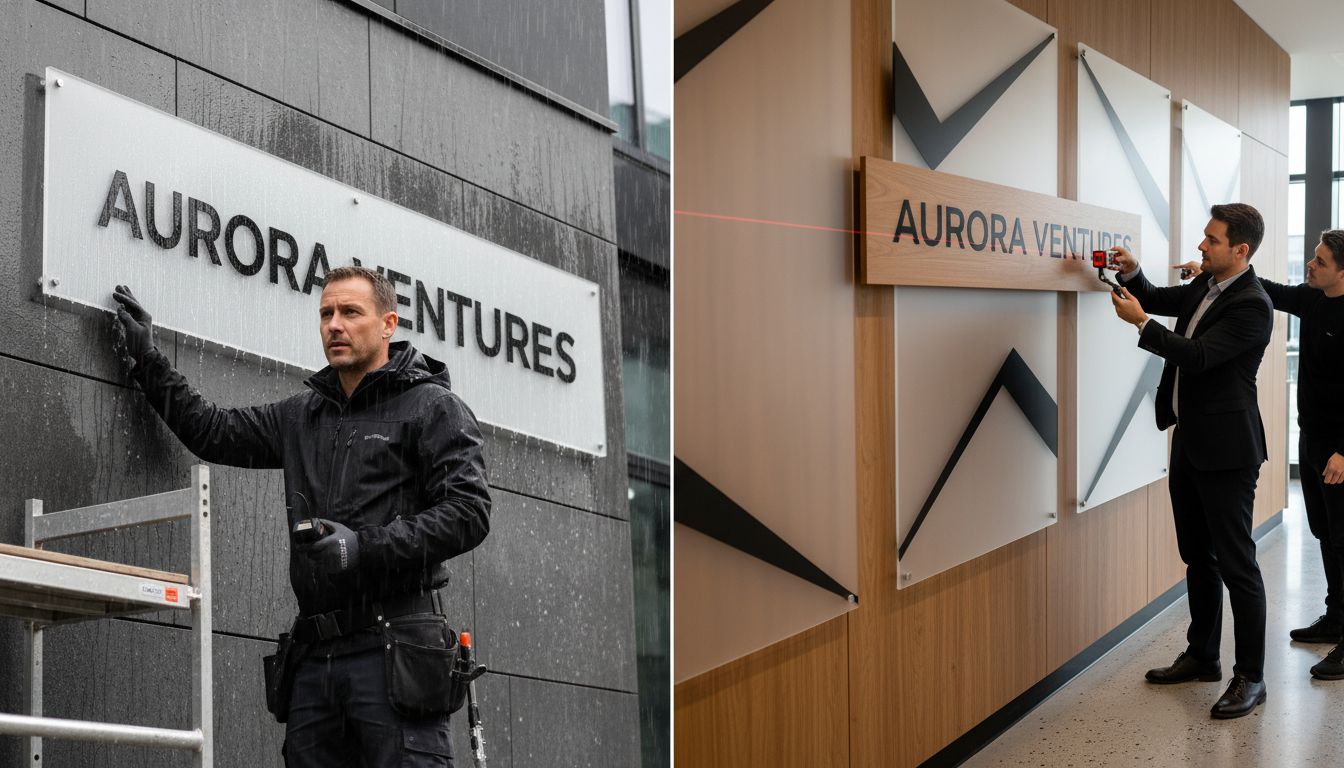
Materials Suited To Indoor And Outdoor
Selecting the right materials for signage is a critical decision that impacts durability, appearance, and overall effectiveness. Material selection varies dramatically between indoor and outdoor applications, with each environment demanding specific material characteristics.
Outdoor Sign Materials require exceptional resilience and weather resistance. The most robust outdoor materials include:
- Aluminium: Lightweight, corrosion-resistant, perfect for exterior signage
- PVC: Affordable and weather-tolerant, excellent for temporary outdoor displays
- Acrylic: Provides excellent UV resistance and long-term colour retention
- Coroplast: Economical plastic material ideal for short-term outdoor signage
Indoor Sign Materials prioritise aesthetic appeal and interior design integration. These materials focus more on visual quality and less on extreme durability. Foamex signs printing London is one of the most popular indoor options, alongside:
- Vinyl graphics
- Acrylic panels
- Wooden composites
- Magnetic and adhesive-backed materials
The key distinction lies in material engineering. Outdoor materials must withstand temperature fluctuations, direct sunlight, moisture, and potential physical impacts. Indoor materials can be more delicate, emphasising design flexibility and interior aesthetic harmony. By understanding these material characteristics, businesses can select signage solutions that not only communicate effectively but also endure their specific environmental challenges.
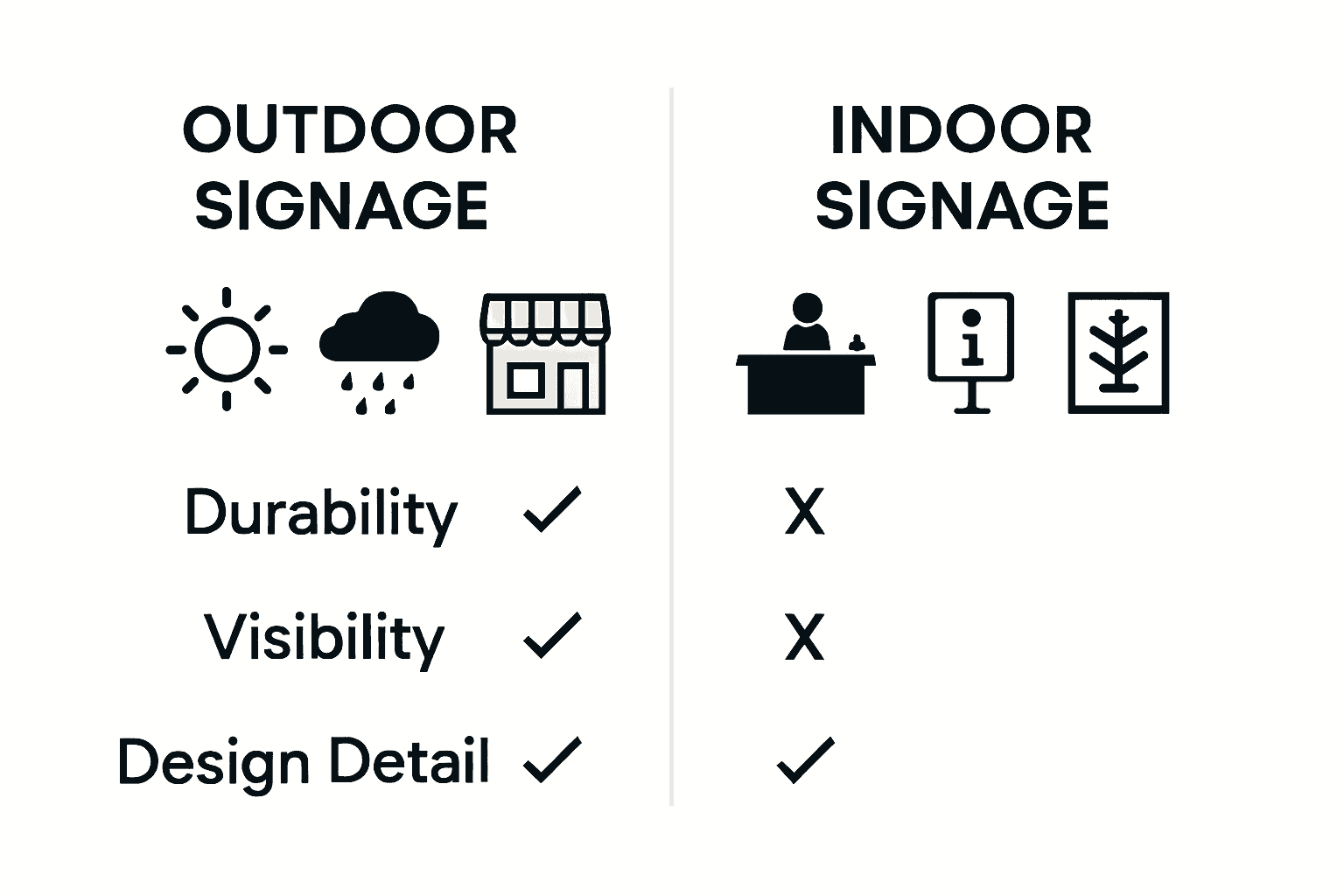
Design, Visibility And Functional Differences
The design philosophy and functional requirements for indoor and outdoor signage represent a critical distinction in visual communication strategies. These differences fundamentally impact how signs are conceived, created, and deployed across various environments.
Outdoor Signage Design Principles demand strategic approaches that prioritise maximum visibility and instant comprehension. Characteristics of effective outdoor signs include:
- Larger, bolder typography
- High-contrast colour schemes
- Simplified graphic elements
- Wider viewing angles
- Robust, weather-resistant visual components
Indoor Signage Design Approaches focus more on aesthetic integration and detailed information delivery. These signs are crafted to complement interior spaces while providing precise guidance and communication.
The primary functional differences emerge from viewing distance and environmental context. Outdoor signs must communicate messages quickly to moving audiences, often from significant distances, requiring bold, clear designs that capture attention instantaneously. Conversely, indoor signs can incorporate more nuanced details, elaborate typography, and subtle design elements, knowing viewers will be in closer proximity and have more time to absorb information.
Vinyl sticker printing London solutions bridge both worlds effectively — indoor window vinyls can deliver the colour impact of outdoor advertising with the precision detailing suited to interior viewing distances. By understanding these critical design distinctions, businesses can create signage that not only looks professional but effectively communicates its intended message across different spatial contexts.
UK Legal And Safety Requirements
Navigating the legal landscape of signage in the United Kingdom requires a comprehensive understanding of multiple regulatory frameworks. Businesses must adhere to strict guidelines ensuring public safety, accessibility, and compliance across both indoor and outdoor signage environments.
Key Legal Considerations for Signage encompass several critical areas:
- Accessibility Requirements: Ensuring signs are readable and comprehensible for individuals with visual or cognitive disabilities
- Material Safety Standards: Using non-toxic, fire-resistant materials that meet national building regulations
- Visibility and Placement Regulations: Maintaining clear sightlines and avoiding potential obstruction of public spaces
- Content Compliance: Adhering to advertising standards and avoiding misleading or offensive messaging
For Outdoor Signage, additional legal considerations become paramount. Selecting materials that can withstand environmental challenges while maintaining structural integrity and safety standards is essential. This includes considerations such as wind resistance, durability, and potential impact on public infrastructure.
Businesses must also navigate complex regulatory environments that vary between different UK jurisdictions. Working with professional signage companies London who understand local council requirements ensures full compliance, minimising potential fines or forced removals of non-compliant signage.
Maintenance And Lifecycle Considerations
The longevity and performance of signage depend critically on proactive maintenance and strategic material selection. Understanding the lifecycle of different signage types is fundamental to making informed investment decisions.
Outdoor Signage Maintenance Challenges include managing environmental degradation and preserving visual integrity. Key maintenance considerations involve:
- Regular cleaning to remove dirt and pollutants
- Periodic inspection for structural damage
- UV protection and colour preservation treatments
- Addressing weather-related wear and tear
- Prompt repair of mechanical or structural issues
Indoor Signage Lifecycle Management typically involves less intensive maintenance but requires consistent aesthetic upkeep. Indoor signs have shorter replacement cycles due to lower environmental stress but still demand strategic care.
The average lifespan of signage varies dramatically based on material quality, environmental exposure, and maintenance frequency. Outdoor signs might require complete replacement every 5-7 years, while well-maintained indoor signs can last 10-15 years.
Large format printing London graphics used outdoors should be produced using UV-resistant inks and weatherproof substrates to maximise lifespan and reduce replacement frequency. Businesses should develop comprehensive maintenance schedules, budget for periodic upgrades, and select materials that balance durability with aesthetic appeal. Investing in high-quality initial design and proactive maintenance ultimately reduces long-term costs and ensures consistent brand representation.
Discover the Perfect Signage Solution for Your Business
Choosing between outdoor and indoor signage is not just about appearance but also about durability, visibility, and legal compliance. Many businesses struggle with selecting materials that can endure the UK weather or designs that communicate clearly at varying distances. If you want signage that truly reflects your brand while standing up to these challenges, understanding the right approach is essential.
At PromoSigns, we specialise in creating bespoke shop signs, illuminated signs, and large format prints designed specifically for the unique demands of indoor and outdoor environments. Whether you need robust aluminium signs that last through the elements or visually compelling indoor displays that guide and engage customers, our expert team will tailor your signage to meet legal safety requirements and maximise impact.
Ready to enhance your business presence with expertly crafted signage? Explore how we bring together design excellence and material expertise at PromoSigns. Take the next step toward professional signage solutions by contacting us today and securing signs that combine durability, visibility, and compliance for your London, Essex or Kent business.
Frequently Asked Questions
What are the main differences between outdoor and indoor signage?
Outdoor signage is designed for maximum visibility and durability in various weather conditions, while indoor signage focuses on aesthetic integration and detailed communication within controlled environments.
What materials are recommended for outdoor signage?
Outdoor signage should be made from durable materials such as aluminium, PVC, acrylic, and coroplast, as these materials are weather-resistant and can withstand environmental challenges.
How often should outdoor signage be maintained?
Outdoor signage should be inspected regularly for structural damage and cleaned to remove pollutants. It may require complete replacement every 5-7 years, depending on environmental exposure and maintenance frequency.
What factors influence the design of outdoor signage?
The design of outdoor signage prioritises factors such as larger typography, high-contrast colour schemes, and robustness to ensure instant comprehension and visibility from a distance.
Recommended
- 7 Key Differences Between Indoor vs Outdoor Signs – PromoSigns.co.uk
- Choosing Outdoor Signage: A Step-by-Step Guide for 2025 – PromoSigns.co.uk
- Outdoor vs indoor Restaurant Signs: Key Differences and Uses – PromoSigns.co.uk
- Interior vs Exterior Signage: Best Choices for London Businesses 2025 – PromoSigns.co.uk
- Pest Proofing Outdoor Spaces: Essential 2025 Guide For Texas Homes – Pest Control Van Alstyne, TX – Pestico Pest Control
