
Did you know that choosing the wrong signage material can cut a sign’s lifespan by up to 50 percent? Businesses rely on signs to connect with customers, make a strong first impression, and withstand everyday conditions. With options like aluminium, acrylic, and recycled plastics each offering unique benefits, selecting the right material is more than just a design choice. Discover which key factors shape durable, effective signs that truly represent your brand.
Table of Contents
- What Are Signage Materials? Essential Concepts
- Main Types of Signage Materials Compared
- Key Factors: Durability, Appearance, Installation
- Best Applications by Business Type and Location
- Cost, Maintenance, and Eco-Friendly Options
- Choosing the Right Signage Material: Expert Tips
Table of Contents
Key Takeaways
| Point | Details |
|---|---|
| Material Selection is Crucial | Choosing the right signage material is essential for achieving optimal performance, visual impact, and durability in various environments. |
| Durability and Aesthetics Matter | Professionals must weigh durability, visual appeal, and installation requirements when selecting materials, to ensure long-lasting brand communication. |
| Cost Efficiency is Important | Evaluate initial costs and maintenance levels of materials like aluminum and PVC to manage signage budgets effectively while achieving desired outcomes. |
| Eco-Friendly Options are Emerging | Businesses should consider sustainable materials, such as recycled plastics, which offer both durability and environmental benefits, enhancing corporate responsibility. |
What Are Signage Materials? Essential Concepts
Signage materials are the foundational elements that transform design concepts into tangible visual communication tools. These substrates are carefully selected based on specific properties that impact durability, appearance, and environmental suitability.
Signage materials range from traditional to modern options, each offering unique characteristics for different business needs. Aluminium provides exceptional weather resistance, making it ideal for outdoor applications. Acrylic stands out with its crystal-clear transparency and contemporary aesthetic, perfect for businesses wanting a sleek, professional look. PVC emerges as a versatile and cost-effective solution that adapts to multiple design requirements.
When selecting signage materials, professionals consider several critical factors. Here is a comparison of key signage materials by their durability, appearance, and cost-effectiveness:
| Material | Durability | Visual Appeal | Cost-Effectiveness |
|---|---|---|---|
| Aluminium | Very High | Sleek, Modern | Moderate |
| Acrylic | High | Glossy, Contemporary | Moderate |
| PVC | Medium | Versatile, Clean | High |
| Wood | Medium | Natural, Traditional | Low |
| Stainless Steel | Very High | Polished, Professional | Low |
| Recycled Plastic | High | Functional, Eco-Friendly | Medium |
- Durability: How well the material withstands environmental conditions
- Visual Appeal: The material’s aesthetic contribution to brand messaging
- Cost-effectiveness: The balance between quality and budget constraints
- Installation Requirements: Ease of mounting and maintenance
Beyond physical properties, the right signage material communicates brand identity. Shop signs London specialists can advise on which substrates will perform best for your specific premises, location, and brand requirements, ensuring you invest in materials that deliver the best long-term return.
Main Types of Signage Materials Compared
Business signage requires strategic material selection to ensure optimal performance and visual impact. Several primary materials dominate the signage landscape, each offering unique advantages for different business needs.
Aluminium emerges as a top-tier choice for businesses seeking durability and versatility. This material is lightweight, rust-proof, and exceptionally resilient in outdoor environments. Its resistance to corrosion makes it ideal for external signage that must withstand diverse weather conditions.
Here is a comprehensive breakdown of the most popular signage materials:
| Material | Key Characteristics | Best Use Cases |
|---|---|---|
| Aluminium | Lightweight, rust-resistant, durable | Outdoor signs, industrial settings |
| Acrylic | Glossy finish, modern appearance | Illuminated signs, retail displays |
| PVC | Cost-effective, weatherproof | Temporary and permanent signage |
| Wood | Natural aesthetic, traditional look | Rustic businesses, artisan shops |
Foamex signs printing London is one of the most widely used materials for interior signage, offering lightweight handling, excellent print quality, and strong cost-effectiveness that makes it a practical choice for retail, exhibition, and office identification applications.
For businesses looking to make strategic signage decisions, understanding how to match materials with your specific branding and environmental requirements is key. Each material brings its own personality to your visual communication strategy, transforming simple signs into powerful brand statements.
Key Factors: Durability, Appearance, Installation
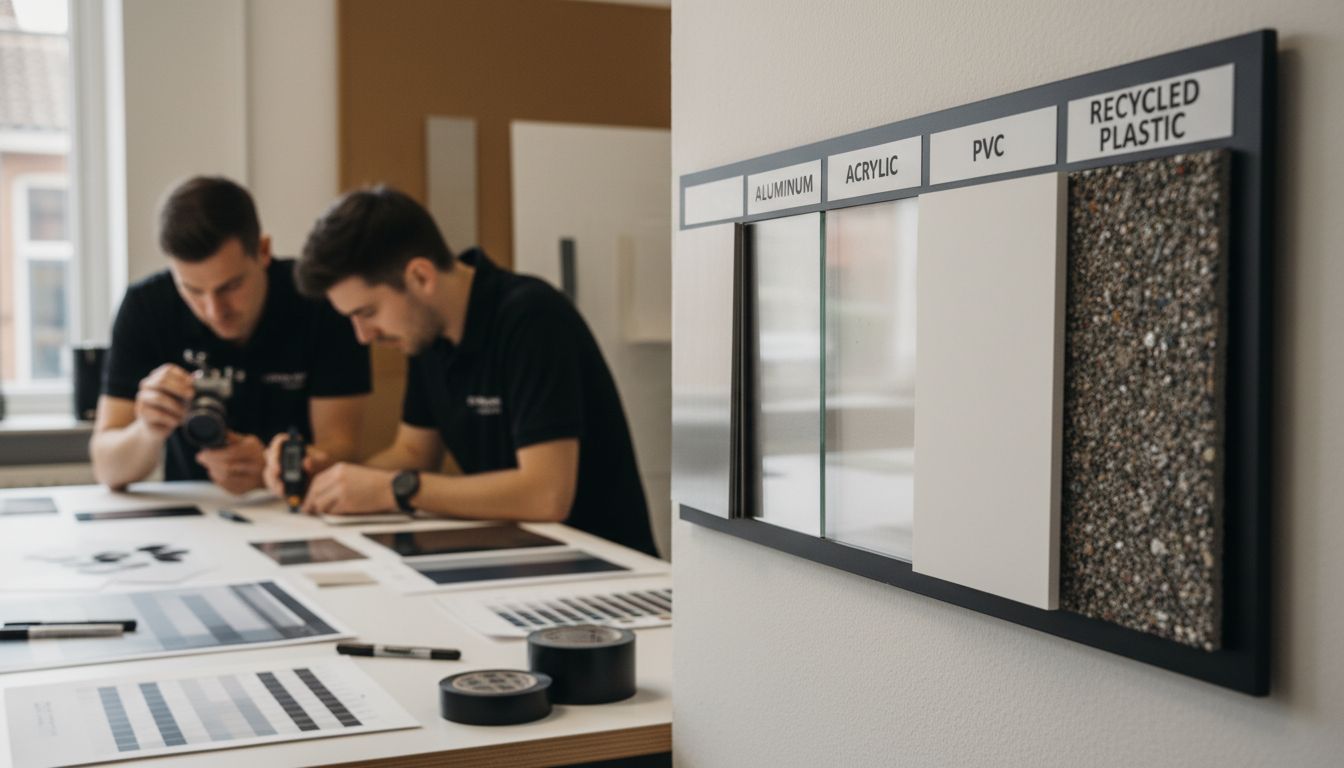
Selecting the right signage material is a critical decision that goes far beyond simple aesthetic preferences. Three fundamental factors determine the success of any signage project: durability, appearance, and installation methodology.
Durability stands as the cornerstone of effective signage. Materials like high-density PVC demonstrate exceptional resistance to environmental challenges. These materials must withstand temperature fluctuations, moisture exposure, and UV radiation without compromising structural integrity or visual appeal.
Appearance Factors:
- Colour retention and fade resistance
- Texture and surface finish
- Compatibility with brand aesthetic
- Ability to support graphics and printing
Installation Considerations:
- Weight of the material
- Mounting complexity
- Required hardware and support structures
- Ease of replacement and maintenance
Professional sign makers understand that material selection is a nuanced process. Vinyl sticker printing London graphics applied over aluminium or acrylic substrates offer a particularly flexible approach, allowing businesses to update messaging or branding without replacing the entire sign structure — a major advantage for retailers and businesses that refresh their promotions regularly.
Best Applications by Business Type and Location
Signage selection is not a one-size-fits-all approach, but a strategic decision tailored to specific business environments and communication needs. Different business types demand unique material characteristics that align with their brand identity and functional requirements.
Indoor Environments present distinct signage challenges compared to outdoor settings. Acrylic emerges as a premier choice for modern corporate spaces, providing a sleek, professional appearance that communicates sophistication. Retail establishments benefit from materials that offer high visual impact, with vinyl graphics proving particularly effective for window displays and temporary promotional messaging.
Material Selection by Business Sector
| Business Type | Recommended Materials | Key Considerations |
|---|---|---|
| Retail | Acrylic, Vinyl | High visibility, flexibility |
| Corporate | Metal, Glass | Professional appearance |
| Hospitality | Wood, Stone | Warm, inviting aesthetic |
| Industrial | Aluminium, Dibond | Durability, weather resistance |
Large format printing London on weatherproof substrates is the most cost-effective solution for businesses needing large-scale outdoor graphics, from hoarding boards to building wraps, delivering high visual impact at a fraction of the cost of fabricated sign structures.
Cost, Maintenance, and Eco-Friendly Options
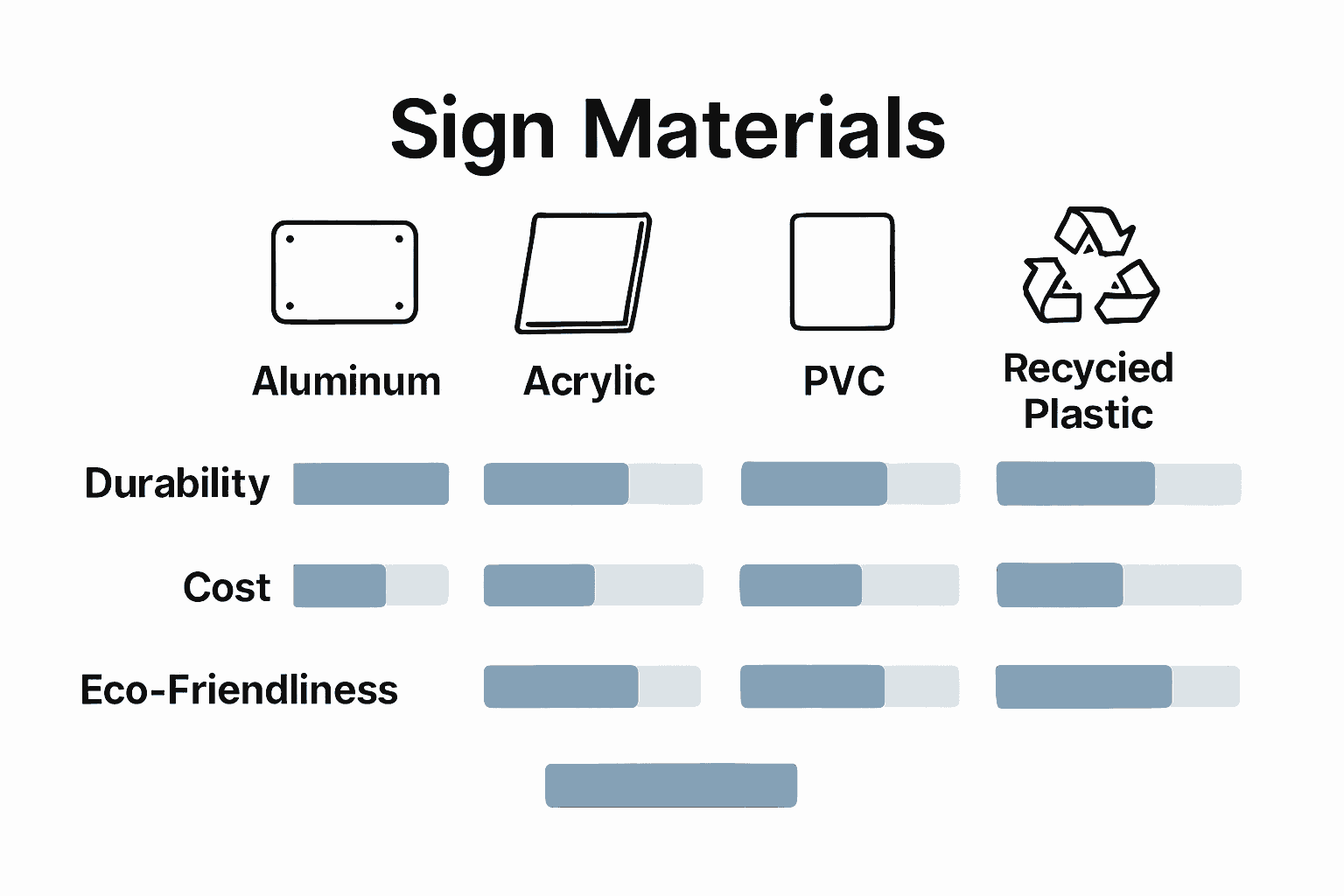
Navigating the complex landscape of signage materials requires a strategic approach that balances cost-effectiveness, maintenance requirements, and environmental responsibility. Different materials present unique financial and practical considerations that businesses must carefully evaluate.
Cost Management emerges as a critical factor in material selection. Aluminium stands out as a moderate-cost option offering exceptional durability, while PVC presents a budget-friendly alternative with some limitations. Stainless steel represents a premium investment with superior weather resistance, making it ideal for long-term applications that demand minimal maintenance and maximum longevity.
Sustainable Signage Solutions
Eco-conscious businesses are increasingly exploring sustainable alternatives. Recycled plastic is an innovative material that offers notable advantages:
- 100% recycled composition
- Exceptional durability
- Resistance to environmental degradation
- Minimal maintenance requirements
| Material | Initial Cost | Maintenance Level | Eco-Friendliness |
|---|---|---|---|
| Aluminium | Moderate | Low | Medium |
| Recycled Plastic | Higher | Very Low | High |
| PVC | Low | Medium | Low |
| Stainless Steel | High | Very Low | Medium |
Working with experienced signage companies London gives businesses access to a full range of material options including eco-certified substrates and recycled content panels, enabling sustainability commitments to be met without compromising on visual quality or durability.
Choosing the Right Signage Material: Expert Tips
Selecting the perfect signage material is a nuanced process that requires careful evaluation of multiple critical factors. Successful material selection hinges on understanding environmental conditions, projected lifespan, and maintenance capabilities of different substrates.
Environmental Assessment forms the cornerstone of material selection. Professionals must consider factors like temperature fluctuations, humidity levels, direct sunlight exposure, and potential wind loads. Materials like high-density PVC offer remarkable moisture resistance and adaptability, making them suitable for diverse applications.
Key Evaluation Factors:
- Anticipated environmental stress
- Required visual aesthetic
- Budget constraints
- Expected operational lifespan
- Maintenance requirements
| Material | Best For | Durability | Cost Efficiency |
|---|---|---|---|
| Aluminium | Outdoor Signage | High | Moderate |
| High-Density PVC | Versatile Applications | Medium | High |
| Dibond | Architectural Signage | Very High | High |
| Corrugated Plastic | Short-Term Displays | Low | Very High |
Our guide on how to choose the right commercial sign for your business provides additional insights into navigating the complex landscape of signage material selection. Remember, the optimal choice balances functional requirements with aesthetic goals, transforming your signage from a mere communication tool into a strategic brand asset.
Discover the Perfect Signage Material for Your Business Success
Choosing the right signage material can feel overwhelming with all the options and factors like durability, visual appeal, and cost-effectiveness to consider. This guide highlights common challenges such as selecting materials that withstand weather conditions while matching your brand identity. You want signs that last yet look exceptional without exceeding your budget.
At Promo Signs, we specialise in helping London, Essex, and Kent businesses navigate these exact decisions. Whether you need sleek acrylic for a modern retail look or robust aluminium for outdoor durability, we design, produce, and install custom shop signs tailored to your needs. Our expertise means you avoid costly mistakes and get signage that truly works for your brand and environment.
Ready to transform your visual communication with signage materials chosen just for your business goals? Explore our custom signage solutions and take advantage of expert advice and quality craftsmanship. Contact us today to get started on a signage project that stands the test of time and elevates your business presence.
Frequently Asked Questions
What are the most common types of signage materials?
Signage materials commonly include aluminium, acrylic, PVC, wood, stainless steel, and recycled plastic. Each type has unique characteristics that suit different business needs and environments.
How do I choose the right signage material for my business?
Selecting the right signage material involves considering factors like durability, visual appeal, cost-effectiveness, and installation requirements. Assess the environmental conditions where the sign will be placed and your brand’s aesthetic goals.
What factors impact the durability of signage materials?
Durability is influenced by environmental factors such as temperature fluctuations, moisture exposure, and UV radiation. Materials like high-density PVC and aluminium are known for their exceptional resistance to these elements.
Are there eco-friendly options for signage materials?
Yes, recycled plastic is a sustainable signage material that offers durability, weather resistance, and minimal maintenance. Many businesses are increasingly opting for eco-friendly materials to align with environmental commitments.
Recommended
- Exhibition Signage Basics 2025: Essential Guide for Businesses – PromoSigns.co.uk
- What Is 3D Signage? Guide for London Businesses & Events 2025 – PromoSigns.co.uk
- Event Signage Best Practices 2025: Essential Tips for London Businesses – PromoSigns.co.uk
- How to Design Building Signage: A 2025 Guide for London Businesses – PromoSigns.co.uk
