
Choosing the right material for your shop sign can change everything. Aluminium signage can last up to 20 years outdoors with very little maintenance. Most people think the design or colours matter most. It turns out the true secret to a sign that grabs attention and never fades lies in the stuff you build it with.
Table of Contents
- What Are The Common Materials For Shop Signs?
- Metal Materials For Professional Signage
- Acrylic And Plastic Signage Options
- Why Material Choice Matters For Shop Signs
- Performance And Environmental Resilience
- Economic And Brand Representation Factors
- How Different Materials Affect Sign Durability
- Environmental Degradation Factors
- Material-Specific Durability Characteristics
- The Impact Of Materials On Visual Appeal And Branding
- Material Perception And Brand Messaging
- Psychological Impact Of Material Choices
- Navigating Regulations And Best Practices In Sign Materials
- Accessibility And Design Compliance
- Material Safety And Environmental Considerations
Table of Contents
Quick Summary
| Takeaway | Explanation |
|---|---|
| Choose durable materials for signs | Selecting durable materials like metal or acrylic ensures longevity in diverse environments. |
| Consider brand messaging in material choice | The materials you select communicate your brand’s values and affect customer perceptions. |
| Ensure compliance with accessibility standards | Signage must meet legal standards for visibility and accessibility, reflecting professionalism and inclusivity. |
| Evaluate cost vs. long-term savings | Investing in durable materials may have higher upfront costs but leads to reduced maintenance and replacements. |
| Know the environmental impact on durability | Different materials respond uniquely to environmental conditions, affecting their lifespan and performance. |
What Are the Common Materials for Shop Signs?
Selecting the right materials for shop signs is crucial for creating a lasting visual impact and ensuring durability in various environmental conditions. Different materials offer unique advantages, making the selection process a strategic decision for businesses seeking to communicate their brand effectively.
Metal Materials for Professional Signage
Metal remains a popular choice for shop signs, offering exceptional durability and a professional aesthetic. Aluminium stands out as a premier material, known for its lightweight nature, corrosion resistance, and ability to withstand harsh weather conditions. Stainless steel provides another robust option, delivering a sleek, modern appearance while maintaining structural integrity. Explore innovative sign design techniques that leverage these metal materials for maximum visual appeal.
Key characteristics of metal shop signs include:
- Excellent weather resistance
- Long-lasting durability
- Contemporary and professional appearance
- Versatile for both indoor and outdoor applications
Acrylic and Plastic Signage Options
Acrylic signs have gained significant popularity among businesses seeking versatile and cost-effective signage solutions. These materials offer remarkable design flexibility, allowing for intricate shapes, vibrant colours, and various finishing techniques. According to UC San Diego’s campus Sign Shop, acrylic can be fabricated with UV-stable digital graphics and dimensional lettering, making it an adaptable choice for different business environments.
Plastic materials like PVC and polycarbonate provide additional alternatives, each presenting unique benefits such as lightweight construction, affordability, and resistance to impacts. These materials are particularly suitable for temporary or frequently updated signage requirements.
To help readers quickly compare the main materials used for shop signage, the following table outlines the key characteristics and advantages of metals, acrylics, and plastics discussed in the article.
What Are the Common Materials for Shop Signs?
Selecting the right materials for shop signs is crucial for creating a lasting visual impact and ensuring durability in various environmental conditions. Different materials offer unique advantages, making the selection process a strategic decision for businesses seeking to communicate their brand effectively.
Metal Materials for Professional Signage
Metal remains a popular choice for shop signs, offering exceptional durability and a professional aesthetic. Aluminium stands out as a premier material, known for its lightweight nature, corrosion resistance, and ability to withstand harsh weather conditions. Stainless steel provides another robust option, delivering a sleek, modern appearance while maintaining structural integrity. Explore innovative sign design techniques that leverage these metal materials for maximum visual appeal.
Key characteristics of metal shop signs include:
- Excellent weather resistance
- Long-lasting durability
- Contemporary and professional appearance
- Versatile for both indoor and outdoor applications
Acrylic and Plastic Signage Options
Acrylic signs have gained significant popularity among businesses seeking versatile and cost-effective signage solutions. These materials offer remarkable design flexibility, allowing for intricate shapes, vibrant colours, and various finishing techniques. Acrylic can be fabricated with UV-stable digital graphics and dimensional lettering, making it an adaptable choice for different business environments.
Plastic materials like PVC and polycarbonate provide additional alternatives, each presenting unique benefits such as lightweight construction, affordability, and resistance to impacts. These materials are particularly suitable for temporary or frequently updated signage requirements.
| Material | Key Advantages | Typical Uses | Durability |
|---|---|---|---|
| Aluminium | Lightweight, corrosion resistant, weatherproof | Indoor and outdoor signage | Up to 20 years outdoors |
| Stainless Steel | Sleek appearance, high structural integrity, modern finish | Contemporary professional signage | Long-lasting |
| Acrylic | Design flexibility, vibrant colours, UV-stable graphics | Varied business signage | Variable (with UV stable) |
| PVC | Lightweight, affordable, impact resistant | Temporary or regularly updated | Moderate |
| Polycarbonate | Impact resistance, durability | Temporary and indoor signage | Moderate to High |
Understanding the specific properties of different materials enables businesses to make informed decisions that align with their branding, budget, and environmental considerations.
Whether prioritising durability, aesthetic appeal, or cost-effectiveness, the right material can transform a simple shop sign into a powerful communication tool that captures attention and reinforces brand identity. Businesses seeking expert guidance on which material suits their location, budget, and brand standards can consult with experienced signage companies London who carry out site assessments and material recommendations as standard.
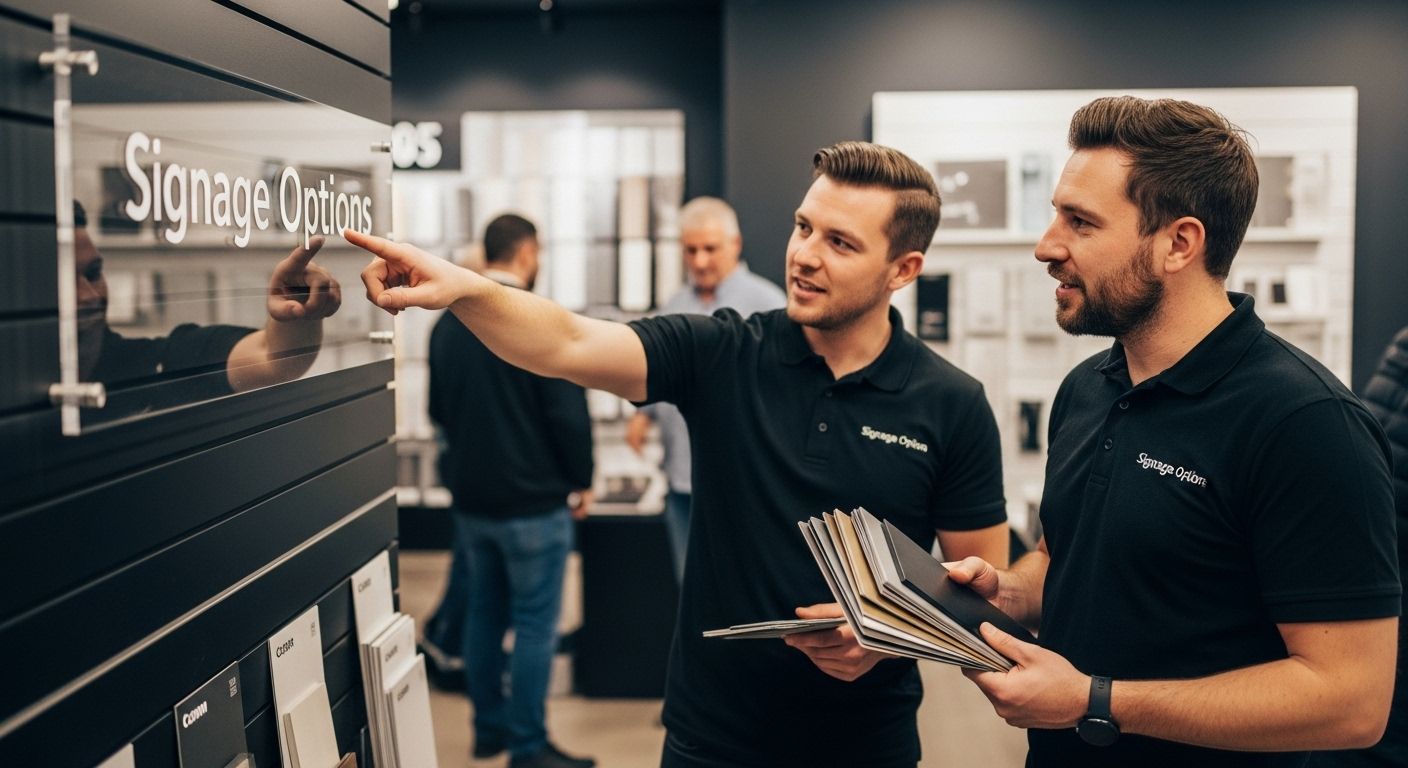
Why Material Choice Matters for Shop Signs
Selecting the appropriate material for shop signs transcends aesthetic considerations, representing a strategic business decision with profound implications for brand perception, durability, and long-term communication effectiveness. The material chosen directly influences a sign’s performance, visibility, and ability to withstand environmental challenges.
Performance and Environmental Resilience
Material selection critically determines a sign’s ability to maintain visual integrity under diverse environmental conditions. Signs must provide consistent legibility and contrast, which means materials must resist colour degradation, maintain surface finish, and preserve graphic quality over time.
Key performance considerations include:
- Resistance to UV radiation
- Temperature fluctuation tolerance
- Corrosion and moisture protection
- Structural stability under wind and external pressures
Economic and Brand Representation Factors
Learn more about strategic signage selection that aligns with your business objectives. The economic implications of material choice extend beyond initial production costs. Durable materials like aluminium and stainless steel might present higher upfront expenses but offer significant long-term savings through reduced maintenance and replacement frequencies.
Moreover, the selected material communicates subtle brand messaging. A high-quality, professionally crafted sign constructed from premium materials signals business credibility, attention to detail, and commitment to quality. Conversely, signs made from inferior materials can inadvertently communicate cost-cutting or lack of professional standards.
Ultimately, material choice represents an investment in brand communication. By carefully considering performance characteristics, environmental resilience, economic factors, and aesthetic qualities, businesses can transform their shop signs London from mere informational tools into powerful brand ambassadors that consistently represent their professional identity.
How Different Materials Affect Sign Durability
Understanding the intricate relationship between material properties and sign durability is crucial for businesses seeking long-lasting, professional signage solutions. Different materials respond uniquely to environmental stressors, which directly impacts their performance, appearance, and overall lifespan.
Environmental Degradation Factors
Multiple environmental elements systematically challenge sign materials, causing progressive deterioration. Key degradation factors include UV radiation, temperature fluctuations, moisture exposure, and mechanical stress. These variables interact differently with various material compositions, creating complex aging mechanisms.
| Environmental Factor | Impact on Materials | Notes |
|---|---|---|
| UV Radiation | Causes colour fading, surface degradation | Aluminium and UV-stable acrylic highly resistant |
| Temperature Fluctuations | Can trigger warping or brittleness | Metals tolerate temperature swings better than plastics |
| Moisture and Humidity | Leads to corrosion or material weakening | Metals like stainless steel and aluminium are resistant |
| Wind and Mechanical Pressure | Risk of deformation or detachment | Structural metals resist pressure, plastics may flex |
| Chemical Pollutants | Leads to staining, corrosion, or decay | Stainless steel is highly chemical resistant |
Critical environmental degradation factors include:
- Direct sunlight exposure intensity
- Temperature range and thermal cycling
- Humidity and moisture levels
- Wind and mechanical pressure
- Chemical pollutants in urban environments
Material-Specific Durability Characteristics
Explore our comprehensive signage materials guide to understand nuanced performance differences. Metals like aluminium demonstrate remarkable resistance to corrosion and structural deformation, maintaining visual integrity across extended periods. Alternatively, plastics such as polycarbonate and acrylic exhibit variable durability profiles depending on their specific molecular composition and manufacturing techniques.
Some materials inherently possess superior weathering characteristics. Stainless steel resists oxidation, while powder-coated aluminium provides enhanced surface protection against UV radiation and mechanical wear. Conversely, untreated materials like standard mild steel rapidly deteriorate when exposed to consistent environmental challenges.
Ultimately, material durability represents a complex interplay between inherent material properties, environmental conditions, and maintenance practices. Businesses must consider not just initial aesthetic appeal, but long-term performance potential when selecting signage materials. For lightweight, budget-conscious indoor display applications, foamex signs printing London offers a practical PVC foam board solution that balances affordability with a clean, professional finish.
The Impact of Materials on Visual Appeal and Branding
Shop signs serve as powerful visual communication tools that extend far beyond mere information delivery. The materials selected for signage play a profound role in shaping brand perception, communicating business values, and creating memorable visual experiences for potential customers.
Material Perception and Brand Messaging
Visual character presentation is critical, with surface finish and contrast directly influencing perception. Different materials inherently communicate distinct brand personalities and emotional responses. Sleek metallic surfaces suggest modernity and precision, while wooden materials convey warmth and craftsmanship.
Material communication signals include:
- Perceived quality and professionalism
- Business sector and industry positioning
- Investment in brand presentation
- Commitment to aesthetic details
Psychological Impact of Material Choices
Discover advanced branding strategies that leverage material selection for maximum impact. Consumers subconsciously interpret material qualities as reflective of business credibility. Polished aluminium might suggest technological innovation, whereas hand-crafted wooden signs could indicate artisanal expertise. The texture, finish, and composition of signage materials create immediate psychological impressions that significantly influence customer engagement.
Stainless steel communicates corporate reliability, acrylic suggests contemporary design, and textured materials like stone or brick-effect signage can evoke heritage and tradition. These subtle material narratives operate beneath conscious perception, forming instant emotional connections with potential customers.
Ultimately, material selection transcends functional requirements, becoming a strategic branding instrument. Businesses that understand and strategically leverage material properties can transform their shop signs from mere informational markers into compelling brand storytelling elements that capture attention, communicate values, and create lasting impressions. For businesses that want every material decision — from substrate to finish — to be engineered precisely for their brand brief, custom signs London specialists offer bespoke fabrication across the full range of available materials.
Navigating Regulations and Best Practices in Sign Materials
Businesses must carefully consider regulatory requirements and industry standards when selecting materials for shop signs. These guidelines ensure safety, accessibility, and professional presentation while protecting both business interests and public interaction.
Accessibility and Design Compliance
Accessibility regulations play a crucial role in sign material selection. Signage must meet specific requirements regarding visual contrast, character legibility, and tactile information. These standards mandate precise specifications for:
- Non-glare surface finishes
- Minimum contrast between characters and backgrounds
- Appropriate mounting heights
- Legible character sizes and styles
- Tactile letter and symbol requirements
Material Safety and Environmental Considerations
Explore comprehensive compliance guidelines that address regulatory nuances. Beyond visual requirements, businesses must consider material safety, environmental impact, and potential chemical emissions. Certain jurisdictions impose strict regulations on material composition, particularly for plastics and coating materials used in signage.
Key regulatory considerations include chemical emission limits, fire safety ratings, and sustainability standards. Some regions restrict specific plastic types or require environmentally friendly manufacturing processes. Businesses must balance aesthetic desires with compliance requirements, selecting materials that meet both visual communication goals and legal standards.
Ultimately, navigating sign material regulations requires a comprehensive approach that integrates design creativity, legal compliance, and professional standards. Successful businesses view these regulations not as constraints but as opportunities to demonstrate commitment to quality, accessibility, and responsible design practices. For businesses seeking production at scale — such as applying digitally printed graphics across large exterior surfaces — large format printing London delivers the material expertise and print precision to handle everything from aluminium composite panels to UV-stable banner substrates.
Choose Materials That Make Your Business Stand Out
Are you worried your shop sign is sending the wrong message because it uses the wrong materials? The article explains how choices like aluminium, acrylic, and stainless steel impact everything from durability to the way customers perceive your brand. A damaged or faded sign can cost you countless opportunities just because of poor material selection. At PromoSigns, we help businesses in London, Essex, and Kent avoid these common pitfalls by delivering expertly crafted signs built to last and impress. Find out how our knowledge of shop signage materials will strengthen your visual identity and support compliance requirements.
Make your first impression count. Visit PromoSigns to see how our custom signs can elevate your business. Request a consultation now to ensure your next sign is designed with the best materials for your brand and the environment where you operate.
Frequently Asked Questions
What are the best materials for shop signs?
Metal, acrylic, and plastic are popular materials for shop signs, each offering unique benefits. Metal is known for its durability and professional look, while acrylic provides design flexibility and vibrant colours. Plastic options, such as PVC and polycarbonate, are lightweight and cost-effective, making them suitable for temporary signs.
How do different materials affect the durability of shop signs?
Different materials respond uniquely to environmental stressors. Metals like aluminium are highly resistant to corrosion and structural deformation, while plastics vary in durability based on their specific composition. Understanding each material’s weather resistance and maintenance requirements is crucial for ensuring lasting signage.
What factors should I consider when choosing materials for my business signage?
When selecting materials for your signage, consider performance aspects like weather resistance and UV protection, aesthetic qualities related to brand image, economic factors such as initial costs versus long-term savings, and compliance with accessibility regulations.
How do materials impact the visual appeal of shop signs?
Materials significantly affect the visual character of shop signs. Sleek metals convey modernity, whereas wood suggests craftsmanship. The choice of materials can influence customer perception and engagement, as different materials evoke distinct emotional responses and contribute to brand messaging.
Recommended
- 8 Inspiring High Street Shop Sign Ideas for Success – PromoSigns.co.uk
- How to Install Shop Signs: A Step-by-Step Guide for 2025 – PromoSigns.co.uk
- Designing Effective Shop Signs: Essential Guide for Businesses – PromoSigns.co.uk
- How to Choose Shop Signage: Guide for London Businesses – PromoSigns.co.uk
