
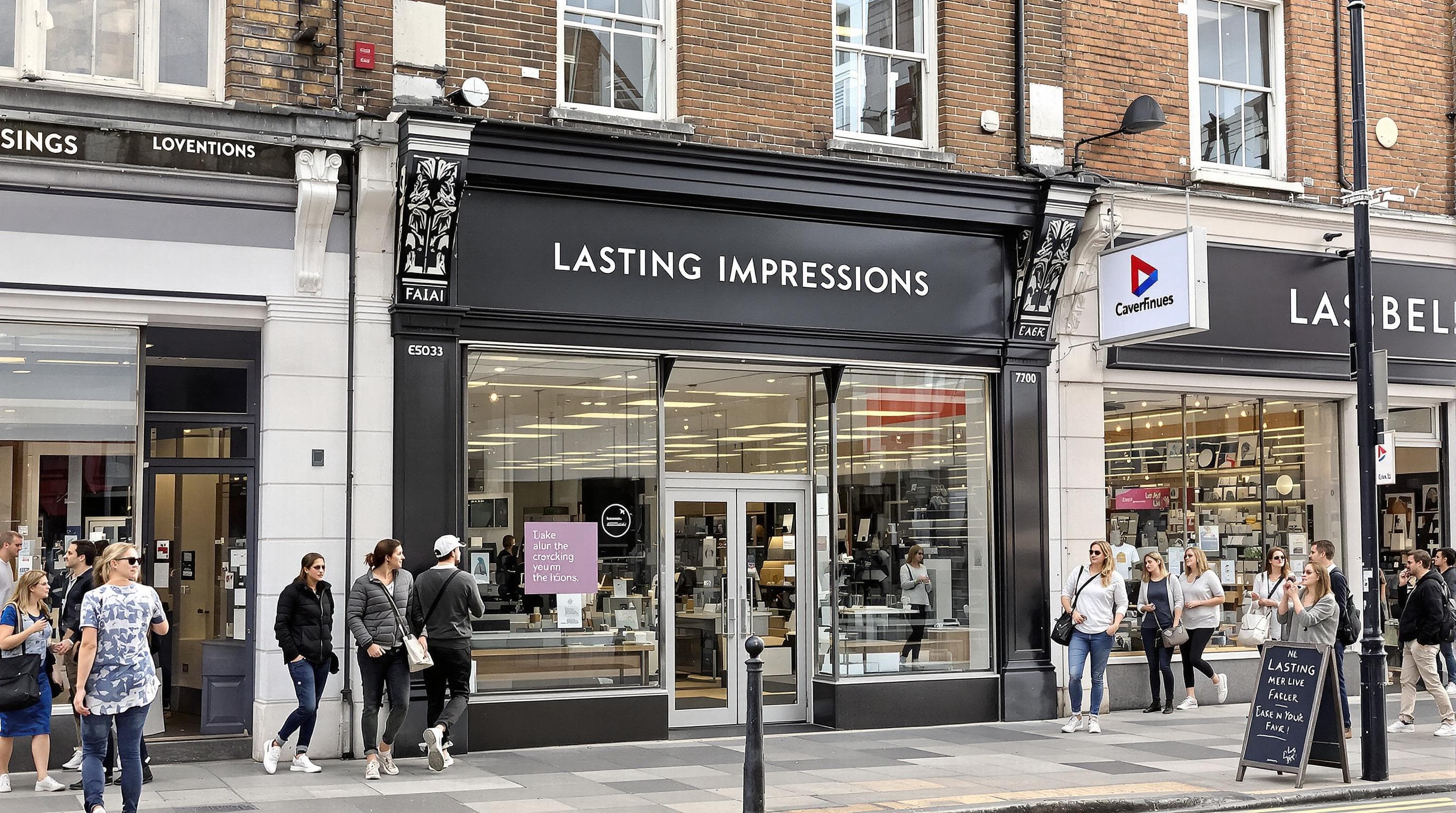
A striking shop fascia can be the difference between bustling foot traffic and empty doorways in London. Here is something many overlook. An aluminium fascia can last up to 30 years with minimal maintenance, far outlasting traditional wood by decades. Most shopfronts are spending more on repairs and replacements than they ever realise, just for sticking with old habits.
Table of Contents
Table of Contents
- Choosing The Right Materials For Your Fascia
- Creating A Strong Visual Identity With Fascia
- Ensuring Compliance And Local Appeal In London
- Practical Maintenance Tips For Long-Lasting Fascias
Quick Summary
| Takeaway | Explanation |
|---|---|
| Choose Durable Materials | Opt for materials like aluminium or composite that offer longevity, low maintenance, and corrosion resistance, compared to traditional wooden fascias. |
| Design with Brand Identity | Ensure your fascia design reflects your brand’s core identity through careful selection of typography, colour palette, and proportions, while respecting local architectural styles. |
| Prioritise Compliance | Understand and adhere to local regulatory frameworks and design guidelines that ensure your fascia aligns with community aesthetics and safety standards. |
| Implement Regular Maintenance | Establish a systematic approach for regular cleaning and inspections to preserve your fascia’s condition and appearance, preventing costly long-term damage. |
| Engage Professionals for Installation | Collaborate with experienced professionals for installation to guarantee optimal performance and durability of your chosen fascia materials. |
Choosing the Right Materials for Your Fascia
Selecting the right materials for your shop fascia is a critical decision that impacts both aesthetic appeal and long-term performance. The material you choose will influence your business’s visual identity, durability, and maintenance requirements. Business owners must carefully evaluate different options to ensure their shop front makes the right impression while standing up to London’s variable weather conditions.
Understanding Material Performance and Characteristics
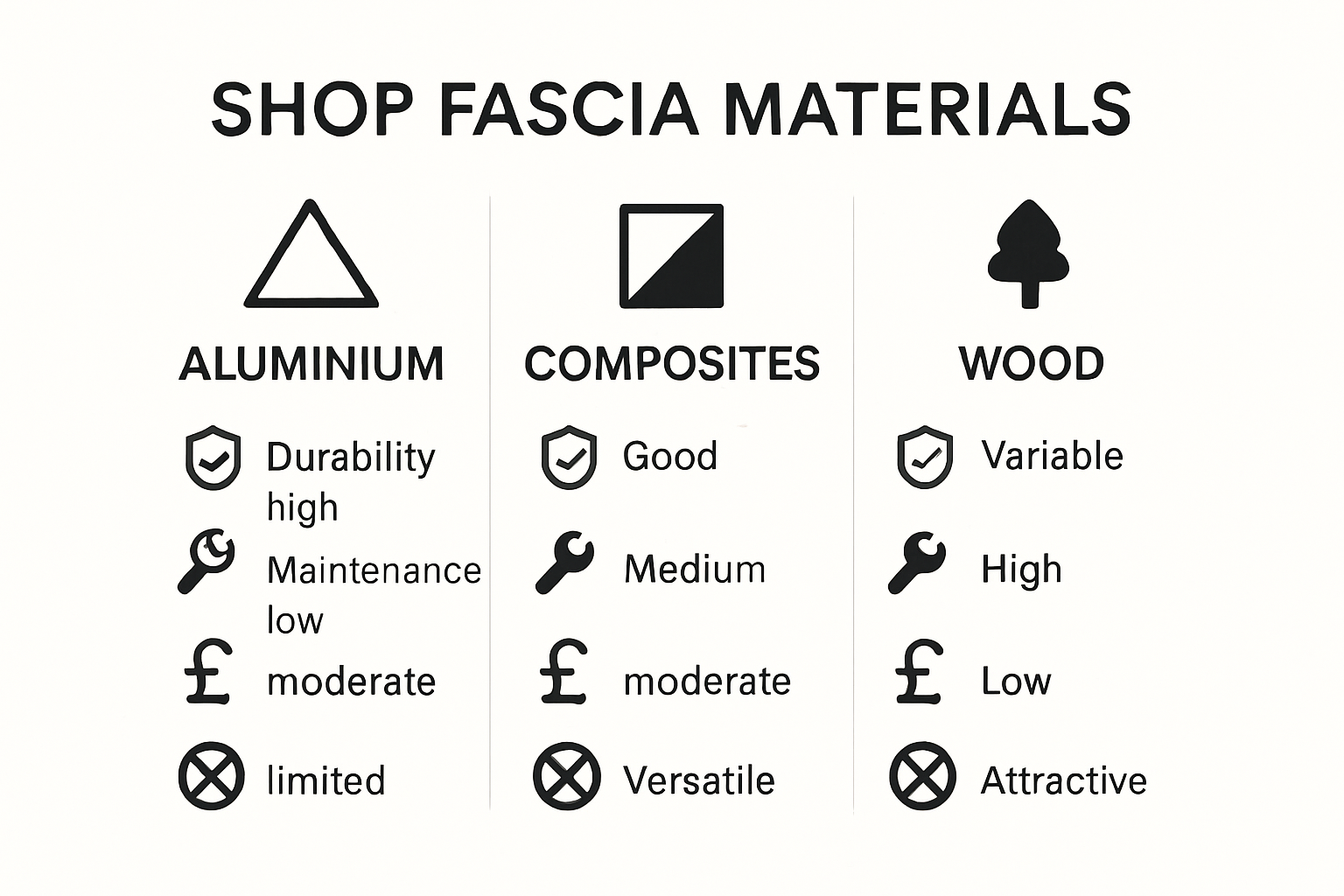
The following table compares the key features of Aluminium, Composite, and Traditional Wood fascia materials as discussed in the article, providing a concise reference for business owners weighing their options:
| Feature | Aluminium | Composite | Traditional Wood |
|---|---|---|---|
| Corrosion Resistance | High | High | Low |
| Lifespan | Up to 30 years | Long-lasting | 10-15 years |
| Maintenance | Minimal | Minimal | Frequent |
| Weather Resilience | Excellent | Excellent | Moderate |
| Sustainability | Highly recyclable | Contains recycled content | Renewable (if sourced well) |
| Design Flexibility | Good | Excellent (many colours/textures) | Moderate |
| Upfront Cost | Higher | Higher | Lower |
Composite materials present another innovative solution for businesses seeking versatility. Design Horizons Research highlights that composite fascia boards combine wood fibers and plastic, delivering remarkable advantages:
- Weather Resilience: Superior protection against moisture and temperature fluctuations
- Low Maintenance: Minimal upkeep compared to traditional wood materials
- Design Flexibility: Available in multiple colors and textures
Cost Considerations and Long-Term Investment
While initial material costs are important, smart business owners understand the significance of long-term value. Construction Economics Journal recommends evaluating materials through a comprehensive lifecycle cost analysis. Traditional wooden fascias might seem economical initially but require frequent maintenance and potential replacement.
Aluminium and composite materials, though potentially more expensive upfront, offer significant long-term savings. Their durability means reduced repair and replacement costs. For instance, an aluminium fascia can last up to 30 years with minimal maintenance, compared to wooden alternatives that might require replacement every 10-15 years.
Professional Installation and Material Selection
Choosing materials is only half the battle. Professional Signage Association emphasizes the critical role of expert installation. Even the highest-quality materials can underperform if not properly fitted. Business owners should prioritize working with experienced professionals who understand material-specific installation techniques.
Consider factors such as:
- Local climate conditions
- Building structure
- Aesthetic requirements
- Budget constraints
By carefully evaluating these elements and consulting with signage professionals, London businesses can select fascia materials that not only look exceptional but also provide reliable, long-lasting performance. The right material transforms a simple shop front into a powerful visual statement that attracts customers and reflects your brand’s quality and attention to detail.
Creating a Strong Visual Identity With Fascia
A shop fascia represents more than just a sign it is a powerful communication tool that encapsulates your brand’s essence and attracts potential customers. For London businesses, the fascia serves as a critical first point of visual engagement that can significantly influence customer perceptions and purchasing decisions.
Strategic Design Principles
Designing an effective fascia requires a nuanced understanding of visual communication. Urban Design Research Institute highlights that successful fascia design integrates multiple strategic elements. The typography, color palette, and overall composition must align seamlessly with your brand’s core identity.
According to Royal Borough of Kensington and Chelsea Planning Consultations, traditional design principles remain crucial. Traditional materials like hand-painted timber and individually applied lettering can maintain visual harmony with the building’s architectural character. These approaches ensure your fascia does not disrupt the streetscape but enhances it.
Key considerations for visual identity include:
- Proportionality: Ensure fascia size complements the building’s architectural features
- Color Coherence: Select colors that reflect your brand personality
- Typography: Choose fonts that communicate your brand’s professional tone
Technical Considerations for Maximum Impact
Design Innovation Journal emphasizes that technical execution matters as much as conceptual design. The depth and placement of your fascia can dramatically influence its visual effectiveness. Businesses should avoid overly deep fascias that might disrupt building proportions.
Illumination plays a critical role in modern fascia design. Strategic lighting can transform your signage from daytime identifier to nighttime beacon. LED technologies now offer energy-efficient solutions that provide crisp, vibrant displays while maintaining professional aesthetics. Learn more about our innovative signage solutions for comprehensive branding strategies.
Cultural and Local Context
London’s rich architectural heritage demands a nuanced approach to fascia design. London Design Council recommends businesses consider the historical and cultural context of their specific location. A fascia in Shoreditch might embrace contemporary minimalism, while one in Covent Garden could incorporate more traditional, ornate elements.
Businesses must balance individual expression with respect for local architectural character. This means understanding:
- Neighborhood architectural styles
- Local planning regulations
- Historical design precedents

By carefully crafting a fascia that communicates your unique brand story while respecting its architectural environment, you create more than signage. You develop a visual narrative that invites customers, tells your brand’s story, and establishes an immediate emotional connection. Your fascia becomes a silent yet powerful ambassador for your business, working continuously to attract and engage potential customers.
Ensuring Compliance and Local Appeal in London
Navigating the complex landscape of regulatory requirements and local design standards is crucial for London businesses seeking to create impactful shop fascias. The intersection of legal compliance, architectural heritage, and visual communication demands a strategic approach that balances aesthetic innovation with respect for local guidelines.
Regulatory Framework and Design Guidelines
The following table summarises the key compliance and design considerations for London shop fascias outlined in the article, providing a practical checklist for business owners:
| Compliance Area | Key Requirement | Source/Consideration |
|---|---|---|
| Proportional Design | Fascias must complement building features | Planning Guidelines |
| Historical Context | Respect local architectural environment | Borough Consultations |
| Material Selection | Use traditional/sympathetic materials | Design Frameworks |
| Accessibility | Ensure visual and physical accessibility | UK Accessibility Standards |
| Fire and Safety | Meet fire and installation safety regulations | Gov’t Safety Regulations |
| Conservation Areas | Adhere to area-specific restrictions | Local Planning Authority |
The UK Accessibility Conformance Standard introduces additional requirements for signage design. Businesses must ensure their fascias are not just visually appealing but also accessible to all potential customers, including those with visual or mobility impairments.
Legal and Safety Compliance
Beyond aesthetic considerations, legal compliance is paramount. UK Government Safety Regulations introduce new standards for commercial signage that businesses must carefully navigate. These regulations focus on:
- Fire safety standards
- Material durability
- Installation safety protocols
Check out our comprehensive retail signage compliance guide for detailed insights into meeting these evolving regulatory requirements.
Local Architectural Sensitivity
Successful fascia design requires a nuanced understanding of London’s diverse architectural landscapes. London Urban Design Association recommends a contextual approach that considers:
- Neighborhood-specific architectural characteristics
- Conservation area restrictions
- Local planning authority preferences
For instance, a fascia in the historical streets of Bloomsbury would require a markedly different approach compared to a contemporary design in Canary Wharf. This sensitivity to local context transforms a simple sign into a thoughtful architectural element that enhances rather than disrupts the urban fabric.
Businesses must view their fascia as more than a marketing tool it is a critical interface between private commercial interests and public urban spaces. By carefully balancing regulatory compliance, design innovation, and local architectural sensitivity, London businesses can create fascias that are not just legally sound but also contribute positively to the city’s rich visual tapestry. The most successful designs will seamlessly integrate brand identity with respect for local heritage, creating signage that feels both distinctive and inherently part of London’s architectural narrative.
Practical Maintenance Tips for Long-Lasting Fascias
Maintaining your shop fascia is not just about preserving its aesthetic appeal but also protecting your business’s visual investment. A well-maintained fascia communicates professionalism, attracts customers, and prevents costly long-term damage. By implementing strategic maintenance practices, London businesses can ensure their signage remains vibrant, functional, and representative of their brand identity.
Regular Cleaning and Inspection Protocols
National Plastics Maintenance Guide recommends a systematic approach to fascia maintenance. Regular cleaning involves using mild detergents and warm water, avoiding abrasive cleaning methods that could compromise material integrity. Professional signage experts suggest:
- Gentle Cleaning: Use soft cloths or non-abrasive sponges
- Appropriate Cleaning Solutions: Select materials-specific cleaning agents
- Thorough Drying: Prevent water accumulation and potential corrosion
Monthly visual inspections can reveal early signs of wear, such as paint chipping, material discoloration, or structural weaknesses. Professional Signage Association emphasizes documenting these inspections to track deterioration patterns and plan proactive interventions.
Seasonal Maintenance Strategies
London’s variable climate demands adaptive maintenance strategies. Seasonal Maintenance Research highlights the importance of tailored care throughout the year. Winter presents challenges like moisture accumulation and potential material brittleness, while summer can cause UV-related discoloration.
Key seasonal considerations include:
- Winter Preparation: Check for water damage and seal potential entry points
- Summer Protection: Apply UV-resistant coatings for materials susceptible to sun damage
- Autumn Debris Management: Clear surrounding areas to prevent moisture retention
Learn more about our comprehensive signage maintenance solutions to protect your business’s visual identity year-round.
Professional Maintenance and Restoration
While routine care is essential, periodic professional maintenance ensures comprehensive preservation. Commercial Signage Preservation Institute recommends:
- Annual Professional Inspections: Comprehensive evaluations by expert technicians
- Specialized Restoration: Address complex maintenance requirements
- Material-Specific Treatment: Tailored approaches for different fascia materials
Professional maintenance goes beyond simple cleaning. Experts can identify potential structural issues, recommend targeted repairs, and implement preservation techniques that extend your fascia’s lifespan. This approach not only maintains aesthetic quality but also prevents expensive replacements.
By adopting a holistic maintenance strategy that combines regular cleaning, seasonal adaptations, and professional interventions, London businesses can transform fascia maintenance from a reactive task to a proactive investment. Your fascia becomes more than a sign it becomes a resilient, dynamic representation of your brand’s commitment to quality and attention to detail.
Frequently Asked Questions
What materials are recommended for shop fascias in London?
Choosing durable materials like aluminium or composite is advisable for shop fascias in London. These materials offer longevity, low maintenance needs, and excellent weather resistance compared to traditional wooden fascias.
How can I ensure my shop fascia aligns with local regulations?
To comply with local regulations, it’s essential to understand the planning guidelines and design frameworks set by the local authority. These often include requirements for proportional design, material selection, and considerations for historical context.
What are the key design elements for creating an effective shop fascia?
Key design elements include proportionality to the building, a coherent colour palette reflecting your brand, and typography that communicates your professional tone. These elements should harmonize with local architectural styles as well.
How often should I maintain my shop fascia?
Regular maintenance should involve monthly visual inspections and cleaning. Seasonal maintenance strategies should be deployed, tailored to London’s variable climate, to ensure long-lasting appearance and functionality.
Transform Your Fascia Into a Standout Business Asset
If you feel frustrated by facias that fade quickly or struggle to attract attention, you are not alone. The article explains the real cost of choosing outdated materials or relying on standard designs. It highlights how important professional installation, compliance with local regulations and regular maintenance are for keeping your shopfront looking fresh and appealing. You want a fascia that makes a powerful first impression and stands up to London’s changing weather, all while reflecting your brand’s true identity.

Ready to leave costly repairs and forgettable frontage behind? At PromoSigns, we specialise in custom shop signage that truly lasts. Our team handles everything from design to installation, offering durable options like illuminated signs and large-format prints. Make your business impossible to ignore, meet all London compliance standards and let experienced professionals handle the details. Take the next step by visiting PromoSigns or explore how our fascia signage solutions can help your shopfront shine all year round.
Recommended
- Fascia Signs London | Premium Signage for London Businesses
- Office Signage Ideas for London Businesses and Events: 2025 Trends – PromoSigns.co.uk
- Signage for Office Interiors: 2025 Guide for London Businesses – PromoSigns.co.uk
- Signage Design Principles for London Businesses in 2025 – PromoSigns.co.uk
- Transform Your Workspace: Office Interior Design Tips & Trends
