
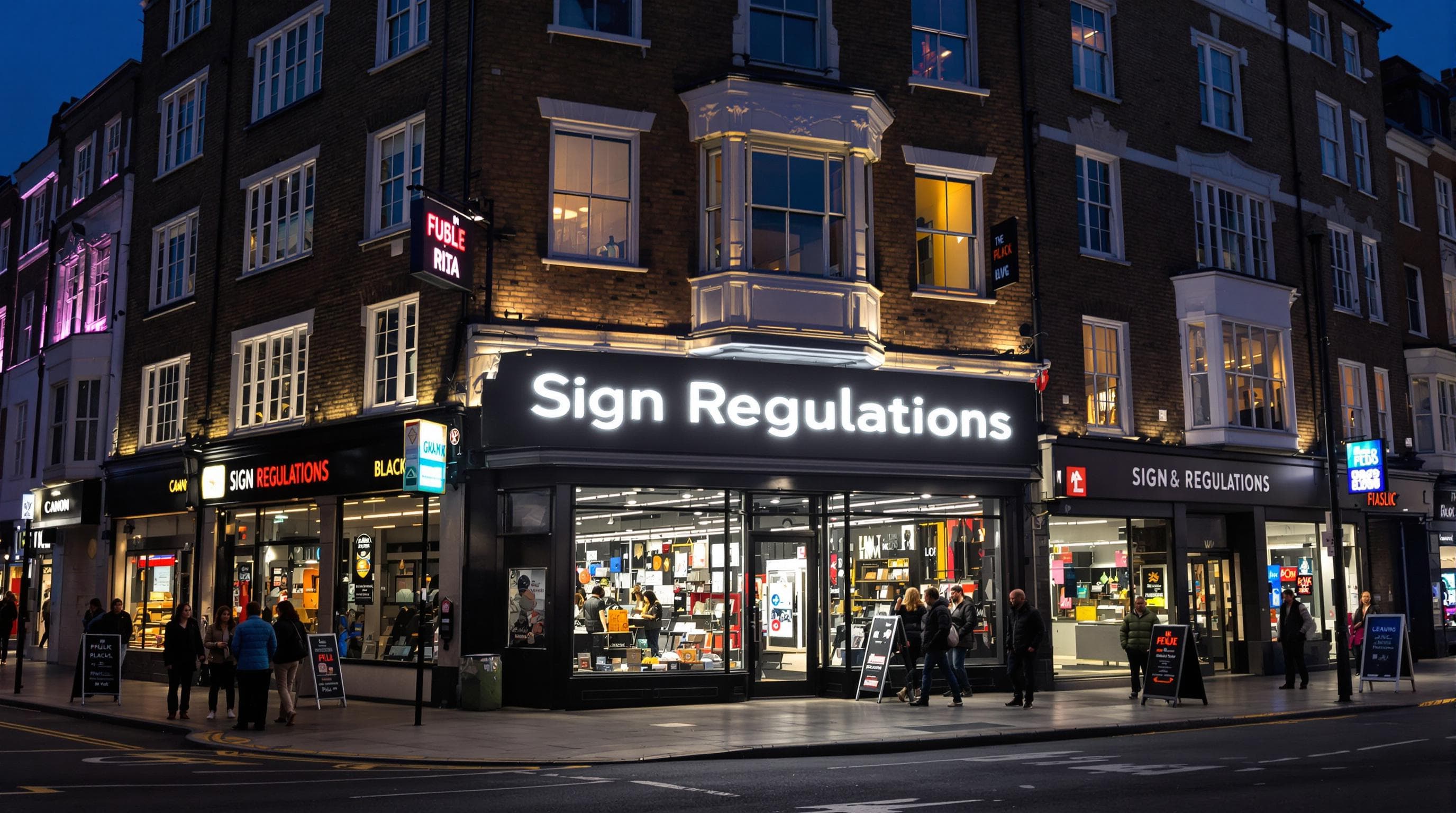
Illuminated signs are transforming high streets and city centres, catching the eye of every passerby. Some councils now require signs to meet energy ratings and technical standards stricter than ever before. But businesses might be surprised to learn that even a perfect sign design can be rejected if you miss a single safety document or place a sign just a few centimetres too close to a pavement. With local councils enforcing over 79% of permit refusals due to technical documentation errors, knowing the rules is more vital than ever.
Table of Contents
Table of Contents
- Understanding Illuminated Sign Regulations In London
- Key Legal And Safety Requirements For 2025
- How To Secure Permits For Illuminated Signs
- Common Mistakes And Best Practices For Businesses
Quick Summary
| Takeaway | Explanation |
|---|---|
| Understand Local Regulations | Businesses must engage closely with their borough’s planning department to navigate regulations concerning brightness, positioning, and potential hazards of illuminated signs. |
| Prioritise Safety and Technical Compliance | Adherence to established electrical safety standards and energy efficiency requirements is crucial, including the use of advanced technologies like LED and thermal management. |
| Prepare Comprehensive Documentation | Securing permits requires detailed application packages with technical specifications, safety certifications, and compliance proof to facilitate the review process. |
| Focus on Design Simplicity | Effective illuminated signage requires attention to detail in design, ensuring contrast and consistency to enhance brand perception while remaining compliant with regulations. |
| Implement Ongoing Maintenance Strategies | Regular inspections and maintenance are essential to ensure the technical performance and safety of illuminated signs, including electrical safety checks and technology updates. |
Understanding Illuminated Sign Regulations in London
Businesses in London face a complex landscape of illuminated sign regulations that require careful navigation to ensure compliance and avoid potential legal complications. The regulatory framework governing illuminated signage is intricate, balancing the needs of businesses with urban aesthetic considerations and public safety standards.
Legal Framework and Planning Permissions
The Town and Country Planning (Control of Advertisements) (England) Regulations 2007 form the cornerstone of illuminated sign regulations in London. These comprehensive guidelines establish critical parameters for businesses seeking to install illuminated signage. Local planning authorities have significant discretion in interpreting and enforcing these regulations, which means businesses must engage closely with their specific borough’s planning department.
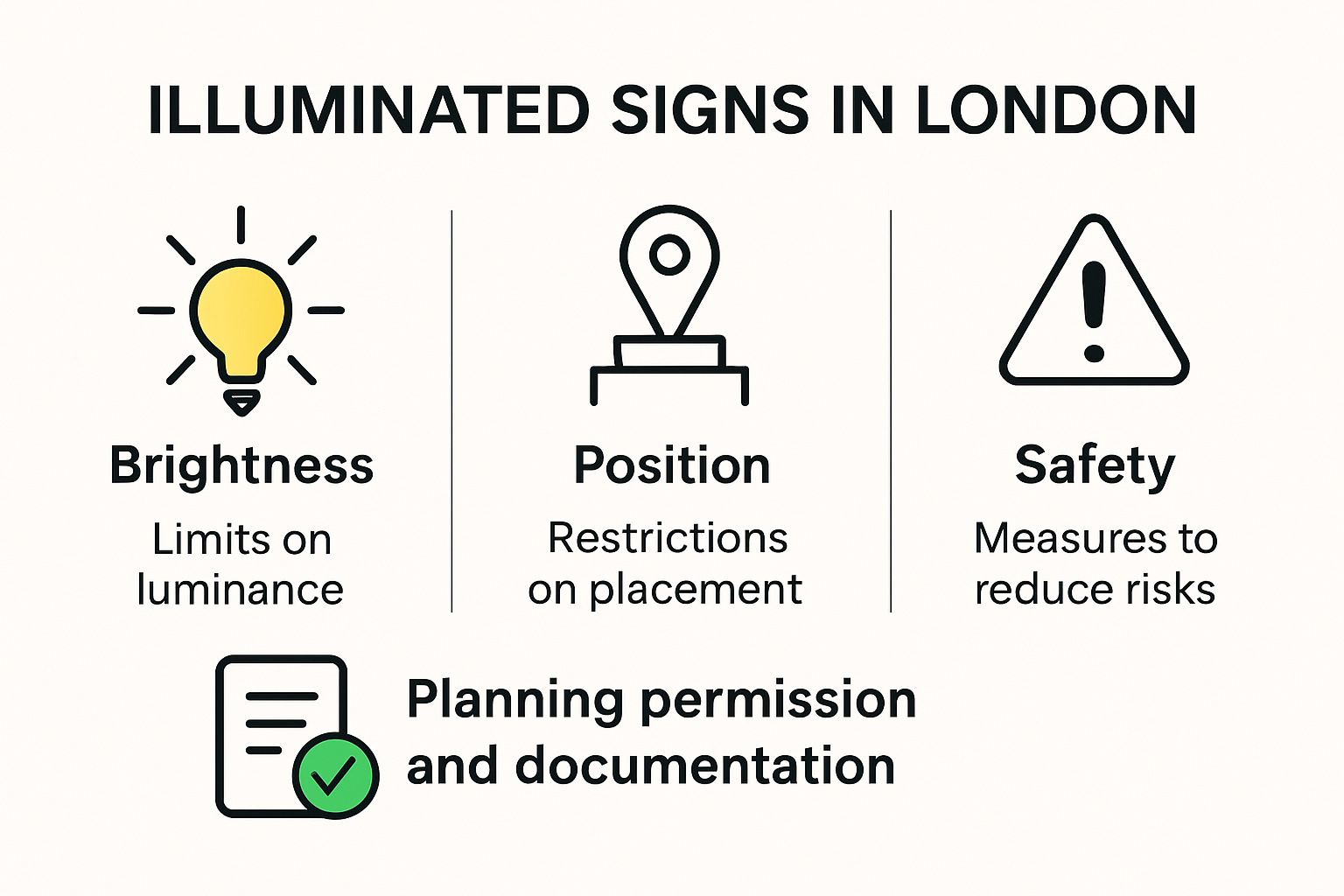
Key regulatory considerations include brightness levels, positioning, size restrictions, and potential impact on public spaces. Illuminated signs must not create potential hazards for road users or create light pollution that might disturb residential areas. The regulations require businesses to obtain explicit planning permissions, particularly for signs that are visible from public highways or might impact the local streetscape.
Technical Compliance and Safety Standards
Beyond visual aesthetics, illuminated sign regulations in London emphasise technical compliance and safety. According to London City Council’s Planning Guidelines, businesses must ensure their illuminated signs meet specific electrical safety standards and energy efficiency requirements. This includes using LED technologies that minimise power consumption and reduce environmental impact.
Signage must adhere to strict luminance limits, typically measured in candelas per square metre. These technical specifications prevent excessive brightness that could potentially distract drivers or create visual nuisance for surrounding properties. Businesses must also consider the sign’s placement, ensuring it does not obstruct pedestrian walkways or interfere with traffic signals.
Practical Implementation and Compliance Strategies
Successful navigation of illuminated sign regulations requires a proactive approach. Businesses should explore our comprehensive guide to illuminated signage to understand the nuanced requirements. Engaging with local planning authorities early in the design process can help prevent potential compliance issues.
Documentation is crucial. Businesses must prepare detailed submissions including technical specifications, design drawings, and precise location plans. Professional sign designers familiar with London’s regulatory landscape can provide invaluable support in creating signs that are both visually compelling and fully compliant with local regulations.
While the regulations might seem complex, they ultimately serve to maintain London’s visual harmony and ensure public safety. By understanding and respecting these guidelines, businesses can create impactful illuminated signage that enhances their brand visibility while contributing positively to the urban environment.
Key Legal and Safety Requirements for 2025
As businesses continue to evolve their visual communication strategies, illuminated sign regulations in 2025 demand increasingly sophisticated approaches to legal compliance and safety standards. The regulatory landscape has become more complex, requiring businesses to navigate intricate requirements that balance aesthetic appeal with public safety and technological innovation.
Electrical Safety and Technical Standards
The Occupational Safety and Health Administration (OSHA) standards provide critical guidelines for electrical signage safety in commercial environments. Businesses must adhere to stringent requirements that cover electrical installation, wiring methods, and overcurrent protection. According to Building Research Establishment (BRE) guidelines, illuminated signs must now incorporate advanced safety features, including:
- Thermal Management: Ensuring signs can withstand temperature variations without compromising electrical integrity
- Surge Protection: Integrated circuits that prevent electrical damage from power fluctuations
- Automated Shut-off Mechanisms: Systems that immediately disconnect power in case of electrical anomalies
These technical requirements go beyond traditional safety measures, reflecting the increasing complexity of modern illuminated signage technologies.
Regulatory Compliance and Documentation
Businesses must prepare comprehensive documentation demonstrating full compliance with 2025 illuminated sign regulations. This includes detailed technical specifications, safety certifications, and comprehensive risk assessments. Explore our comprehensive guide to signage compliance to understand the intricate documentation requirements.
Key documentation elements include:
- Precise electrical circuit diagrams
- Material safety data sheets
- Certification of electrical component standards
- Detailed installation and maintenance protocols
Local authorities have become increasingly rigorous in their inspection processes, requiring businesses to maintain meticulous records that demonstrate ongoing compliance and safety.
Environmental and Energy Efficiency Considerations
The 2025 regulatory framework places significant emphasis on environmental sustainability and energy efficiency for illuminated signs. Businesses must now implement signs that not only meet aesthetic and safety standards but also contribute to broader environmental goals.
Regulatory requirements now mandate:
- Minimum energy efficiency ratings for illuminated signs
- Use of low-emission LED technologies
- Automated light intensity management systems
- Recycling and disposal protocols for signage components
These requirements reflect a holistic approach to sign regulation, considering the broader impact of commercial signage on urban environments and energy consumption.
Navigation of these complex requirements demands a proactive and informed approach. Businesses must invest in continuous education, technological adaptation, and close collaboration with regulatory bodies to ensure their illuminated signs remain compliant, safe, and effective in the evolving commercial landscape of 2025.
To help summarise the critical compliance requirements, the following table outlines the main legal, technical, and environmental regulations for illuminated signs in 2025:
| Requirement Type | Key Focus Area | Example Regulation or Standard |
|---|---|---|
| Legal/Planning | Local authority approval, placement rules | Town & Country Planning regulations, borough permits |
| Electrical Safety | Installation, wiring, and safety features | OSHA 1910.303, surge protection, thermal management |
| Documentation | Comprehensive technical records | Schematics, certifications, safety/risk assessments |
| Technical Standards | Luminance, size, energy use, shutoff | Candela limits, LED technology, automated shutoff |
| Environmental | Energy performance, recycling, LED use | Efficiency ratings, disposal guidelines, low-emission |
How to Secure Permits for Illuminated Signs
Securing permits for illuminated signs involves a complex process that requires meticulous attention to detail and thorough understanding of local regulatory requirements. Businesses must navigate a multifaceted landscape of administrative procedures, technical specifications, and local government regulations to successfully obtain the necessary approvals for their signage installations.
Initial Application and Documentation Preparation
The permit acquisition process begins with comprehensive documentation preparation. According to Fairfax County’s Sign Regulation Guidelines, businesses must compile a detailed application package that includes:
- Precise architectural drawings of the proposed sign
- Detailed electrical schematics
- Precise location plans demonstrating sign placement
- Comprehensive material specifications
- Proof of compliance with local zoning regulations
Professional sign designers recommend creating a comprehensive submission that anticipates potential questions from regulatory bodies. Our professional installation guide provides additional insights into creating robust permit applications.
Technical Compliance and Review Process
Local authorities conduct rigorous technical reviews to ensure illuminated signs meet specific safety and aesthetic standards. New York City Department of Buildings emphasizes several critical evaluation criteria:
- Structural integrity assessment
- Electrical safety verification
- Light emission and brightness measurements
- Impact on surrounding urban environment
- Compliance with energy efficiency standards
Businesses should anticipate a comprehensive review process that may require multiple iterations and additional documentation. Professional consultation can significantly streamline this complex procedure.
Navigating Local Regulatory Variations
Permit requirements vary substantially between different local jurisdictions, making it essential for businesses to engage directly with their specific municipal planning departments. Key considerations include:
- Zoning district specific regulations
- Historical district additional restrictions
- Height and placement limitations
- Illumination intensity guidelines
- Seasonal or temporary signage provisions
Successful permit acquisition requires a proactive approach. Businesses should schedule preliminary consultations with local planning authorities, presenting detailed plans and demonstrating a commitment to regulatory compliance.
The permit process for illuminated signs in 2025 demands a strategic, well-prepared approach. Companies must invest time in understanding local regulations, preparing comprehensive documentation, and maintaining open communication with regulatory bodies. By approaching the permit acquisition process methodically, businesses can successfully navigate the complex landscape of illuminated sign regulations and secure the necessary approvals for their signage projects.
Below is a table summarising the key steps and documents required in the illuminated sign permit application process:
| Permit Step | Description | Example Documents Required |
|---|---|---|
| Application Submission | Submit full application to local authority | Form, business/owner details |
| Design & Technical Documentation Preparation | Prepare drawings, schematics, specs | Architectural plans, electrical diagrams |
| Zoning & Compliance Review | Demonstrate conformity with planning/zoning | Location plan, statement of compliance |
| Safety and Technical Standards Assessment | Prove adherence to safety and energy rules | Certifications, safety data sheets |
| Review & Revision | Respond to authority feedback for approvals | Amended documents as requested |
Common Mistakes and Best Practices for Businesses
Businesses navigating the complex world of illuminated signage face numerous potential pitfalls that can compromise their regulatory compliance, brand image, and operational effectiveness. Understanding these challenges is crucial for creating impactful and legally compliant illuminated signs in 2025.
Design and Visibility Considerations
Visual communication through illuminated signs demands meticulous attention to detail. According to National Signs, 79% of consumers critically examine spelling, grammar, and design elements in marketing materials. This scrutiny extends to illuminated signage, where poor design can significantly undermine brand perception.
Common design mistakes include:
- Inappropriate Color Contrast: Failing to create sufficient visual distinction between text and background
- Overcomplicated Messaging: Attempting to include too much information in limited space
- Inconsistent Branding: Deviating from established brand guidelines in sign design
Explore our comprehensive guide to effective sign design to avoid these critical errors. Professional designers recommend maintaining simplicity, ensuring readability, and aligning sign design with overall brand identity.

Regulatory Compliance and Technical Challenges
Piros Signs emphasizes the critical importance of thorough research before sign installation. Businesses frequently encounter compliance issues due to:
- Inadequate understanding of local zoning regulations
- Failure to obtain necessary permits
- Overlooking specific technical requirements for illuminated signage
- Neglecting periodic maintenance and safety inspections
Best practices include:
- Conducting comprehensive pre-installation research
- Consulting with local planning authorities
- Maintaining detailed documentation of sign specifications
- Implementing regular maintenance and safety checks
The following table highlights typical mistakes businesses make when implementing illuminated signage and best practice strategies to prevent them:
| Common Mistake | Description | Best Practice Solution |
|---|---|---|
| Poor colour contrast | Text and background not distinct | Use clear, high-contrast combinations |
| Overcomplicated content | Too much information, reduced readability | Keep messages clear and concise |
| Inconsistent branding | Deviating from established visual guidelines | Adhere to company’s brand standards |
| Skipping local research/permitting | Neglecting zoning and regulatory requirements | Consult with local authorities upfront |
| Lack of ongoing maintenance | Not inspecting/sign cleaning and component replacement | Schedule regular maintenance checks |
| Ignoring technical/electrical requirements | Overlooking safety or energy standards | Review technical requirements closely |
Technical Performance and Maintenance
House of Signs highlights the importance of ongoing technical performance. Businesses must proactively address potential issues such as:
- Electrical system vulnerabilities
- Light degradation over time
- Environmental impact on sign materials
- Energy efficiency considerations
Key maintenance strategies include:
- Regular electrical safety inspections
- Periodic cleaning and component replacement
- Monitoring light intensity and color consistency
- Updating technology to meet evolving energy standards
Successful illuminated signage in 2025 requires a holistic approach that balances creative design, technical precision, and regulatory compliance. Businesses must invest time in understanding the intricate requirements, engaging with professional designers, and maintaining a proactive approach to sign management. By anticipating potential challenges and implementing comprehensive strategies, companies can create illuminated signs that not only meet legal standards but also effectively communicate their brand message.
Frequently Asked Questions
What are the key regulations for illuminated signs in London?
Businesses must adhere to the Town and Country Planning (Control of Advertisements) Regulations, which cover brightness levels, positioning, size restrictions, and safety standards to avoid hazards or light pollution.
How can businesses ensure their illuminated signs comply with safety standards?
Compliance with safety standards requires adherence to OSHA guidelines, including proper electrical installations, thermal management, and surge protection to prevent electrical hazards.
What documentation is needed to secure permits for illuminated signs?
Businesses need to prepare comprehensive application packages that include architectural drawings, electrical schematics, material specifications, and proof of compliance with local zoning regulations.
How can businesses avoid common mistakes when installing illuminated signs?
To avoid pitfalls, businesses should conduct thorough research on local regulations, maintain clear and compliant design, ensure technical specifications are met, and implement regular maintenance for the signage.
Take the Stress Out of Illuminated Sign Compliance for 2025
Worried about the endless paperwork and strict technical standards behind illuminated signage? With councils turning away most applications due to missing technical documentation or small compliance errors, it is easy to feel overwhelmed and risk project delays. Your brand deserves to shine without being held back by new energy ratings and constantly changing safety standards. Our team at PromoSigns understands these pain points, and we are here to help you avoid costly setbacks.

Ready to secure your illuminated sign without the hassle? Let PromoSigns guide your business through every step, from detailed drawings and safety certifications to flawless installation. Visit our London illuminated signs guide to learn more, or get started instantly at https://promosigns.co.uk and ensure your signage stands out and stays compliant in 2025.
Recommended
- Illuminated Signs Explained: A 2025 Guide for London Businesses – PromoSigns.co.uk
- Illuminated Shop Sign Benefits for London Businesses 2025 – PromoSigns.co.uk
- What Is Illuminated Signage? 2025 Guide for London Businesses – PromoSigns.co.uk
- Effective Use of Lighting in Shop Signs for London Businesses 2025 – PromoSigns.co.uk
- Normes sécurité incendie 2025 : obligations et conseils clés | Réparation de fissures de fondation Rive-Sud
- Waste Disposal Legal Requirements UK 2025: What Businesses Must Know – Venture Waste
