
Shop owners across London know a brilliant sign can make all the difference and with so many choices, the right decision can feel overwhelming. Yet many are shocked to discover that material selection alone can account for up to 40% of your entire signage cost. It is not always the fanciest digital display that matters most. Sometimes, a simple tweak in design or clever placement can double your sign’s impact without emptying your wallet.
Table of Contents
Table of Contents
- Factors That Influence The Cost Of Shop Signage
- Popular Sign Types And Average Prices In 2025
- How To Budget For Shop Signage In London
- Tips To Maximise Value From Your Signage Investment
Quick Summary
| Takeaway | Explanation |
|---|---|
| Material Quality Affects Cost | The selection of materials can account for up to 40% of the total signage production cost, influencing both durability and aesthetics. Higher quality materials enhance visual appeal but increase costs. |
| Design Complexity Impacts Pricing | Custom designs can elevate signage costs by 30-50% compared to standard options due to intricate graphics and bespoke elements, so opt for simplicity to save on expenses. |
| Consider Long-Term Value | Invest in durable, weather-resistant materials and modular designs to minimise future replacement and maintenance costs, ensuring longevity and adaptability. |
| Strategic Budget Allocation | Allocate 3-5% of your annual marketing budget for signage, breaking it down into design, production, installation, and maintenance for comprehensive financial planning. |
| Maximise Visibility with Location | Proper placement and technical optimisation, including lighting and mounting techniques, can increase sign visibility by up to 40%, enhancing customer engagement. |
Factors That Influence the Cost of Shop Signage
Shop signage represents a critical investment for businesses seeking to establish a strong visual presence in London’s competitive market. The cost of shop signage is not a one-size-fits-all proposition but a complex interplay of multiple factors that can significantly impact your budget and final product.
Material Selection and Quality
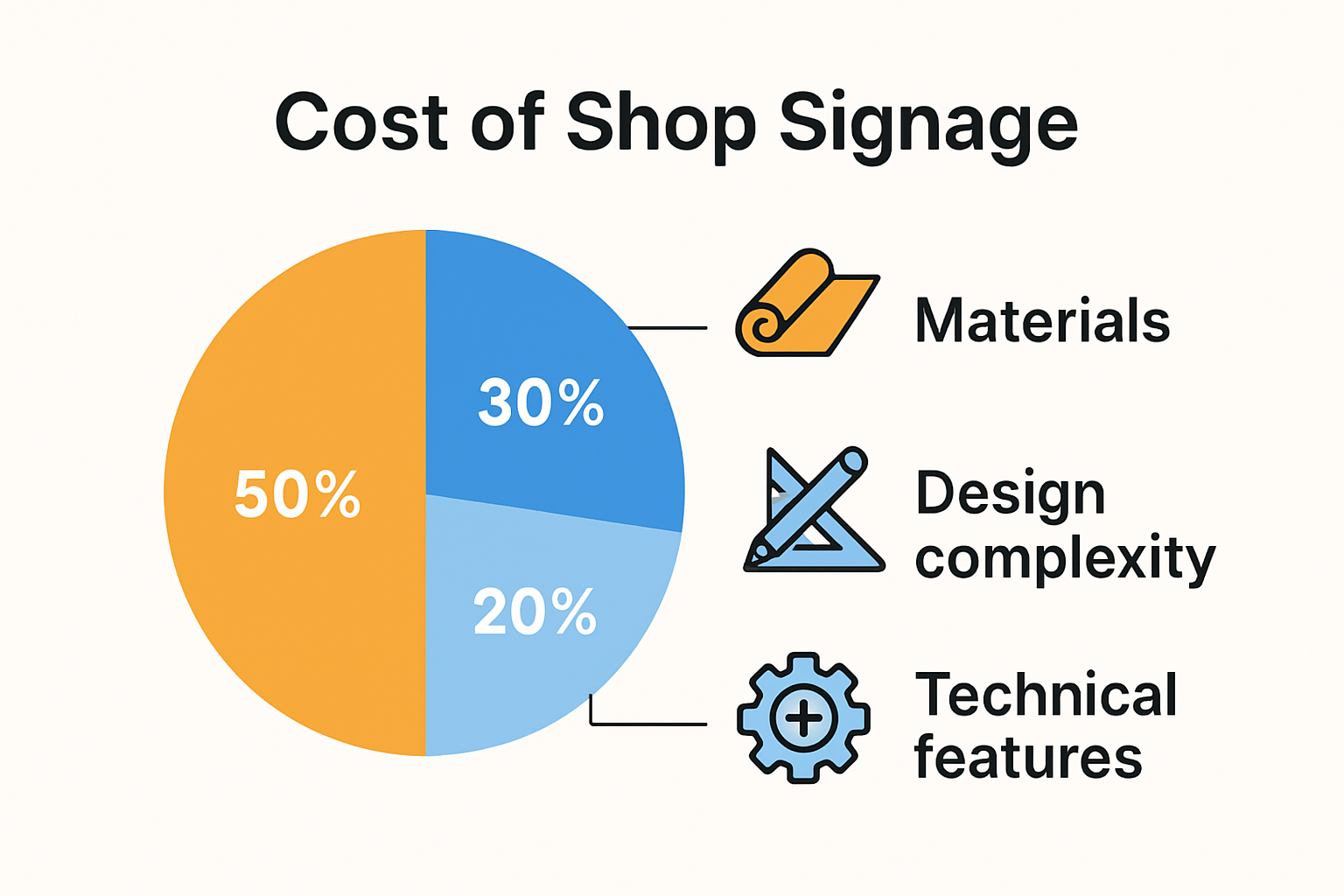
The choice of materials plays a pivotal role in determining the overall cost of shop signage. High-quality materials like aluminium, stainless steel, and premium acrylic offer durability and professional aesthetics but come with higher price points. Comprehensive signage research indicates that material selection can account for up to 40% of the total signage production cost. Basic options like vinyl or painted signs remain more budget-friendly, while illuminated or custom-fabricated signs with advanced materials will drive costs upward.
Businesses must balance aesthetic appeal with practical considerations. Lightweight materials might reduce installation costs, but they may compromise longevity and visual impact. Factors such as weather resistance, maintenance requirements, and expected lifespan become crucial decision-making elements when evaluating material choices.
Design Complexity and Customisation
The intricacy of your shop sign design directly influences its manufacturing complexity and subsequent cost. Standard, straightforward designs with minimal graphics and simple typography will be more economical. Conversely, intricate logos, multiple color schemes, complex typography, and bespoke artwork significantly increase production expenses. Design industry experts suggest that custom design work can elevate signage costs by 30-50% compared to standardised options.
Customisation extends beyond visual elements. Size, mounting requirements, and integration with existing architectural features all contribute to the final price. Larger signs demand more materials and potentially more complex installation processes, which translates to higher overall expenses. Urban environments like London often have strict planning regulations and aesthetic guidelines that can further complicate design and installation processes.
Technical Features and Additional Components
Modern shop signage increasingly incorporates advanced technical features that enhance visibility and functionality. Illumination options such as LED lighting, digital displays, and dynamic lighting systems dramatically impact pricing. Basic non-illuminated signs represent the most cost-effective solution, while fully digital, programmable signs can represent a substantial investment.
Additional technical considerations include weatherproofing, electronic components, power supply requirements, and potential connectivity features. These elements not only increase initial production costs but also introduce ongoing maintenance and operational expenses. Our comprehensive guide on shop front signage provides deeper insights into how these technical specifications influence overall investment.

Understanding these factors helps businesses make informed decisions about their shop signage investment. While costs can vary widely, a strategic approach considering material quality, design complexity, and technical requirements ensures businesses achieve maximum visual impact within their budgetary constraints.
Here is a summary table comparing the key factors that influence signage costs in London, and their potential impact:
| Factor | Cost Impact (%) | Description |
|---|---|---|
| Material Selection & Quality | Up to 40% | Higher quality materials improve aesthetics & durability, but cost more |
| Design Complexity & Customisation | 30-50% increase | Intricate custom designs significantly raise production expense |
| Technical Features | Variable | Lighting, electronics, and digital displays add to both upfront and running costs |
| Size & Installation | Variable | Larger or more complex installs increase material and labour expenses |
| Maintenance & Longevity | Variable | Durable materials reduce maintenance and replacement costs over time |
Popular Sign Types and Average Prices in 2025
As businesses in London continue to navigate a competitive marketplace, understanding the landscape of shop signage types and their associated costs becomes crucial for strategic branding and marketing investments. The signage market in 2025 presents a diverse array of options catering to different business needs, budgets, and aesthetic preferences.
Illuminated and Non-Illuminated Signage
Illuminated signs represent a significant segment of the shop signage market, offering enhanced visibility during evening hours and in low-light conditions. Market research from Statista indicates that illuminated signs have seen a 35% growth in adoption among urban businesses. Pricing for these signs varies considerably:
- LED Illuminated Signs: £500 – £3,500
- Neon-Style Signs: £750 – £4,000
- Basic Backlit Signs: £350 – £2,500
- Non-Illuminated Acrylic Signs: £200 – £1,500
Non-illuminated signs remain popular for businesses seeking cost-effective branding solutions. These signs offer simplicity and can be equally impactful when designed with strategic color schemes and typography. Our comprehensive guide on shop front signage provides deeper insights into selecting the right signage type.
Dimensional and Architectural Signage
Dimensional signs have gained significant traction in 2025, offering businesses a sophisticated and professional appearance. These signs create depth and visual interest through raised lettering, 3D elements, and intricate design features. Design industry experts suggest that dimensional signage can increase brand perception and customer engagement.
Price ranges for dimensional signage include:
- Metal Channel Letters: £800 – £5,000
- Raised Acrylic Lettering: £350 – £2,500
- Wooden Dimensional Signs: £450 – £3,000
- Composite Material Signs: £600 – £4,500
Architectural signage integrates seamlessly with building facades, offering a cohesive and sophisticated branding approach. These signs are particularly popular among professional services, boutique retailers, and businesses in historic or design-conscious areas of London.
Digital and Interactive Signage
Digital signage represents the cutting edge of shop sign technology in 2025. These dynamic displays offer unprecedented flexibility, allowing businesses to update content instantly and engage customers through interactive features. Technology research from Gartner predicts continued growth in digital signage adoption across urban commercial spaces.
Price points for digital signage solutions vary widely:
- Basic Digital Displays: £1,500 – £6,000
- Interactive Touch Screens: £2,500 – £10,000
- High-Resolution LED Screens: £3,000 – £15,000
- Smart Digital Signage Systems: £4,500 – £20,000
These advanced signs offer real-time marketing capabilities, allowing businesses to showcase promotions, display dynamic content, and create immersive customer experiences. While the initial investment is higher, the potential for increased customer engagement and marketing flexibility makes digital signage an attractive option for forward-thinking businesses.
Understanding these sign types and their associated costs enables businesses to make informed decisions that align with their branding objectives, budget constraints, and visual communication goals in London’s dynamic commercial environment.
To help you compare average prices for the most common shop signage types in 2025, see the table below:
| Sign Type | Price Range | Features |
|---|---|---|
| LED Illuminated Signs | £500 – £3,500 | Night visibility, energy-efficient |
| Neon-Style Signs | £750 – £4,000 | Retro look, high impact |
| Basic Backlit Signs | £350 – £2,500 | Internal lighting, sleek appearance |
| Non-Illuminated Acrylic Signs | £200 – £1,500 | Cost-effective, custom shapes |
| Metal Channel Letters | £800 – £5,000 | 3D effect, durable |
| Raised Acrylic Lettering | £350 – £2,500 | Depth, lightweight |
| Wooden Dimensional Signs | £450 – £3,000 | Natural look, custom routed |
| Composite Material Signs | £600 – £4,500 | Weather resistant, modern design |
| Basic Digital Displays | £1,500 – £6,000 | Changeable content, animated |
| Interactive Touch Screens | £2,500 – £10,000 | Customer engagement, touch feedback |
| High-Resolution LED Screens | £3,000 – £15,000 | Large format, video capability |
| Smart Digital Signage Systems | £4,500 – £20,000 | Programmable, data integration |
How to Budget for Shop Signage in London
Budgeting for shop signage in London requires strategic planning and a comprehensive understanding of both immediate costs and long-term investment considerations. The unique commercial landscape of London demands businesses approach signage as a critical marketing and branding investment rather than a mere expense.
Strategic Cost Allocation and Financial Planning
Successful signage budgeting begins with a holistic financial approach that considers multiple economic factors. Economic research from the Greater London Authority suggests that small to medium enterprises should allocate approximately 3-5% of their annual marketing budget to signage and visual branding. This percentage allows for quality signage without overwhelming operational expenses.
Businesses should break down their signage budget into distinct categories:
- Initial Design Costs: 20-25% of total budget
- Materials and Production: 40-50% of total budget
- Installation and Mounting: 15-20% of total budget
- Maintenance and Potential Upgrades: 10-15% of total budget
Our comprehensive guide on shop front signage offers deeper insights into strategic budget allocation for different business types.
Below is a budgeting breakdown table to clarify how shop signage costs are commonly allocated for London businesses:
| Budget Area | Recommended % of Total Budget | Typical Expense Focus |
|---|---|---|
| Initial Design | 20-25% | Logo, graphics, mock-ups |
| Materials & Production | 40-50% | Fabrication, materials |
| Installation & Mounting | 15-20% | Labour, equipment, permits |
| Maintenance & Upgrades | 10-15% | Cleaning, repairs, enhancements |
Financing Options and Cost Management
Businesses in London have multiple financing strategies to manage signage investments. Financial experts from the British Chambers of Commerce recommend several approaches to manage signage expenditure:
- Staged Investment: Implement signage in phases to distribute costs over time
- Leasing Options: Some signage providers offer flexible payment plans
- Tax Considerations: Explore potential tax deductions for business branding investments
- Bulk Negotiation: Negotiate better rates for multiple signage elements
Additionally, businesses should consider the return on investment (ROI) perspective. A well-designed sign can significantly enhance brand visibility and customer attraction, potentially offsetting initial expenses through increased foot traffic and brand recognition.
Long-Term Cost-Effectiveness Strategies
Thinking beyond immediate expenses involves selecting signage solutions that offer durability and adaptability. High-quality materials and modular design can reduce long-term replacement and maintenance costs. Digital and adaptable signage systems, while initially more expensive, provide flexibility for future branding updates without complete replacement.
Key considerations for long-term cost-effectiveness include:
- Material Durability: Choose weather-resistant materials
- Energy Efficiency: For illuminated signs, select low-energy LED technologies
- Scalable Design: Ensure signage can be modified without complete replacement
- Maintenance Contracts: Investigate comprehensive service packages
Businesses must also factor in location-specific considerations. London’s diverse architectural environments and strict planning regulations can impact signage installation costs. Professional consultation can help navigate these complex requirements while maintaining budget discipline.
Ultimately, successful signage budgeting combines careful financial planning, strategic investment, and a forward-thinking approach to brand representation. By treating signage as a crucial marketing tool rather than a mere functional requirement, businesses can create impactful visual communications that deliver substantial long-term value.
Tips to Maximise Value From Your Signage Investment
Maximising the value of your signage investment requires a strategic approach that goes beyond mere visual appeal. In London’s competitive business environment, your shop sign represents more than just a directional marker—it’s a powerful communication tool that can significantly impact brand perception, customer attraction, and overall business success.
Strategic Design and Branding Alignment
Effective signage is fundamentally about creating a cohesive brand narrative. Brand strategy experts from the Design Council emphasise that successful signage should seamlessly integrate with your overall brand identity. This means carefully considering colour schemes, typography, and visual elements that reflect your business personality.
Key considerations for strategic design include:
- Consistency: Ensure sign design matches other marketing materials
- Readability: Choose fonts and colours that are easily visible from a distance
- Emotional Connection: Create a design that resonates with your target audience
Our comprehensive guide on creating impactful shop signs provides deeper insights into design principles that elevate brand perception.
Location and Technical Optimization
The placement and technical configuration of your signage can dramatically influence its effectiveness. Urban planning research from the London School of Economics reveals that strategic sign placement can increase visibility by up to 40%. This involves understanding sight lines, pedestrian traffic patterns, and local architectural context.
Technical optimization strategies include:
- Lighting Considerations: Use energy-efficient LED solutions for 24-hour visibility
- Material Selection: Choose weather-resistant materials suitable for London’s variable climate
- Mounting Techniques: Ensure secure, professional installation that complements building architecture
Performance Tracking and Continuous Improvement
Treating signage as a dynamic marketing asset requires ongoing evaluation and refinement. Modern businesses can leverage technological tools to measure signage effectiveness. Advanced digital signage systems offer analytics capabilities that track customer engagement, helping businesses make data-driven improvements.
Performance tracking methods include:
- Foot Traffic Monitoring: Use sensors or digital tracking to measure sign impact
- Customer Feedback: Regularly solicit opinions about sign visibility and appeal
- Periodic Design Audits: Review sign effectiveness every 12-18 months
Businesses should also consider the potential for modular design, allowing future updates without complete sign replacement. This approach provides flexibility and long-term cost-effectiveness, enabling your signage to evolve alongside your brand.
Ultimately, maximising signage value is about viewing it as a strategic investment rather than a one-time expense. By approaching sign design holistically—considering brand alignment, technical optimization, and continuous improvement—businesses can transform their shop signage from a simple identification marker into a powerful marketing and communication tool that drives tangible business results.
Frequently Asked Questions
What factors influence the cost of shop signage in London?
The cost of shop signage in London is influenced by material selection, design complexity, technical features, size, and installation requirements. Material quality can account for up to 40% of costs, while custom designs may increase expenses by 30-50%.
How much should businesses budget for signage in London?
Businesses should allocate approximately 3-5% of their annual marketing budget for signage, covering design, production, installation, and maintenance. This ensures a comprehensive financial plan that maximises visual impact.
What are the average prices for different types of shop signage in 2025?
In 2025, average prices for shop signage vary widely: LED illuminated signs range from £500 to £3,500, while basic non-illuminated acrylic signs can cost between £200 and £1,500. Digital signage can be significantly more expensive, ranging from £1,500 to £20,000 depending on features.
How can businesses maximise the value of their signage investment?
To maximise signage value, businesses should ensure design alignment with branding, optimise technical features for visibility, and regularly evaluate performance using customer feedback and analytics. Investing in durable materials and modular designs also enhances long-term cost-effectiveness.
Take Control of Your Shop Signage Costs with Proven Expertise
Feeling overwhelmed by the rising costs and endless options for shop signage in London? Many business owners are concerned that choosing the wrong materials or a complicated design could waste both time and money. Our team understands these challenges and has helped countless clients like you get the most from every pound spent. Whether you want to enhance your shop’s visibility, choose durable materials, or streamline your signage installation, we specialise in custom solutions tailored to your exact needs. Discover how we address every detail covered in the Cost of Shop Signage in London: 2025 Guide for Businesses.

Let us help you avoid costly mistakes and unlock greater impact from your signage investment. Visit PromoSigns to request a free consultation or explore more solutions. Take the next step today for shop signage that is effective, affordable, and fully customised for success.
Recommended
- Types of Shop Signs for London Businesses: The 2025 Guide – PromoSigns.co.uk
- How Much Does a Shop Front Sign Cost in the UK? – PromoSigns.co.uk
- Shop Signage Basics 2025: Essential Tips for London Businesses – PromoSigns.co.uk
- How Much Do Outdoor Business Signs Cost? | Promo Signs
- Affordable Online Advertising Tips for Small Businesses 2025 | Ibrandmedia
- Cost to Move House UK 2025: Guide for Homeowners and Businesses | Schott Removals
