
Window graphics are transforming how shops entice passersby to step inside. Everyone expects bright colours will grab attention, and they do. But studies show that window graphics can boost approach behaviour by up to 47 percent, making them far more effective than simple decoration. What really surprises is how the right design triggers unconscious responses in shoppers, turning a standard pane of glass into a silent invitation they cannot ignore.
Table of Contents
Table of Contents
- The Science Behind Window Graphics Impact
- Design Strategies To Capture Customer Attention
- Industry-Specific Window Graphics: Custom Solutions
- Maximising Results: Placement, Timing And Local Trends
Quick Summary
| Takeaway | Explanation |
|---|---|
| Window graphics leverage psychological triggers. | They transform visual spaces into marketing tools, deeply influencing consumer behaviour through design elements. |
| Effective colour choices enhance visual impact. | Strategic colour use, like red for urgency, can significantly capture attention and influence customer engagement. |
| Compelling storytelling engages potential customers. | Graphics should narrate a cohesive brand story and forge emotional connections, making displays memorable. |
| Placement and timing are critical for success. | Strategic positioning and timely updates to window graphics ensure they resonate with customers and attract foot traffic. |
| Continuous measurement and adaptation improve effectiveness. | Regularly analysing performance and customer feedback helps refine graphics to maintain relevance and engagement. |
The Science Behind Window Graphics Impact
Visual communication through window graphics represents a sophisticated psychological strategy for attracting customer attention. Modern businesses recognise that window displays are more than mere decorative elements they are strategic tools designed to trigger specific consumer responses.
Psychological Triggers in Visual Design
Window graphics operate on intricate psychological principles that transform passive visual spaces into powerful marketing instruments. Explore our expert window graphics techniques to understand how strategic design can influence consumer behaviour.
Research published in the Journal of Theoretical and Applied Electronic Commerce Research demonstrates that window displays significantly impact shopping decisions. The study reveals that well-designed graphics can create an immediate emotional connection, compelling potential customers to engage with a business’s storefront.
The human brain processes visual information exponentially faster than text. According to research in the International Design Journal, optical illusions and strategic visual compositions can manipulate consumer perception, creating a subconscious attraction that transcends traditional advertising methods.
Neurological Response to Window Graphics
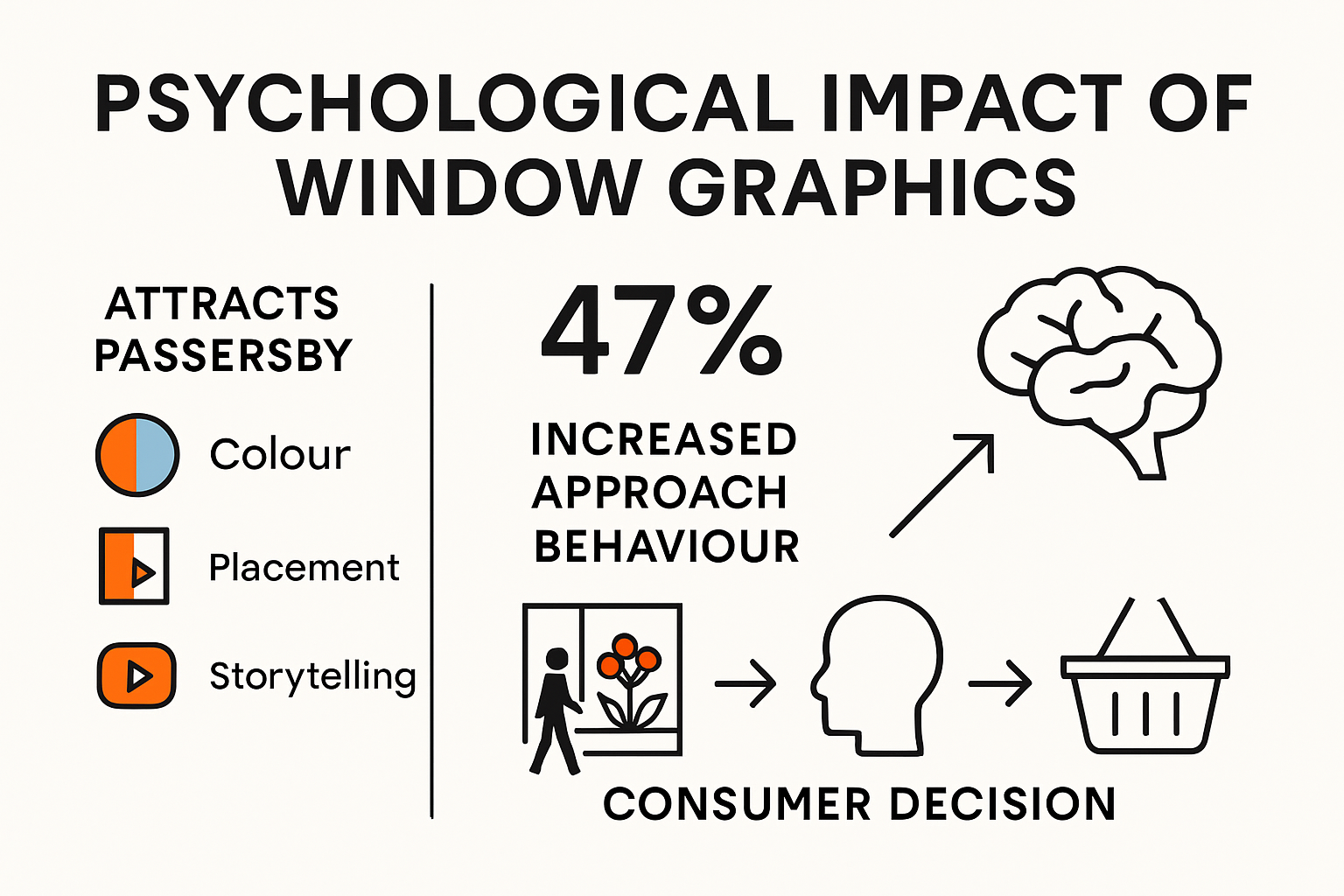
Neurological studies indicate that humans are hardwired to respond to visual stimuli. Window graphics that leverage colour psychology, strategic placement, and compelling imagery can trigger immediate neurological responses. These responses include increased dopamine release, heightened curiosity, and an unconscious urge to explore further.
The Journal of Textile Science & Fashion Technology highlights that larger, more innovative window displays correlate directly with enhanced consumer interest. Their research suggests that complex, visually engaging graphics can increase approach behaviour by up to 47%, transforming passive observers into active potential customers.
By understanding these scientific principles, businesses can design window graphics that are not just aesthetically pleasing but neurologically compelling. The key lies in creating visual narratives that speak directly to the subconscious mind, bypassing rational filters and generating immediate emotional engagement.
Strategic Visual Communication
Effective window graphics are a precise blend of art and science. They must balance aesthetic appeal with strategic communication, using visual elements that resonate with the target audience’s psychological preferences. Colour schemes, imagery complexity, and spatial arrangement all play crucial roles in creating graphics that do more than just decorate a window they communicate, persuade, and ultimately attract.
The most successful window graphics are those that tell a story, evoke emotion, and create an immediate sense of connection. They transform a simple glass surface into a powerful communication platform that speaks directly to potential customers, inviting them to step closer and explore what lies beyond the glass.
Design Strategies to Capture Customer Attention
Window graphics represent a sophisticated visual communication tool that goes far beyond simple decoration. Successful design strategies require a nuanced understanding of visual psychology, consumer behaviour, and strategic aesthetic principles.
Colour and Visual Hierarchy
Colour selection plays a pivotal role in capturing customer attention. Learn advanced design principles for business signage to understand how strategic colour choices influence perception.
According to research published in MDPI, colour significantly influences visual attention and subjective preferences. The study revealed that red is particularly effective in drawing immediate visual focus, making it a powerful tool in window graphic design. By strategically implementing vibrant colours and creating clear visual hierarchies, businesses can guide customers’ eyes precisely where they want them.
Professional designers understand that colour is not just about aesthetic appeal but about creating psychological triggers that prompt engagement. Warm colours like red and orange can create a sense of urgency, while cooler tones like blue communicate reliability and professionalism.
To provide an at-a-glance overview, the following table summarises the psychological effects of colour choices highlighted in the article and their application in window graphic design:
| Colour | Psychological Effect | Typical Use in Window Graphics |
|---|---|---|
| Red | Urgency, immediate focus | Promote sales, draw attention to offers |
| Orange | Excitement, warmth | Highlight promotions and events |
| Blue | Trust, reliability | Convey professionalism (e.g., services) |
| Green | Calm, growth | Suggest eco-friendly or natural themes |
| Yellow | Cheerfulness, optimism | Attract attention, energise environment |
| Purple | Luxury, creativity | Brand premium or creative offerings |
Storytelling Through Visual Composition
Effective window graphics transform static displays into compelling narratives. A study by Huda Othman emphasizes that window displays should be attractive, memorable, and appropriately timed to positively influence purchase intentions.
Successful visual storytelling involves creating a cohesive narrative that speaks directly to the target audience. This means understanding your customers’ aspirations, challenges, and emotional triggers. Graphics should not merely showcase products but create an immersive experience that resonates on an emotional level.
Key elements of effective visual storytelling include:
- Contextual Relevance: Ensuring graphics reflect the brand’s identity and customer expectations
- Emotional Connection: Using imagery that evokes specific feelings or memories
- Dynamic Composition: Creating visual flow that guides the viewer’s gaze
Technical Precision in Design
Beyond aesthetic considerations, technical precision is crucial in window graphic design. This involves understanding spatial relationships, scaling, and how different design elements interact with architectural features.
Professional designers consider factors like:
- Window size and orientation
- Natural and artificial lighting conditions
- Viewing distances and angles
- Material and texture compatibility
Technical precision ensures that window graphics look stunning from multiple perspectives and maintain their visual impact throughout different times of day.
The most compelling window graphics seamlessly blend artistic creativity with strategic design principles. They transform a simple glass surface into a powerful communication platform that instantly captures attention, tells a story, and invites potential customers to explore further.
Industry-Specific Window Graphics: Custom Solutions
Window graphics are not a one-size-fits-all solution. Each industry demands a unique visual approach that communicates brand identity, attracts target customers, and effectively communicates specific business messaging. Explore our specialised window graphic solutions tailored to diverse business needs.
Retail and Consumer Services
Retail environments require dynamic window graphics that instantly capture potential customers’ attention. Research on visual interface design demonstrates that specific visual features significantly influence user engagement and response rates.
For fashion boutiques, window graphics might feature lifestyle imagery, mannequins with cutting-edge outfits, or immersive seasonal displays. Restaurants could utilise graphics showcasing signature dishes, creating visual appetites that draw customers inside. Professional services like law firms or consulting agencies might opt for more understated, elegant designs that communicate reliability and expertise.
Hospitality and Entertainment Sectors
Hotels, theatres, and entertainment venues require window graphics that promise experiences rather than merely displaying information. According to a study investigating graphical interface design, the configuration and size of visual elements directly impact audience perception and interaction efficiency.
Theatres might create dramatic window displays featuring show posters with dynamic typography and evocative imagery. Hotels could design graphics that showcase their unique architectural features or highlight local cultural experiences. Museums and galleries might use window graphics as preview exhibitions, offering tantalising glimpses of current or upcoming displays.
Technology and Professional Environments
Technology companies and professional service providers need window graphics that communicate innovation, precision, and forward thinking. These designs must balance technical sophistication with approachability.
Startups might utilise graphics that showcase their technological ecosystem, using abstract representations of digital networks or innovative product illustrations. Consulting firms could design graphics that represent complex business solutions through clean, minimalist visual metaphors. Tech companies might highlight their workplace culture or showcase breakthrough innovations.
The critical aspect of industry-specific window graphics is understanding the unique communication needs of each sector. Successful designs go beyond aesthetic appeal they create immediate emotional connections, tell compelling brand stories, and transform passive window spaces into powerful marketing platforms.
Carefully crafted window graphics serve as silent ambassadors for businesses. They communicate brand values, attract potential customers, and create memorable first impressions that can significantly influence consumer behaviour. By tailoring designs to specific industry contexts, businesses can leverage window graphics as strategic communication tools that do far more than simply decorate a storefront.
The table below compares the window graphic approaches recommended for different industries, illustrating design focus and typical objectives:
| Industry | Design Focus | Typical Objectives |
|---|---|---|
| Retail & Consumer Services | Lifestyle imagery, seasonal themes | Attract foot traffic, promote products |
| Hospitality & Entertainment | Experiential, dynamic visuals | Create anticipation, highlight experience |
| Technology & Professional | Minimalist, innovative, technical | Convey innovation, build trust, inform |
Maximising Results: Placement, Timing and Local Trends
Window graphics represent a sophisticated marketing tool that requires strategic planning beyond mere visual design. Success depends on understanding complex interactions between placement, timing, and local market dynamics. Discover advanced display strategies to maximise your visual communication impact.
Strategic Spatial Positioning
Window graphic placement is a critical factor in customer attraction. According to research in the Journal of Retailing and Consumer Services, larger window displays significantly outperform smaller ones in capturing consumer attention. Businesses must consider architectural context, pedestrian traffic flow, and viewing angles when positioning graphics.
Key considerations for optimal placement include:
- Visibility from multiple perspectives: Ensuring graphics are legible from different approach angles
- Natural light interaction: Positioning graphics to leverage natural and artificial lighting conditions
- Architectural harmony: Integrating designs that complement the building’s structural elements
Temporal Relevance and Local Trends
Timing plays a crucial role in window graphic effectiveness. Research in the International Design Journal emphasises that window displays must be attractive, memorable, and appropriately timed to positively influence purchase intentions.
Successful businesses adapt their window graphics to reflect:
- Seasonal changes and local events
- Cultural celebrations and community narratives
- Current fashion and design trends
- Local consumer preferences and demographics
For instance, a retail store might adjust its window graphics to reflect local festival seasons, cultural events, or significant community milestones. This approach transforms window displays from static advertisements into dynamic storytelling platforms that resonate with local audiences.
Performance Measurement and Adaptation
Maximising window graphic results requires continuous monitoring and strategic adaptation. The Journal of Textile Science & Fashion Technology highlights that innovative displays achieve significantly better image ratings compared to traditional approaches.
Effective performance measurement involves:
- Tracking foot traffic changes
- Monitoring customer engagement levels
- Collecting qualitative feedback from local customers
- Analysing sales data correlated with graphic updates
Businesses must view window graphics as living communication tools that require regular refinement. By combining data-driven insights with creative design, companies can create window displays that not only attract customers but also build lasting brand connections within their local community.
Ultimately, successful window graphics transcend traditional advertising. They become cultural touchpoints that reflect a business’s understanding of its local environment, customer aspirations, and evolving market dynamics. The most compelling displays do more than showcase products they tell stories, evoke emotions, and invite customers into a unique brand experience.
Frequently Asked Questions
How do window graphics attract customers?
Window graphics attract customers by leveraging psychological triggers that influence consumer behaviour. Well-designed graphics can create emotional connections, significantly increasing foot traffic by up to 47%.
What design strategies are effective for window graphics?
Effective strategies include using vibrant colours to grab attention, creating compelling visual narratives that resonate emotionally, and ensuring technical precision to enhance the overall impact.
Why is colour important in window graphic design?
Colour plays a crucial role in window graphic design as it evokes specific psychological responses. For example, red can create a sense of urgency, while blue fosters trust and reliability.
How can businesses measure the effectiveness of their window graphics?
Businesses can measure the effectiveness of window graphics by tracking foot traffic, monitoring customer engagement, collecting feedback, and analysing sales data correlated with graphic updates.
Ready to Transform Your Window Graphics Into Real Customer Attraction?
Many businesses struggle to turn their shop fronts into true magnets for footfall, even when putting real effort into decoration. If your current display is not maximising its potential, this article has proven that the right window graphics can spark emotional connection and increase customer approach behaviour by as much as 47 percent. Promosigns delivers exactly the psychological triggers and technical expertise you need, with custom design, large format printing, and professional installation across London, Essex, and Kent. Let us bridge the gap between mere decoration and powerful marketing—your storefront can work for you every day.

Do not let another potential customer walk by without noticing your business. Explore our shop window graphics expertise or get started today at Promosigns. Our tailored solutions are crafted to engage your audience and keep your brand ahead of the curve. Book your free consultation now to see the difference visual strategy makes.
Recommended
- Retail Window Graphics: The Secret to Attracting More Customers – PromoSigns.co.uk
- The Modern Age Visual Displays For Branding – PromoSigns.co.uk
- 9 Key Types of Retail Signage That Can Transform Your Store
- Retail POP Display Signage Solutions for London Businesses in 2025 – PromoSigns.co.uk
- Stylishly Choose Window Coverings for a Stunning 2025!
- What is Window Tint? Essential Guide for Tinting Pros 2025 – AEONCUT PPF Pre-cut Cutting software
