
Managing a signage installation might seem straightforward, but even small missteps can turn a well-meant project into a costly mess. Most people focus on how a sign looks or what materials to buy. Yet the smartest projects start with something surprising — documenting measurable goals and building in a contingency fund of 10-15 percent above expected expenses. That step alone can be the difference between a smooth installation that lifts your brand and a stressful ordeal nobody wants to repeat.
Table of Contents
- Step 1: Define Your Project Goals And Objectives
- Step 2: Identify Resources And Budget Constraints
- Step 3: Create A Detailed Project Plan And Timeline
- Step 4: Coordinate With Stakeholders And Team Members
- Step 5: Implement The Signage Installation
- Step 6: Evaluate The Project Outcome And Gather Feedback
Table of Contents
Quick Summary
| Key Point | Explanation |
|---|---|
| 1. Define Clear Project Goals | Establish specific, measurable objectives to guide the signage project. This ensures direction and focuses resources effectively. |
| 2. Identify Budget and Resources | Assess financial resources and material needs thoroughly to avoid unexpected expenses during the project. |
| 3. Create a Detailed Project Plan | Develop a structured timeline with clear tasks and milestones for effective project execution. This aids in managing workflows efficiently. |
| 4. Coordinate with Stakeholders | Foster open communication among project participants to align expectations and enhance collaboration throughout the process. |
| 5. Evaluate Project Outcomes | Systematically collect feedback to assess performance against the original goals, providing insights for future improvements. |
Step 1: Define Your Project Goals and Objectives
Successful project management for signage begins with crystal clear goal definition. Without precise objectives, your signage installation risks becoming a complex, costly endeavour with unpredictable outcomes. The initial planning stage sets the foundation for everything that follows, determining the project’s direction, scope, and ultimate success.
To effectively define your project goals, start by conducting a comprehensive assessment of your specific signage requirements. Consider the fundamental questions: What is the primary purpose of this signage? Are you aiming to enhance brand visibility, provide directional information, or create a specific aesthetic impact? Each objective will significantly influence your design, materials, and installation approach.
Begin by documenting your core project objectives with specificity. For instance, if you are a retail business seeking exterior signage, your goals might include increasing street visibility, communicating your brand identity, and attracting potential customers. These objectives should be measurable and time-bound. A well-defined goal would look like: “Install a professionally designed, illuminated storefront sign within six weeks that increases foot traffic by 20%.”
Learn more about planning your signage project to understand how strategic goal setting can transform your installation process. Consider creating a project brief that outlines:
- Specific functional requirements
- Aesthetic and branding considerations
- Budget constraints
- Timeline expectations
- Technical specifications
Consult with stakeholders to ensure comprehensive goal alignment. This might include marketing teams, facilities managers, or business owners who can provide nuanced insights into the project’s strategic objectives. By gathering multiple perspectives, you create a more robust and comprehensive project framework.
Verify your goals are achievable by cross-referencing them against practical constraints such as budget, physical space, local regulations, and technical feasibility. A goal that looks perfect on paper but cannot be realistically implemented will only lead to frustration and wasted resources. For businesses commissioning shop signs London for the first time, defining the goal clearly at this stage — whether fascia, projecting sign, or illuminated display — ensures the entire project stays focused and on budget.
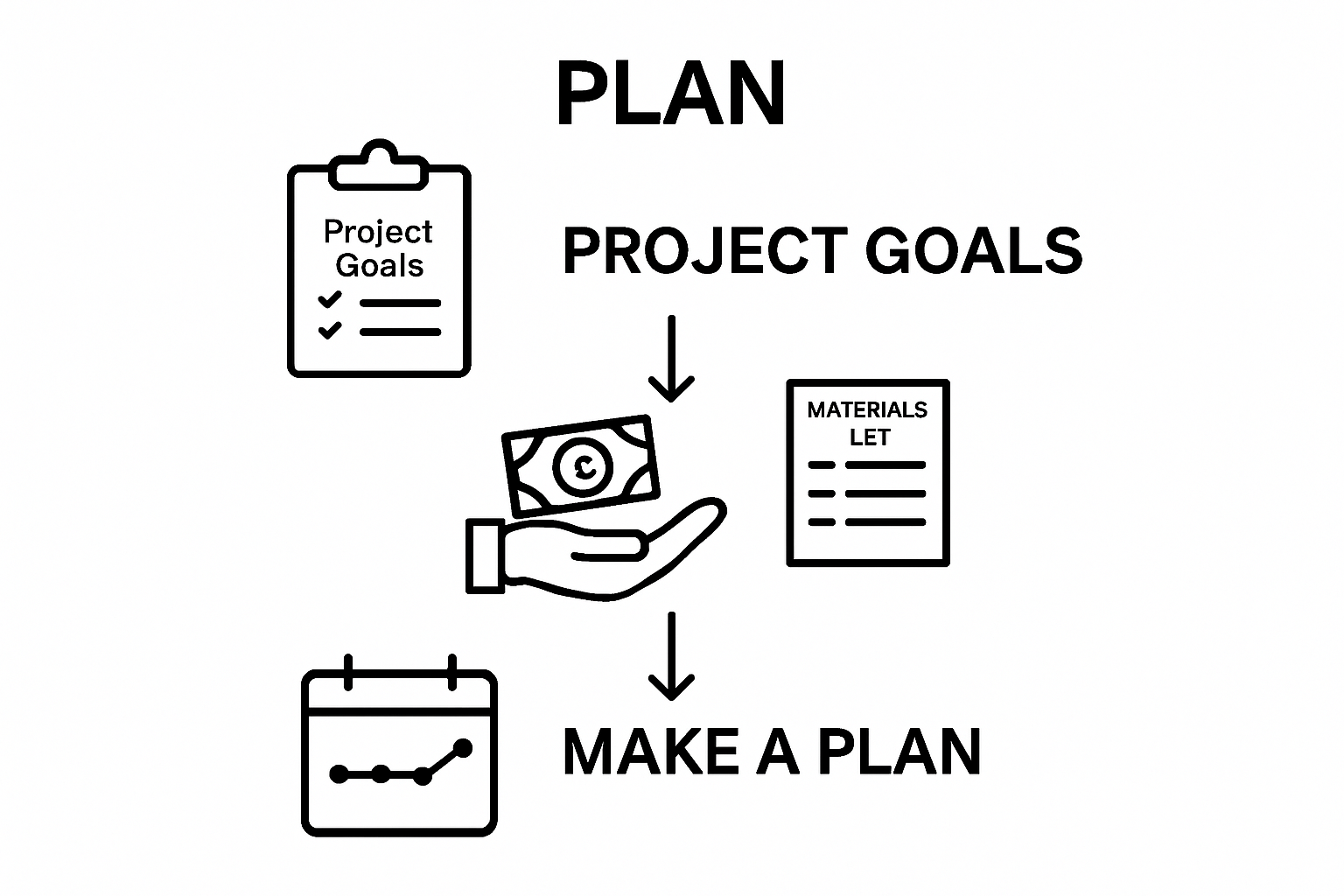
Step 2: Identify Resources and Budget Constraints
Once project goals are established, the critical next phase involves identifying the precise resources and financial parameters that will transform your signage vision into reality. Resource and budget identification represents the financial blueprint of your project, determining what can be achieved within your economic boundaries.
Budget constraints are more than just monetary limits. They encompass a comprehensive evaluation of financial resources, material availability, labour costs, and potential unexpected expenses. Begin by conducting a thorough financial assessment that goes beyond simple amounts. Consider not just the direct expenses of signage production and installation, but also indirect costs such as potential site modifications, permits, design consultations, and potential disruption to business operations.
Explore our guide on choosing outdoor signage to understand how different signage options impact your budget. When evaluating resources, categorise them into three primary areas: financial capital, human resources, and material requirements. Financial capital involves not just the total budget, but also cash flow timing and potential funding sources. Human resources assessment means identifying the skilled personnel needed for design, fabrication, and installation. Material requirements involve understanding the specific resources needed for your signage project.
Develop a detailed cost breakdown that includes:
- Initial design and consultation fees
- Material procurement expenses
- Manufacturing and production costs
- Installation labour and equipment
- Potential site preparation or modification expenses
- Contingency fund for unexpected challenges
Professional tip: Always include a contingency budget of 10-15% above your estimated costs. This buffer provides flexibility for unforeseen circumstances without derailing the entire project. Remember that accurate resource identification is not about minimising expenses, but about allocating your budget strategically to achieve maximum impact. Partnering early with established signage companies London gives you access to accurate cost estimates and material lead times before committing to a final budget.
To verify your resource and budget identification is comprehensive, conduct a final cross-reference check. Confirm that every identified expense directly supports your original project goals. If a cost does not contribute to achieving your signage objectives, it may be an unnecessary expenditure that can be eliminated or optimised.
Step 4: Coordinate with Stakeholders and Team Members
Successful signage project management hinges on exceptional communication and strategic coordination among all involved parties. This crucial step transforms individual contributions into a unified, coherent project execution strategy that aligns vision, expertise, and expectations across multiple stakeholders.
Stakeholder coordination is more than scheduling meetings. It involves creating a comprehensive communication ecosystem where information flows transparently, responsibilities are clearly defined, and potential conflicts are proactively addressed. Begin by mapping out every individual and team connected to your signage project, from designers and manufacturers to installation technicians and business owners.
Explore our comprehensive guide on planning signage projects to understand the nuanced communication requirements. Create a detailed stakeholder engagement matrix that outlines each participant’s role, communication preferences, decision-making authority, and specific project responsibilities. This document serves as a critical reference point throughout the project lifecycle.
Establish a structured communication protocol that defines:
- Preferred communication channels (email, project management software, regular meetings)
- Frequency of updates and progress reports
- Escalation procedures for addressing challenges
- Decision-making hierarchies
- Specific contact points for different project phases
Implement collaborative tools that facilitate real-time information sharing and documentation. Digital project management platforms can provide transparent tracking of tasks, enable instant messaging, and maintain a comprehensive record of all project-related communications. Regular check-ins are essential, but they must be purposeful and efficient, focusing on concrete updates, potential roadblocks, and collaborative problem-solving.
To verify effective stakeholder coordination, conduct periodic alignment meetings where all key participants review project progress, discuss emerging challenges, and reaffirm collective objectives. Pay close attention to potential misalignments in expectations, technical capabilities, or project interpretation. A successful coordination strategy transforms individual expertise into a cohesive, high-performing project team capable of delivering exceptional signage solutions.
Step 5: Implement the Signage Installation
The implementation phase represents the pivotal moment where your meticulously planned signage project transitions from conceptual design to physical reality. This critical stage demands precision, attention to detail, and a systematic approach to ensure flawless execution of your carefully developed strategy.
Successful signage installation requires a methodical and strategic approach. Begin by conducting a final site survey to confirm all preparatory work aligns with your original design specifications. Verify that mounting surfaces are structurally sound, electrical connections are properly configured for illuminated signs, and the designated installation area meets all technical requirements established during earlier planning stages.
Check out our comprehensive guide to professional commercial sign installation to understand the nuanced steps of implementation. Assemble your installation team with clear role assignments, ensuring each member understands their specific responsibilities. Professional installation involves more than simply mounting a sign – it requires coordinated effort, technical expertise, and careful execution.
Prepare a comprehensive installation checklist that covers critical aspects:
- Confirmation of all required tools and equipment
- Verification of site safety and accessibility
- Precise measurements and alignment techniques
- Electrical and mounting hardware preparation
- Quality control and final aesthetic assessment
Each installation stage demands careful documentation. Photograph each phase of the installation process, creating a visual record that can serve both as a professional portfolio piece and a potential reference for future projects. Pay extraordinary attention to alignment, levelling, and secure mounting. Even minor deviations can significantly impact the sign’s visual impact and long-term durability.
To verify successful implementation, conduct a thorough post-installation inspection. This involves checking structural integrity, confirming precise positioning, testing any electrical components, and ensuring the final product matches the original design brief. A successful signage installation transforms your carefully crafted plan into a tangible, impactful visual communication tool that represents your brand or business with precision and professionalism.
Below is a checklist table to help verify all critical aspects and requirements before, during, and after your signage installation project.
Step 3: Create a Detailed Project Plan and Timeline
A comprehensive project plan transforms your signage installation from a conceptual idea into a structured, executable strategy. This critical step bridges the gap between initial goals and actual implementation, providing a clear roadmap that guides every subsequent action and decision.
Developing a project plan requires meticulous attention to detail and strategic thinking. Begin by breaking down your entire signage project into discrete, manageable tasks. Each task should have a clear starting point, estimated duration, required resources, and specific deliverables. Think of this process as creating a narrative for your project, where each chapter represents a crucial phase of development and installation.
Discover more about planning your signage project to understand the nuanced approach required for successful implementation. Start by creating a chronological sequence of activities, considering potential dependencies and potential bottlenecks. For a signage installation, this might include design conceptualisation, client approval, material procurement, manufacturing, site preparation, and final installation.
Establish clear milestones that mark significant progress points in your project. These checkpoints serve multiple purposes: they provide motivation, allow for progress tracking, and create opportunities for stakeholder communication. Realistic timeline estimation is crucial — always include buffer periods to accommodate unexpected challenges or potential delays.
Your project timeline should include:
- Initial design and concept development phase
- Client review and approval periods
- Manufacturing and production timelines
- Logistics and transportation planning
- Installation preparation and execution
- Final quality assessment and client sign-off
Utilise project management tools like Gantt charts or digital project management software to visualise your timeline. These tools help you track interdependencies between tasks, allocate resources efficiently, and quickly identify potential scheduling conflicts. Pay special attention to tasks that cannot proceed until previous stages are completed, such as site surveys preceding installation or design approvals before manufacturing. For projects involving large format printing London graphics, factoring in print production lead times at this stage prevents last-minute delays on installation day.
To verify your project plan’s effectiveness, conduct a comprehensive review with all key stakeholders. Confirm that the timeline is realistic, resources are appropriately allocated, and each milestone aligns with the original project goals established in earlier steps.
Step 4: Coordinate with Stakeholders and Team Members
Successful signage project management hinges on exceptional communication and strategic coordination among all involved parties. This crucial step transforms individual contributions into a unified, coherent project execution strategy that aligns vision, expertise, and expectations across multiple stakeholders.
Stakeholder coordination is more than scheduling meetings. It involves creating a comprehensive communication ecosystem where information flows transparently, responsibilities are clearly defined, and potential conflicts are proactively addressed. Begin by mapping out every individual and team connected to your signage project, from designers and manufacturers to installation technicians and business owners.
Explore our comprehensive guide on planning signage projects to understand the nuanced communication requirements. Create a detailed stakeholder engagement matrix that outlines each participant’s role, communication preferences, decision-making authority, and specific project responsibilities. This document serves as a critical reference point throughout the project lifecycle.
Establish a structured communication protocol that defines:
- Preferred communication channels (email, project management software, regular meetings)
- Frequency of updates and progress reports
- Escalation procedures for addressing challenges
- Decision-making hierarchies
- Specific contact points for different project phases
Implement collaborative tools that facilitate real-time information sharing and documentation. Digital project management platforms can provide transparent tracking of tasks, enable instant messaging, and maintain a comprehensive record of all project-related communications. Regular check-ins are essential, but they must be purposeful and efficient, focusing on concrete updates, potential roadblocks, and collaborative problem-solving.
To verify effective stakeholder coordination, conduct periodic alignment meetings where all key participants review project progress, discuss emerging challenges, and reaffirm collective objectives. Pay close attention to potential misalignments in expectations, technical capabilities, or project interpretation. Businesses commissioning custom signs London benefit most from this coordination step when design sign-off, planning consent, and installation scheduling are all managed through a single point of contact.
Step 5: Implement the Signage Installation
The implementation phase represents the pivotal moment where your meticulously planned signage project transitions from conceptual design to physical reality. This critical stage demands precision, attention to detail, and a systematic approach to ensure flawless execution of your carefully developed strategy.
Successful signage installation requires a methodical and strategic approach. Begin by conducting a final site survey to confirm all preparatory work aligns with your original design specifications. Verify that mounting surfaces are structurally sound, electrical connections are properly configured for illuminated signs, and the designated installation area meets all technical requirements established during earlier planning stages.
Check out our comprehensive guide to professional commercial sign installation to understand the nuanced steps of implementation. Assemble your installation team with clear role assignments, ensuring each member understands their specific responsibilities. Professional installation involves more than simply mounting a sign — it requires coordinated effort, technical expertise, and careful execution.
Prepare a comprehensive installation checklist that covers critical aspects:
- Confirmation of all required tools and equipment
- Verification of site safety and accessibility
- Precise measurements and alignment techniques
- Electrical and mounting hardware preparation
- Quality control and final aesthetic assessment
Each installation stage demands careful documentation. Photograph each phase of the installation process, creating a visual record that can serve both as a professional portfolio piece and a potential reference for future projects. Pay extraordinary attention to alignment, levelling, and secure mounting. Even minor deviations can significantly impact the sign’s visual impact and long-term durability.
To verify successful implementation, conduct a thorough post-installation inspection. This involves checking structural integrity, confirming precise positioning, testing any electrical components, and ensuring the final product matches the original design brief. A successful signage installation transforms your carefully crafted plan into a tangible, impactful visual communication tool that represents your brand or business with precision and professionalism.
| Checklist Item | Description | Completion Status |
|---|---|---|
| Project goals documented | All objectives are specified, measurable, and time-bound | [ ] |
| Budget and contingency set | Total budget plus 10-15% contingency confirmed | [ ] |
| Resources identified | Human resources, materials, and equipment confirmed | [ ] |
| Timeline established | Detailed project plan and timeline with milestones created | [ ] |
| Stakeholder roles defined | Roles, responsibilities, and contact points assigned | [ ] |
| Installation checklist used | Tools, safety, alignment, and technical requirements checked | [ ] |
| Final inspection completed | Installation inspected and matches original design brief |
[ ]
|

Step 6: Evaluate the Project Outcome and Gather Feedback
Project evaluation represents the final and perhaps most critical stage of your signage installation process. This comprehensive review transforms individual experiences and observations into valuable insights that can improve future project management strategies and refine your overall approach to signage implementation.
Systematic feedback collection goes far beyond simple satisfaction surveys. Develop a multi-dimensional evaluation framework that captures quantitative and qualitative data across various project dimensions. Begin by comparing the completed project against the original objectives established in your initial planning stages. Assess how closely the final installation matches the initial design brief, budget constraints, and performance expectations.
Explore our detailed guide on planning signage projects to understand comprehensive evaluation techniques. Engage with all stakeholders systematically, creating structured opportunities for them to share their perspectives. This might involve individual interviews, group debriefing sessions, or carefully designed feedback questionnaires that capture nuanced insights about the project’s execution and outcomes.
Design a robust feedback collection mechanism that addresses multiple project dimensions:
- Technical performance and installation quality
- Aesthetic alignment with original design concept
- Budget and resource utilisation
- Stakeholder satisfaction levels
- Potential areas for future improvement
Utilise both quantitative metrics and qualitative narrative feedback to develop a comprehensive understanding of the project’s success. Numerical ratings provide statistical insights, while detailed comments reveal the emotional and practical experiences of those involved. Consider creating a scoring system that allows stakeholders to rate different aspects of the project systematically, enabling you to track performance trends across multiple installations.
To verify the effectiveness of your evaluation process, synthesise all collected feedback into a comprehensive report. This document should not only highlight the project’s achievements but also candidly discuss challenges encountered and potential strategies for future improvement. A truly successful project management approach views each installation as a learning opportunity, continuously refining processes and expanding organisational capabilities through thoughtful, structured reflection. Businesses that work repeatedly with the same business signs London partner benefit most from this stage — accumulated feedback creates a working relationship where each project is faster, smoother, and more aligned with brand expectations than the last.
Your Signage Project Deserves Professional Project Management
Struggling to translate your signage goals into a smooth and stress-free installation? As detailed in our article, project management for signage requires clarity, careful planning, and excellent coordination to avoid delays, budget overruns, and poor outcomes. The pain points are real: aligning stakeholders, controlling costs, and achieving a finish that elevates your brand.
At PromoSigns, we specialise in taking these worries off your desk. From crafting detailed project plans to ensuring precise on-site execution, our team guides you every step of the way. We bring your vision to life across London, Essex and Kent with bespoke designs, illuminated signs, and large format printing that truly stand out. Our process is transparent and proven to deliver.
Ready to streamline your next signage project and see results that impress? Visit our main site to explore our full range of services, or discover exactly how our professional commercial sign installation can help you avoid the most common pitfalls. Your signage deserves the best. Contact us now to secure your project slot and guarantee your business makes a powerful first impression.
Frequently Asked Questions
What are the key steps in project management for signage installation?
The key steps in project management for signage installation include defining project goals and objectives, identifying resources and budget constraints, creating a detailed project plan and timeline, coordinating with stakeholders, implementing the signage installation, and evaluating the project outcome.
How can I define clear objectives for my signage project?
To define clear objectives for your signage project, conduct a comprehensive assessment of your specific requirements, considering factors such as brand visibility, directional information, or aesthetic impact. Document goals that are specific, measurable, achievable, relevant, and time-bound (SMART).
Why is budget identification important in signage project management?
Budget identification is crucial as it determines what can be achieved within financial boundaries. It includes evaluating all financial resources, material availability, and potential unexpected expenses, ensuring that the project aligns with its objectives without overspending.
What tools can help in creating a project plan and timeline for signage installation?
Utilising project management tools like Gantt charts or digital project management software can help visualise your project timeline, track task interdependencies, allocate resources efficiently, and identify potential scheduling conflicts, providing a clear roadmap for your signage installation.
Recommended
- A Step-by-Step Guide to Professional Commercial Sign Installation
- Planning a Signage Project
- How to Install Wall Signs for Your Business Effectively
- How to Install Shop Signs
