
Restaurant signs are everywhere and every last detail about them is shaped by strict rules. Non-compliance can lead to heavy fines or even force a business to close. You might think this is only about making things look tidy on the high street. The real reason goes much deeper. These regulations protect public safety, ensure transparency for customers, and help keep everyone healthy without anyone even realising it.
Table of Contents
- What Are Signage Regulations And Their Purpose?
- The Legal Foundation Of Signage Standards
- Purpose And Public Interest Protection
- Why Signage Regulations Matter For Restaurants
- Legal Compliance And Risk Management
- Consumer Protection And Information
- The Impact Of Signage On Customer Experience
- Visual Communication And Brand Identity
- Psychological Influences On Customer Perception
- Key Concepts Of Compliance In Restaurant Signage
- Health And Safety Information Display
- Nutritional And Regulatory Transparency
- Real-World Examples Of Signage Regulations
- Urban Health And Safety Mandates
- Municipal Compliance Case Studies
Table of Contents
Quick Summary
| Takeaway | Explanation |
|---|---|
| Adhere to local signage regulations | Compliance with local rules is essential to avoid fines and ensure business continuity. |
| Ensure visibility and clarity | Signage should be easy to read to facilitate effective communication with customers. |
| Display critical health information | Prominently showcase health warnings and allergen information to protect consumers. |
| Leverage visual design for branding | Use consistent branding elements in signage to enhance brand recognition and customer engagement. |
| Maintain safety and accessibility standards | Comply with safety guidelines to prevent hazards and ensure all patrons can access the signage. |
Straipsnis apie: restaurant signage regulations — teisiniai pagrindai, atitiktis, poveikis klientų patirčiai, realūs pavyzdžiai.
Išorinės nuorodos kurias reikia pašalinti:
planning.org— išorinėhealth.ny.gov(×3) — išorinėemerald.com— išorinė
5 tinkamiausios vidinės nuorodos pagal temą:
- shop signs London → /shop-signs-london/
- retail signs signage → /retail-signs-signage/
- custom signs London → /custom-signs-london/
- large format printing London → /large-format-printing-london/
- business signs London → /business-signs-london/
Restaurant signs are everywhere and every last detail about them is shaped by strict rules. Non-compliance can lead to heavy fines or even force a business to close. You might think this is only about making things look tidy on the high street. The real reason goes much deeper. These regulations protect public safety, ensure transparency for customers, and help keep everyone healthy without anyone even realising it.
Table of Contents
- What Are Signage Regulations And Their Purpose?
- The Legal Foundation Of Signage Standards
- Purpose And Public Interest Protection
- Why Signage Regulations Matter For Restaurants
- Legal Compliance And Risk Management
- Consumer Protection And Information
- The Impact Of Signage On Customer Experience
- Visual Communication And Brand Identity
- Psychological Influences On Customer Perception
- Key Concepts Of Compliance In Restaurant Signage
- Health And Safety Information Display
- Nutritional And Regulatory Transparency
- Real-World Examples Of Signage Regulations
- Urban Health And Safety Mandates
- Municipal Compliance Case Studies
Quick Summary
| Takeaway | Explanation |
|---|---|
| Adhere to local signage regulations | Compliance with local rules is essential to avoid fines and ensure business continuity. |
| Ensure visibility and clarity | Signage should be easy to read to facilitate effective communication with customers. |
| Display critical health information | Prominently showcase health warnings and allergen information to protect consumers. |
| Leverage visual design for branding | Use consistent branding elements in signage to enhance brand recognition and customer engagement. |
| Maintain safety and accessibility standards | Comply with safety guidelines to prevent hazards and ensure all patrons can access the signage. |
What Are Signage Regulations and Their Purpose?
Signage regulations represent a comprehensive framework of rules and guidelines governing the design, placement, installation, and visibility of commercial signs for businesses, particularly within the restaurant industry. These structured protocols serve multiple critical functions that extend beyond mere aesthetic considerations.
The Legal Foundation of Signage Standards
At their core, signage regulations emerge from municipal, regional, and national governance structures designed to maintain public safety, urban aesthetics, and equitable commercial environments. Local councils and planning authorities establish specific guidelines that restaurants must navigate when creating external signage. Understanding signage health and safety rules becomes crucial for business owners seeking compliance.
These regulations typically address several fundamental aspects:
- Dimensional restrictions for signage
- Permitted mounting locations
- Material specifications
- Illumination standards
- Visual clarity requirements
Purpose and Public Interest Protection
Signage regulations serve broader societal objectives beyond individual business interests. These rules balance commercial communication needs with community welfare. They prevent visual pollution, ensure pedestrian and traffic safety, maintain architectural heritage, and create uniform urban landscapes.
For restaurants specifically, signage regulations help:
- Protect public spaces from excessive commercial messaging
- Ensure signs do not obstruct pedestrian pathways
- Maintain consistent aesthetic standards
- Prevent potential hazards from poorly designed or installed signage
By establishing clear parameters, these regulations create a structured environment where businesses can effectively communicate their brand while respecting broader community standards and safety considerations. Restaurants that work with experienced business signs London specialists benefit from professional guidance on planning consent and local authority requirements from the outset.
| Objective | Business Aspect | Public/Civic Aspect |
|---|---|---|
| Legal compliance and risk management | Avoid fines and closure | Maintain city order and safety |
| Customer transparency and trust | Build reputation and loyalty | Ensure public health and wellbeing |
| Consistent branding and communication | Strengthen brand identity | Enhance urban aesthetic quality |
| Health and safety hazard prevention | Reduce liability and incidents | Protect pedestrians and patrons |
| Accessibility and inclusivity | Broaden customer base | Ensure equal access for all citizens |
Why Signage Regulations Matter for Restaurants
Signage regulations play a crucial role in restaurant operations, extending far beyond simple aesthetic considerations. These comprehensive guidelines are designed to protect businesses, consumers, and the broader urban environment through strategic communication and safety standards.
Legal Compliance and Risk Management
For restaurants, adhering to signage regulations is not optional but a fundamental legal requirement. Non-compliance can result in significant financial penalties, potential business closure, and reputational damage.
Local health departments and municipal authorities enforce strict guidelines regarding the visibility, content, and placement of restaurant signage. Restaurant branding with signage requires careful navigation of these complex regulatory landscapes.
Key legal considerations include:
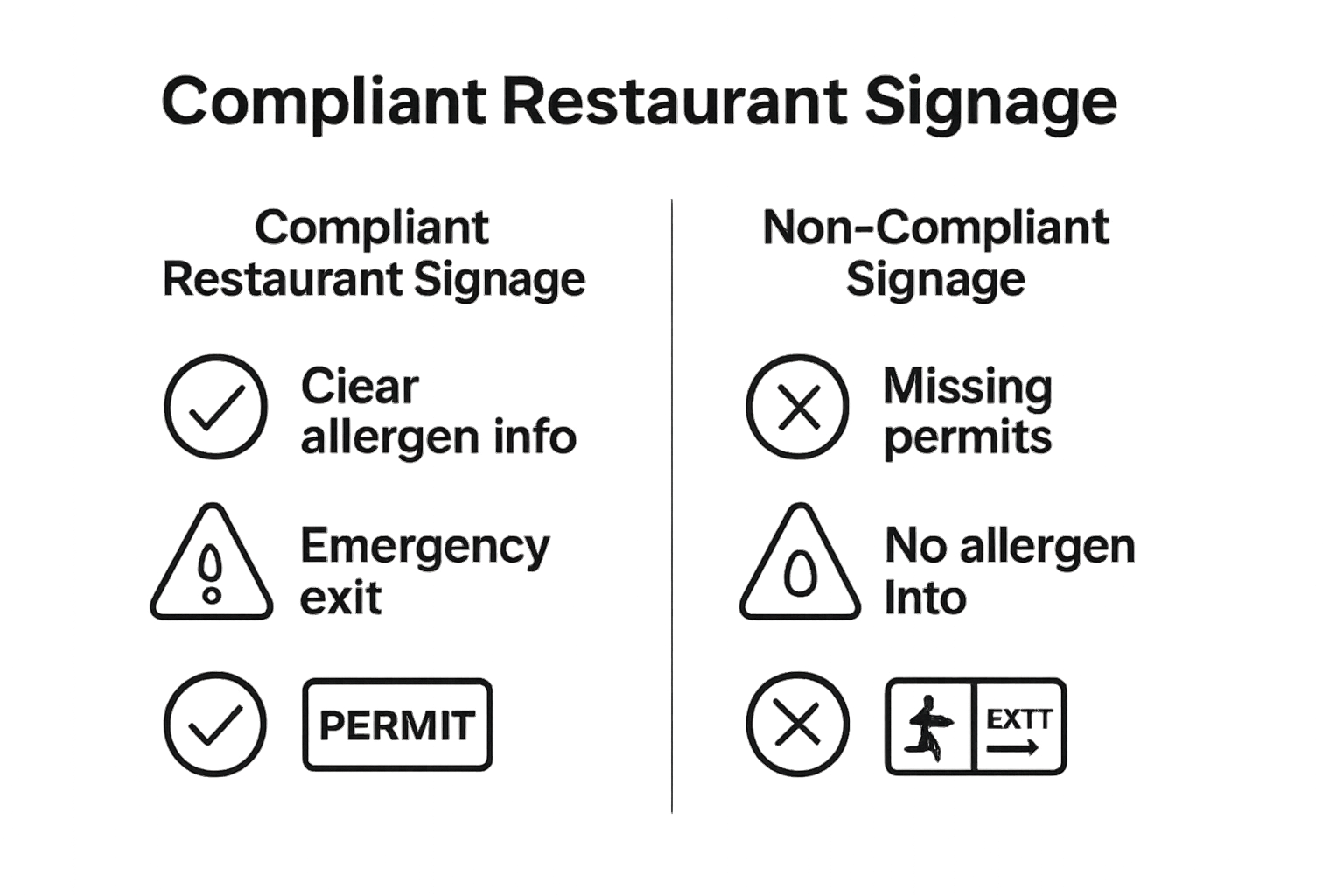
- Health and safety warning displays
- Allergen information visibility
- Accessibility requirements for signage
- Proper licensing and permit displays
- Emergency exit signage standards
Consumer Protection and Information
Restaurant signage serves critical consumer protection functions. Mandatory signage helps communicate essential information such as food allergen warnings, nutritional details, and potential health risks. This transparency builds customer trust and demonstrates a commitment to public safety.
Restaurant signage regulations ensure that:
- Customers receive accurate nutritional information
- Potential health risks are clearly communicated
- Accessibility needs are met for all patrons
- Business credentials and certifications are verifiable
By establishing clear communication standards, these regulations create a safer, more transparent dining environment that protects both restaurants and their customers. Producing these mandatory displays to a professional standard — clear, durable, and correctly sized — is where working with a quality retail signs signage provider makes a measurable difference to compliance outcomes.
The Impact of Signage on Customer Experience
Restaurant signage transcends mere visual communication, serving as a powerful psychological tool that shapes customer perceptions, expectations, and overall dining experience. The strategic design and implementation of signage can significantly influence customer behaviour, brand perception, and ultimately, business success.
Visual Communication and Brand Identity
Signage represents the visual embodiment of a restaurant’s brand personality and identity. The typography, colour palette, and design elements communicate subtle messages about the establishment’s style, cuisine, and target audience. Signage and brand recognition play a critical role in creating memorable first impressions that can attract or deter potential customers.
Key visual communication aspects include:
- Consistent colour schemes reflecting brand identity
- Typography that matches restaurant’s culinary style
- Design elements communicating cuisine authenticity
- Visual hierarchy guiding customer attention
- Clarity and readability of information
Psychological Influences on Customer Perception
Restaurant signage significantly impacts consumers’ perceptions of food quality, healthiness, and purchase intentions. Subtle design elements like colour and typography can profoundly influence customer expectations and dining decisions.
Signage influences customer psychology through:
- Creating initial emotional connections
- Establishing trust and credibility
- Communicating restaurant’s cultural authenticity
- Generating curiosity and anticipation
- Providing reassurance about dining experience
By understanding and leveraging these psychological nuances, restaurants can craft signage that not only informs but also emotionally engages potential customers, transforming a simple sign into a powerful marketing and experiential tool. Restaurants investing in fully custom signs London can align every visual element — from font choice to finish — with the psychological impression they want to create.
Key Concepts of Compliance in Restaurant Signage
Compliance in restaurant signage represents a complex intersection of legal, health, safety, and operational requirements that businesses must carefully navigate. These regulations are not mere suggestions but mandatory standards designed to protect public health, ensure consumer safety, and maintain professional business practices.
Health and Safety Information Display
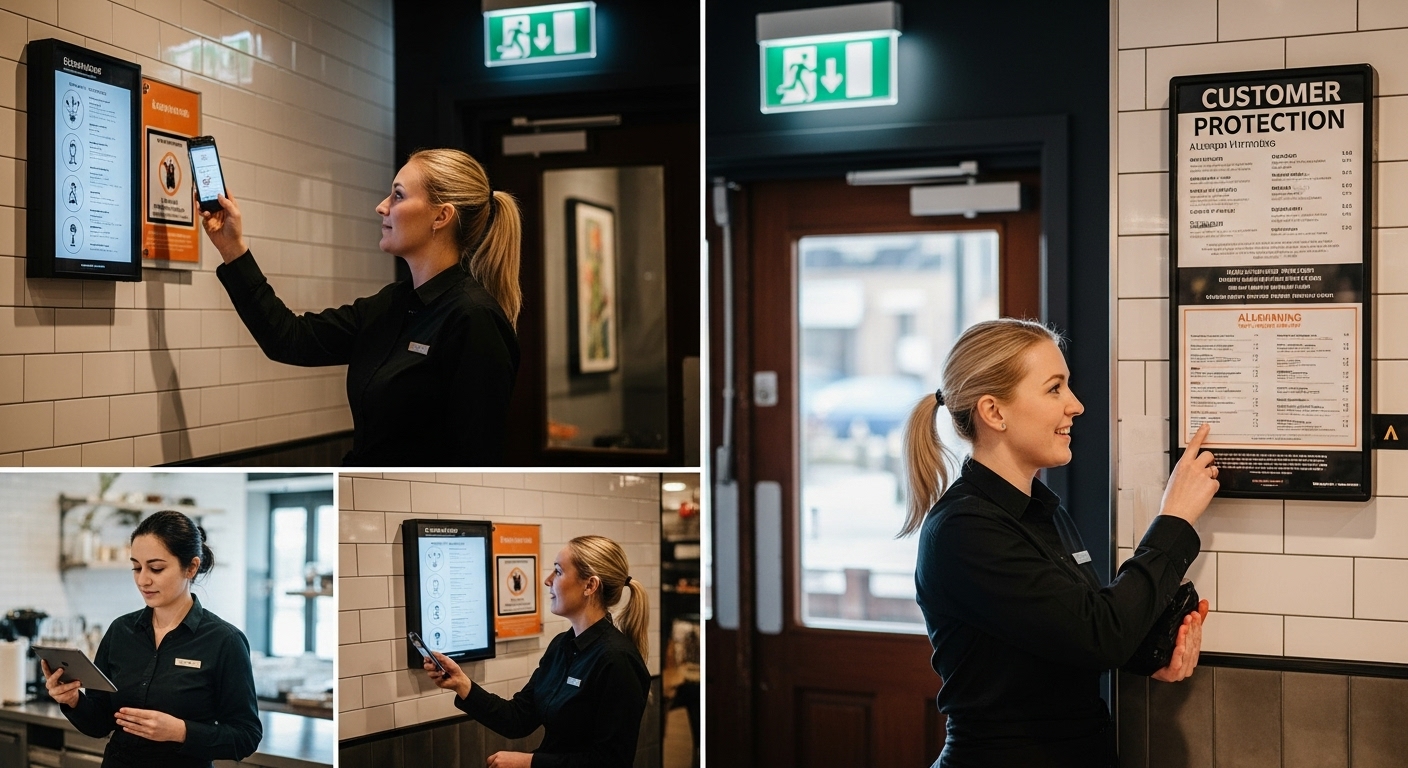
Restaurants must prioritize signage that communicates critical health and safety information. Signage for compliance involves strategically displaying information that helps prevent potential health risks and ensures customer protection.
Key health and safety signage requirements include:
- Allergen warning notifications
- Employee handwashing instructions
- Food preparation hygiene standards
- Emergency exit route markings
- First aid and medical assistance information
Nutritional and Regulatory Transparency
Restaurants are legally obligated to provide transparent nutritional and ingredient information. This requirement extends beyond menu boards to include comprehensive allergen notifications and dietary guidance.
Compliance transparency encompasses:
- Calorie count displays
- Ingredient sourcing information
- Dietary restriction accommodations
- Nutritional content breakdowns
- Potential allergen cross-contamination warnings
By meticulously adhering to these compliance standards, restaurants demonstrate their commitment to customer welfare, build trust, and mitigate potential legal risks associated with inadequate information disclosure. For interior menu boards and allergen displays that need to be both compliant and visually strong, large format printing London delivers the resolution and material quality required for a professional result.
| Type of Signage | Purpose |
|---|---|
| Allergen warning notifications | Protect customers from allergen exposure |
| Employee handwashing instructions | Maintain food hygiene and reduce contamination risk |
| Food preparation hygiene standards | Ensure safe food handling and kitchen practices |
| Emergency exit route markings | Facilitate safe evacuation in case of emergency |
| First aid and medical assistance | Provide prompt guidance in the event of health incidents |
| Calorie count displays | Support informed dining decisions |
| Nutritional content breakdowns | Promote transparency regarding food healthfulness |
| Accessibility instructions | Ensure all patrons can safely use facilities |
Real-World Examples of Signage Regulations
Signage regulations manifest differently across various jurisdictions, reflecting local health, safety, and aesthetic priorities. These real-world examples demonstrate the nuanced and context-specific nature of restaurant signage requirements, highlighting the complexity of regulatory compliance.
Urban Health and Safety Mandates
Major metropolitan areas often implement stringent signage regulations to protect public health and ensure consumer safety. How to design building signage becomes crucial in navigating these intricate regulatory landscapes.
Typical urban regulatory requirements include:
- Mandatory allergen warning displays
- Prominent health inspection grade postings
- Clear emergency exit signage
- Employee hygiene instruction notices
- Nutritional information transparency
Municipal Compliance Case Studies
Municipalities enforce comprehensive signage regulations that extend beyond generic guidelines. These regulations often encompass specific requirements tailored to local community needs and public health priorities.
Detailed municipal signage regulation examples demonstrate:
- Specific calorie count display mandates
- Bicycle delivery safety signage requirements
- Recycling and waste management information
- Accessibility compliance instructions
- No smoking zone indicators
These real-world examples underscore the critical role of signage regulations in creating safe, transparent, and responsible dining environments that prioritize consumer welfare and public health. London restaurants that invest in fully compliant, professionally produced shop signs London are better positioned to pass inspections, maintain their reputation, and attract customers who value transparency and quality presentation.
Ready to Simplify Restaurant Signage Compliance in London?
It is easy to feel overwhelmed by signage regulations when running a restaurant. The risk of costly fines, unexpected inspections, or confusing health and safety rules can hold back even the most ambitious business owner. Our expertise in restaurant branding with signage ensures your signs always meet critical compliance and health requirements, protecting your reputation and keeping your business open.
Discover how PromoSigns delivers compliant, eye-catching signage from design through installation across London, Essex, and Kent. If you need help understanding or meeting signage regulations, let our team handle the details so you do not miss a single requirement. Visit our signage for compliance guide or contact us today. With compliance deadlines always close, now is the best time to safeguard your restaurant and attract more customers with professional, legally approved signs.
Frequently Asked Questions
What are the main aspects of signage regulations for restaurants?
Signage regulations typically address several key areas, including dimensional restrictions for signage, permitted mounting locations, material specifications, illumination standards, and visual clarity requirements.
Why is compliance with signage regulations important for restaurants?
Compliance with signage regulations is crucial as it helps restaurants avoid financial penalties, ensures the safety of consumers, and protects the restaurant’s reputation. Non-compliance can lead to significant consequences, including potential business closure.
How do signage regulations protect consumers?
Signage regulations play a vital role in consumer protection by requiring restaurants to display essential information, such as allergen warnings and nutritional details. This transparency builds trust between the restaurant and its patrons, ensuring they have the necessary information about their food options.
What types of health and safety information must be displayed in restaurant signage?
Restaurants must prominently display health and safety information, which includes allergen warnings, employee hygiene instructions, emergency exit route markings, and first aid information, to ensure customer safety and compliance with regulations.
Recommended
- Restaurant Branding with Signage: 2025 Guide for London Businesses – PromoSigns.co.uk
- Outdoor vs indoor Restaurant Signs: Key Differences and Uses – PromoSigns.co.uk
- How to Choose the Perfect Restaurant Sign for Your Brand
- Retail Signage Compliance Guide 2025 for London Businesses – PromoSigns.co.uk
