
In the competitive hospitality industry, effective signage distinguishes successful restaurants from struggling establishments. Clear, professional visual communication guides customers seamlessly through their dining experience, from initial discovery through to departure, while reinforcing brand identity and enhancing operational efficiency.
This comprehensive guide explores the critical role of restaurant signage, covering everything from external visibility and menu displays to wayfinding and regulatory compliance, ensuring your dining establishment maximizes customer satisfaction and business success.
Table of Contents
Key Takeaways
| Point | Details |
|---|---|
| Importance of Signage | Restaurant signage significantly influences customer perceptions, behaviour, and purchasing intentions. |
| Types of Signage | Effective signage includes exterior signs for attracting customers and internal signs for guiding patrons. |
| Legal Considerations | Restaurant owners must comply with local regulations, including planning permissions and safety standards, when designing signage. |
| Avoiding Mistakes | Common mistakes include information overload and inconsistent branding, which can detract from the signage’s effectiveness in communicating the brand identity. |
Peržiūriu “Clear Restaurant Signage” dokumentą ir sutvarkysu pagal naujausius Google 2026 reikalavimus…
Clear Restaurant Signage: Essential Guide to Dining Establishment Visual Communication
In the competitive hospitality industry, effective signage distinguishes successful restaurants from struggling establishments. Clear, professional visual communication guides customers seamlessly through their dining experience, from initial discovery through to departure, while reinforcing brand identity and enhancing operational efficiency.
This comprehensive guide explores the critical role of restaurant signage, covering everything from external visibility and menu displays to wayfinding and regulatory compliance, ensuring your dining establishment maximizes customer satisfaction and business success.
Why Clear Restaurant Signage Matters
First Impressions and Customer Acquisition
The Initial Decision: Potential diners make snap judgments about restaurants within seconds:
External Signage Impact:
- Street-level visibility determines discovery
- Professional appearance suggests quality standards
- Clear messaging reduces decision anxiety
- Distinctive branding creates memorable impressions
- Welcoming signage encourages entry
Statistics Reveal:
- 76% of customers have entered restaurants based solely on signage
- 68% believe sign quality reflects business quality
- Professional restaurant signs increase foot traffic by 25-40%
- Poor signage causes 30% of potential customers to bypass establishments
Customer Experience Enhancement
Navigation and Comfort: Strategic restaurant signage creates seamless experiences:
Entry and Orientation:
- Clear entrance identification
- Opening hours visibility
- Capacity and seating information
- Reservation status indication
- Waiting area guidance
Interior Wayfinding:
- Restroom location clarity
- Bar and dining area distinction
- Exit identification
- Accessible facilities indication
- Service station locations
Operational Efficiency
Staff Time Optimization: Effective signage reduces repetitive customer inquiries:
Common Question Prevention:
- Menu availability and pricing
- Facility locations
- Service procedures
- Payment methods
- Special dietary options
Staff Benefits:
- 30-50% reduction in basic inquiries
- More time for personalized service
- Improved customer interaction quality
- Reduced stress during busy periods
- Enhanced service consistency
External Restaurant Signage
Primary Building Signs
Fascia Signs: Prominent building-mounted identification:
Design Essentials:
- Restaurant name prominence
- Cuisine type indication
- Logo and brand integration
- Appropriate scale (building proportion)
- Professional illumination
Material Options:
- Built-up letters (dimensional, premium)
- Illuminated signs (24/7 visibility)
- Traditional painted timber (heritage establishments)
- Modern acrylic panels
- Metal fabrication (contemporary)
Illumination Strategies:
- Internal LED (even, consistent)
- Halo backlighting (sophisticated)
- External spotlighting (architectural)
- Neon accents (character, atmosphere)
Projecting Signs
Traditional Hanging Displays: Perpendicular mounting for dual-direction visibility:
Advantages:
- Visible from both pedestrian directions
- Heritage and character appeal
- Professional craftsmanship showcase
- Premium positioning communication
- Planning permission typically required
Design Considerations:
- Building architecture harmony
- Local regulation compliance
- Wind load calculations
- Minimum height clearance (2.5m)
- Maintenance accessibility
Window Signage
First-Floor Marketing: Windows offer prime communication opportunities:
Application Types:
- Vinyl lettering (hours, contact details)
- Window graphics (branding, atmosphere)
- Menu displays (pricing, specialties)
- Award and recognition showcase
- Promotional campaigns
Best Practices:
- Maintain interior visibility (40-60% maximum coverage)
- High-contrast readability
- Professional installation quality
- Regular cleaning maintenance
- Seasonal update capability
Pavement Signs
Immediate Customer Capture: A-boards drive impulse visits:
Effective Applications:
- Daily specials promotion
- Lunch/dinner offers
- Happy hour details
- Event announcements
- Directional guidance (off-street locations)
Regulatory Compliance:
- Pedestrian clearance requirements (minimum 1.5m)
- Maximum size restrictions
- Placement distance from building
- Removal outside trading hours
- Public liability insurance
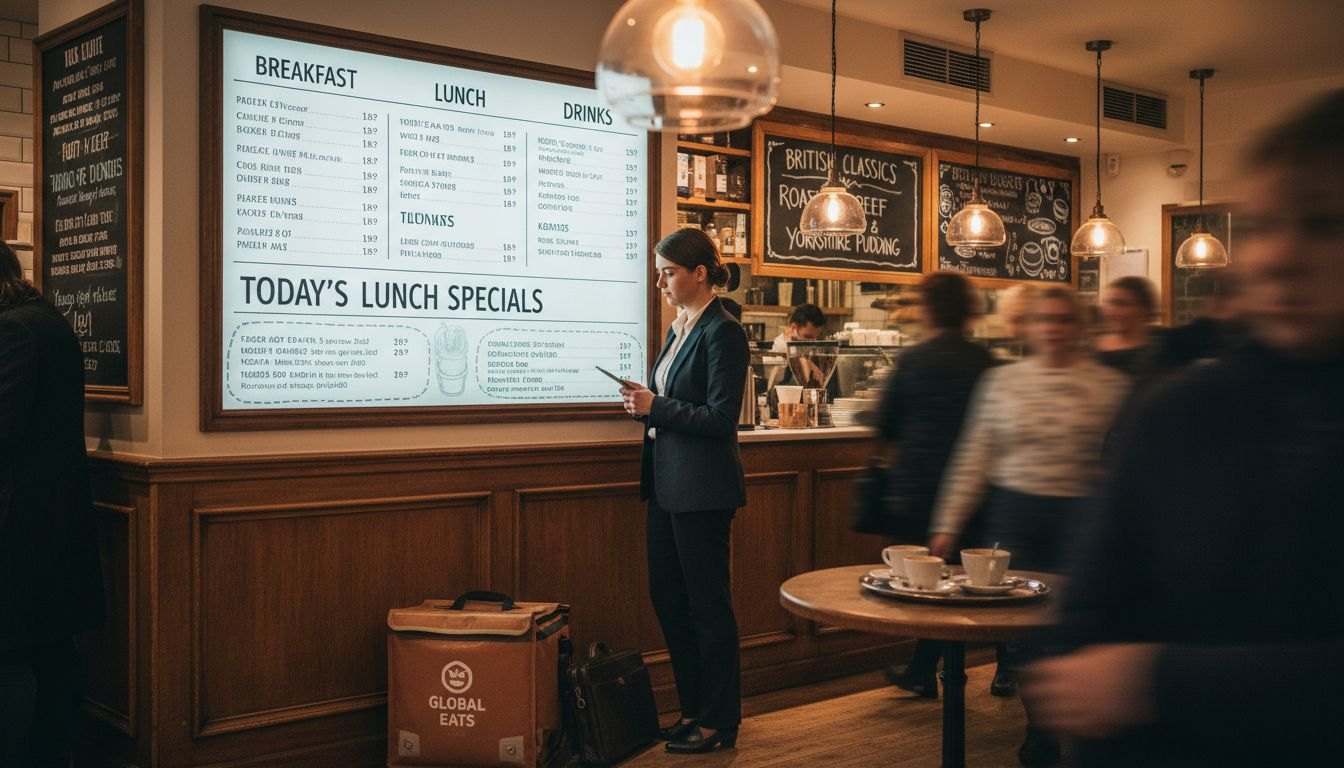
Pro tip: When designing restaurant signage, consider how each visual element tells a story about your dining concept and consistently reflects your brand’s unique personality.
Menu Display Signage
External Menu Boards
Pre-Entry Information: Strategic menu visibility reduces entry hesitation:
Placement Options:
- Window-mounted displays
- Wall-mounted cases
- Freestanding illuminated units
- Digital screen integration
Content Requirements:
- Representative dish selection
- Price transparency
- Cuisine style indication
- Dietary option highlighting
- Professional photography
Design Quality:
- Weather-resistant materials
- Illumination for evening visibility
- Easy update mechanisms
- Professional layout
- Brand consistency
Internal Menu Displays
Traditional Menu Boards: Behind-counter and wall-mounted displays:
Applications:
- Quick-service restaurants
- Cafés and coffee shops
- Bars and pubs
- Casual dining establishments
Material Options:
- Chalkboard (flexible, traditional)
- Printed posters (professional, detailed)
- Lightbox displays (premium, illuminated)
- Digital screens (dynamic, updatable)
- Acrylic panels (modern, clean)
Digital Menu Boards
Dynamic Content Display: Modern restaurants increasingly adopt digital:
Advantages:
- Instant content updates
- Time-based menu changes (breakfast/lunch/dinner)
- Promotional highlighting
- Nutritional information integration
- Multi-language capability
- Reduced printing costs
Implementation Considerations:
- Initial investment (£1,500-£5,000 per screen)
- Content management systems
- Design and animation quality
- Brightness and readability
- Maintenance and support
Interior Restaurant Signage
Wayfinding and Directional Signs
Customer Navigation: Clear interior signage enhances experience:
Essential Elements:
- Restroom identification (universal symbols)
- Bar and dining area designation
- Entrance and exit clarity
- Accessible facility indication
- Emergency exit compliance
Design Consistency:
- Unified visual language
- Brand color integration
- Appropriate typography
- Professional mounting
- Strategic placement (decision points)
Table Numbering and Identification
Service Efficiency: Clear table designation supports operations:
Systems:
- Traditional table numbers
- Thematic naming (creative establishments)
- Area and section identification
- Reservation indication
- QR code integration
Materials:
- Table-mounted displays
- Hanging signs (high-ceiling venues)
- Digital screens
- Permanent engraved/printed
- Temporary promotional overlays
Promotional and Informational Signage
Customer Communication: Strategic messaging enhances experience:
Applications:
- Daily specials displays
- Wine and beverage features
- Chef recommendations
- Event announcements
- WiFi access information
- Payment method indication
- Social media engagement prompts
Material Choices:
- Poster frames (changeable content)
- Chalkboards (flexible, authentic)
- Acrylic displays (premium, modern)
- Foamex boards (lightweight, economical)
- Digital screens (dynamic, engaging)
Here’s a summary of common restaurant signage types and their primary impacts:
| Signage Type | Core Function | Key Visual Impact | Example Effect on Business |
|---|---|---|---|
| Exterior Signage | Attracts foot traffic | Establishes brand presence | Increased walk-in customers |
| Internal Signage | Guides customer movement | Enhances ambience | Improved customer orientation |
| Illuminated Signs | Boosts night-time visibility | Projects modern impression | Extended operational hours appeal |
| Menu Boards | Presents food offerings | Communicates specials | Promotion of higher-margin items |
Regulatory and Compliance Signage
Health and Safety Requirements
Mandatory Displays: UK restaurants must provide:
Fire Safety:
- Fire exit identification
- Fire action notices
- Extinguisher location
- Assembly point designation
- Evacuation route maps
Food Safety Information:
- Allergen information availability
- Food hygiene rating display
- Handwashing instructions (staff areas)
- Temperature monitoring
- Cleaning schedules
Accessibility Compliance
Equality Act 2010 Requirements: Inclusive signage ensures equal access:
Essential Elements:
- Accessible entrance indication
- Accessible toilet identification
- Level access routes
- Assistance availability
- Hearing loop indication
- Service animal welcome
Design Standards:
- High-contrast color combinations (70% minimum)
- Tactile and Braille elements
- Appropriate mounting heights (1200-1600mm)
- Pictogram clarity
- Non-glare surfaces
Licensing and Legal Notices
Required Displays: Various licenses and notices mandatory:
Premises License:
- Alcohol sales authorization
- Operating hours specification
- Licensee identification
- Conditions summary
Additional Requirements:
- No smoking signage
- CCTV notification
- Data protection information
- Children and families policy
- Service charge explanation
Design Principles for Restaurant Signage
Brand Consistency
Visual Identity Integration: All restaurant signage should reflect brand:
Elements:
- Logo application
- Color palette adherence
- Typography consistency
- Imagery style
- Tone and messaging
Atmosphere Creation:
- Fine dining: Elegant, sophisticated materials
- Casual dining: Approachable, warm design
- Fast casual: Clean, efficient communication
- Ethnic cuisine: Cultural authenticity
- Contemporary: Modern, minimalist aesthetic
Readability and Clarity
Typography Selection:
- Appropriate to brand personality
- Legible at intended viewing distances
- High-contrast combinations
- Appropriate sizing hierarchy
- Limited font families (2-3 maximum)
Content Clarity:
- Concise messaging
- Prioritized information hierarchy
- Logical grouping
- White space utilization
- Professional copywriting
Material Selection
Interior Applications:
Premium Options:
- Brushed metal (sophisticated)
- Acrylic (modern, professional)
- Wood (warm, traditional)
- Fabric and textile (soft, contemporary)
- Chalkboard (flexible, authentic)
Budget-Friendly:
- Vinyl graphics (versatile, economical)
- Foamex boards (lightweight, effective)
- Printed paper (temporary, changeable)
- Laminated displays (durable, cost-effective)
External Applications: Weather-resistant materials essential:
- Powder-coated aluminum
- Acrylic (UV-stable)
- Composite materials (Dibond)
- Treated timber
- Stainless steel
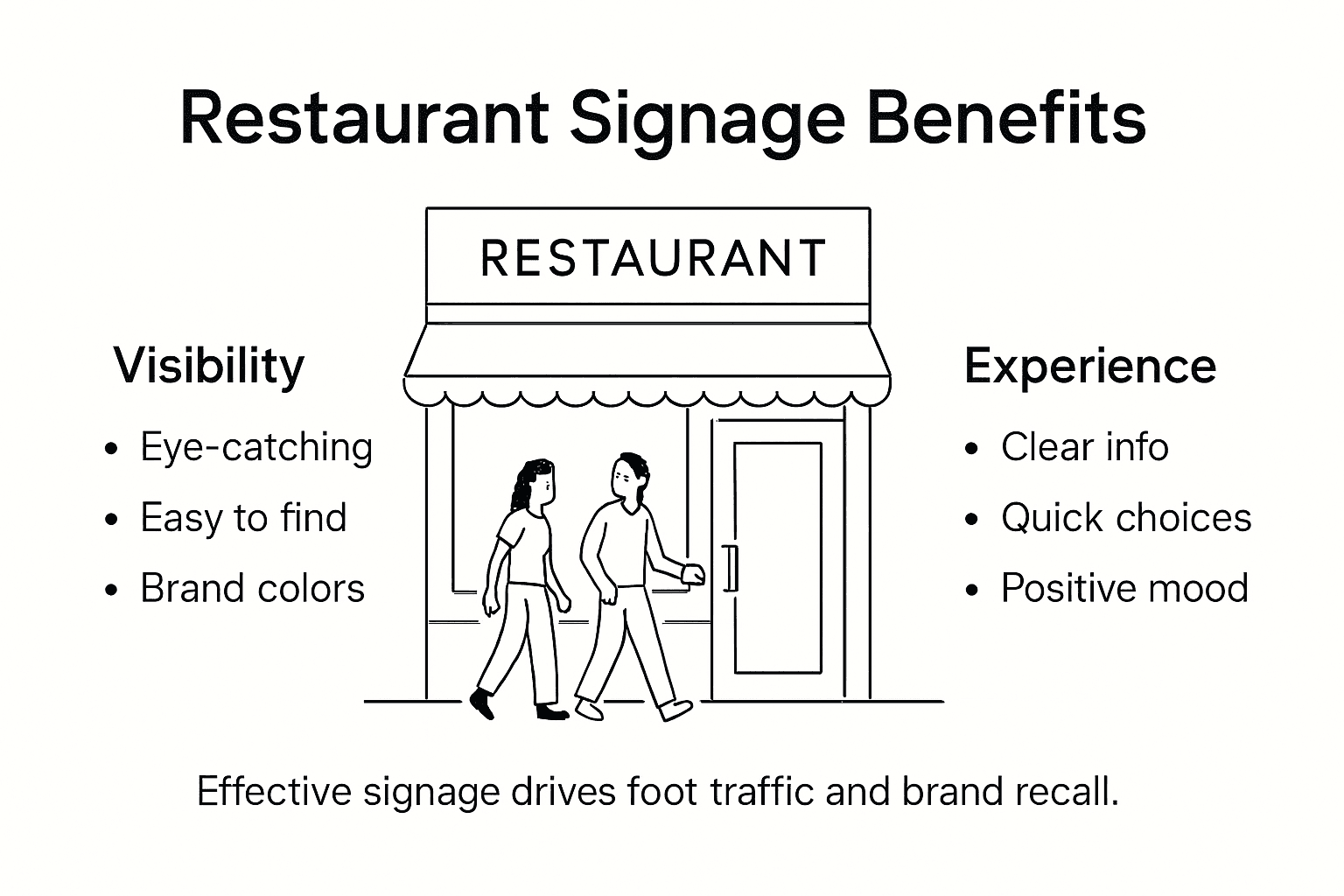
Pro tip: Develop a consistent visual language across all your signage that authentically represents your restaurant’s unique character and culinary ethos.
Cuisine-Specific Signage Considerations
Fine Dining Establishments
Subtle, Sophisticated Approach:
- Understated external signage
- Premium material quality
- Elegant typography
- Minimal promotional messaging
- Focus on ambiance and exclusivity
Casual and Family Dining
Welcoming, Informative:
- Clear value communication
- Family-friendly messaging
- Menu variety highlighting
- Promotional visibility
- Approachable design aesthetic
Quick Service and Fast Casual
Efficiency-Focused:
- Clear menu boards (speed and clarity)
- Queue management signage
- Ordering process explanation
- Pick-up and delivery indication
- Digital integration priority
Ethnic and Specialty Restaurants
Cultural Authenticity:
- Appropriate cultural design elements
- Multilingual content consideration
- Traditional material incorporation
- Authentic imagery
- Heritage communication
Outdoor Dining Signage
Pavement Café Identification
External Seating Areas: Clear boundary and brand communication:
Applications:
- Barrier and rope systems
- Branded umbrellas
- Table signage
- Menu displays
- Heating and comfort information
Weather Considerations:
- Water-resistant materials
- Wind-stable construction
- UV-fade resistance
- Easy storage and deployment
- Maintenance simplicity
Illuminated Restaurant Signage
LED Lighting Benefits
Modern Illumination:
- 80% energy savings vs. traditional
- Long lifespan (50,000+ hours)
- Consistent color temperature
- Reduced heat generation
- Environmental benefits
Illumination Strategies
External Signage:
- Full illumination (built-up letters, lightboxes)
- Halo backlighting (sophisticated, modern)
- Spotlighting (architectural, dramatic)
- Neon accents (character, atmosphere)
Internal Applications:
- Menu board backlighting
- Feature wall illumination
- Accent lighting for promotional displays
- Ambient atmospheric lighting
Cost Considerations
Investment Ranges (UK)
External Signage:
- Basic fascia sign: £800-£2,000
- Illuminated fascia: £1,500-£5,000
- Projecting sign: £800-£3,000
- Window graphics: £200-£1,000
- A-board: £50-£300
Interior Signage:
- Menu boards (traditional): £300-£1,500
- Digital menu screens: £1,500-£5,000 per display
- Wayfinding package: £500-£2,000
- Table identification: £200-£800
- Promotional displays: £100-£500
Regulatory Signage:
- Basic compliance package: £200-£500
- Comprehensive safety signage: £500-£1,500
Return on Investment
Measurable Benefits:
- Increased foot traffic (25-40% average)
- Reduced staff inquiry time (30-50%)
- Enhanced customer satisfaction scores
- Improved operational efficiency
- Stronger brand recognition
- Higher average spend (clear menu communication)
Maintenance and Updates
Regular Maintenance Schedule
Monthly Inspection:
- Cleaning requirements
- Damage assessment
- Illumination functionality
- Content accuracy
- Professional appearance
Seasonal Updates:
- Menu changes reflection
- Promotional campaign alignment
- Seasonal offering highlights
- Event announcements
- Weather preparation
Professional Cleaning
External Signage:
- Quarterly professional cleaning
- Weather damage inspection
- Graffiti removal
- Illumination component care
Internal Signage:
- Regular dusting and cleaning
- Glass and acrylic polishing
- Frame and mounting inspection
- Content refresh evaluation
Choosing Professional Signage Providers
Selection Criteria
Essential Capabilities:
- Restaurant signage expertise
- Menu board specialization
- Design services proficiency
- Quality manufacturing
- Professional installation
- Compliance knowledge
- Maintenance support
Portfolio Assessment:
- Hospitality sector experience
- Style and aesthetic range
- Quality standards demonstration
- Long-term client relationships
- Problem-solving capability
Common Mistakes to Avoid
Design Errors
Clarity Failures:
- Overcomplicated messaging
- Poor typography choices
- Insufficient contrast
- Cluttered composition
- Inconsistent branding
Practical Oversights
Operational Issues:
- Inadequate illumination
- Difficult update mechanisms
- Poor weather resistance
- Inaccessible mounting
- Missing compliance elements
Future Trends
Technology Integration
Emerging Developments:
- AI-powered menu optimization
- QR code ubiquity
- Augmented reality experiences
- Personalized digital displays
- Contactless ordering integration
Sustainability Focus
Environmental Priorities:
- Recyclable materials
- LED energy efficiency
- Sustainable substrate options
- Long-life component selection
- Responsible disposal programs
Conclusion
Clear, professional restaurant signage represents essential infrastructure for successful dining establishments, impacting customer acquisition, experience quality, operational efficiency, and brand perception. From external visibility that attracts first-time visitors through to internal wayfinding that enhances comfort, every sign contributes to business success.
Strategic investment in quality signage delivers exceptional returns through increased foot traffic, enhanced customer satisfaction, improved staff efficiency, and sustained competitive advantage. Whether operating fine dining establishments, casual restaurants, or quick-service venues, fundamental signage principles remain: clarity, professionalism, brand consistency, and customer focus.
Approached thoughtfully and executed professionally, restaurant visual communication transforms dining spaces while optimizing both customer experience and business performance. For establishments seeking to maximize their signage impact, partnering with experienced restaurant signage specialists ensures access to hospitality expertise, design innovation, and professional execution that elevates brand presence and operational success.
Recommended
- Exploring the Popularity of LED and Neon Signs in Restaurants
- Restaurant Branding with Signage: 2025 Guide for London Businesses – PromoSigns.co.uk
- How to Choose the Perfect Restaurant Sign for Your Brand
- Restaurant Signs London | Top UK Restaurant Signage Supplier
- Retractable Banners – Transfer Kingz
