
Lighting can make or break your business signage and the difference is striking. LED technologies can cut energy use by up to 75 percent compared to traditional lighting. Most people think brighter is always better. The real advantage comes from using the right colour temperature and contrast which means even a modest sign can stand out powerfully in a competitive high street.
Table of Contents
Table of Contents
- Why Lighting Is Crucial for Signage
- Types of Lighting and Their Impact on Signs
- Practical Tips for Better Sign Visibility
- Common Lighting Mistakes to Avoid in 2025
Quick Summary
| Takeaway | Explanation |
|---|---|
| Effective lighting enhances brand visibility | Proper illumination makes signage more noticeable, attracting potential customers, especially in low-light conditions. |
| Choose the right colour temperature | Tailor lighting colours to match your brand’s personality and desired emotional impact on customers. |
| Maintain optimal contrast for readability | Ensure a distinct brightness difference between your sign and its background to improve visibility and legibility, especially at night. |
| Invest in energy-efficient lighting solutions | Utilise LED technology for its superior performance and lower energy consumption, which can reduce operational costs. |
| Regular maintenance is essential for effectiveness | Consistent inspections and upkeep of lighting fixtures ensure visual quality is sustained over time, preventing degradation. |
Why Lighting Is Crucial for Signage
In the competitive world of business visibility, signage serves as more than just an informational tool. Lighting transforms signage from a mere functional element into a powerful communication medium that captures attention, communicates brand identity, and drives customer engagement.
The Visual Impact of Illuminated Signage
Lighting is not just an aesthetic choice but a strategic communication tool for businesses. The National Park Service highlights that appropriate lighting techniques ensure signage remains visible and legible, particularly during low-light conditions. This visibility is crucial for businesses seeking to attract and guide potential customers.
The strategic use of illumination can dramatically enhance a sign’s effectiveness. Bright, well-designed lighting draws the eye, creates visual hierarchy, and allows businesses to communicate their message even after sunset. Modern lighting technologies enable signs to stand out in crowded urban environments, making them visible from greater distances and in varying atmospheric conditions.
Technical Considerations in Sign Lighting
Effective sign lighting involves multiple technical considerations beyond simple brightness. Colour temperature, intensity, and distribution play critical roles in how a sign is perceived. Cool white lights often create a modern, professional appearance, while warmer tones can evoke a sense of warmth and approachability.
LED technologies have revolutionised sign lighting, offering energy-efficient solutions with superior performance. Learn more about our advanced lighting solutions that can transform your business signage. These modern lighting options provide businesses with unprecedented control over their visual messaging, allowing for dynamic colour changes, programmable displays, and reduced energy consumption.
Brand Communication Through Illumination
Beyond technical functionality, lighting serves as a powerful brand communication tool. A well-lit sign communicates professionalism, attention to detail, and commitment to customer experience. The right lighting can convey a brand’s personality – whether it’s sleek and modern, warm and inviting, or bold and dynamic.
Consider how different lighting approaches can subtly shift perception. A soft, warm glow might suit a boutique café, while a crisp, bright illumination could be perfect for a technology store. The nuanced use of lighting allows businesses to tell their story visually, creating an immediate emotional connection with potential customers before they even step through the door.
Businesses must recognize that signage lighting is an investment in brand perception. It’s not merely about visibility but about creating a memorable visual experience that distinguishes a brand in a competitive marketplace. The right lighting strategy can transform a simple sign into a beacon that attracts, informs, and engages potential customers.
Types of Lighting and Their Impact on Signs
Modern signage lighting represents a sophisticated intersection of technology, design, and strategic communication. Different lighting types offer unique advantages, enabling businesses to craft precise visual messages that resonate with their target audience and enhance brand visibility.
Illumination Technologies and Design Strategies
The world of sign lighting has evolved dramatically, offering businesses unprecedented options for creating impactful visual communications. Traditional fluorescent and neon lighting have been largely replaced by more advanced LED technologies, which provide superior performance, energy efficiency, and design flexibility.
LED lighting has revolutionised signage by offering multiple configuration possibilities. These versatile light sources can be programmed to change colours, create dynamic displays, and deliver complex visual narratives. Explore our comprehensive guide to illuminated signage to understand how these technologies can transform your business presentation.
According to Lighting Research Center at Rensselaer Polytechnic Institute, LED technologies can reduce energy consumption by up to 75% compared to traditional lighting methods, making them not just visually effective but also environmentally responsible.
To help readers compare the main types of signage lighting discussed, the following table summarises the key features and benefits of each technology mentioned.
| Lighting Type | Key Features | Energy Efficiency | Design Flexibility |
|---|---|---|---|
| Fluorescent | Traditional tubes, even light, older tech | Moderate | Limited |
| Neon | Vibrant colours, vintage appeal | Low | Moderate |
| LED | Programmable, colour changing, long lifespan | High (up to 75% savings) | High |
Colour Temperature and Psychological Impact
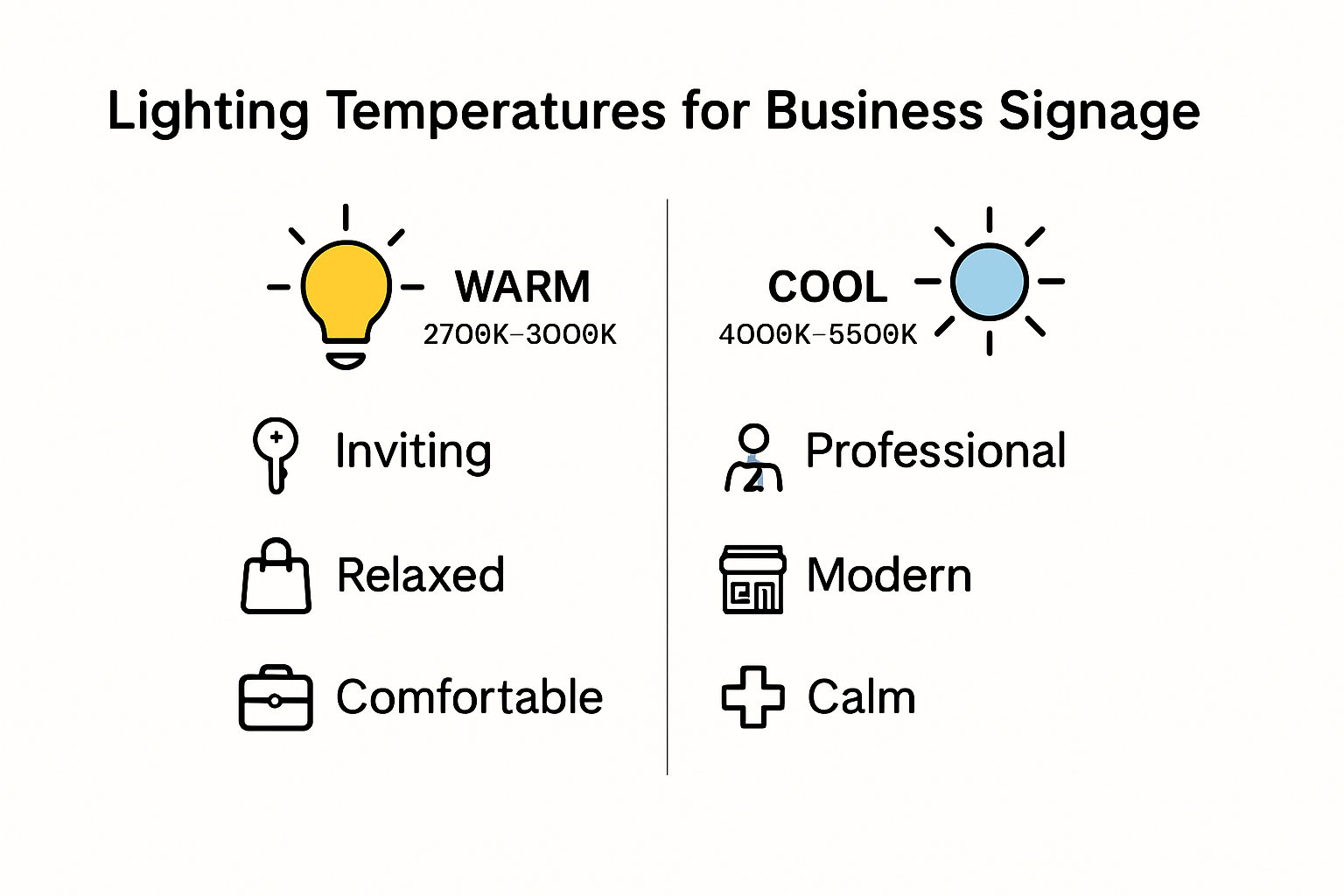
The colour temperature of lighting plays a crucial role in how signs are perceived and interpreted. Warm colour temperatures (ranging between 2700K to 3000K) create a sense of intimacy and comfort, ideal for hospitality and retail environments. Cool colour temperatures (4000K to 6500K) project a sense of professionalism, clarity, and modernity, making them perfect for technology firms, medical facilities, and corporate settings.
Research from the International Association of Lighting Designers suggests that colour temperature can significantly influence customer perception and emotional response. A carefully selected lighting temperature can subconsciously communicate brand personality, values, and positioning.
Advanced Lighting Techniques
Beyond standard illumination, contemporary sign lighting incorporates sophisticated techniques like backlighting, edge lighting, and projection mapping. Backlighting creates a halo effect around signage, providing depth and dramatic visual appeal. Edge lighting offers a sleek, modern aesthetic, making signs appear to float against their background.
Projection mapping represents the cutting edge of sign illumination, allowing businesses to transform static signs into dynamic, interactive displays. This technique can project moving graphics, changing messages, and complex visual narratives directly onto signage surfaces, creating an immersive brand experience.
Businesses must view lighting not merely as a functional requirement but as a strategic communication tool. The right lighting approach can transform a simple sign into a powerful brand statement, capturing attention, conveying personality, and creating memorable visual experiences that distinguish a brand in a competitive marketplace.
Practical Tips for Better Sign Visibility
Achieving optimal sign visibility requires a strategic approach that goes beyond simple illumination. Businesses must carefully consider multiple factors to ensure their signage effectively communicates their message and attracts potential customers.
Lighting Contrast and Uniformity
The Federal Highway Administration emphasizes the critical importance of luminance contrast in sign visibility. Professional signage should maintain a luminance contrast ratio of at least 3:1 during daylight and 7:1 at night to ensure maximum readability. This means creating a significant difference between the sign’s brightness and its background, which helps the sign stand out in various environmental conditions.
Explore our top storefront sign visibility strategies to understand how professional design can dramatically improve your sign’s impact. The key is creating a visual hierarchy that guides the viewer’s eye and communicates information efficiently.
This table outlines key technical recommendations for sign lighting to maximise visibility in various environments.
| Factor | Daylight Recommended Ratio | Night Recommended Ratio | Practical Guideline |
|---|---|---|---|
| Luminance Contrast Ratio | 3:1 | 7:1 | Distinct brightness between sign & background |
| Uniformity Ratio (max:min) | – | 6:1 | Avoid bright spots & harsh shadows |
Positioning and Light Distribution
According to the National Academies Press, maintaining a maximum-to-minimum uniformity ratio of 6:1 is crucial for optimal sign lighting. This technical recommendation translates to practical advice: avoid creating harsh bright spots or dark shadows that could compromise readability.
The Canadian Centre for Occupational Health and Safety recommends using multiple low-intensity light fixtures instead of a single high-intensity source. This approach helps control glare and ensures more consistent illumination across the sign’s surface. Strategic positioning of light sources can transform how viewers perceive and interact with your signage.
Material and Design Considerations
Beyond lighting techniques, material selection plays a crucial role in sign visibility. Reflective and semi-reflective materials can enhance visibility, especially in low-light conditions. Matte finishes reduce glare, while slightly textured surfaces can help break up light and improve overall legibility.
colour selection is equally important. High-contrast colour combinations – such as dark text on light backgrounds or vice versa – significantly improve readability. Professional designers recommend avoiding similar colour tones that might blend together, making the sign difficult to read from a distance.
Business owners should view sign visibility as an investment in their brand communication. Every element – from lighting intensity and colour temperature to material selection and positioning – contributes to creating a sign that not only catches the eye but effectively communicates your brand’s message. The goal is not just to be seen, but to be understood and remembered.
Common Lighting Mistakes to Avoid in 2025
In the rapidly evolving world of business signage, lighting represents a critical communication tool that can either elevate or undermine brand perception. Understanding and avoiding common lighting mistakes is essential for businesses seeking to create impactful, professional signage in 2025.
Design and Technical Errors
Research from industry experts reveals several critical mistakes businesses frequently make with sign lighting. One of the most prevalent errors is selecting inappropriate lighting types that fail to complement the sign’s purpose or environment.
Learn more about effective lighting strategies to ensure your signage makes the right impression. Businesses often overlook crucial factors such as colour temperature, light intensity, and how different lighting approaches interact with specific sign materials.
Another significant technical error involves neglecting energy efficiency. Modern businesses must consider sustainable lighting solutions that reduce operational costs while maintaining high visual impact. LED technologies offer superior performance, but improper selection can lead to suboptimal results.
Regulatory and Aesthetic Considerations
According to industry analysis, many businesses fail to consider local regulations and environmental context when designing illuminated signage. This oversight can result in potential legal complications and reduced sign effectiveness.
colour choices represent another critical area of potential mistakes. Businesses frequently make poor decisions by:
- Using colours that clash with brand identity
- Selecting colours with insufficient contrast
- Implementing lighting that creates excessive glare
- Ignoring the psychological impact of colour temperature
Proper colour selection goes beyond aesthetic preferences. It involves understanding how different colours and lighting temperatures communicate brand personality and influence customer perception.
The following checklist table summarises common colour and lighting mistakes businesses should watch for in signage projects.
| Common Mistake | Should Avoid? | Impact |
|---|---|---|
| Colours clash with brand identity | Yes | Confuses or weakens brand image |
| Insufficient colour contrast | Yes | Lowers readability |
| Excessive glare from lighting | Yes | Causes discomfort, hard to read |
| Ignoring psychological impact of temperature | Yes | Sends wrong emotional signal |
Maintenance and Long-Term Performance
Signage experts highlight that consistent maintenance is crucial for sustained sign performance. Many businesses underestimate the importance of regular lighting inspections, which can lead to gradual degradation of visual quality.
Common maintenance-related mistakes include:
- Neglecting regular cleaning of lighting fixtures
- Failing to replace burnt-out or dimming lights promptly
- Ignoring potential electrical issues
- Not updating lighting technologies as more efficient options become available
Businesses must view sign lighting as a dynamic system requiring ongoing attention. The most successful organisations treat their signage as a critical communication tool, investing time and resources into maintaining its visual effectiveness.
In 2025, businesses cannot afford to view sign lighting as a mere afterthought. It represents a sophisticated intersection of technology, design, and brand communication. By understanding and proactively avoiding these common mistakes, companies can create signage that not only captures attention but also communicates professionalism and attention to detail.
Frequently Asked Questions
How does lighting impact the visibility of my business signage?
Proper lighting enhances the visibility of signage by creating contrast between the sign and its background, making it stand out, especially in low-light conditions. Bright, well-placed lighting helps attract potential customers and guides them effectively.
What type of lighting is best for business signage?
LED lighting is considered the best option due to its energy efficiency, versatility, and ability to produce vibrant colours and dynamic displays. It can lower energy costs by up to 75% compared to traditional lighting methods.
Why is colour temperature important for signage lighting?
Colour temperature influences how signage is perceived. Warm temperatures create a welcoming feel, ideal for cafés and shops, while cool temperatures evoke professionalism, suitable for corporate or tech businesses. Choosing the right colour temperature helps convey your brand’s personality.
What are some common mistakes to avoid with sign lighting in 2025?
Common mistakes include ignoring energy efficiency, selecting inappropriate lighting types, and failing to maintain proper contrast for readability. Regular maintenance and compliance with local regulations are crucial to ensure the effectiveness and longevity of your signage.
Transform Your Shop Signage with the Right Lighting Strategy
Are you frustrated by signage that fades into the background or fails to match your brand’s personality, despite your best efforts? The article above highlights the critical challenges of achieving visibility after dark, selecting the right colour temperature, and ensuring contrast so your message always stands out. If you want to turn these insights into a real business advantage, now is the time to act.

Our experienced team at PromoSigns specialises in designing, producing, and installing custom illuminated signs that tackle these very pain points. We use energy-efficient LED technologies, expert colour management, and superior material choices to ensure your signage is as visible and impactful as possible day or night. Learn more about our illuminated sign solutions or see how we help London, Essex, and Kent businesses win attention with storefront signage that stands out. Make your brand unforgettable. Visit PromoSigns and request your free consultation today.
Recommended
- Effective Use of Lighting in Shop Signs for London Businesses 2025 – PromoSigns.co.uk
- Illuminated Signs Explained: A 2025 Guide for London Businesses – PromoSigns.co.uk
- Illuminated Shop Sign Benefits for London Businesses 2025 – PromoSigns.co.uk
- What Is Illuminated Signage? 2025 Guide for London Businesses – PromoSigns.co.uk
