
Every day, thousands of London businesses depend on their signs to catch the eyes of passers-by and make a strong first impression. Yet more than 30 percent of customers admit that faded or damaged signage makes them question a business’s quality. Most owners think a quick wipe or the occasional new bulb will do the trick. It turns out that even spotless signs can quietly sap your reputation and profits if you miss one crucial detail.
Table of Contents
Table of Contents
- Why Regular Signage Maintenance Matters
- Step-By-Step Guide To Cleaning Business Signs
- Preventing Common Signage Problems
- When To Call A Professional For Sign Repairs
Quick Summary
| Takeaway | Explanation |
|---|---|
| Regular maintenance boosts brand image | Ongoing signage upkeep ensures a professional image, enhancing customer perception and trust. |
| Prevent costly replacements through inspections | Early identification of minor issues prevents expensive repairs or replacements down the line. |
| Comply with regulations and safety standards | Proper maintenance ensures signage meets safety regulations, protecting against legal liabilities. |
| Tailor cleaning methods to sign materials | Use specific cleaning techniques for each material type to avoid damage and prolong lifespan. |
| Engage professionals for critical repairs | For signs showing wear or damage, professional assessment and repair ensure safety and quality. |
Why Regular Signage Maintenance Matters
Signage represents more than just a visual communication tool for businesses. It serves as a critical interface between your brand and potential customers, making its ongoing maintenance a strategic necessity. Learn more about professional sign maintenance to understand how regular upkeep can significantly impact your business’s professional image and operational effectiveness.
The Economic Impact of Neglected Signage
Businesses often underestimate the financial consequences of poor signage maintenance. According to the Federal Highway Administration, regulatory and informational signs that are damaged, dirty, or poorly maintained can directly influence customer perception and business performance. A faded, worn sign suggests neglect and can inadvertently communicate a lack of professionalism or attention to detail.
Signage deterioration occurs through multiple mechanisms: environmental exposure, UV radiation, pollution, and physical wear. These factors progressively degrade sign materials, reducing visibility and aesthetic appeal. For London businesses competing in a visually saturated market, maintaining crisp, clear signage isn’t just recommended—it’s essential.
Preventative Maintenance as a Strategic Investment
Preventative maintenance represents a proactive approach to signage management. The FHWA recommends implementing a comprehensive sign management system that encompasses regular inspection, cleaning, and timely repairs. This systematic approach offers several key benefits:
- Cost Efficiency: Addressing minor issues early prevents expensive full replacements
- Brand Consistency: Maintained signs ensure your visual identity remains sharp and professional
- Customer Confidence: Clean, legible signage communicates reliability and attention to detail
Regular maintenance involves more than superficial cleaning. It requires thorough inspections of structural integrity, electrical components for illuminated signs, and material condition. Businesses should schedule professional assessments at least twice annually to catch potential issues before they escalate.
Safety and Compliance Considerations
Beyond aesthetic concerns, signage maintenance intersects with critical safety and regulatory compliance. Signs that are unclear, damaged, or non-functional can create potential legal liabilities. For instance, safety signage in commercial spaces must remain legible and accurately positioned to meet health and safety regulations.
Professional maintenance ensures your signage not only looks impressive but also meets all current regulatory standards. This approach protects your business from potential fines and demonstrates a commitment to professional standards and customer safety.
By treating signage maintenance as a strategic investment rather than an occasional expense, businesses can transform these communication tools from passive markers into dynamic brand representatives that consistently communicate quality, professionalism, and attention to detail.
Step-by-Step Guide to Cleaning Business Signs
Maintaining clean and professional signage requires a systematic approach that protects both the sign’s appearance and structural integrity. Explore professional sign cleaning techniques to ensure your business signage remains pristine and impactful.
Essential Preparation and Safety Protocols
Before initiating any cleaning process, businesses must prioritize safety and proper preparation. According to the Occupational Safety and Health Administration, cleaning exterior signs involves critical safety considerations. Workers should first assess the sign’s location, ensuring stable access using appropriate ladders or scaffolding. Personal protective equipment such as non-slip footwear, safety glasses, and gloves are mandatory to prevent potential accidents.
Prior to cleaning, conduct a comprehensive sign inspection. Check for structural damage, loose components, electrical issues for illuminated signs, and potential environmental wear. This preliminary assessment helps identify whether professional intervention is required or if routine cleaning is sufficient.
Cleaning Techniques for Different Sign Materials
Cleaning techniques vary significantly depending on sign materials. The CDC/NIOSH workplace maintenance guidelines recommend tailored approaches for different surfaces:
- Painted Metal Signs: Use mild detergent mixed with warm water, soft microfibre cloths, and gentle circular motions to remove dirt without scratching
- Acrylic and Plastic Signs: Employ specialized plastic cleaners, avoiding abrasive materials that might cause scratching
- Illuminated Signs: Power down electrical components before cleaning, using electronics-safe cleaning solutions
- Wooden Signs: Apply wood-specific cleaners that protect against moisture and prevent potential rotting
Always test cleaning solutions on a small, inconspicuous area first to ensure compatibility with the sign’s material and finish. Avoid harsh chemicals, pressure washers, or aggressive scrubbing that could damage delicate surfaces.
To help you select the proper cleaning approach, here’s a comparison of recommended techniques for different sign materials, as detailed in the article:
| Sign Material | Recommended Cleaning Method | Key Precautions |
|---|---|---|
| Painted Metal | Mild detergent, warm water, microfibre cloth, gentle motion | Avoid scratching; do not use abrasives |
| Acrylic/Plastic | Specialised plastic cleaner, soft cloth | Avoid abrasive materials to prevent scratches |
| Illuminated | Power off, electronics-safe solution | Clean while powered down; prevent moisture |
| Wooden | Wood-specific cleaner | Protect against moisture; avoid over-saturation |
Maintenance Frequency and Professional Considerations
The frequency of sign cleaning depends on several environmental factors. Urban locations with higher pollution levels, proximity to main roads, or areas with significant industrial activity might require more frequent maintenance. Generally, businesses should schedule professional cleaning every three to six months.
For signs exposed to extreme weather conditions or heavy environmental pollutants, quarterly cleaning might be necessary. Professional sign maintenance services can provide comprehensive cleaning that goes beyond surface-level aesthetics, addressing potential structural issues and preserving the sign’s long-term functionality.
Remember that consistent maintenance is not just about appearance—it’s a strategic investment in your business’s visual communication and brand perception. A well-maintained sign communicates professionalism, attention to detail, and commitment to quality, serving as a silent yet powerful marketing tool for your business.
Preventing Common Signage Problems
Effective signage management goes beyond routine cleaning and requires a proactive approach to identifying and mitigating potential issues before they escalate. Discover strategic signage solutions to protect your business’s visual communication infrastructure.
Environmental Damage and Material Degradation
Signage faces constant environmental challenges that can compromise its structural integrity and visual appeal. According to the Occupational Safety and Health Administration, regular inspections are crucial for preventing potential hazards caused by sign deterioration. Different materials respond uniquely to environmental stressors:
- Metal Signs: Prone to corrosion, particularly in humid or coastal environments
- Wooden Signs: Vulnerable to moisture, rot, and insect damage
- Plastic and Acrylic Signs: Can yellow, crack, or become brittle with prolonged UV exposure
- Illuminated Signs: Electrical components risk moisture intrusion and component failure
Implementing a comprehensive material-specific protection strategy involves selecting appropriate sealants, protective coatings, and positioning signs to minimize direct environmental impact. Regular professional assessments can identify early signs of material stress and recommend preventative interventions.
The following table outlines common types of sign damage and the associated maintenance focus, aligning with advice provided in the prevention section:
| Sign Type | Common Problems | Maintenance Focus |
|---|---|---|
| Metal Signs | Corrosion, rust | Apply appropriate sealants; inspect for rust |
| Wooden Signs | Moisture, rot, insect damage | Use protective coatings; check for rot |
| Plastic/Acrylic Signs | UV yellowing, cracking, brittleness | Minimise direct sun; regular inspection |
| Illuminated Signs | Electrical faults, moisture ingress | Quarterly electrical checks; check seals |
Electrical and Lighting System Maintenance
Illuminated signs require specialized maintenance to ensure consistent performance and safety. Electrical components represent a critical vulnerability that demands systematic monitoring. Common issues include:
- LED Degradation: Gradual reduction in brightness and color consistency
- Wiring Problems: Potential electrical shorts or connection failures
- Transformer and Power Supply Issues: Risk of intermittent or complete lighting failure
- Water Ingress: Potential electrical system damage from moisture penetration
Businesses should schedule quarterly electrical system inspections, focusing on connection integrity, moisture sealing, and component performance. Professional technicians can conduct comprehensive diagnostics, identifying potential failures before they compromise sign functionality.
Structural Integrity and Mounting Considerations
Beyond material and electrical concerns, signs must maintain robust structural integrity. Mounting systems are particularly vulnerable to long-term environmental stress. Critical areas of focus include:
- Mounting Bracket Stability: Regular assessment of bolt tension and bracket alignment
- Foundation and Support Structure: Checking for signs of movement, rust, or structural fatigue
- Wind Load Resistance: Ensuring signs can withstand local meteorological conditions
- Vibration and Movement: Monitoring potential loosening of critical connections
Professional sign maintenance teams can conduct comprehensive structural assessments, using specialized equipment to measure mounting stability and identify potential weakness points. Proactive intervention prevents catastrophic failures that could result in property damage or safety risks.
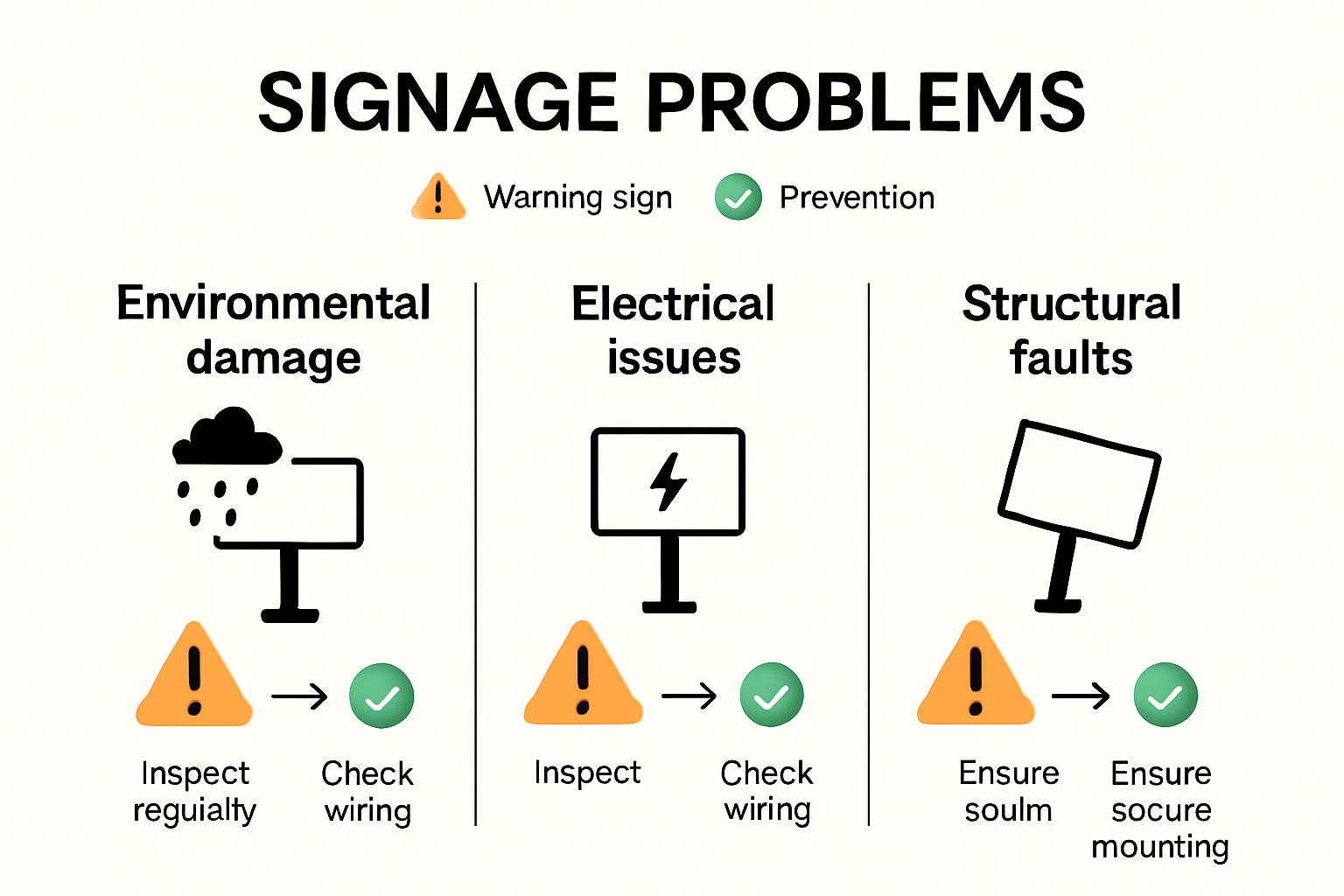
By adopting a holistic, anticipatory approach to signage maintenance, businesses transform potential problems into manageable, predictable aspects of their visual communication strategy. Regular professional assessments, material-specific protection, and systematic monitoring ensure signs remain not just functional, but powerful representations of brand quality and professionalism.
When to Call a Professional for Sign Repairs
Recognizing when professional intervention is necessary can save businesses significant time, money, and potential safety risks. Explore expert sign repair strategies to understand the nuanced requirements of professional signage maintenance.
Identifying Critical Repair Indicators
Professional sign repair becomes imperative when specific warning signs emerge. According to the Federal Highway Administration, periodic inspections are crucial for detecting potential issues before they escalate. Key indicators suggesting immediate professional intervention include:
- Structural Compromise: Visible bending, warping, or separation of sign components
- Electrical Malfunction: Intermittent lighting, complete failure of illumination systems
- Material Degradation: Significant corrosion, cracking, or material breakdown
- Mounting System Instability: Loose brackets, signs showing signs of potential detachment
These indicators represent more than cosmetic concerns. They signal potential safety risks and potential brand reputation damage that require immediate professional assessment.
Comprehensive Diagnostic Approaches
Professional sign repair services offer comprehensive diagnostic capabilities that extend beyond surface-level inspections. The FHWA’s sign management guidelines recommend a systematic approach to identifying and addressing signage issues:
- Advanced Diagnostic Tools: Specialized equipment for detecting hidden structural and electrical problems
- Material Compatibility Assessment: Expert evaluation of repair techniques specific to different sign materials
- Compliance Verification: Ensuring repairs meet current safety and regulatory standards
- Predictive Maintenance Recommendations: Identifying potential future issues before they become critical
Professional technicians bring specialized knowledge that goes beyond basic maintenance. They understand the intricate interactions between different sign components, environmental factors, and material properties.
Cost-Benefit Analysis of Professional Intervention
While some businesses might hesitate due to perceived costs, professional sign repairs often represent a strategic financial decision. Delaying necessary repairs can lead to exponentially higher expenses through:
- Complete Sign Replacement: Minor issues left unaddressed can necessitate full sign replacement
- Business Reputation Damage: Poorly maintained signage can negatively impact customer perception
- Safety Liability: Potential legal risks associated with unstable or malfunctioning signage
- Increased Energy Costs: Inefficient electrical systems in illuminated signs can drive up operational expenses
Professional sign repair services provide a comprehensive solution that addresses immediate issues while preventing long-term complications. They offer a holistic approach that considers structural integrity, aesthetic appeal, and operational efficiency.

Businesses should view professional sign repair not as an expense, but as a critical investment in their visual communication infrastructure. By partnering with experienced professionals, companies can ensure their signage remains a powerful, reliable representation of their brand’s quality and attention to detail.
Frequently Asked Questions
What is the importance of regular signage maintenance for businesses?
Regular signage maintenance is crucial as it boosts your brand image, prevents costly replacements, ensures compliance with safety regulations, and enhances customer confidence by providing a professional appearance.
How often should businesses clean their signs?
The frequency of sign cleaning generally depends on environmental factors. Businesses should aim for professional cleaning every three to six months, with quarterly cleanings for signs exposed to extreme weather or high pollution.
What are the common problems signs face that require preventive maintenance?
Common issues include environmental damage such as corrosion for metal signs, moisture and rot for wooden signs, and UV degradation for plastic signs. Regular inspections help identify these risks before they escalate.
When should a business consider calling a professional for sign repairs?
A business should call a professional for repairs if there are visible signs of structural compromise, electrical malfunctions, significant material degradation, or instability in the mounting system. These issues can pose safety risks and harm your business’s reputation.
Keep Your Brand Shining with Expert Signage Maintenance
Dirty or damaged signs do more than just look unprofessional. As discussed in our article, faded graphics, malfunctioning lighting and neglected structures can cause customers to doubt your business and hurt your reputation in a highly competitive London market. Even regular cleaning cannot always tackle hidden issues such as electrical faults or weakened mounts that can create safety risks and increase future costs.

Do not let small problems become expensive setbacks for your brand. At PromoSigns, we specialise in designing, producing and maintaining custom shop signs and illuminated signage for London, Essex and Kent businesses. We understand that your sign needs to work as hard as you do. See how our professional sign maintenance and repair expertise can extend the life and impact of your signage. Ready for a no-obligation consultation? Visit our main site now and let us help you protect your investment before small issues turn into costly replacements.
Recommended
- Best Practices for Maintenance of Shop Signs – PromoSigns.co.uk
- Shop Signage Basics 2025: Essential Tips for London Businesses – PromoSigns.co.uk
- Outdoor Signage Best Practices for London Businesses 2025 – PromoSigns.co.uk
- Retail Signage Compliance Guide 2025 for London Businesses – PromoSigns.co.uk
- Aménagement espaces extérieurs rive-sud : guide 2025 simple | 450-550-3606
- 8 Ways to Market Your Photography Services | Effortlessly Professional Websites
