
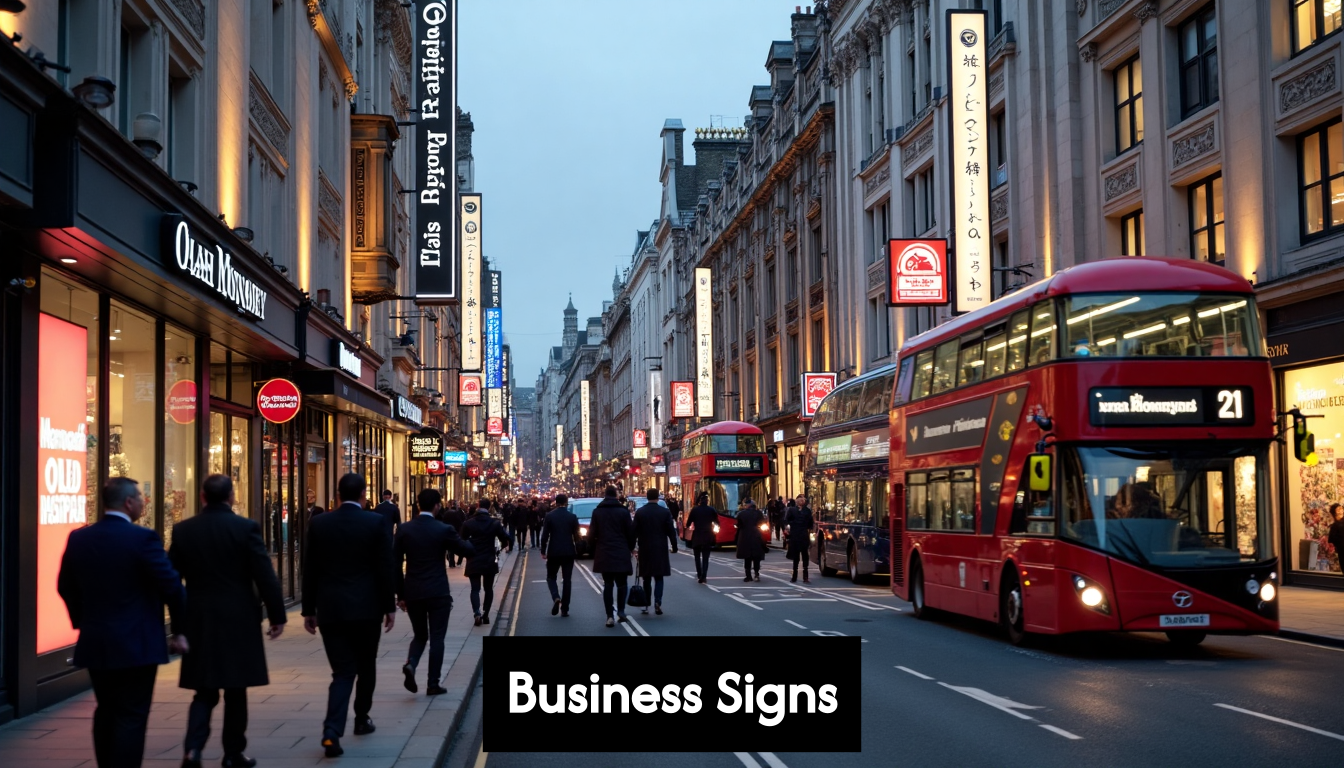
Business signs are evolving faster than ever. In fact, digital signage now dominates the market with outdoor signs holding 63.4 percent of market share in 2025. Most people expect illuminated digital boards to be the centre of attention. Yet, the most impressive shift is not about flashy screens or fancy displays. The real story is how London businesses are now weaving together traditional signs, sustainable materials and personal touches to reflect the city’s unique neighbourhoods. Here is what is making signs in 2025 totally different from anything you’ve seen before.
Table of Contents
Table of Contents
- Popular Types Of Business Signs Explained
- Choosing The Right Sign For Your Industry
- Sign Materials And Installation Options
- London Signage Trends: 2025 And Beyond
Quick Summary
| Takeaway | Explanation |
|---|---|
| Embrace Digital and Interactive Signage | In 2025, businesses should adopt digital signage technologies for real-time content updates and immersive customer experiences, which are becoming essential for visibility and engagement. |
| Leverage Traditional Signage | Despite the rise of digital, traditional illuminated signage still holds a significant market share, providing essential visibility and aesthetic appeal in high foot traffic areas. |
| Consider Industry-Specific Signage Needs | Different industries require tailored signage solutions that not only reflect brand identity but also comply with regulations and functional needs, such as safety in industrial environments. |
| Utilise Sustainable Materials | Businesses should prioritise eco-friendly materials and energy-efficient technologies in their signage to meet consumer expectations and promote corporate values. |
| Focus on Localisation and Personalisation | Hyper personalised signage that resonates with local communities is key; businesses should design signs that reflect local culture and neighbourhood identities. |
Popular Types of Business Signs Explained
Business signage has evolved dramatically in recent years, transforming from simple static displays to dynamic communication tools that capture attention and drive customer engagement. Understanding the types of business signs available can help companies make strategic decisions about their visual marketing approach.
Digital and Interactive Signage: The Future of Business Communication
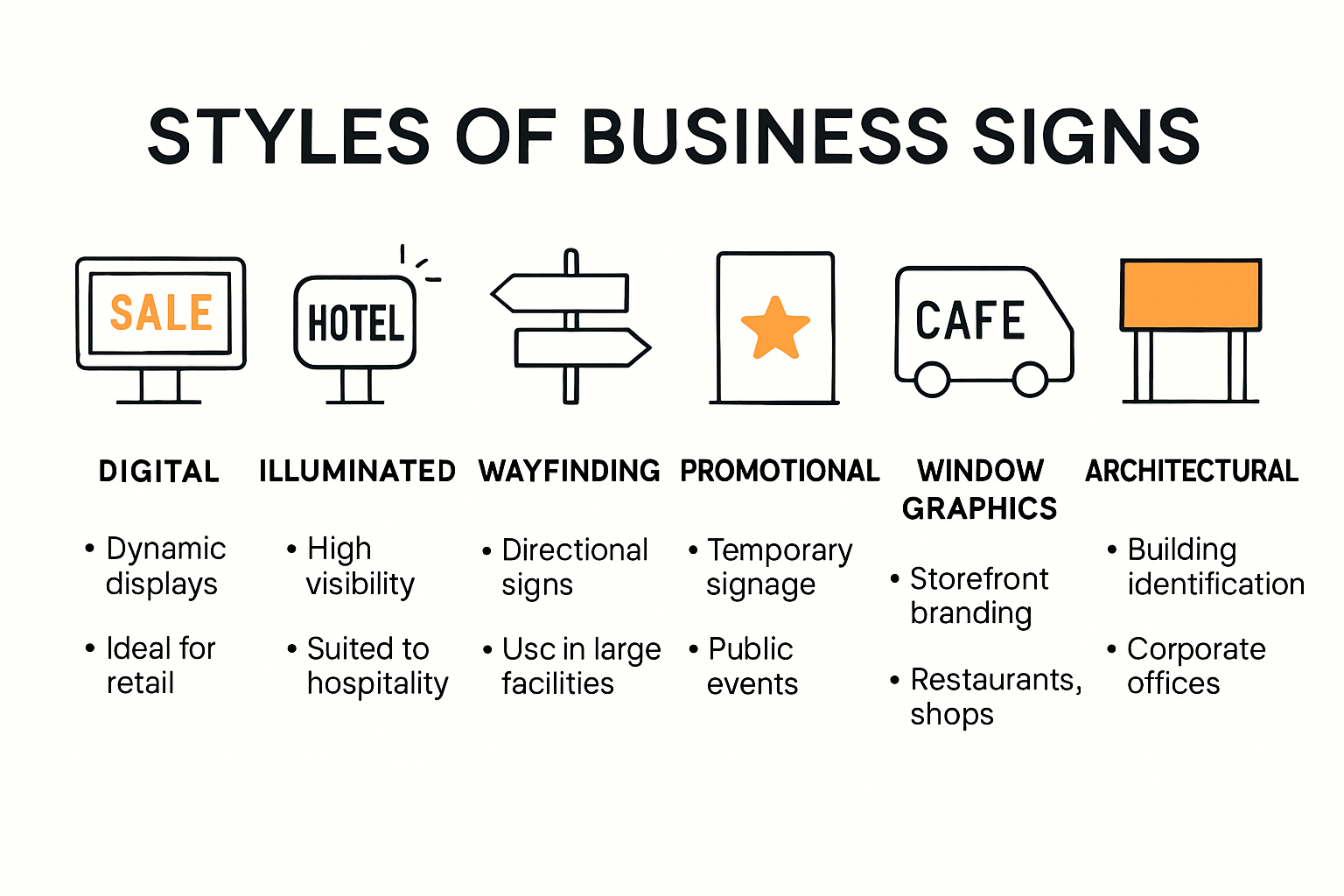
In 2025, digital signage has become a game changing technology for businesses seeking maximum visibility. According to market research, digital billboards and computer controlled LED displays now dominate the signage market. These innovative signs offer remarkable advantages over traditional signage, including real time content updates, dynamic messaging, and interactive capabilities.
Modern digital signs can integrate augmented reality features, allowing businesses to create immersive experiences that go beyond simple visual communication. For instance, retail shops can use touchscreen displays that provide product information, enable virtual try ons, or offer personalized recommendations. Restaurants might showcase dynamic menu boards that change based on time of day, while corporate offices can use interactive wayfinding systems that help visitors navigate complex environments.
Traditional and Illuminated Signage: Timeless Marketing Tools
While digital technologies are advancing rapidly, traditional signage remains critically important. Market segmentation data reveals that outdoor signage still holds a substantial 63.4% market share in 2025, demonstrating the continued relevance of physical signs. Illuminated signs, particularly those using LED technology, offer a perfect blend of traditional visibility and modern efficiency.
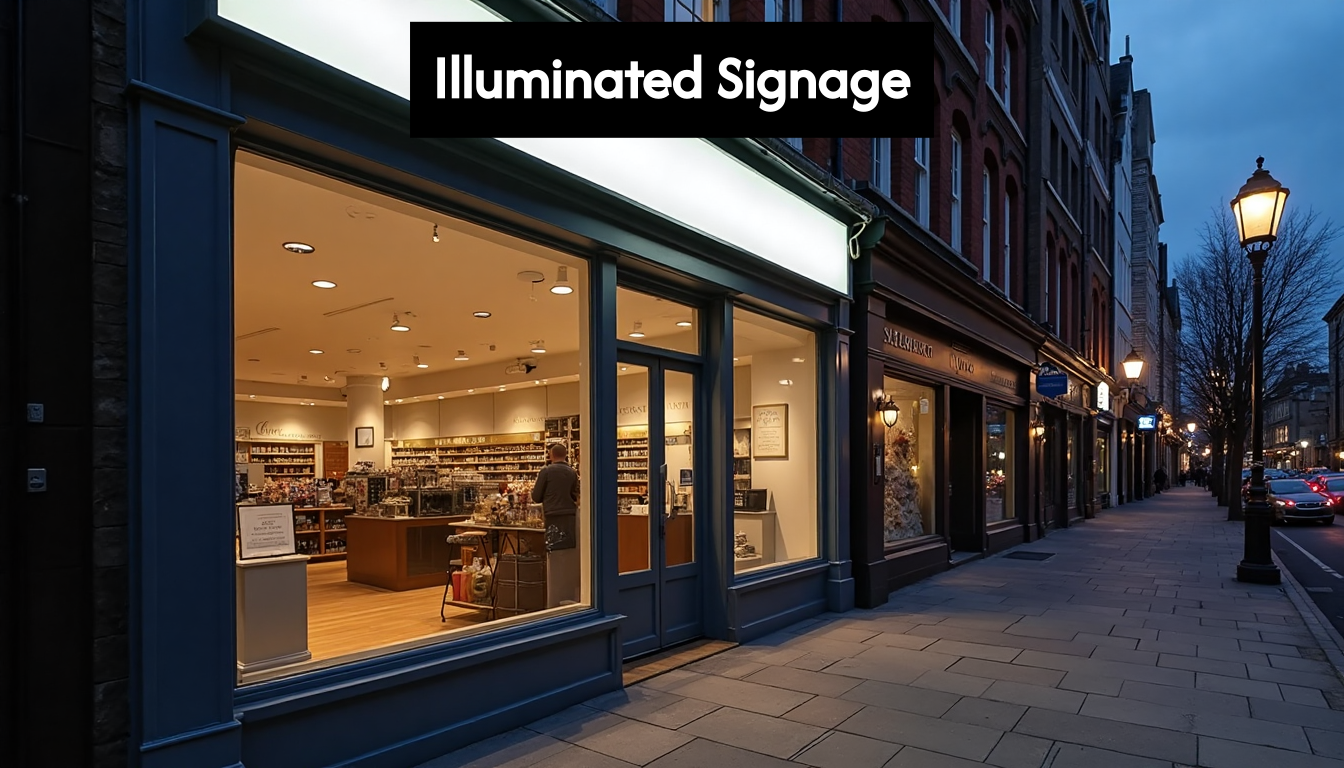
These signs come in various formats including channel letters, lightbox signs, and neon displays. They provide excellent visibility during day and night, ensuring your business remains noticeable even in low light conditions. Illuminated signs are particularly effective for businesses located in areas with high foot traffic or complex urban environments where standing out is crucial.
Specialized Signage: Tailoring Visual Communication
Beyond digital and illuminated options, businesses now have access to highly specialized signage solutions. Wayfinding signs help customers navigate interior spaces, while promotional signs can highlight specific products or services. Window graphics, vehicle wraps, and architectural signage offer additional opportunities for brand visibility.
For businesses looking to dive deeper into sign selection, our comprehensive guide on commercial signage provides detailed insights into choosing the perfect sign for your specific needs. Whether you’re a small startup or an established enterprise, understanding these diverse signage options can significantly enhance your visual marketing strategy.
The key is selecting signs that not only look professional but also communicate your brand identity effectively. As technology continues to advance, businesses that adapt and leverage innovative signage solutions will be best positioned to capture customer attention and drive engagement.
Choosing the Right Sign for Your Industry
Selecting the appropriate business sign requires careful consideration of industry specific requirements, branding objectives, and regulatory guidelines. Different sectors demand unique signage solutions that not only communicate brand identity but also comply with local regulations and meet functional needs.
Retail and Hospitality: Visual Storytelling through Signage
Retail and hospitality businesses rely heavily on signs that create immediate visual impact and communicate brand personality. According to signage compliance guidelines, these businesses must navigate complex requirements when installing signage, particularly in conservation areas or zones with strict aesthetic regulations.
For retail environments, storefront signs should balance aesthetic appeal with clear communication. Window graphics, illuminated channel letters, and projecting signs can help attract customer attention. Restaurants and cafes might opt for menu boards, illuminated exterior signs, and interior wayfinding solutions that enhance customer experience. Our comprehensive restaurant signage guide provides deeper insights into creating compelling visual branding for food service businesses.
Professional Services and Corporate Environments
Corporate and professional service industries require signage that communicates reliability, expertise, and professionalism. These signs must adhere to five fundamental conditions outlined by regulatory bodies: signs must remain clean, maintained, have site owner consent, avoid obstructing official signage, and be removable upon request.
Office buildings typically benefit from lobby signs, directional signage, room identification markers, and external building identification signs. These signs should reflect the organization’s brand guidelines while maintaining a sophisticated and functional aesthetic. Materials like brushed metal, acrylic, and dimensional lettering can create a sense of corporate sophistication.
Industrial and Construction Sectors: Safety and Identification
Industrial businesses and construction sites have unique signage requirements focused on safety, regulation compliance, and clear communication. Permitted development rights allow some flexibility for temporary and small signage, but safety signs, site identification markers, and regulatory compliance notices are crucial.
These signs must be highly visible, durable, and capable of withstanding harsh environmental conditions. Reflective materials, high contrast colors, and clear typography are essential. Construction sites require signs indicating safety zones, equipment restrictions, personal protective equipment requirements, and emergency contact information.
Explore our detailed guide on selecting the right commercial sign to understand how different industries can leverage signage effectively. The right sign does more than communicate information it tells your brand’s story, guides customers, ensures safety, and creates a lasting visual impression.
Sign Materials and Installation Options
Choosing the right materials and installation approach for business signage is a critical decision that impacts durability, visual appeal, and overall brand perception. Modern businesses must carefully consider various factors when selecting sign materials and planning their installation strategy.
Innovative Materials for Modern Signage
Contemporary sign materials have evolved far beyond traditional options. Sustainable signage trends highlight a growing emphasis on eco friendly materials and manufacturing processes. Businesses now have access to a wide range of innovative materials that balance aesthetic appeal, durability, and environmental responsibility.
Metal signs remain a popular choice, offering exceptional durability and a sophisticated appearance. Aluminum and stainless steel provide lightweight yet robust solutions for exterior and interior signage. Wooden signs continue to deliver a classic, warm aesthetic particularly effective for businesses seeking a more traditional or artisanal brand image. Acrylic and glass materials offer modern, sleek options that work exceptionally well for contemporary corporate environments, creating elegant dimensional signs with crisp, clean lines.
Advanced Installation Techniques
Installation is as crucial as material selection. Professional sign installation requires careful consideration of architectural constraints, local regulations, and structural integrity. Modern installation techniques have become increasingly sophisticated, allowing for more complex and creative sign placements.
Companies now utilize advanced mounting systems that minimize visible hardware and create seamless visual experiences. Standoff mounts, hidden bracket systems, and precision laser cutting enable signs to appear as if they are floating against walls or integrated directly into architectural elements. These techniques not only enhance aesthetic appeal but also provide greater flexibility in sign placement and design.
Sustainable and Technology Integrated Solutions
The future of business signage lies in integration of sustainability and technology. According to industry trends, dimensional signage with layered elements and mixed material construction is becoming increasingly popular. Businesses are exploring signs that incorporate recycled materials, energy efficient lighting, and smart technology capabilities.
LED lighting continues to dominate, offering energy efficient illumination with remarkable design flexibility. Solar powered signs are emerging as an innovative solution for outdoor signage, reducing energy consumption and supporting environmental sustainability. Some advanced signs now feature integrated digital displays, QR codes, or augmented reality elements that transform static signage into interactive brand experiences.
The selection of sign materials and installation methods is no longer just a practical decision but a strategic branding opportunity. By carefully choosing materials that reflect your brand identity, leveraging innovative installation techniques, and incorporating sustainable technologies, businesses can create signage that communicates their values, attracts customers, and stands out in a competitive marketplace.
Careful consideration of these factors ensures that your business signage is not just a marker, but a powerful communication tool that represents your brand’s quality, innovation, and commitment to excellence.
London Signage Trends: 2025 and Beyond
The signage landscape in London is undergoing a remarkable transformation, driven by technological innovation, sustainability concerns, and evolving business communication strategies. As we move deeper into 2025, businesses are reimagining how they use signage to connect with customers, enhance brand identity, and create meaningful urban experiences.
Digital Innovation and Interactive Experiences
Digital signage technologies are revolutionizing how businesses communicate in 2025. The entry barriers have significantly decreased, enabling more companies to adopt dynamic, real-time content strategies. Interactive displays are no longer a luxury but a strategic necessity, offering immersive experiences that engage customers on multiple levels.
Smart cities like London are witnessing an explosion of adaptive signage solutions. Touchscreen wayfinding systems in public spaces, augmented reality integration in retail environments, and context aware digital displays are becoming standard. These technologies allow businesses to deliver personalized information, adjust messaging in real time, and create more engaging customer interactions. Our office interior signage guide provides deeper insights into how businesses are transforming communication through innovative signage solutions.
Sustainability and Experiential Design
Sustainability has emerged as a critical trend in London’s signage landscape. According to industry research, businesses are increasingly seeking eco-friendly materials and solutions that meet both consumer expectations and regulatory pressures. This shift goes beyond mere environmental compliance it represents a fundamental reimagining of signage as a tool for expressing corporate values.
Modern signage now incorporates recycled materials, energy efficient lighting, and designs that minimize environmental impact. Solar powered signs, signs made from sustainable wood or recycled metals, and modular designs that reduce waste are becoming increasingly popular. The trend extends to infrastructure signage as well, with new developments highlighting specialized signage such as electric vehicle charging point markers, reflecting London’s commitment to sustainable urban development.
Hyper Personalization and Localized Branding
London’s diverse business ecosystem is driving a trend towards hyper personalized and localized signage solutions. Businesses are moving away from generic, one size fits all approaches to creating signs that reflect neighborhood character, local cultural nuances, and specific community identities. This approach is particularly evident in retail environments, where signage becomes a storytelling medium.
Neighborhood specific typography, locally inspired graphic elements, and signs that incorporate multilingual messaging are becoming standard. Retailers are using signage not just as information delivery systems, but as integral parts of their brand narrative. Retail sign design strategies are evolving to create more immersive, contextually relevant visual experiences that resonate with local communities.
As London continues to be a global hub of innovation, signage is transforming from a passive communication tool to an active, dynamic interface between businesses and their customers. The future of signage is not just about visibility it is about creating meaningful, sustainable, and technologically advanced brand experiences that reflect the city’s dynamic spirit.
Frequently Asked Questions
What types of business signs are essential for London companies in 2025?
In 2025, essential types of business signs for London companies include digital and interactive signage, traditional illuminated signs, and specialized signage tailored to specific needs.
How can digital signage benefit my business in 2025?
Digital signage allows for real-time content updates, interactive capabilities, and enhanced customer engagement, making it a valuable tool for increasing visibility and improving communication with customers.
Why are traditional signs still important in the age of digital signage?
Traditional signs, particularly illuminated ones, remain crucial as they provide visibility, brand recognition, and aesthetic appeal, especially in high foot traffic areas where digital signs might be overlooked.
What factors should I consider when choosing a sign for my industry?
When selecting a sign, consider your industry’s specific needs, including regulatory compliance, branding objectives, and functional requirements such as visibility and safety standards.
Ready to Transform Your London Business with Next-Level Signage?
Struggling to stand out in London’s competitive landscape is a real challenge, especially with customer expectations shifting towards digital innovation, sustainability, and hyper-personalised branding as highlighted in our latest article. You may feel overwhelmed choosing between the right illuminated signs, impactful shopfront solutions, or advanced digital displays that truly connect with your audience. The need for visible, eco-friendly, and interactive signage is more important than ever if you want your business to thrive in 2025.

Now is the time to make your business impossible to ignore. Explore how our team at PromoSigns can design, produce, and install stunning custom signage that fits your unique needs across London, Essex, and Kent. From eye-catching illuminated signs to bespoke shop signs and large format prints, we help you embrace the future of business signage with confidence. Visit our site today and see how easy it is to get started on your journey towards maximum visibility and customer engagement.
Recommended Articles
- Types of Shop Signs for London Businesses: The 2025 Guide – PromoSigns.co.uk
- Custom Sign Design Process for London Businesses: 2025 Guide – PromoSigns.co.uk
- Business Signs London | Fast, Affordable, Professional Signage
