
Shop signage is the silent seller that catches the eye on every London high street and can sway a passer-by into becoming a customer. You might assume that all it takes is a clever logo or bold colours, but that barely scratches the surface. In fact, businesses with well-placed and clear signage can see up to a 50 percent increase in foot traffic compared to those with lacklustre signs. So, choosing your shop sign is not just an artistic choice, it’s a strategic decision that could shape the future of your business.
Table of Contents
Table of Contents
- Understanding Types Of Shop Signage
- Key Factors In Selecting Effective Signage
- Design Tips For Maximum Impact
- Legal And Local Considerations In London
Quick Summary
| Takeaway | Explanation |
|---|---|
| Choose signage that aligns with your brand identity | Ensure that your shop signage is visually coherent with your overall branding, including colours, typography, and graphic elements. |
| Prioritize strategic placement of your signage | Evaluate foot traffic, visibility, and local architectural constraints to determine optimal sign positioning for maximum impact. |
| Comply with local signage regulations | Familiarise yourself with legal requirements and planning permissions to avoid fines and ensure your signage meets local standards. |
| Select materials based on durability and appeal | Choose materials that reflect your brand image while considering factors like weather resistance and maintenance for long-lasting performance. |
| Incorporate innovative design elements | Use dynamic features, such as illumination or interactive components, to enhance visibility and engagement with your signage during different times. |
Understanding Types of Shop Signage
Choosing the right shop signage is a critical decision for businesses seeking to attract customers and communicate their brand effectively. Different types of signage serve various purposes and can significantly impact how potential customers perceive and interact with your business.
Exterior Signage Options
Exterior signage represents the first point of visual contact between your business and potential customers. According to Northeastern University’s Planning, Real Estate & Facilities department, there are multiple exterior sign types businesses can consider. A-Frame signs offer flexible, portable marketing solutions perfect for pavement advertising, while base signs provide more permanent outdoor branding opportunities.
These exterior signs can dramatically improve street visibility. Explore our comprehensive guide on creating impactful business signage to understand how different sign types can enhance your commercial presence. Illuminated signs, channel letter signs, and projecting signs each offer unique advantages for capturing attention during both daytime and evening hours.
To help you compare the main types of exterior shop signage discussed, the table below summarises their key features and benefits as mentioned in the article:
| Sign Type | Key Features | Advantages |
|---|---|---|
| A-Frame Signs | Portable, placed on pavement, flexible use | Ideal for changing messages, attracts passers-by |
| Base Signs | Permanent, outdoor, sturdy | Strong branding, long-term visibility |
| Illuminated Signs | Uses lighting to stand out, visible at night | High visibility during evening hours |
| Channel Letter Signs | Individual letters, dimensional, often lit | Distinctive look, enhances brand presence |
| Projecting Signs | Mounted perpendicular to building, visible side-on | Captures attention from multiple angles |
Material and Design Considerations
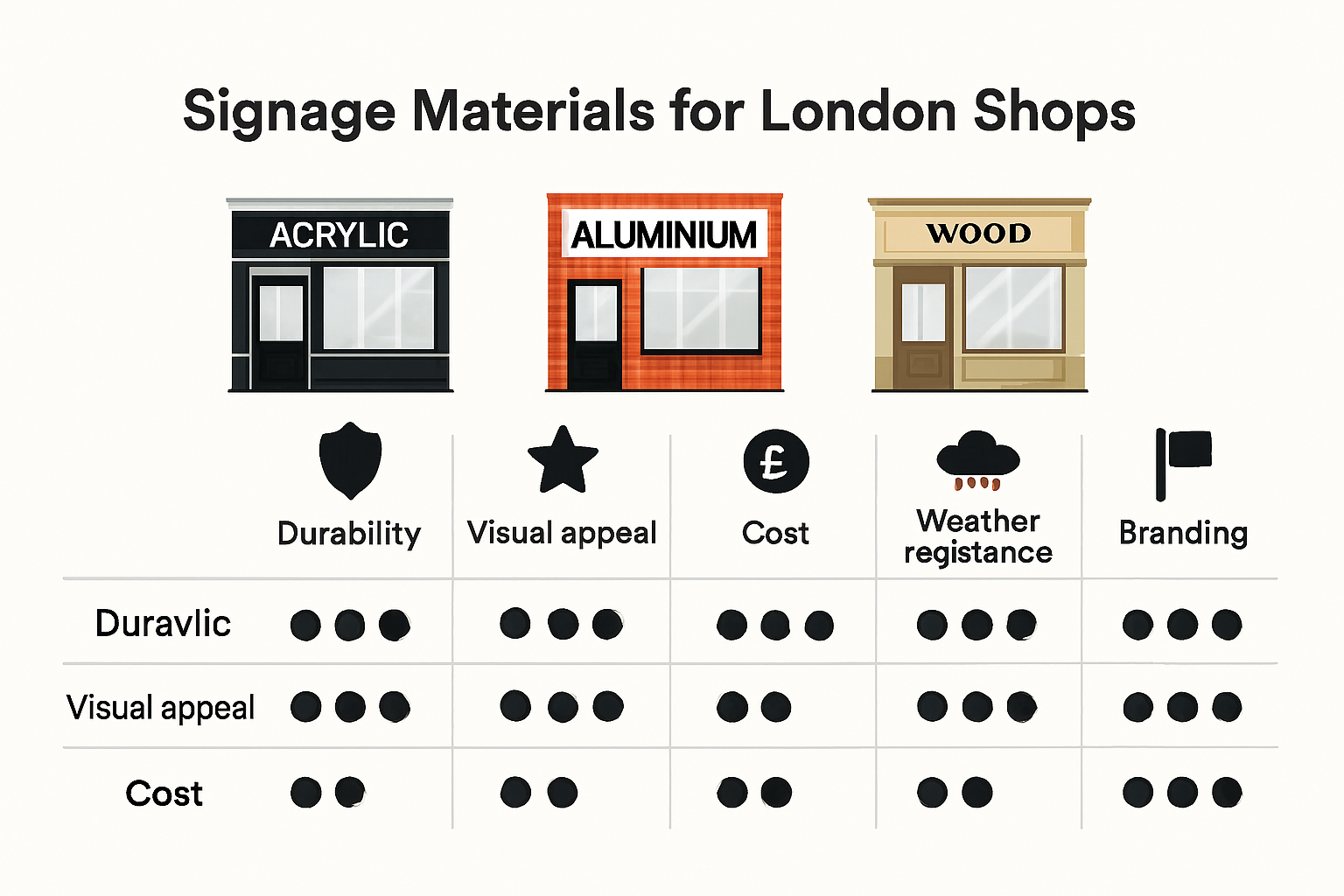
Research from Wikipedia’s signage overview highlights the importance of selecting appropriate materials for shop signs. Different materials communicate distinct brand qualities and durability levels. Acrylic signs offer a modern, sleek appearance and are lightweight, while aluminum composite panels provide robust outdoor performance. Wooden signs can convey a more traditional or artisanal aesthetic, depending on your business identity.
Consider factors like weather resistance, maintenance requirements, and visual appeal when selecting sign materials. Businesses in high-traffic areas might prioritize durability, whereas boutique establishments might focus more on aesthetic refinement. The material choice should align with your brand’s overall visual identity and the architectural context of your location.
The following table outlines common shop signage materials mentioned in the article, comparing their qualities and ideal business use:
| Material | Key Qualities | Best For |
|---|---|---|
| Acrylic | Modern, sleek, lightweight | Contemporary brands, indoor/outdoor |
| Aluminium Composite Panels | Durable, robust, weather-resistant | High-traffic/exterior locations |
| Wood | Traditional, artisanal, natural appeal | Boutique, artisanal, heritage brands |
Interior and Wayfinding Signage
Interior signage plays an equally crucial role in customer experience. Easel signs and indoor directional signs help customers navigate your space efficiently. These signs not only provide practical information but also contribute to your overall brand storytelling. Well-designed interior signs can reinforce your brand’s professionalism and attention to detail.
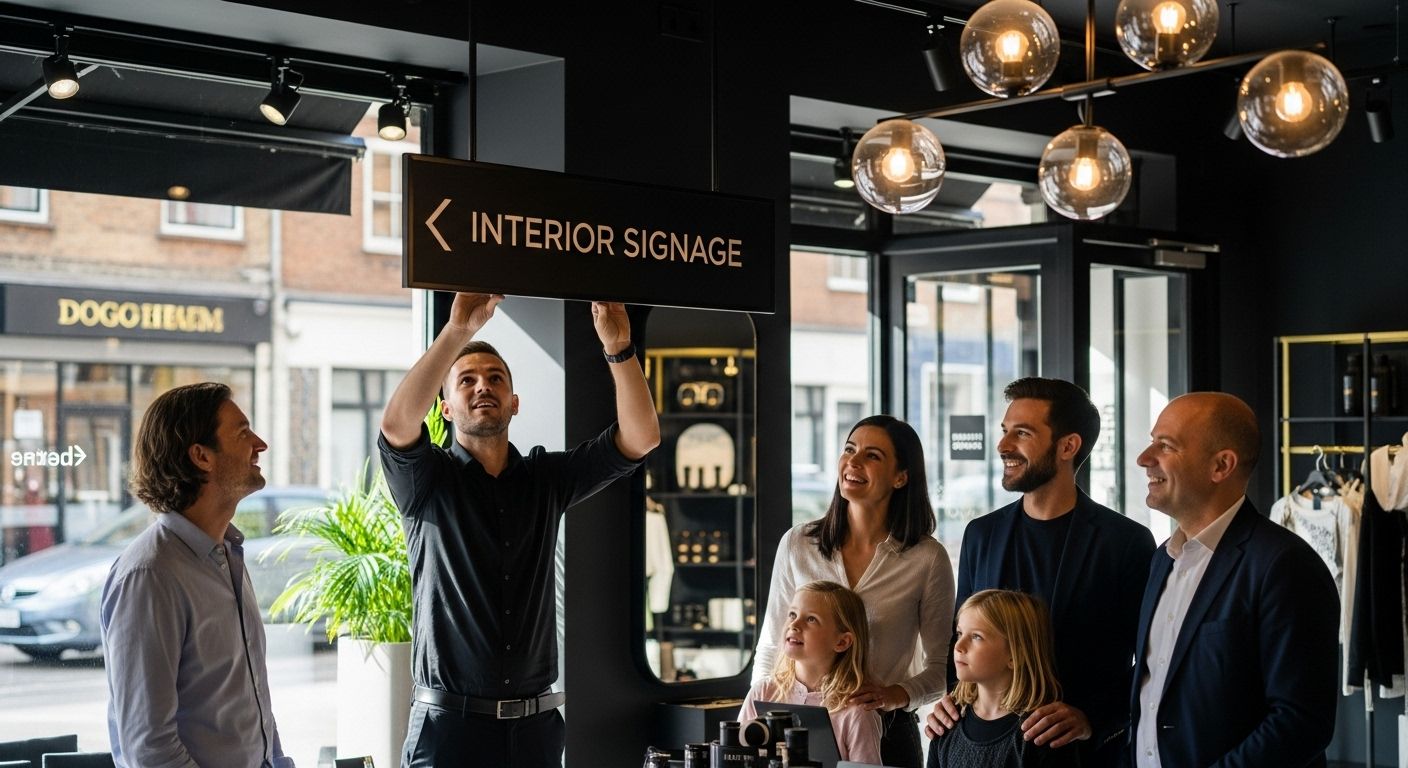
Choosing the right combination of exterior and interior signage requires strategic thinking. Consider how different sign types work together to create a cohesive visual communication strategy that guides, informs, and attracts potential customers. The goal is to create a seamless visual experience that reflects your brand’s unique personality and meets practical business communication needs.
Key Factors in Selecting Effective Signage
Selecting the right signage involves more than just aesthetic considerations. Business owners must carefully evaluate multiple strategic elements to ensure their signage effectively communicates their brand message and attracts potential customers.
Visual Branding and Design Coherence
Your shop sign is a critical visual representation of your brand identity. The design must align seamlessly with your overall brand aesthetic, including colour schemes, typography, and graphic elements. Learn more about creating cohesive business signage to understand how visual consistency can enhance brand recognition.
Consider factors like readability from different distances, contrast between background and text, and how the sign will appear under various lighting conditions. A well-designed sign should be legible both during daylight and evening hours, ensuring maximum visibility and impact.
Location and Placement Strategy
The effectiveness of signage dramatically depends on its strategic placement. Factors such as foot traffic patterns, visibility from the street, and local architectural constraints play crucial roles in determining optimal sign positioning. For businesses in dense urban environments like London, understanding these nuanced placement considerations becomes even more critical.
Height, angle, and proximity to potential customer pathways are essential considerations. Signs should be positioned to catch the eye without obstructing pedestrian movement or violating local planning regulations. Some businesses might benefit from multiple sign types to maximize visibility from different approach angles.
Regulatory Compliance and Technical Specifications
Navigating local signage regulations is paramount for businesses. Different areas have specific requirements regarding sign size, illumination, projection, and content. Architects and business owners must carefully consider these technical specifications to ensure their signage meets all legal standards.
Additional technical considerations include material durability, weather resistance, and maintenance requirements. Signs must withstand environmental conditions while maintaining their visual appeal. Materials like aluminum composite panels, acrylic, and specialized coatings can provide long-lasting performance and protect your investment.
Ultimately, effective signage is a strategic tool that combines visual communication, brand storytelling, and practical functionality. By thoughtfully addressing design, placement, and regulatory considerations, businesses can create signs that not only attract attention but also effectively represent their brand identity and professional ethos.
Design Tips for Maximum Impact
Creating a shop sign that captures attention and communicates your brand effectively requires strategic design thinking. Beyond basic visual elements, successful signage demands a nuanced approach that combines creativity, psychology, and technical precision.
Colour Psychology and Visual Hierarchy
Colour plays a critical role in sign design, influencing potential customers’ emotional and psychological responses. Different colours evoke specific feelings and associations. Blue can communicate professionalism and trust, red suggests energy and excitement, while green often represents growth and sustainability. Explore innovative graphic design strategies to understand how colour selection can dramatically impact your brand perception.
Visual hierarchy helps guide viewers’ eyes through your signage. This means strategically arranging elements so the most important information stands out immediately. Use font size, weight, and colour contrast to create a clear reading path. Typically, your business name or key message should be the largest and most prominent element, with secondary information appearing in smaller, complementary typography.
Typography and Readability Techniques
Choosing the right typography is crucial for effective communication. Sans-serif fonts often provide excellent readability at a distance, while serif fonts can add a touch of elegance for certain brand styles. Consider factors like letter spacing, line height, and font weight to ensure maximum legibility.
Font selection should align with your brand personality. A tech startup might use modern, minimalist typefaces, whereas a traditional bookshop could opt for more classic, refined fonts. Architects and designers understand that typography is not just about aesthetics but about creating a visual language that speaks directly to your target audience.
Innovative Design Elements and Technological Integration
Modern signage goes beyond static displays. Consider incorporating dynamic elements like illumination, digital screens, or interactive components that can adapt to different times of day or customer interactions. LED backlighting, for instance, can dramatically improve visibility during evening hours and create a striking visual impact.
Texture and dimensionality can also enhance sign design. Raised letters, embossed logos, or multi-layered sign construction can create depth and visual interest. These techniques transform your sign from a mere information display into a three-dimensional brand experience.
Remember that effective signage is a delicate balance between creativity and clarity. While it’s essential to be visually striking, the primary goal remains clear communication. Your sign should instantly convey who you are, what you do, and why potential customers should be interested. By thoughtfully combining design principles, technological innovations, and a deep understanding of visual communication, you can create signage that not only attracts attention but also tells a compelling brand story.
Legal and Local Considerations in London
Navigating the legal landscape of shop signage in London requires a comprehensive understanding of local regulations, planning permissions, and statutory requirements. Business owners must carefully consider multiple legal aspects to ensure their signage complies with local guidelines and avoids potential legal complications.
Regulatory Compliance and Planning Permissions
In the United Kingdom, businesses are subject to specific legal requirements regarding signage. Explore our comprehensive retail signage compliance guide to understand the intricate details of local regulations. According to gov.uk, the Town and Country Planning (Control of Advertisements) Regulations 2007 govern the display of outdoor advertisements, with certain signs requiring express consent from local planning authorities.
Different areas in London may have unique restrictions based on local conservation zones, historical district guidelines, and specific neighbourhood regulations. For instance, businesses in conservation areas or near listed buildings might face more stringent requirements regarding sign size, materials, and positioning. It is crucial to consult local planning departments and potentially engage a professional who understands the nuanced local regulations.
Company Identification and Legal Requirements
Legal compliance extends beyond mere aesthetic considerations. Official government guidelines mandate that limited companies must display their registered company information prominently. This includes displaying the company name at registered business locations, ensuring it is easily readable and meets specific legal standards.
Additionally, businesses must consider requirements such as displaying company registration numbers, office addresses, and other identifying information. These legal requirements serve not just as bureaucratic formalities but as important mechanisms for transparency and business accountability. Failure to comply can result in potential fines or legal challenges.
Illumination and Technical Specifications
Special considerations apply to illuminated signage in urban environments like London. Our guide on illuminated sign regulations provides detailed insights into the technical specifications and legal requirements. According to visitbritain.org, businesses must obtain specific consents for illuminated signs, with regulations varying based on the sign’s location, brightness, and potential impact on the surrounding environment.
Factors such as light intensity, potential light pollution, and impact on neighbouring properties are critically evaluated. Some areas might have restrictions on illumination during certain hours or require specific shielding techniques to minimise disruption to residential areas. Energy efficiency and environmental considerations are increasingly becoming part of these regulatory assessments.
Successfully navigating London’s legal signage landscape requires a proactive and informed approach. Business owners should view these regulations not as obstacles but as opportunities to create signage that is not only legally compliant but also respectful of the local urban environment. By understanding and working within these frameworks, businesses can develop signage that effectively communicates their brand while maintaining the aesthetic and regulatory integrity of their local community.
Frequently Asked Questions
What are the different types of exterior shop signage?
Exterior shop signage includes various types, such as A-Frame signs for portability, base signs for permanent branding, illuminated signs for visibility at night, channel letter signs for a distinctive look, and projecting signs for attention from multiple angles.
How do I choose the right material for my shop signage?
Select materials based on factors like durability, appearance, and weather resistance. Options range from acrylic for a modern look to aluminium composite panels for robust outdoor performance, and wood for a traditional aesthetic. Align the choice with your brand identity and the environmental context.
What factors should I consider for the placement of my shop signage?
Consider foot traffic patterns, visibility from the street, and local architectural constraints. Signs should be positioned to catch the eye without obstructing pedestrian movement and should comply with local planning regulations.
How do I ensure my shop signage complies with local regulations in London?
Familiarise yourself with the Town and Country Planning (Control of Advertisements) Regulations 2007, and check with local planning authorities about any specific requirements related to sign size, illumination, and placement, especially in conservation areas.
Bring Your Business Vision to Life with Expert Shop Signage
Have you ever worried that your current shop sign is being overlooked in the sea of busy London streets? The article highlighted how strategic design, proper material choice and compliance with local regulations can make the difference between attracting more foot traffic or being ignored. If your business feels lost among competitors or you are unsure how to comply with the Town and Country Planning (Control of Advertisements) Regulations 2007, we understand how daunting it can be to move from theory to action.

Let the team at PromoSigns guide you from concept to installation. We specialise in custom shop signs and illuminated solutions designed to boost your brand’s visibility every day and night. Our local expertise means you will never have to wonder if your sign is truly making an impact or if it meets all the technical and legal requirements. Take the uncertainty out of your next signage project and contact us now for bespoke advice. Your standout sign is just a click away.
Recommended
- How to Choose Signage: Best Tips for London Businesses 2025 – PromoSigns.co.uk
- Types of Shop Signs for London Businesses: The 2025 Guide – PromoSigns.co.uk
- Shop Signage Basics 2025: Essential Tips for London Businesses – PromoSigns.co.uk
- How to Design Shop Signs: Expert Tips for 2025 – PromoSigns.co.uk
- Best Business Communication Channels UK 2025 Guide – BHA Couriers
- Best Business Sustainability Practices for UK Success 2025 – BHA Couriers
