
Getting noticed on a busy street can make or break a business and your outdoor signage does the heavy lifting. Yet despite this, many shop owners overlook the true power of a well-designed sign.
Research shows that well-placed, brand-aligned signage can increase foot traffic by up to 25 percent. That number is just the start. What most people miss is that picking the right sign is less about stand-out graphics and more about understanding your brand and audience on a deeper level.
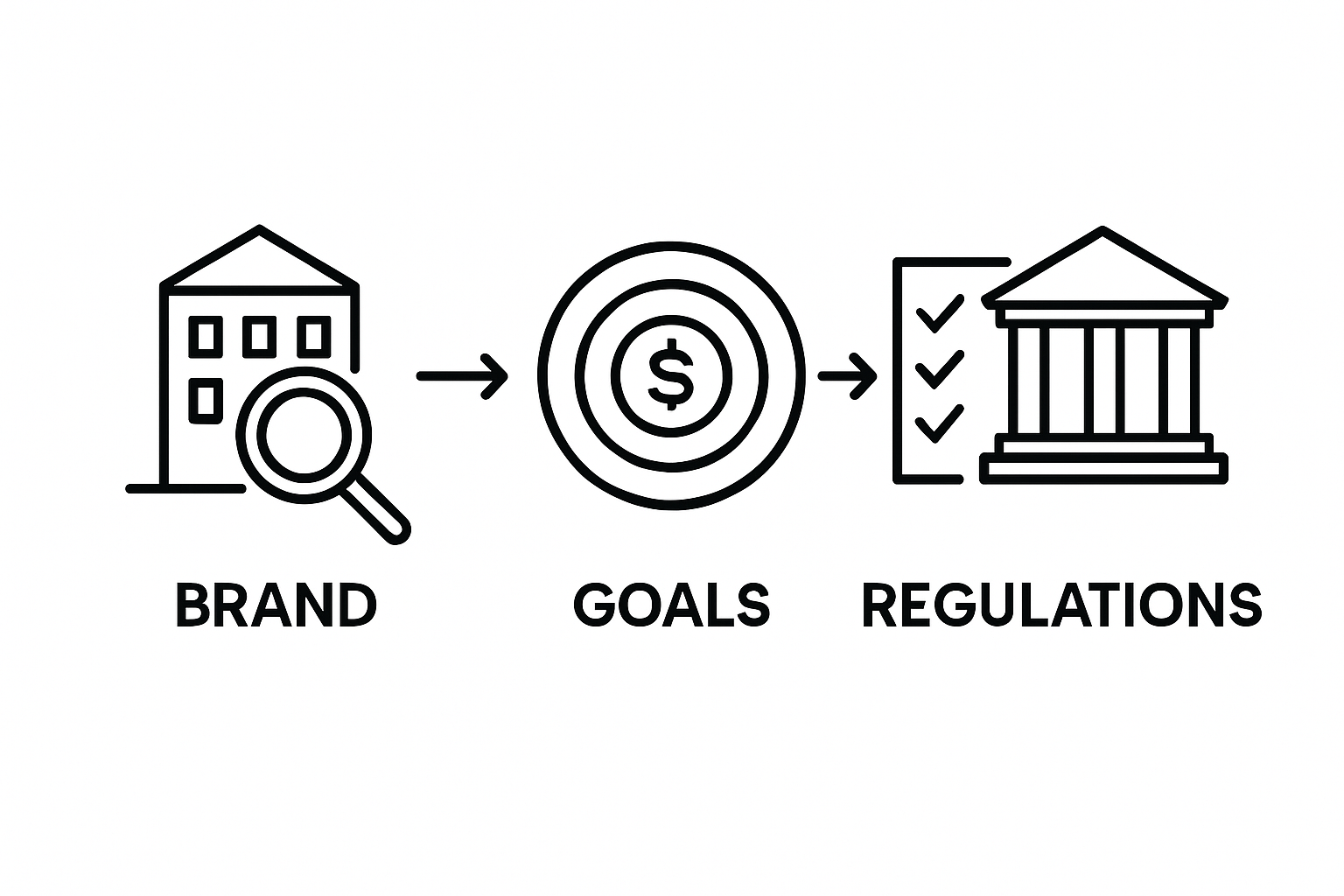
Table of Contents
Table of Contents
- Step 1: Evaluate Your Brand And Target Audience
- Step 2: Determine Your Signage Goals And Budget
- Step 3: Research Local Regulations And Requirements
- Step 4: Select Suitable Materials And Design Elements
- Step 5: Hire Professional Signage Providers Or Designers
- Step 6: Review, Install And Test Your Outdoor Signage
Quick Summary
| Key Point | Explanation |
|---|---|
| 1. Understand Your Brand Identity | Assess your brand’s personality and visual elements to ensure signage reflects your unique identity. |
| 2. Define Clear Signage Goals | Set specific objectives, such as increasing foot traffic, to guide design and placement decisions. |
| 3. Research Local Regulations | Familiarise yourself with local signage laws to avoid fines and ensure compliance with requirements. |
| 4. Choose Durable Materials | Select materials that are resilient and suitable for outdoor conditions to ensure longevity and effectiveness. |
| 5. Hire a Qualified Signage Provider | Select a professional with a strong portfolio and relevant experience to deliver high-quality signage solutions. |
Step 1: Evaluate Your Brand and Target Audience
Choosing outdoor signage begins with a deep understanding of your brand’s identity and the specific audience you aim to attract. This crucial first step sets the foundation for creating signage that not only captures attention but communicates your business’s core message effectively.
Start by conducting a comprehensive brand assessment that explores your company’s unique personality, values, and visual language. Your signage should be an authentic extension of your brand’s identity, reflecting the essence of what makes your business distinctive. Consider your colour palette, typography, logo design, and overall aesthetic. These elements will guide the design choices for your outdoor signage and ensure a consistent brand representation.
Understanding your target audience requires more than surface-level demographic analysis. Dive into the specific characteristics, preferences, and behaviours of your potential customers. What visual styles resonate with them? What messaging will capture their attention? For instance, a trendy cafe targeting young professionals will require a different signage approach compared to a traditional legal firm serving corporate clients.
Consider practical factors that influence signage effectiveness. Location plays a critical role in determining design and visibility. A sign positioned on a busy high street needs different visual strategies compared to one in a quieter business district. Environmental context matters immensely — your signage must stand out while harmonising with surrounding architectural elements.
Verify your signage strategy by answering these key questions:
- Does the proposed design authentically represent your brand?
- Will the sign effectively communicate with your target audience?
- Is the signage visible and legible from relevant distances and angles?
By meticulously evaluating your brand and target audience, you create a solid framework for selecting outdoor signage that is both visually compelling and strategically purposeful. Learn more about creating impactful business signage to refine your approach and ensure maximum visual communication effectiveness.
Step 2: Determine Your Signage Goals and Budget
After establishing your brand identity, the next critical step in choosing outdoor signage involves clearly defining your objectives and financial parameters. Signage goals extend far beyond mere visual decoration — they are strategic communication tools designed to attract customers, convey brand messaging, and ultimately drive business outcomes.
Begin by articulating specific, measurable objectives for your signage. Are you seeking to increase foot traffic? Enhance brand visibility? Communicate essential business information? Each goal will influence design decisions, material selections, and placement strategies.
For retail businesses, signage might aim to draw potential customers from the street, while professional services might prioritise a more understated, authoritative presentation.
Budget considerations require a holistic approach that goes beyond the initial purchase price. Consider the total lifecycle cost of your signage, including design, manufacturing, installation, maintenance, and potential future replacements. Professional signage is an investment that should deliver long-term value. Cheaper options might seem attractive initially but could deteriorate quickly or fail to effectively represent your brand.
Financial planning involves balancing quality with affordability. Research local signage providers and request multiple quotes to understand market rates. Explore comprehensive signage budgeting strategies to make informed financial decisions. Factor in variables like material durability, complexity of design, size, and installation requirements.
Verify your signage goals and budget alignment by evaluating these key criteria:
- Does the proposed signage directly support your identified business objectives?
- Is the budget realistic and sustainable for your business?
- Have you accounted for potential additional expenses like permits or complex installations?
Remember that successful signage represents a strategic investment in your business’s visual communication. By carefully defining goals and establishing a comprehensive budget, you create a solid foundation for selecting outdoor signage that delivers both aesthetic appeal and tangible business benefits.
Step 3: Research Local Regulations and Requirements
Navigating the complex landscape of local signage regulations is a critical step that can prevent costly mistakes and potential legal complications. Regulatory compliance is not optional — it is a fundamental requirement for installing outdoor signage that protects your business from potential fines, forced removals, or legal disputes.
Commence your regulatory research by contacting local municipal authorities, planning departments, and business licensing offices. Each jurisdiction maintains unique requirements regarding signage size, placement, illumination, materials, and aesthetic considerations. Urban areas often have more stringent regulations compared to suburban or rural locations, with specific rules governing commercial districts, historic zones, and main street corridors.
Pay close attention to zoning restrictions that might impact your signage design. Some areas have strict guidelines about sign dimensions, projection from buildings, height limitations, and visibility from public spaces. Illuminated signs often require additional permits and technical specifications, particularly concerning brightness levels, electrical connections, and nighttime visibility. Some municipalities mandate specific mounting techniques or require professional certification for electrical installations.
Explore comprehensive local signage guidelines to ensure you understand the nuanced requirements specific to your business location. Local chambers of commerce and business associations can provide valuable insights into navigating bureaucratic processes and interpreting complex regulatory language.
Verify your regulatory compliance by gathering and confirming these essential documents:
- Comprehensive written summary of local signage regulations
- Copies of required permit applications
- Detailed site plans showing proposed sign placement
- Electrical and structural certification documents (if applicable)
Remember that regulatory research is not a one-time task. Regulations evolve, and staying informed protects your business investment. Consult with local authorities, professional signage designers, and legal advisors to ensure your outdoor signage meets all current requirements while effectively representing your brand.
Step 4: Select Suitable Materials and Design Elements
Selecting the right materials and design elements transforms your outdoor signage from a simple informational tool into a powerful brand communication platform. Material selection is not merely about aesthetics, but about durability, performance, and long-term brand representation.
Aluminium emerges as a premier choice for outdoor signage, offering exceptional durability, lightweight properties, and resistance to corrosion. Unlike traditional materials, modern aluminium signage can withstand extreme weather conditions while maintaining a sleek, professional appearance. Consider composite materials that combine aluminium with acrylic or polycarbonate surfaces for enhanced visual depth and resilience.
Design elements require meticulous consideration beyond superficial attractiveness. Typography, colour palette, and graphic composition must align seamlessly with your brand’s visual identity. Select fonts that are legible from various distances and angles, prioritising clarity over complexity. Colour choices should reflect your brand’s personality while ensuring maximum visibility and emotional resonance with your target audience.
Discover advanced signage design strategies that can elevate your visual communication. Professional designers recommend maintaining high contrast between background and text, using bold, clean typefaces, and incorporating negative space to enhance readability.
Consider environmental factors that might impact material performance. Signs exposed to direct sunlight require UV-resistant materials and colours that will not fade quickly. Coastal or industrial environments demand additional protective coatings to prevent degradation from salt, pollution, or extreme temperatures.
Verify your material and design choices by evaluating these critical criteria:
- Does the selected material meet durability requirements for your specific location?
- Will the design remain legible and attractive under various lighting conditions?
- Does the signage accurately represent your brand’s visual identity?
Remember that your outdoor signage is often the first point of visual contact between your business and potential customers. Investing time and resources in selecting the right materials and design elements will create a lasting, professional impression that speaks volumes about your brand’s quality and attention to detail.
To help you prepare for professional signage installation, here is a table summarising some of the top materials mentioned along with their key properties and recommended uses.
| Material | Key Properties | Recommended Use |
|---|---|---|
| Aluminium | Durable, lightweight, corrosion-resistant | All-purpose outdoor signage |
| Composite | Combines strength, visual depth, and resilience | Areas requiring enhanced aesthetics |
| Acrylic | High clarity, weather-resistant | Sign faces, illuminated features |
| Polycarbonate | Impact-resistant, UV-stable, durable against elements | Harsh or exposed environments |
Step 5: Hire Professional Signage Providers or Designers
Hiring the right professional signage provider represents a pivotal moment in transforming your vision into a tangible, impactful visual communication tool. Professional expertise bridges the gap between conceptual design and exceptional execution, ensuring your outdoor signage meets both aesthetic and functional requirements.
Begin your search by conducting comprehensive research into potential signage providers. Examine their portfolios carefully, looking beyond surface-level aesthetics to evaluate their understanding of brand communication, technical capabilities, and track record of delivering complex projects. Seek providers who demonstrate experience in your specific industry and showcase versatility in design approaches.
Critical evaluation involves more than reviewing past work. Schedule initial consultations to assess their communication style, responsiveness, and ability to translate your brand’s unique requirements into compelling visual solutions. Professionals should ask probing questions about your business objectives, target audience, and brand identity, demonstrating a commitment to understanding your specific needs rather than offering generic design solutions.
Learn about our comprehensive sign design process to understand what professional collaboration truly entails. Transparent providers will offer detailed project proposals that outline design stages, anticipated timelines, cost breakdowns, and potential revisions.
Financial considerations extend beyond the initial quote. Request comprehensive proposals that detail not just design and manufacturing costs, but also installation, potential maintenance, and long-term durability considerations. A reputable signage provider will be forthcoming about potential additional expenses and provide clear, itemised estimates.
Verify your provider’s suitability by confirming these essential criteria:
- Proven portfolio of similar projects in your industry
- Clear, comprehensive project proposal with transparent pricing
- References from previous clients
- Professional certifications and industry memberships
- Demonstrated understanding of local regulatory requirements
Remember that selecting a signage provider is a strategic partnership. The right professional will not just create a sign, but will help communicate your brand’s essence, attract customers, and contribute to your business’s visual identity and marketing strategy.
Step 6: Review, Install and Test Your Outdoor Signage
The final stage of your outdoor signage journey involves meticulous review, precise installation, and comprehensive testing to ensure your visual communication tool performs exactly as intended. This critical phase transforms your carefully designed concept into a real-world representation of your brand.
Begin with a comprehensive design review, examining every detail of your signage against the original specifications. Verify colour accuracy, material quality, typography, and overall visual alignment with your brand identity. Professional installers recommend conducting this review in natural daylight to assess true colour representation and potential imperfections that might be invisible under artificial lighting.
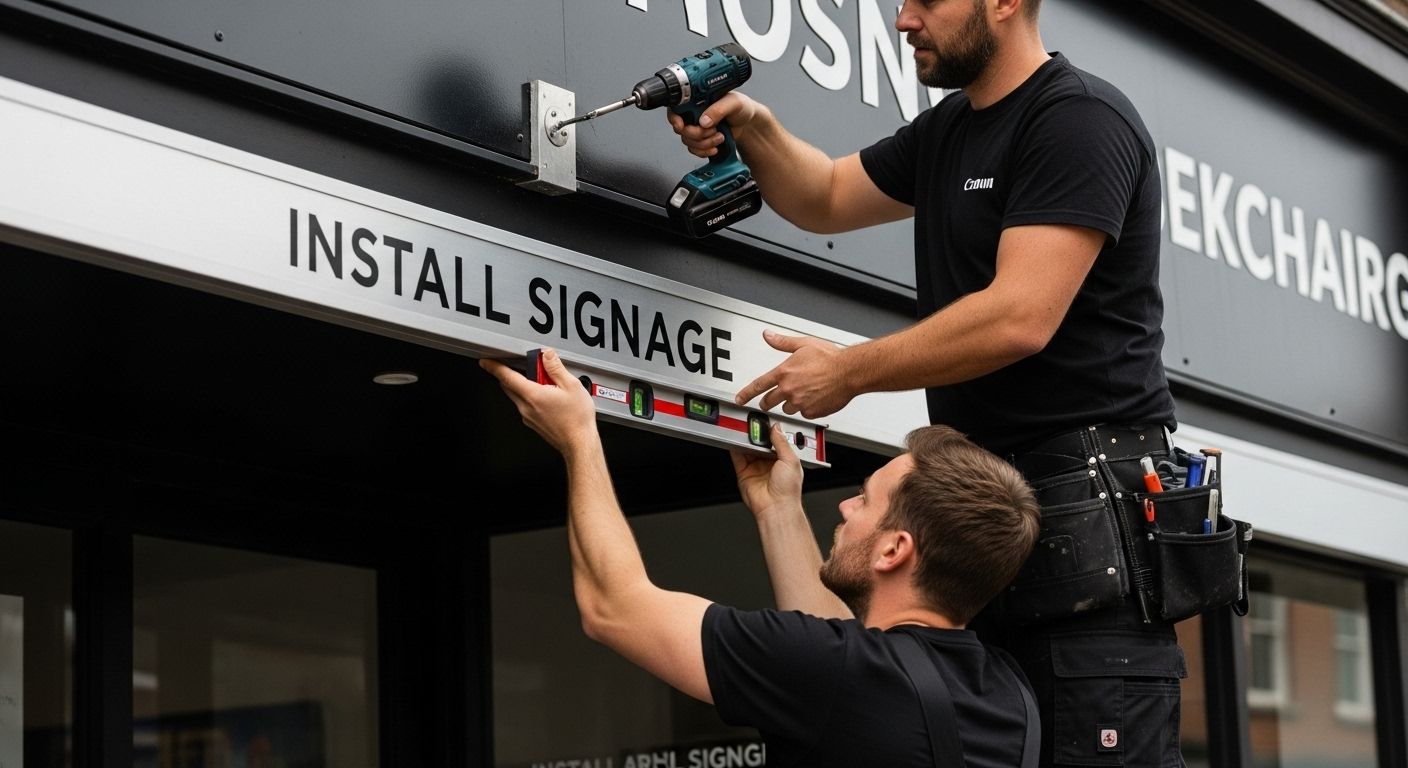
Installation requires surgical precision and professional expertise. Mounting location is paramount, influencing visibility, readability, and overall aesthetic impact. Consider factors like viewing angles, surrounding architectural elements, and potential obstructions. Precise measurements are crucial — even minor misalignments can compromise your sign’s effectiveness and professional appearance.
Discover professional installation best practices that can help you achieve a flawless result. Professional installation involves more than physical mounting; it includes ensuring electrical connections for illuminated signs are secure, weatherproofing is comprehensive, and structural integrity is maintained.
Testing encompasses multiple dimensions beyond visual inspection. Evaluate the sign’s performance under different lighting conditions — daytime clarity, nighttime illumination, and visibility during various weather scenarios. Check retroreflective properties if applicable, ensuring the sign remains legible from multiple distances and angles.
Verify your outdoor signage installation by assessing these critical criteria:
- Sign is perfectly level and securely mounted
- Colours match original design specifications
- Illumination functions correctly (if applicable)
- Signage is clearly readable from intended viewing distances
- No visible damage or installation imperfections exist
Remember that your outdoor signage is a continuous communication platform. Regular maintenance, periodic professional inspections, and willingness to make incremental improvements will ensure your sign continues to represent your brand effectively over time.
Below is a checklist table to help you verify your outdoor signage installation, ensuring all essential criteria are met for optimal performance and presentation.
| Verification Criterion | Description |
|---|---|
| Secure and Level Installation | Sign is perfectly level and securely mounted |
| Colour Accuracy | Colours match original design specifications |
| Illumination Functionality | Illumination functions correctly (if applicable) |
| Readability | Signage is clearly readable from intended viewing distances |
| Absence of Damage or Imperfections | No visible damage or installation imperfections exist |
| Structural and Electrical Integrity | All connections and fixings are robust and compliant |
| Compliance with Specifications | Entire sign aligns with agreed design and regulatory documents |
Ready to Turn Your Signage Challenges Into Standout Success?
Selecting the perfect outdoor sign can feel overwhelming. The article highlighted how difficult it is to combine brand identity, audience appeal and regulatory compliance into one striking, effective sign. Many businesses worry about visibility, material choice and professional installation. That uncertainty can hold your business back from making the unforgettable first impression you deserve.
Explore our full outdoor signage services to see how we help you move from indecision to confidence at every stage of the signage journey.

Work with experts who understand branding, design and local regulations across London, Essex and Kent. We guide you from initial concept through to flawless installation, ensuring your sign delivers impact and compliance — with stunning results. Find out how our custom signage solutions meet your goals from the very first step. Visit PromoSigns now and take control of your business image before the new year.
Frequently Asked Questions
What factors should I consider when evaluating my brand for outdoor signage?
When evaluating your brand, consider its identity, values, visual language, and how these elements can be authentically represented in your signage. Assess your colour palette, typography, and overall aesthetic to ensure consistency in your brand representation.
How can I define my signage goals and budget effectively?
Define specific, measurable signage objectives, such as increasing foot traffic or enhancing brand visibility. Consider the total lifecycle costs, including design, manufacturing, installation, maintenance, and potential future replacements, to establish a realistic budget.
What local regulations should I research before installing outdoor signage?
Research local signage regulations specific to your area, including size, placement, illumination, and aesthetic considerations. Ensure you obtain the necessary permits and comply with zoning restrictions to avoid legal complications.
What materials are best for outdoor signage and why?
Aluminium is an excellent choice for outdoor signage due to its durability, lightweight properties, and resistance to corrosion. Composite materials may also be considered for added visual depth and resilience, while ensuring that the selected material aligns with the environmental conditions of your location.
Recommended
- How to Install Shop Signs: A Step-by-Step Guide for 2025 – PromoSigns.co.uk
- Outdoor Signage Best Practices for London Businesses 2025 – PromoSigns.co.uk
- A Step-by-Step Guide to Professional Commercial Sign Installation – PromoSigns.co.uk
- Effective Signage for Architects: 2025 Guide for London Businesses – PromoSigns.co.uk
