
Workplaces are filled with rules about signs, and for good reason. A single clear safety sign can cut workplace accidents by up to 80 percent according to safety research. That number sounds huge, but most people overlook how much more is at stake than just ticking off legal boxes. It is not only about avoiding fines or impressing inspectors. The real impact lies in how these signs quietly reshape the way people think and act every single day.
Table of Contents
- What Are Signage Health And Safety Rules?
- The Purpose Of Safety Signage Regulations
- Key Components Of Safety Signage Rules
- Why Signage Health And Safety Rules Matter For Businesses
- Legal And Financial Implications
- Organisational Reputation And Employee Trust
- The Impact Of Signage On Health And Safety Outcomes
- Preventative Risk Communication
- Behavioural Modification And Safety Culture
- Key Concepts Behind Effective Health And Safety Signage
- Visual Communication And Cognitive Processing
- Strategic Design And Placement Principles
- Regulatory Framework And Best Practices In London
- Legal Foundations And Regulatory Compliance
- Practical Implementation And Best Practices
Table of Contents
Quick Summary
| Takeaway | Explanation |
|---|---|
| Implement clear signage protocols | Establish standardised guidelines for designing, placing, and maintaining safety signs to enhance understanding. |
| Prioritise legal compliance | Adhere to health and safety regulations to mitigate legal risks and financial penalties associated with inadequate signage. |
| Engage employees with safety communication | Use effective visual strategies in signage to foster a culture of safety and encourage proactive risk management among staff. |
| Conduct regular signage assessments | Regularly inspect and update safety signs to ensure they remain legible, relevant, and effective in risk communication. |
| Incorporate design principles for clarity | Use clear symbols, colour psychology, and strategic placement to maximise the visibility and comprehension of safety messages. |
What are Signage Health and Safety Rules?
Signage health and safety rules represent a comprehensive set of guidelines and regulations designed to protect workers, visitors, and the general public by communicating potential risks, hazards, and necessary precautions through visual communication. These rules establish standardised protocols for creating, positioning, and maintaining safety signage across various environments.
The Purpose of Safety Signage Regulations
The fundamental objective of signage health and safety rules is risk mitigation and prevention. Learn more about health and safety signage requirements for comprehensive workplace protection. These regulations serve critical functions by:
- Providing clear visual warnings about potential dangers
- Indicating mandatory protective actions
- Guiding individuals towards safe practices and emergency procedures
- Ensuring consistent communication of critical safety information
Safety signage must meet specific criteria to effectively communicate hazards. These include using universally recognisable colours, symbols, and text that can be quickly understood by people from diverse backgrounds. Working with professional signage companies London ensures every safety sign is produced to the correct specification — from colour accuracy to material durability — meeting both UK standards and practical workplace requirements.
Key Components of Safety Signage Rules
Effective safety signage rules encompass multiple critical elements that ensure clarity, visibility, and comprehension. These components typically include:
- Design Standards: Specific guidelines about sign colours, shapes, and symbols
- Placement Requirements: Rules defining where and how signs should be positioned
- Maintenance Protocols: Instructions for regularly inspecting and updating safety signage
- Language Considerations: Ensuring signs are readable and understandable by all potential viewers
By establishing these structured guidelines, signage health and safety rules create a standardised approach to communicating potential risks and promoting workplace safety across various industries and environments.
| Component | Description |
|---|---|
| Design Standards | Guidelines specifying sign colours, shapes, and symbols for instant recognition |
| Placement Requirements | Rules about correct positioning to ensure maximum visibility and effectiveness |
| Maintenance Protocols | Procedures for routine inspection and updating of signage to retain relevance and legibility |
| Language Considerations | Use of clear, easily understandable language accessible to all potential viewers |
Why Signage Health and Safety Rules Matter for Businesses
Signage health and safety rules are not merely bureaucratic requirements but fundamental business protection strategies that safeguard organisations from potential legal, financial, and reputational risks. Our comprehensive guide to signage compliance illustrates the critical importance of these regulations across diverse business environments.
Legal and Financial Implications
Businesses that neglect proper health and safety signage expose themselves to significant legal vulnerabilities. Inadequate safety communication can result in substantial financial consequences, including:
- Potential workplace injury compensation claims
- Substantial regulatory fines and penalties
- Increased insurance premiums
- Potential legal prosecution for negligence
The financial ramifications of non-compliance can far exceed the initial investment in comprehensive safety signage, making proactive risk management a strategic business imperative. Investing in professionally produced custom signs London for health and safety applications ensures every sign meets the precise colour, size, and symbol requirements set out in UK regulations.
Organisational Reputation and Employee Trust
Beyond legal considerations, effective safety signage demonstrates an organisation’s commitment to employee welfare. Clear, well-designed safety signs communicate professionalism and organisational integrity. They serve multiple critical functions:
- Building employee confidence in workplace safety
- Demonstrating regulatory compliance
- Reducing potential workplace accidents
- Creating a culture of safety and responsibility
By prioritising robust health and safety signage, businesses signal their dedication to creating secure, responsible work environments that protect both human capital and organisational resources.
The Impact of Signage on Health and Safety Outcomes
Signage represents far more than simple visual communication strategies — it serves as a critical mechanism for preventing accidents, managing risks, and creating safer working environments. Explore our comprehensive office signage guidelines to understand the profound implications of strategic safety signage.
Preventative Risk Communication
The primary objective of health and safety signage is proactive risk prevention. Effective signage can dramatically reduce workplace incidents by providing immediate, clear visual warnings that guide human behaviour and decision making. Well-designed safety signs accomplish critical objectives by:
- Alerting workers to potential hazards before accidents occur
- Providing clear instructions for safe navigation
- Highlighting mandatory protective equipment requirements
- Creating psychological awareness of potential risks
Behavioural Modification and Safety Culture
Signage functions as a powerful tool for organisational cultural transformation, influencing worker perceptions and promoting safety consciousness. Strategic signage design goes beyond simple instruction by:
- Reinforcing organisational commitment to employee welfare
- Creating visual reminders of safety protocols
- Normalising safety practices through consistent communication
- Encouraging proactive risk management approaches
By transforming safety communication from passive instruction to active engagement, businesses can create environments where safety becomes an inherent part of organisational culture rather than a mere compliance requirement. For large warehouses, manufacturing sites, and multi-floor commercial premises, large format printing London enables safety signs to be produced at the scale needed for clear visibility across wide open spaces and high-ceiling environments.

Key Concepts Behind Effective Health and Safety Signage
Effective health and safety signage transcends mere visual communication, representing a sophisticated blend of psychological understanding, design principles, and regulatory compliance. Explore our comprehensive signage accessibility guidelines to understand the nuanced approach required for impactful safety communication.
Visual Communication and Cognitive Processing
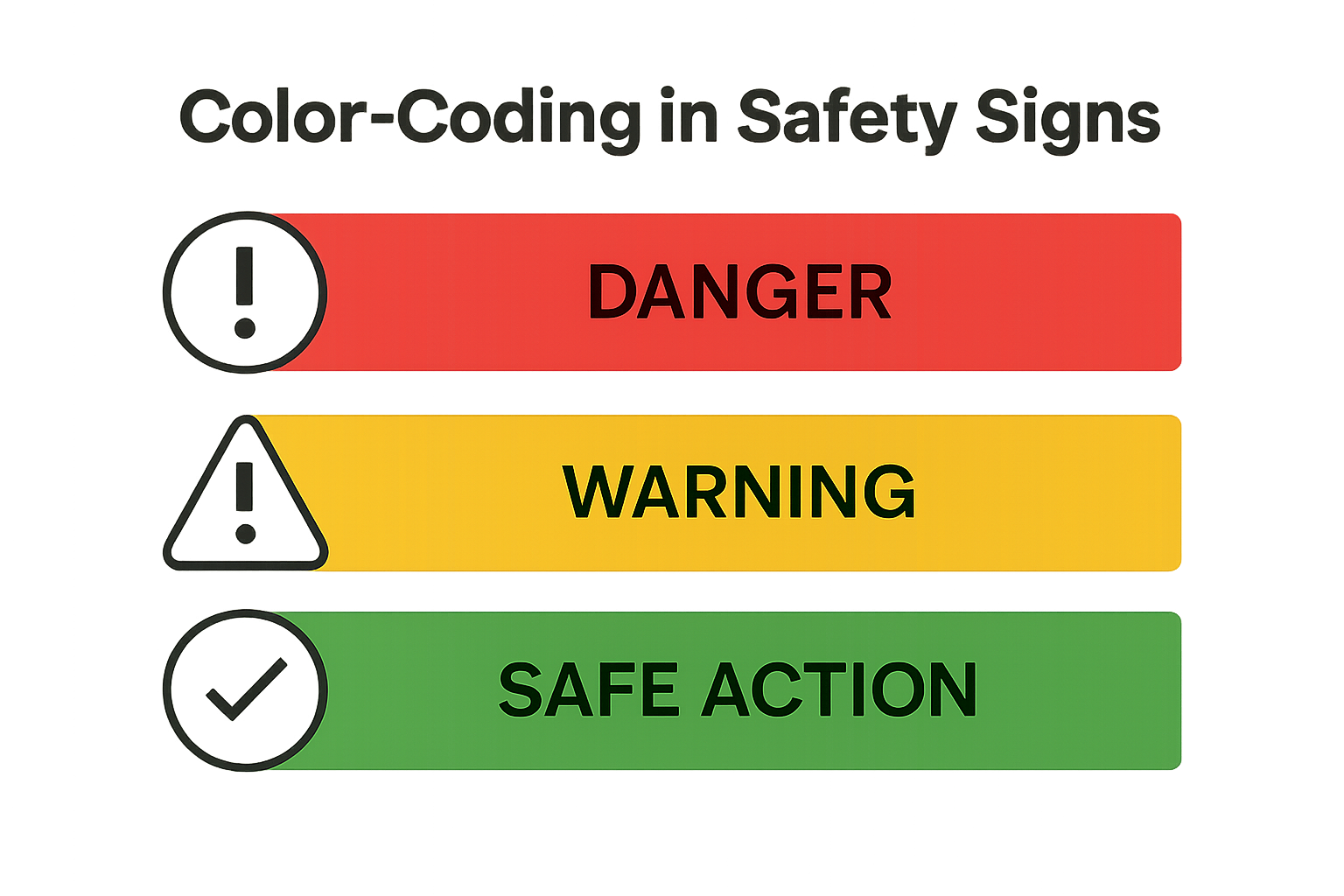
The design of safety signage is fundamentally rooted in understanding human cognitive processing and visual perception. Colour psychology plays a crucial role in how individuals interpret and respond to safety information. Different colours trigger specific psychological responses:
| Colour | Meaning/Message | Psychological Effect |
|---|---|---|
| Red | Immediate danger/emergency | Commands urgent attention |
| Orange | Warning/potential hazards | Prompts caution |
| Yellow | Warning/potential risk | Signals alertness |
| Green | Safety information/positive action | Conveys safety/reassurance |
| Blue | Informational guidance | Provides non-urgent help |
- Red signals immediate danger and demands urgent attention
- Orange indicates potential hazards requiring caution
- Yellow suggests warning and potential risk
- Green communicates safety and positive action
- Blue represents informational guidance
Strategic Design and Placement Principles
Beyond colour psychology, effective safety signage relies on strategic design and placement principles that maximise comprehension and behavioural modification. Critical considerations include:
- Positioning signs at eye level and in high visibility areas
- Using clear, universally understood symbols
- Maintaining consistent design language across different environments
- Ensuring signs are legible from appropriate distances
- Avoiding visual clutter that might diminish message impact
By integrating these sophisticated communication strategies, organisations can transform safety signage from passive information to active risk management tools that genuinely protect human life and organisational resources. For indoor temporary safety notices and short-term site communications, foamex signs printing London provides a lightweight, rigid substrate that is easy to reposition as workplace layouts evolve.
Regulatory Framework and Best Practices in London
London’s health and safety signage regulations represent a comprehensive approach to workplace protection, combining legal mandates with practical implementation strategies. Learn more about business signage regulations to navigate the complex landscape of compliance and safety standards.
Legal Foundations and Regulatory Compliance
The Health and Safety (Safety Signs and Signals) Regulations 1996 form the cornerstone of signage requirements in the United Kingdom. These regulations establish critical guidelines for organisations to communicate potential workplace hazards effectively. Key regulatory requirements include:
- Identifying risks that cannot be eliminated through other control measures
- Providing clear visual warnings about potential dangers
- Ensuring signs are appropriately designed and positioned
- Maintaining signs in a legible and functional condition
- Implementing signs that are easily understood by all workers
Practical Implementation and Best Practices
Successful implementation of health and safety signage goes beyond mere regulatory compliance. Best practices involve a holistic approach that considers workplace dynamics, workforce diversity, and communication effectiveness. Critical considerations for organisations include:
- Conducting comprehensive risk assessments
- Tailoring signage to specific workplace environments
- Ensuring multilingual and accessible design
- Regularly reviewing and updating safety signage
- Training employees to understand and respect safety signage
By embracing these regulatory frameworks and best practices, London businesses can create safer, more responsive work environments that prioritise employee protection and organisational responsibility. Businesses that are also updating their customer-facing signage at the same time will find that combining safety compliance work with a broader signage refresh — including shop signs London and entrance displays — maximises value and ensures visual consistency across the entire premises.
Are Your Business Signs Compliant and Protecting What Matters Most?
Many businesses struggle with navigating complex signage health and safety rules. If you have ever worried about outdated warnings, poor visibility, or unclear instructions, you know how quickly small signage oversights can lead to big problems — from legal penalties to putting staff and visitors at risk. This article discusses the importance of clear, consistent signs, and why compliance is non-negotiable for protecting your people and your livelihood. You need safety signage that not only meets every regulation but is also perfectly tailored for your premises. See how experts ensure safety signage matches exact requirements.
Ready to bridge the gap between regulation and real-world peace of mind? Discover our London signage solutions or visit Promosigns to start your no-obligation consultation. Make sure your business stands out safely and legally — act now to protect your staff, your reputation, and your bottom line.
Frequently Asked Questions
What are the main components of signage health and safety rules?
The key components of signage health and safety rules include design standards, placement requirements, maintenance protocols, and language considerations to ensure clarity, visibility, and comprehension.
Why are signage health and safety rules important for businesses?
Signage health and safety rules are crucial as they protect organisations from legal, financial, and reputational risks while demonstrating a commitment to employee welfare and safety compliance.
How does effective signage contribute to workplace safety?
Effective signage prevents accidents by providing clear visual warnings, guiding safe navigation, and creating awareness about potential hazards, thereby promoting a proactive safety culture.
What regulatory frameworks govern health and safety signage in London?
The Health and Safety (Safety Signs and Signals) Regulations 1996 establish the foundation for signage requirements in the UK, mandating clear visual communication of hazards and ensuring signs are properly designed and maintained.
Recommended
- Retail Signage Compliance Guide 2025 for London Businesses
- Signage Accessibility Guidelines
- Signage Size Guidelines 2025
- Health and Safety Signage
