
Shop owners might think putting up a sign is a simple job and just about picking a bold design. Think again. Fines for skipping a permit can run into thousands and even force the removal of your shop sign overnight. It turns out that the process is less about red tape and more about protecting both your business and the look of your neighbourhood.
Table of Contents
- What Are Building Permits For Shop Signs?
- The Purpose Of Building Permits For Commercial Signage
- Navigating The Permit Application Process
- The Importance Of Building Permits For Shop Signs
- Legal And Safety Implications
- Urban Planning And Community Standards
- Key Regulations Surrounding Shop Signs
- Structural And Design Considerations
- Illumination And Electrical Compliance
- The Role Of Local Authorities In Issuing Permits
- Regulatory Assessment And Evaluation
- Decision-Making And Enforcement Mechanisms
- Common Challenges And Considerations For Shop Owners
- Financial And Administrative Burdens
- Regulatory Complexity And Variability
Table of Contents
Quick Summary
| Takeaway | Explanation |
|---|---|
| Obtain building permits for commercial signage. | Local authorities issue permits to ensure signs meet safety and aesthetic regulations before installation. |
| Follow local regulations closely. | Each council has unique guidelines for dimensions, placement, and safety standards of shop signs. |
| Prepare detailed documentation for applications. | Submitting technical drawings and sign specifications is essential for the approval process. |
| Understand consequences of non-compliance. | Failing to obtain a permit can lead to fines, mandatory removals, and legal liabilities for businesses. |
| Consider professional guidance for complexities. | Engaging design and legal consultants can help navigate intricate local regulations effectively. |
What are Building Permits for Shop Signs?
Building permits for shop signs are official authorisations issued by local government authorities that grant businesses legal permission to install, modify, or replace commercial signage on their premises. These permits ensure that proposed signs meet specific regulatory standards related to safety, aesthetic considerations, and urban planning guidelines.
The Purpose of Building Permits for Commercial Signage
Building permits for shop signs serve multiple critical functions in urban environments. They act as a regulatory mechanism to maintain consistent visual standards and public safety. Local councils use these permits to control the size, placement, illumination, and design of commercial signs, preventing potential hazards and maintaining the architectural character of business districts.
Key considerations for building permits include:
- Structural integrity of the proposed sign
- Compliance with local zoning regulations
- Safety standards for electrical and illuminated signs
- Visual impact on the surrounding urban landscape
- Preservation of historical or conservation area aesthetics
Navigating the Permit Application Process
Obtaining a building permit for a shop sign typically involves submitting detailed documentation to your local planning authority. This usually requires precise technical drawings, sign specifications, and proposed location details. Many local councils have specific requirements that businesses must meet, which can vary significantly depending on the area’s architectural heritage, conservation status, and urban design guidelines.
For businesses looking to understand more about signage regulations, our comprehensive guide to shop signage basics provides additional insights into navigating local requirements.
Most commercial signs require official permits, with only limited exceptions for temporary or small-scale signage. This approach ensures that businesses maintain safety standards and contribute positively to the urban visual environment. Working with established signage companies London from the outset means having expert support to prepare compliant documentation and liaise with your local planning authority throughout the process.
The Importance of Building Permits for Shop Signs
Building permits for shop signs are significantly more than bureaucratic formalities. They represent a critical mechanism for ensuring public safety, maintaining urban aesthetic standards, and protecting business interests through legal compliance and systematic regulation.
Legal and Safety Implications
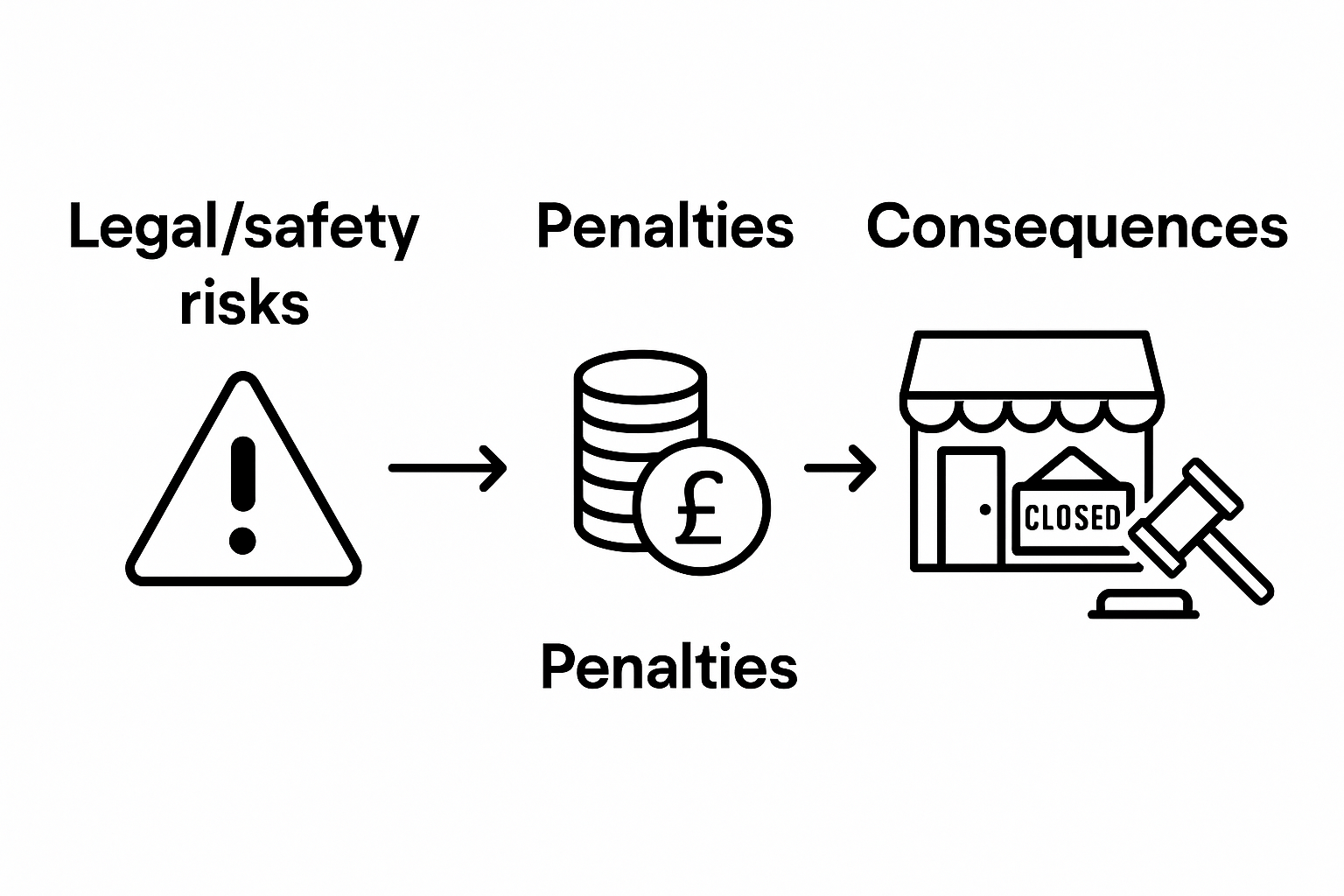
The legal landscape surrounding commercial signage is complex and multifaceted. Building permits serve as a crucial safeguard against potential risks associated with improper sign installation. Businesses that bypass permit requirements expose themselves to substantial legal and financial vulnerabilities. Local authorities can impose significant penalties, including:
- Mandatory sign removal
- Substantial monetary fines
- Potential business operation interruptions
- Legal liability for any accidents or damages caused by non-compliant signage
These consequences underscore the critical nature of obtaining proper building permits before sign installation or modification.
Urban Planning and Community Standards
Building permits play a pivotal role in maintaining the visual coherence and aesthetic integrity of commercial districts. They enable local councils to regulate signage that could potentially disrupt architectural harmony, obstruct pedestrian pathways, or create visual pollution. By implementing standardised guidelines, municipalities ensure that commercial signage contributes positively to the urban landscape.
For businesses seeking comprehensive insights into navigating signage regulations, our professional guide to shop sign installation offers valuable strategic advice.
Sign regulations are designed to maintain public safety and urban aesthetic standards. These regulations demonstrate how building permits are not merely administrative procedures but essential tools for creating safe, visually appealing urban environments that balance business needs with community interests. Investing in properly permitted, professionally produced sign makers protects your business from enforcement action while delivering the high-visibility frontage your brand deserves.
Key Regulations Surrounding Shop Signs
Shop sign regulations are comprehensive frameworks designed to balance commercial interests with public safety, urban aesthetics, and community standards. These regulations vary significantly across different local authorities, creating a complex landscape that businesses must carefully navigate.
Structural and Design Considerations
Local councils impose strict guidelines regarding the physical characteristics of commercial signage. Sign regulations typically address critical aspects such as dimensions, placement, materials, and visibility. Businesses must adhere to specific parameters that ensure signs do not compromise public safety or disrupt urban architectural harmony.
Key structural regulation considerations include:
- Maximum permitted sign dimensions
- Mounting height and distance from kerb lines
- Structural integrity requirements
- Materials permitted for sign construction
- Load-bearing and wind resistance standards
Illumination and Electrical Compliance
Electrically illuminated signs are subject to additional regulatory scrutiny. Local authorities mandate precise specifications to prevent potential electrical hazards and manage light pollution. Illuminated signage must meet rigorous electrical safety standards, including:
- Certified electrical installation documentation
- Compliance with current wiring regulations
- Restrictions on luminosity and light spillage
- Earth bonding and protection mechanism requirements
- Regular electrical safety inspections
For businesses seeking comprehensive guidance on navigating these complex regulations, our retail signage compliance guide provides in-depth insights into current standards.
Specific exceptions exist for certain sign types, demonstrating the nuanced nature of municipal signage regulations. These regulations highlight the intricate balance between facilitating business visibility and maintaining urban aesthetic and safety standards. For illuminated fascia and cabinet signs, partnering with custom signs London specialists ensures that electrical specifications, luminosity levels, and structural details are all built to meet local authority requirements.
| Regulation Aspect | Key Considerations |
|---|---|
| Structural Requirements | Maximum dimensions, mounting height, distance from kerb lines, permissible materials, load-bearing and wind resistance standards |
| Design Requirements | Compliance with local aesthetic guidelines, visual impact on streetscape, harmony with architectural character |
| Illumination/Electrical | Certified electrical installations, wiring standards compliance, luminosity restrictions, regular safety inspections |
| Placement Restrictions | Proximity to pedestrian paths/kerbs, avoidance of obstructed sightlines, compatibility with conservation or historical zones |
The Role of Local Authorities in Issuing Permits
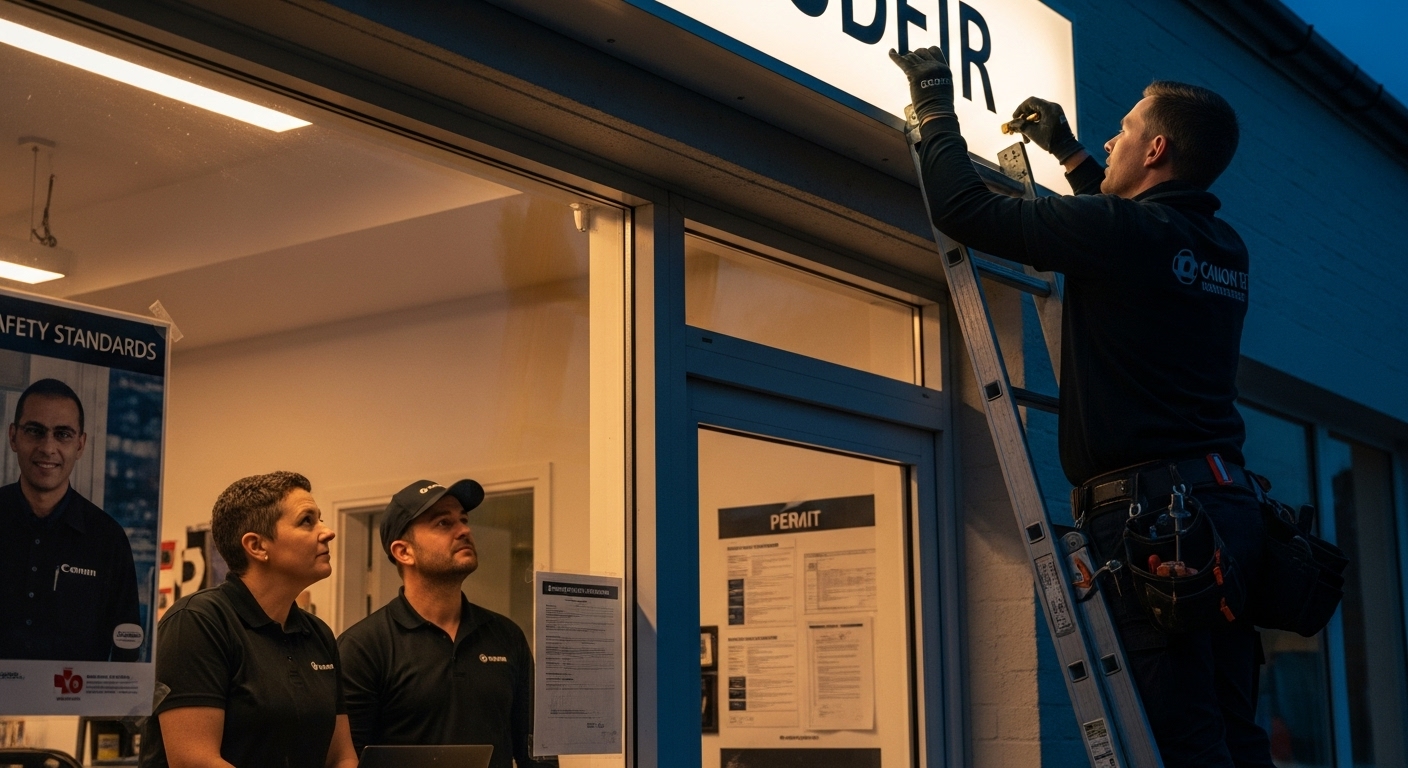
Local authorities play a pivotal role in regulating commercial signage through a comprehensive permit issuance process that balances business needs with community interests. These municipal bodies serve as critical gatekeepers, ensuring that shop signs meet stringent safety, aesthetic, and urban planning standards.
Regulatory Assessment and Evaluation
Local councils conduct thorough evaluations of sign permit applications, examining multiple dimensions beyond simple bureaucratic compliance. Their assessment process involves a nuanced examination of how proposed signage interacts with the broader urban environment. Municipalities consider factors that extend far beyond basic dimensional requirements, including:
- Visual impact on streetscape aesthetics
- Compatibility with local architectural heritage
- Potential obstruction of pedestrian or vehicular sightlines
- Compliance with conservation area guidelines
- Environmental and historical preservation considerations
Decision-Making and Enforcement Mechanisms
The permit issuance process is not merely administrative but represents a strategic approach to urban management. Local authorities have developed sophisticated frameworks for assessing and approving commercial signage. They possess legal powers to approve, modify, or reject sign permit applications based on comprehensive evaluation criteria.
Key enforcement mechanisms include:
- Mandatory site inspections
- Detailed documentation requirements
- Potential fines for non-compliance
- Right to request sign modifications
- Periodic review of existing signage permits
For businesses seeking detailed insights into navigating local authority requirements, our comprehensive types of shop signs guide offers valuable strategic advice.
Local planning authorities have specific responsibilities in managing commercial signage, ensuring that permits balance commercial interests with broader community and aesthetic considerations. This approach demonstrates how municipal regulation goes beyond simple permission-granting to actively shape urban visual environments. For large-scale external graphics submitted as part of a planning application, large format printing London suppliers can produce accurate visual mock-ups that demonstrate how proposed signage will look in situ, supporting a stronger permit application.
Common Challenges and Considerations for Shop Owners
Navigating the complex landscape of building permits for shop signs presents numerous challenges for business owners. The process requires meticulous attention to detail, strategic planning, and a comprehensive understanding of local regulatory frameworks.
Financial and Administrative Burdens
Shop owners frequently encounter significant financial and administrative obstacles when pursuing sign permits. The permit application process involves substantial investments of time, resources, and expertise. Businesses must allocate considerable effort to understanding intricate local regulations, preparing detailed documentation, and potentially engaging professional design and legal services.
Key financial considerations include:
- Permit application fees
- Professional consultation costs
- Potential design modification expenses
- Potential legal compliance consultation
- Potential fines for non-compliance
Regulatory Complexity and Variability
One of the most challenging aspects of obtaining shop sign permits is the substantial variability in local regulations. Different municipal authorities maintain unique sets of requirements, which can create significant complexity for businesses operating across multiple locations or expanding into new areas.
Critical regulatory variation factors include:
- Dimensional restrictions
- Aesthetic guidelines
- Historical conservation area specifications
- Illumination standards
- Placement and mounting regulations
For businesses seeking comprehensive guidance on managing these complexities, our step-by-step shop sign installation guide provides strategic insights and practical recommendations.
Shop owners must navigate intricate planning controls that balance commercial interests with broader community aesthetic and safety considerations. These challenges underscore the importance of thorough preparation and professional guidance in the sign permitting process. Engaging a business signs London specialist who regularly works within London’s planning framework removes much of this administrative burden, ensuring your application is correctly prepared and your installation is fully compliant from day one.
| Challenge Category | Example Challenges |
|---|---|
| Financial Burdens | Permit application fees, professional consultation costs, design modification expenses, potential fines for non-compliance |
| Administrative Burdens | Preparing detailed documentation, understanding local regulations, time commitment, need for expert input |
| Regulatory Complexity | Variability between local authorities, differing dimensional restrictions, differing historical or conservation area rules |
Navigating Shop Sign Permits with Total Confidence
Tired of feeling overwhelmed by complex building permits or the maze of local regulations for your shop signage? Securing the right permits is not just about ticking boxes. The risk of costly delays, fines or even forced sign removal is real if you miss a single detail. Whether you are facing strict council requirements on illuminated signs or struggling with documentation, your peace of mind matters. Our in-depth knowledge, as explored in your reading on building permits, proves how crucial expert help is.
Why take unnecessary risks or gamble with time and money? Let us simplify every step. From design and compliance to expert installation, our team at PromoSigns serves businesses across London, Essex and Kent. Explore solutions that are crafted to meet all regulatory guidelines by visiting our shop front sign installation guide and our shop signage basics overview. Act now to partner with a specialist who understands the challenges and will handle your shop sign project with care from concept to completion. Get in touch today at PromoSigns and make your business stand out safely and legally.
Frequently Asked Questions
What are building permits for shop signs?
Building permits for shop signs are official authorisations from local government authorities that allow businesses to install, modify, or replace commercial signage to ensure compliance with safety, aesthetic, and urban planning standards.
Why is it important to obtain a building permit for a shop sign?
Obtaining a building permit for a shop sign is essential to avoid potential legal issues, such as fines and penalties, and to ensure that the sign meets safety standards and local regulations, thereby contributing positively to the urban environment.
What types of considerations are involved in the permit application process for shop signs?
The permit application process typically requires detailed documentation, including technical drawings, sign specifications, proposed location details, and compliance with local zoning regulations and structural integrity standards.
What are the common challenges faced by shop owners when securing building permits for signs?
Common challenges include navigating complex and varying local regulations, financial and administrative burdens associated with permit applications, and the need for professional consultation to ensure compliance with safety and aesthetic guidelines.
Recommended
- Shop Signage Basics 2025: Essential Tips for London Businesses – PromoSigns.co.uk
- How to Design Building Signage: A 2025 Guide for London Businesses – PromoSigns.co.uk
- Types of Shop Signs for London Businesses: The 2025 Guide – PromoSigns.co.uk
- How to Design Shop Signs: Expert Tips for 2025 – PromoSigns.co.uk
