
Outdoor signage across London lines the streets, vying for attention in every imaginable shopfront and high street. But not every sign stands a chance in this city brimming with visual noise and endless rain. One misstep in material or design can cost you dearly and yet, switching to premium signage materials can drive down replacement and maintenance costs by up to 40 percent over five years. So why do so many businesses still settle for less when the right sign could pay for itself?
Table of Contents
Table of Contents
- Choosing The Right Outdoor Signage Materials
- Design Tips For Maximum Visibility And Impact
- Legal Considerations And Local London Guidelines
- Installation, Maintenance And Safety Essentials
Quick Summary
| Takeaway | Explanation |
|---|---|
| Choose durable materials for outdoor signage | Opt for materials like aluminium composite panels and acrylic to resist weather and pollution in London. |
| Prioritise visibility with strategic design | Use high-contrast colours and clear typography to enhance readability and attract potential customers. |
| Understand legal signage regulations | Familiarise yourself with local guidelines on advertisement consent, design criteria, and illuminated signage to avoid fines. |
| Implement regular maintenance strategies | Schedule periodic inspections and cleaning to ensure signage longevity and effective brand representation. |
| Engage professional installation teams | Utilize certified installers to ensure compliance with safety standards and structural integrity during sign placement. |
Choosing the Right Outdoor Signage Materials
Selecting the appropriate materials for outdoor signage represents a critical decision for London businesses seeking to create impactful visual communication. The durability, aesthetic appeal, and performance of signage materials directly influence brand perception and customer engagement.
Weather Resistance and Material Performance
Outdoor signage in London faces unique environmental challenges, requiring materials that can withstand frequent moisture, temperature fluctuations, and urban pollution. Comprehensive research by the British Sign & Graphics Association highlights that aluminium composite panels, acrylic, and high-grade PVC represent the most resilient choices for exterior signage.
Aluminium composite panels offer exceptional strength-to-weight ratios, resisting corrosion and maintaining structural integrity across varying weather conditions. These materials provide businesses with long-term signage solutions that retain their visual quality and professional appearance. Acrylic signage options deliver superior clarity and can be manufactured with UV-resistant coatings, preventing colour degradation from prolonged sunlight exposure.
Below is a comparison table summarising the most popular outdoor signage materials for London businesses, highlighting their weather resistance, durability, and ideal use cases:
| Material | Weather Resistance | Durability | Ideal Use Cases |
|---|---|---|---|
| Aluminium Composite Panels | Excellent | High | Shopfronts, corporate exteriors |
| Acrylic | Very Good (with UV coating) | High | Contemporary retail, illuminated signs |
| High-grade PVC | Good | Moderate | Temporary signs, promotional boards |
| Stainless Steel | Excellent | Very High | High-traffic, premium branding |
| Powder-coated Metals | Excellent | Very High | Outdoor logos, monument signs |
| Wood | Moderate | Moderate | Traditional or bespoke shops |
| Glass | Good | Moderate-High | Modern, sleek displays |
Material Cost and Longevity Considerations
Business owners must balance initial investment with long-term performance when selecting outdoor signage materials. Engineering studies from the Materials Research Centre demonstrate that investing in premium materials can reduce replacement and maintenance costs by up to 40% over a five-year period.
Stainless steel and powder-coated metals provide excellent durability for high-traffic commercial environments. These materials resist scratching, maintain colour integrity, and offer a sleek, professional aesthetic that communicates business quality. Powder coating techniques add an extra layer of protection against environmental wear, making them ideal for businesses seeking robust signage solutions.
Aesthetic and Branding Integration
Beyond technical performance, material selection plays a crucial role in brand communication. Different materials can convey distinct brand personalities professional and modern feel of brushed metal, the warmth of wooden signage, or the contemporary edge of glass and acrylic all contribute to a business’s visual narrative.
Businesses should consider how their chosen material aligns with their brand identity, architectural context, and target audience perception. Check out our guide on creative outdoor shop sign ideas for inspiration on matching materials with brand aesthetics.
Ultimately, successful outdoor signage material selection requires a holistic approach that considers environmental durability, cost-effectiveness, and brand representation. By carefully evaluating these factors, London businesses can create signage that not only survives the city’s challenging conditions but also effectively communicates their unique brand story.
Design Tips for Maximum Visibility and Impact
Designing outdoor signage that captures attention and communicates brand messaging effectively requires strategic planning and sophisticated visual techniques. For London businesses competing in a visually dynamic urban environment, creating signage that stands out is both an art and a science.
Color Psychology and Visual Contrast
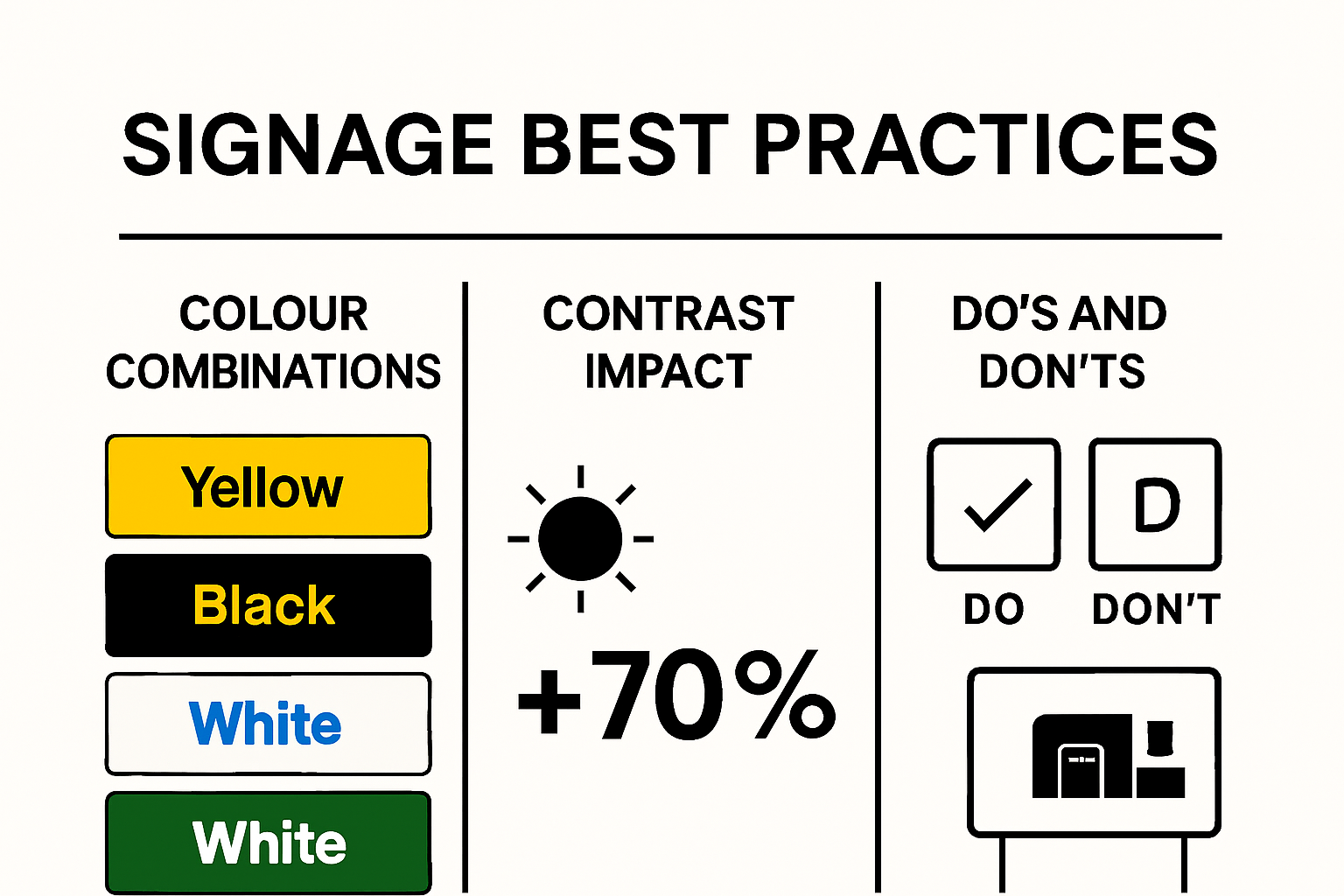
Color selection plays a pivotal role in signage visibility and emotional engagement. According to the National Building Specification, high-contrast color combinations can increase sign readability by up to 70%. Professional designers recommend using complementary color schemes that create visual tension while maintaining legibility.
Psychological research demonstrates that certain color combinations trigger specific emotional responses. Bold colors like vibrant red and deep blue can create immediate visual impact, while softer palettes communicate sophistication and professionalism. Understanding these nuanced interactions between color, perception, and brand identity enables businesses to craft signage that not only attracts attention but also communicates subtle brand narratives.
Typography and Information Hierarchy
Federal Highway Administration guidelines emphasize the critical importance of font selection and information design in creating effective signage. Legible typefaces with clean lines and appropriate scaling ensure that messages are readable from various distances and angles. Sans-serif fonts typically offer superior clarity in outdoor environments, particularly when viewed at speed or from a distance.
Information hierarchy determines how quickly viewers comprehend signage messaging. Strategic use of font sizes, weights, and spacing guides the viewer’s eye and prioritizes key information. Large, bold headlines paired with smaller supporting text create visual dynamics that capture and maintain viewer attention. Businesses must balance aesthetic appeal with functional communication, ensuring that critical information is immediately accessible.
Placement and Environmental Integration
Signage effectiveness extends beyond design elements to include strategic placement and environmental context. Explore our comprehensive guide for architects to understand how architectural integration can enhance signage impact. Successful outdoor signage harmonizes with surrounding architectural elements, leveraging natural sightlines and architectural features to maximize visibility.
Consider factors like pedestrian traffic patterns, lighting conditions, and potential visual obstructions when positioning signage. Elevated or strategically angled signs can increase visibility and create compelling visual experiences. Urban environments demand adaptive design approaches that consider complex spatial dynamics and viewer perspectives.
Ultimately, exceptional outdoor signage represents a sophisticated blend of design principles, brand storytelling, and environmental awareness. By thoughtfully combining color psychology, typographic clarity, and strategic placement, London businesses can create outdoor signage that doesn’t just communicate information but creates memorable visual experiences that resonate with their target audience.
Legal Considerations and Local London Guidelines
Navigating the complex landscape of outdoor signage regulations represents a critical challenge for London businesses. Understanding the legal framework ensures compliance, prevents potential fines, and maintains professional standards across urban commercial environments.
Advertisement Consent and Planning Permissions
The UK Government’s guide to outdoor advertisements establishes clear parameters for signage installation and display. Most outdoor signs require explicit advertisement consent, particularly those located in conservation areas, historic districts, or featuring illuminated elements.
Businesses must submit detailed applications to local planning authorities, demonstrating how proposed signage complements the architectural context and meets specific size, placement, and design criteria. The application process involves comprehensive assessments of visual impact, potential obstruction, and alignment with local urban design principles. Our detailed retail signage compliance guide provides additional insights into navigating these regulatory requirements.
Illumination and Technical Specifications
The Planning Portal’s regulations provide explicit guidelines regarding illuminated signage. Brightness levels, hours of illumination, and light spillage are carefully controlled to prevent visual pollution and maintain neighborhood aesthetics. Signs must not create glare for pedestrians, motorists, or adjacent properties, requiring precise technical specifications and professional installation.
Specific restrictions apply to different commercial zones. Heritage areas impose stricter controls, often requiring sympathetic designs that respect historical architectural characteristics. Modern commercial districts might offer more flexibility, but still mandate adherence to comprehensive technical standards that ensure safety and visual harmony.
Traffic and Public Space Signage Regulations
The Traffic Signs Regulations and General Directions 2016 establish critical guidelines for signs that interact with public infrastructure. Businesses must ensure their outdoor signage does not interfere with traffic signs, pedestrian pathways, or create potential safety hazards.
Key considerations include maintaining minimum distances from road junctions, ensuring signs do not obstruct sightlines, and avoiding color schemes that could be mistaken for official traffic communications. Signs near highways or busy intersections require additional scrutiny, with potential requirements for reflective materials or specific mounting heights.
Compliance involves more than technical adherence it represents a commitment to urban design quality and community responsibility. London’s diverse architectural environment demands nuanced approaches that balance business visibility with collective urban aesthetic standards. Businesses investing time in understanding these regulations demonstrate professional sophistication and respect for the city’s complex visual ecosystem.
By proactively engaging with legal requirements, businesses transform signage from mere commercial communication into a thoughtful contribution to London’s dynamic urban landscape. Professional guidance and meticulous planning remain essential in successfully navigating these intricate regulatory frameworks.
The following table summarises the key legal considerations London businesses need to address when installing outdoor signage, based on the regulatory sections above:
| Legal Consideration | Description | Applies to |
|---|---|---|
| Advertisement Consent | Permission required from local councils, especially in historic or conservation areas | Most external signage and illuminated signs |
| Planning Permissions | Application demonstrating integration with architecture, meeting size/design criteria | All signage in protected areas and new builds |
| Illumination Restrictions | Controls on brightness, hours of operation, and preventing light pollution | Illuminated/external signage, heritage zones |
| Technical Specifications | Requirements for safe installation, structural integrity, and electrical compliance | All professional signage |
| Traffic/Space Regulations | Must not obstruct sightlines or resemble official traffic signs; site specific distance rules | Signs near roads, highways, or public paths |
| Heritage/Zone-specific Controls | Stricter requirements in listed/historic districts, often demanding sympathetic materials | Conservation and historic areas |
Installation, Maintenance And Safety Essentials
Professional outdoor signage installation represents a complex process that extends far beyond simple placement. London businesses must approach signage implementation with meticulous planning, technical expertise, and unwavering commitment to safety standards.
Professional Installation Protocols
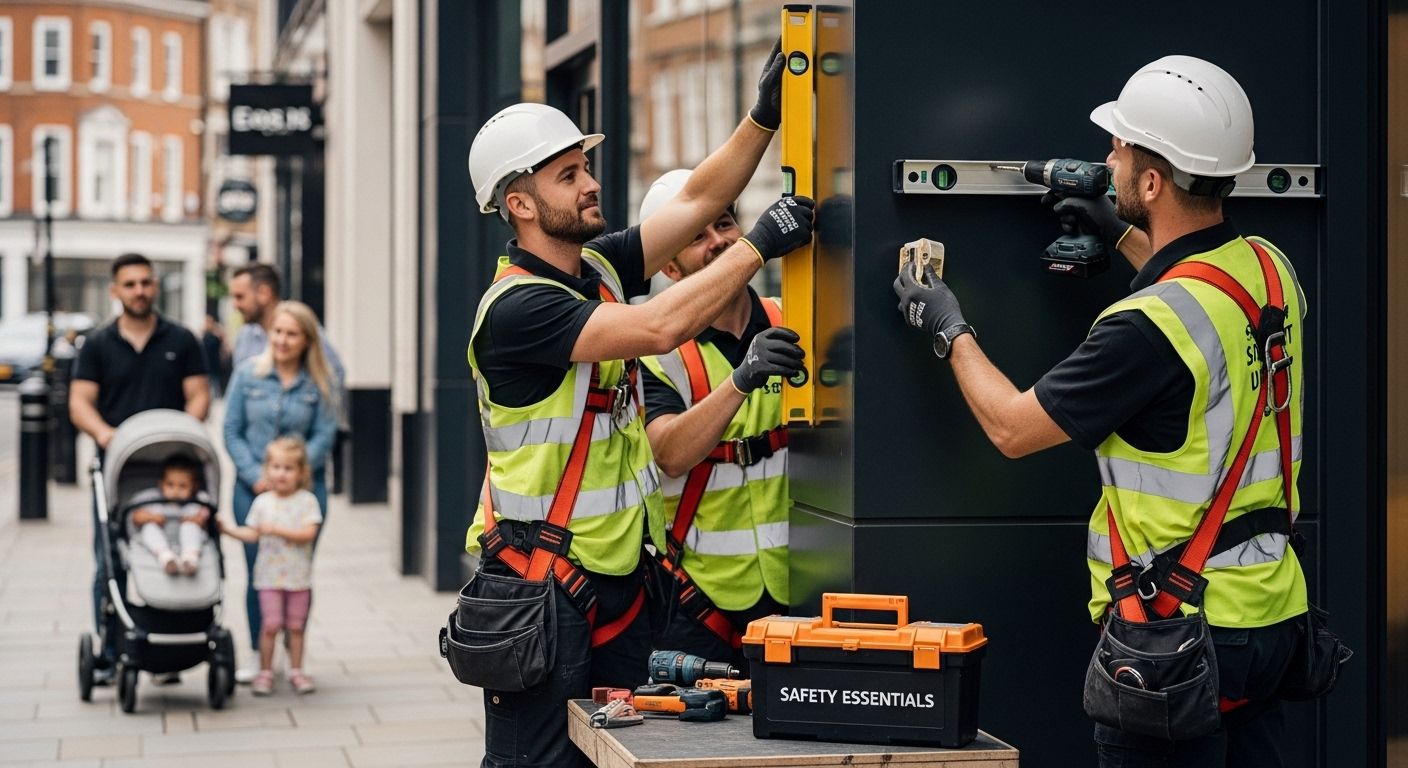
WorkSafe Victoria’s comprehensive guidelines underscore the critical importance of systematic installation practices. Professional signage installation requires specialized skills, precise technical knowledge, and rigorous safety protocols. Businesses must ensure that installation teams possess appropriate certifications, understand structural engineering principles, and can evaluate site-specific challenges.
Key considerations include structural integrity assessment, precise mounting techniques, and understanding load-bearing requirements. Installers must evaluate building surfaces, select appropriate mounting hardware, and ensure signs can withstand environmental stresses such as wind loads, temperature variations, and potential structural movement. Electrical signs demand additional technical expertise, requiring careful integration with existing electrical systems and compliance with current safety regulations.
Maintenance and Longevity Strategies
Regular maintenance represents a critical investment in signage performance and brand representation. The International Sign Association recommends comprehensive maintenance schedules that include periodic structural inspections, cleaning protocols, and proactive damage prevention.
Maintenance strategies should address multiple dimensions: visual appearance, structural integrity, and functional performance. This involves routine cleaning to remove environmental contaminants, checking electrical components for potential degradation, examining mounting hardware for signs of wear, and assessing color consistency and illumination quality. Businesses should develop a systematic maintenance log, documenting each inspection and any interventions to track the sign’s lifecycle and performance.
Safety and Risk Management
Comprehensive safety protocols are non-negotiable in outdoor signage installation and maintenance. Professional teams must implement robust risk management strategies that protect both installation personnel and public safety. This includes using appropriate personal protective equipment, establishing secure work zones, and following strict procedural guidelines when working at heights or near electrical infrastructure.
Risk assessment involves evaluating potential hazards such as overhead electrical lines, unstable mounting surfaces, and public accessibility during installation. Businesses must develop detailed method statements that outline specific safety procedures, emergency protocols, and contingency plans. Our comprehensive health and safety signage guide provides additional insights into implementing robust safety frameworks.
Beyond immediate installation concerns, long-term safety management requires ongoing vigilance. Regular structural assessments, prompt repairs, and proactive maintenance help mitigate potential risks associated with sign degradation. Businesses that prioritize safety not only protect their investment but also demonstrate professional responsibility and commitment to public well-being.
Successful outdoor signage implementation is a multifaceted process combining technical expertise, aesthetic consideration, and rigorous safety standards. By adopting a holistic approach that balances visual impact with professional installation practices, London businesses can create signage solutions that are both visually compelling and fundamentally secure.
Frequently Asked Questions
What materials are recommended for outdoor signage in London?
Outdoor signage in London should use durable materials that can withstand the local weather conditions, such as aluminium composite panels, acrylic, and high-grade PVC. These materials offer excellent weather resistance and longevity, making them ideal for outdoor use.
How can I enhance the visibility of my outdoor signage?
To enhance visibility, focus on high-contrast colours and clear typography. Using bold, legible fonts and a strategic colour palette will help ensure your signage stands out against the urban environment and is easily readable from a distance.
What legal considerations should I be aware of for outdoor signage in London?
Businesses must obtain advertisement consent and planning permissions for most outdoor signage, particularly in conservation areas. It’s crucial to understand local regulations governing illumination, technical specifications, and traffic-related guidelines to avoid fines and ensure compliance.
How often should I maintain my outdoor signage?
Regular maintenance is essential for outdoor signage longevity. It’s recommended to conduct periodic inspections and cleaning to address any wear and environmental damage. Creating a maintenance schedule helps track the signage’s condition and ensures it remains effective and visually appealing.
Give Your Business the Advantage With Unmatched Outdoor Signage Expertise
Is your London signage standing up to the challenge? Many businesses lose valuable customers and risk costly fines due to weather-worn signs, unclear design choices, or missing legal compliance measures — all highlighted as real concerns in the latest best practices guide. You work hard to build your brand, so do not let your signage fall short in the competitive city environment.

Trust PromoSigns to bring advanced, compliant and weather-resistant signage directly to your storefront. Our team designs, manufactures and installs shop signs, illuminated signage and large format prints that meet every legal and visual standard set in 2025. Ready to upgrade your visibility and protect against unnecessary costs? Visit our full range of services and experience a free expert consultation tailored for your location. Your next standout sign is just a click away — act now to secure your space on London’s streets before your competition does.
Recommended
- Signage Design Principles for London Businesses in 2025 – PromoSigns.co.uk
- Graphic Design Tips for Signage: 2025 Guide for London Businesses – PromoSigns.co.uk
- Signage Size Guidelines 2025: The Essential Guide for London Businesses – PromoSigns.co.uk
- Office Signage Ideas for London Businesses and Events: 2025 Trends – PromoSigns.co.uk
