
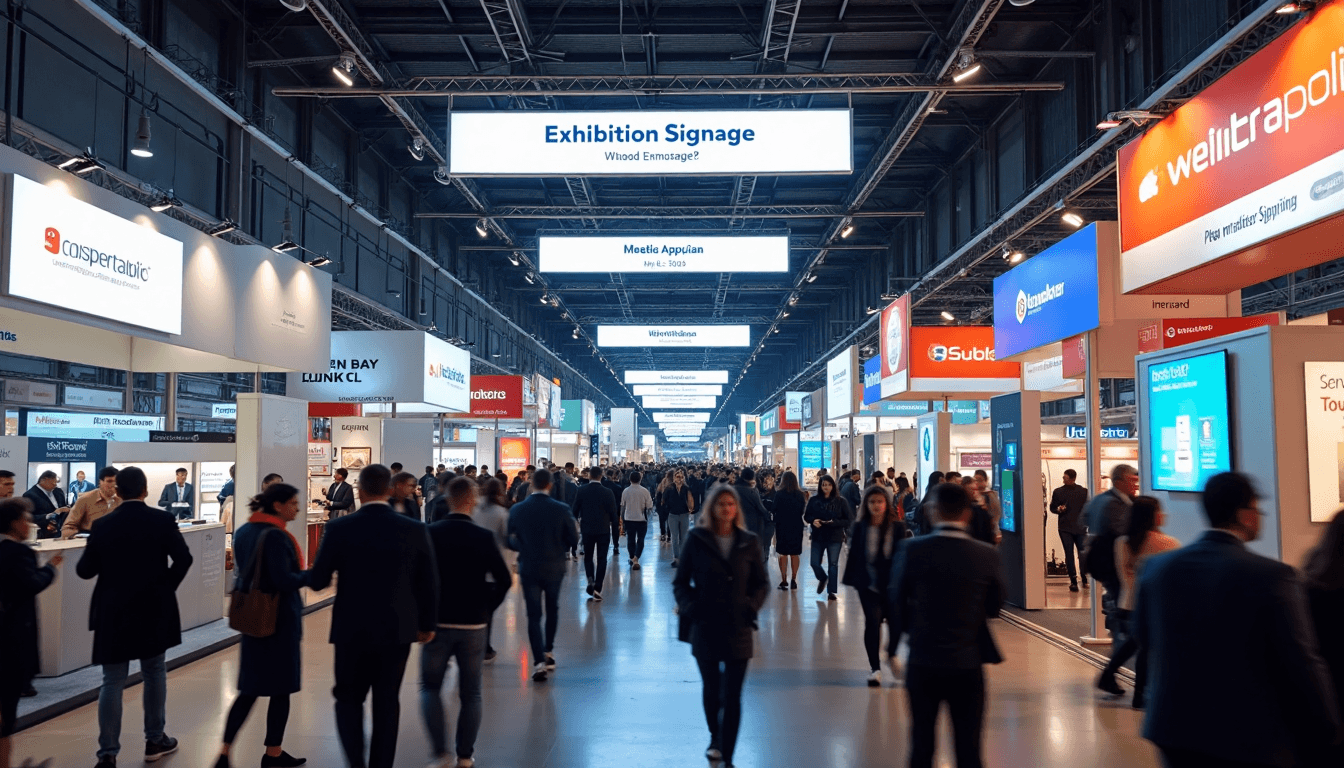
Exhibition signage might sound ordinary, but the way businesses attract attention in 2025 is evolving fast. Here is a shocker: interactive features like QR codes and touchscreens can increase visitor engagement by up to 60 percent compared to static displays. Most companies are still stuck with the usual banners, yet the real winners are using smart, sustainable and inclusive designs to leave their competitors behind.
Table of Contents
Table of Contents
- Understanding Key Types Of Exhibition Signage
- Best Design Practices For Effective Exhibition Signs
- Planning Signage For Maximum Impact In 2025
- Compliance And Accessibility Essentials For Businesses
Quick Summary
| Takeaway | Explanation |
|---|---|
| Diverse Signage Types Enhance Engagement | A variety of exhibition signage, including strategic display, digital solutions, and directional signs, helps capture attention and effectively communicate essential information to visitors. |
| Prioritise Readability and Visual Hierarchy | By focusing on clarity through careful font selection, colour contrast, and strategic layout, businesses can ensure that their signage is easily understood at a glance. |
| Integrate Interactive Technologies | Incorporating interactive elements, such as QR codes and touchscreen displays, can significantly enhance visitor engagement and information retention during exhibitions. |
| Embrace Sustainability in Design | Sustainable practices, such as using recycled materials and energy-efficient displays, are increasingly important and can resonate well with environmentally conscious audiences. |
| Ensure Compliance and Accessibility | Businesses must prioritise compliance with accessibility standards, utilising inclusive design principles to create welcoming environments for all visitors, including those with disabilities. |
Understanding Key Types of Exhibition Signage
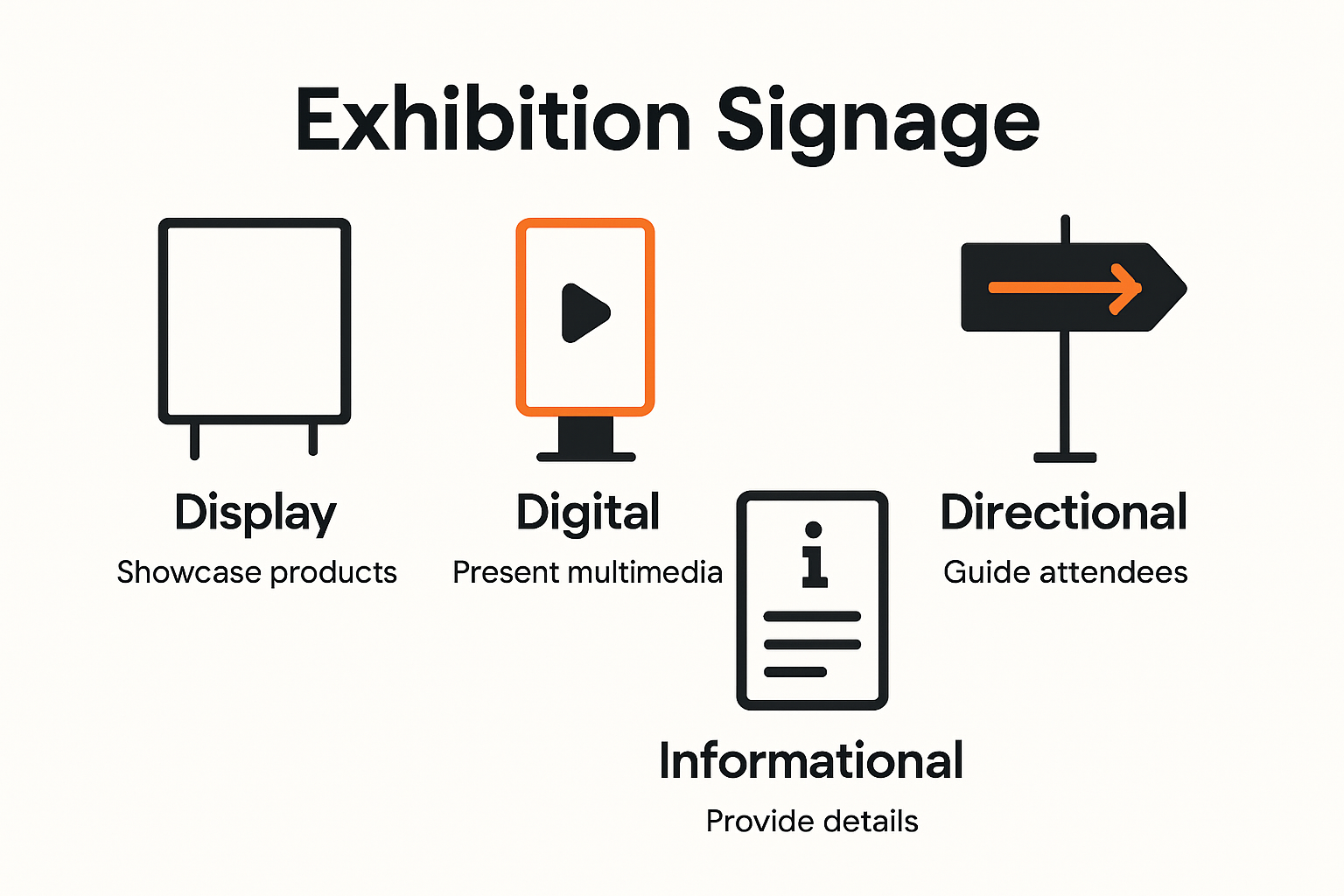
Exhibition signage represents a critical communication strategy for businesses seeking to capture attention and convey essential information during events, trade shows, and conferences. Understanding the diverse range of signage options enables organisations to create compelling visual narratives that engage potential clients and stakeholders effectively.
Strategic Display Signage for Maximum Impact
Effective exhibition signage goes beyond mere information transmission. According to research from exhibition design experts, a strategic hierarchy of text panels plays a crucial role in visitor engagement. This approach encompasses multiple signage types that serve distinct communication purposes.
Banner and Flag Signage stand out as primary attention-grabbing tools. These large-format displays provide immediate visual identification for businesses, enabling quick brand recognition from a distance. Typically mounted at strategic locations, they create visual landmarks within exhibition spaces, guiding visitor attention and establishing organisational presence.
Booth Header Signs represent another critical signage element. These panels typically feature company logos, core messaging, and key brand identifiers. By crafting clear, visually striking headers, businesses can communicate their professional identity and core offerings within seconds of visitor interaction.
Digital and Interactive Signage Solutions
Modern exhibition environments increasingly leverage digital signage technologies. Contemporary exhibition design research highlights the growing popularity of dynamic digital displays that offer unprecedented flexibility in content presentation.
Digital signage enables businesses to showcase:
- Video presentations demonstrating product functionality
- Live data streams providing real-time information
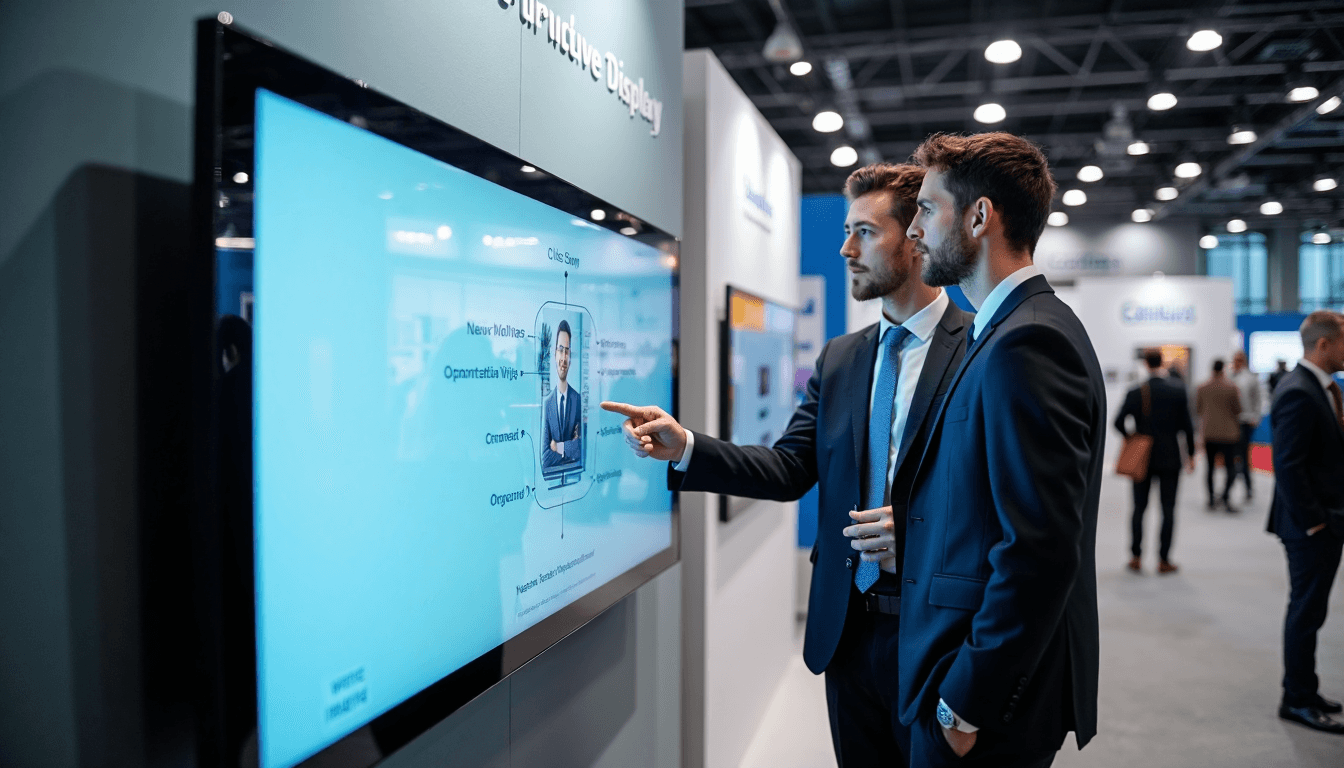
- Interactive touchscreen experiences allowing deeper visitor engagement
- Animated graphics that capture attention more effectively than static displays
These digital solutions transform traditional exhibition communication models, allowing for instant content updates and more immersive audience interactions. Learn more about advanced signage strategies for business success.
Directional and Informational Signage
Beyond branding, exhibition signage serves critical wayfinding functions. Strategically placed directional signs help visitors navigate complex event spaces, reducing confusion and enhancing overall attendee experience. These signs typically incorporate clear typography, consistent colour schemes, and intuitive design principles to guide movement efficiently.
Informational panels provide deeper context about products, services, or exhibition themes. They complement visual displays by offering detailed explanations, technical specifications, or narrative contexts that enrich visitor understanding. Effective informational signage balances comprehensive details with concise, easily digestible content.
By carefully selecting and implementing diverse signage types, businesses can create compelling exhibition experiences that communicate brand identity, facilitate information exchange, and leave lasting impressions on potential clients and partners.
Here is a summary table comparing the key types of exhibition signage discussed, helping you quickly understand their primary functions and advantages:
| Signage Type | Description | Primary Purpose | Key Advantage |
|---|---|---|---|
| Banner & Flag Signage | Large-format, attention-grabbing graphics | Brand visibility, visual landmark | Immediate recognition from distance |
| Booth Header Signs | Overhead panels with logos and messages | Brand identity, quick communication | Clear display of core offerings |
| Digital Signage | Video screens, animations, data streams | Engaging, dynamic info delivery | Real-time content updates |
| Interactive Touchscreen Kiosks | Touch-enabled displays for visitor interaction | Deep engagement, personalised info | Enhanced visitor participation |
| Directional Signage | Arrows, maps, wayfinding cues | Navigational support | Eases movement through venue |
| Informational Panels | Text-heavy panels providing details and context | Detailed explanations | Informs and educates effectively |
Best Design Practices for Effective Exhibition Signs
Designing impactful exhibition signage requires a strategic approach that balances visual appeal, brand communication, and practical functionality. Successful signs do more than simply display information they create memorable experiences that engage and inform potential clients and stakeholders.
Visual Hierarchy and Readability
Research from design experts emphasises the critical importance of visual hierarchy in signage design. Effective signs must prioritise readability and immediate comprehension. This means carefully selecting typography, colour schemes, and layout to guide viewers’ attention precisely where you want it.
Key considerations for optimal readability include:
- Font Selection: Choose clear, sans-serif fonts that remain legible from various distances
- Colour Contrast: Utilise high-contrast colour combinations that ensure text stands out against backgrounds
- Text Size: Scale text proportionally to viewing distance, ensuring maximum visibility
Typography plays a crucial role in communication. Professional designers recommend using no more than two different typefaces to maintain visual consistency and prevent overwhelming viewers. Learn more about creating standout exhibition designs.
Brand Consistency and Visual Storytelling
Consistent branding transforms exhibition signage from mere information panels to powerful narrative tools. According to brand communication research, maintaining a unified visual language across all signage reinforces organisational identity and builds audience trust.
Effective brand representation involves:
- Colour Palette Alignment: Using official brand colours consistently
- Logo Placement: Strategically positioning logos for maximum recognition
- Messaging Tone: Maintaining a consistent communication style
Visual storytelling goes beyond static displays. Modern exhibition signs should create a narrative arc that guides visitors through information, creating emotional connections and memorable experiences.
Interactive and Technological Integration
Contemporary exhibition signage increasingly incorporates interactive elements to enhance visitor engagement. Research on audience interaction demonstrates that interactive technologies can significantly improve information retention and visitor experience.
Innovative interactive features include:
- QR Code Integration: Enabling quick access to additional digital content
- Touchscreen Displays: Allowing visitors to explore information dynamically
- Augmented Reality Overlays: Providing immersive supplementary information
Technological integration should feel seamless and intuitive. The goal is to enhance information delivery, not complicate the viewer’ experience. Careful design ensures that interactive elements feel natural and add genuine value to the exhibition narrative.
Ultimately, exceptional exhibition signage is an art form that combines technical precision, creative design, and strategic communication. By focusing on readability, brand consistency, and intelligent technological integration, businesses can create signs that not only inform but truly inspire and engage their audience.
Planning Signage for Maximum Impact in 2025
The exhibition landscape of 2025 demands a sophisticated approach to signage planning that goes beyond traditional display strategies. Businesses must now consider technological integration, sustainability, and audience engagement as core principles in their signage development process.
To help you assess core priorities when planning exhibition signage for maximum impact in 2025, the following table summarises the key design approaches and their benefits outlined in this section:
| Planning Focus | Description | Sample Strategies/Features | Main Benefit |
|---|---|---|---|
| Technological Innovation | Using advanced, flexible hardware & software | Modular systems, real-time updates, connectivity | Adaptability, dynamic response to needs |
| Sustainability | Minimising environmental impact | Recycled materials, energy-efficient displays | Eco-friendly, appeals to conscious visitors |
| Messaging & Visual Design | Clear and concise communication | Bold typography, minimalist layout, standout colours | Instant comprehension, memorable impact |
| Audience Engagement | Enhancing interactive experience | Touchscreens, QR codes, Augmented Reality | Stronger connection with audience |
Strategic Design and Technological Innovation
Contemporary trade show research highlights the critical importance of adaptable signage systems. Modular and reconfigurable designs have emerged as a key trend, allowing organisations to create flexible exhibition experiences that can be easily customised for different events and audiences.
Key technological considerations include:
- Adaptive Display Technologies: Utilising screens and panels that can be quickly repositioned
- Digital Integration: Incorporating smart interfaces that enable real-time content updates
- Connectivity Features: Embedding QR codes and augmented reality capabilities
These innovative approaches enable businesses to create dynamic exhibition environments that respond quickly to changing audience needs. Explore advanced signage solutions for modern businesses to stay ahead of emerging trends.
Sustainability and Visual Communication
In 2025, exhibition signage must address growing environmental consciousness. Design experts recommend integrating biophilic design principles that incorporate natural materials and eco-friendly production methods.
Sustainable signage strategies involve:
- Recycled Material Usage: Selecting environmentally responsible production materials
- Energy Efficient Displays: Implementing low-power digital signage solutions
- Reusable Design Structures: Creating modular systems that minimise waste
Biophilic design elements such as reclaimed wood, bamboo panels, and plant-integrated displays not only reduce environmental impact but also create visually compelling exhibition experiences that resonate with environmentally conscious audiences.
Messaging and Audience Engagement
Communication research emphasises the importance of clear, concise messaging in exhibition signage. In an era of information overload, businesses must craft communications that are immediately comprehensible and visually striking.
Effective messaging techniques include:
- Bold Typography: Using large, high-contrast fonts
- Minimalist Design: Reducing visual clutter
- Strategic Placement: Positioning key messages for maximum visibility
The goal is to create signage that communicates complex ideas quickly and memorably. By balancing technological innovation, sustainability, and strategic communication, businesses can develop exhibition signage that not only captures attention but also creates meaningful connections with their target audience.
As we move into 2025, successful exhibition signage will be defined by its ability to adapt, communicate clearly, and align with broader environmental and technological trends. Organisations that embrace these principles will stand out in increasingly competitive exhibition environments.
Compliance and Accessibility Essentials for Businesses
In the evolving landscape of exhibition design, compliance and accessibility have transformed from optional considerations to fundamental requirements. Businesses must now prioritise creating inclusive signage solutions that accommodate diverse audience needs while adhering to legal and ethical standards.
Legal Framework and Accessibility Standards
Accessibility research reveals critical guidelines for developing universally accessible signage. Organisations must understand that effective accessibility extends far beyond basic visual communication, encompassing comprehensive design strategies that support individuals with varied sensory and cognitive capabilities.
Key legal compliance requirements include:
- Visual Contrast: Maintaining minimum 70% contrast between text and background
- Font Selection: Utilising clear, sans-serif typefaces like Arial or Helvetica
- Mounting Height: Positioning signs between 48 to 60 inches from floor level
- Text Size: Ensuring readability for individuals with visual impairments
Explore comprehensive signage compliance strategies to ensure your exhibition materials meet current regulatory standards.
Inclusive Design Principles
Inclusive design represents a holistic approach to creating exhibition signage that serves all potential users. According to universal design experts, effective accessibility requires considering multiple sensory engagement methods.
Strategies for inclusive exhibition signage include:
- Tactile Elements: Incorporating raised lettering and Braille translations
- Audio Description Compatibility: Providing QR codes linking to descriptive audio content
- Color-Blind Friendly Palettes: Selecting colour schemes readable across different visual capabilities
- Simple Language Usage: Crafting clear, straightforward messaging
By implementing these approaches, businesses demonstrate commitment to creating welcoming, accessible exhibition environments that respect individual differences.
Technological Accessibility Solutions
Technological accessibility research highlights innovative approaches for enhancing exhibition signage inclusivity. Modern technologies offer unprecedented opportunities to create adaptive, responsive communication systems.
Cutting-edge accessibility technologies include:
- Voice-Activated Information Stations: Enabling hands-free interaction
- Adaptive Digital Displays: Allowing real-time text resizing and contrast adjustments
- Augmented Reality Descriptions: Providing supplementary contextual information
- Multi-Language Support: Offering instant translations for diverse audiences
These technological solutions transform exhibition spaces into dynamic, responsive environments that prioritise universal understanding and engagement.
Compliance and accessibility are no longer peripheral considerations but central pillars of effective exhibition design. Businesses that embrace these principles will not only meet legal requirements but also demonstrate genuine commitment to creating inclusive, welcoming environments that respect and celebrate human diversity.
Frequently Asked Questions
What types of exhibition signage are most effective for businesses in 2025?
Diverse types of exhibition signage, such as banner and flag signage, booth header signs, digital displays, interactive kiosks, directional signs, and informational panels, can significantly enhance engagement by capturing attention and effectively communicating essential information.
How can I ensure my exhibition signage is readable and visually effective?
To guarantee readability and visual effectiveness, focus on clear font selection, high colour contrast, appropriate text size, and a well-structured layout that guides viewer attention.
What role does sustainability play in exhibition signage design?
Sustainability is increasingly vital, with practices such as using recycled materials, energy-efficient displays, and reusable signage systems becoming essential for resonating with environmentally conscious audiences and minimising environmental impact.
How can I make my exhibition signage accessible to all visitors?
To ensure accessibility, incorporate inclusive design principles such as high visual contrast, tactile elements, simple language, and technology like voice-activated information stations, which cater to diverse sensory needs and provide a welcoming environment.
Transform Your Exhibition Presence with Bespoke Signage Solutions
Are you struggling to capture attention at exhibitions or worried your signage is not engaging enough for today’s standards? The article highlights how technologies like interactive displays, strategic layout, and accessible design can make or break your impact in 2025. Many businesses are behind because their signs lack adaptability, clear messaging, or modern technology. Avoid falling into this trap and instead position your brand well ahead of the competition.

Let our experts at PromoSigns help you design and implement striking, future-ready exhibition signage. We specialise in large format printing, custom illuminated signs and seamless installations for brands across London, Essex, and Kent, ensuring your stand looks sharp, is fully compliant, and deeply connects with visitors. Ready for a visual transformation that delivers better results? Visit our website to explore how you can take your exhibition display to the next level today.
Recommended
- Types of Shop Signage for Business Success in 2025 – PromoSigns.co.uk
- Event Signage Checklist 2025: Essential Guide for London Businesses – PromoSigns.co.uk
- Retail Sign Design Tips 2025: Essential Guide for London Businesses – PromoSigns.co.uk
- What Makes A Great Shop Sign – PromoSigns.co.uk
- Retail POP Display Signage Solutions for London Businesses in 2025 – PromoSigns.co.uk
- Custom Sign Design Process for London Businesses: 2025 Guide – PromoSigns.co.uk
