

London’s retail scene is getting stricter about signage rules. Businesses face fines that can run well into the thousands for even small compliance mistakes. Most shop owners think all it takes is a flashy sign with their logo and some bright lights. That’s a costly misconception. The real challenge isn’t just design, it’s navigating a maze of legal rules, accessibility demands and mounting sustainability pressures that will decide if your sign stays up—or is ordered down.
Table of Contents
Table of Contents
- Understanding Retail Signage Compliance Requirements
- Key Legal Rules For London Businesses
- Best Practices For Signage Installation In 2025
- Common Compliance Mistakes And How To Avoid Them
Quick Summary
| Takeaway | Explanation |
|---|---|
| Understand Legal Compliance | Retail signage in London must comply with a complex framework of regulations, including visibility standards and safety requirements, to avoid significant penalties and maintain consumer trust. |
| Proper Sign Placement and Visibility | Ensure signs are mounted at eye level and in unobstructed areas to enhance visibility, conducting regular audits to maintain optimal positioning. |
| Maintain Regulatory Documentation | Display mandatory health and safety information prominently, and ensure all documentation is current and complete to comply with legal obligations. |
| Prioritise Accessibility in Design | Follow the Equality Act 2010 by designing signage that is readable for all customers, considering factors such as colour contrast and height accessibility. |
| Invest in Professional Installation | Work with certified signage professionals to navigate legal complexities and ensure effective, compliant installation of all signage. |
Understanding Retail Signage Compliance Requirements
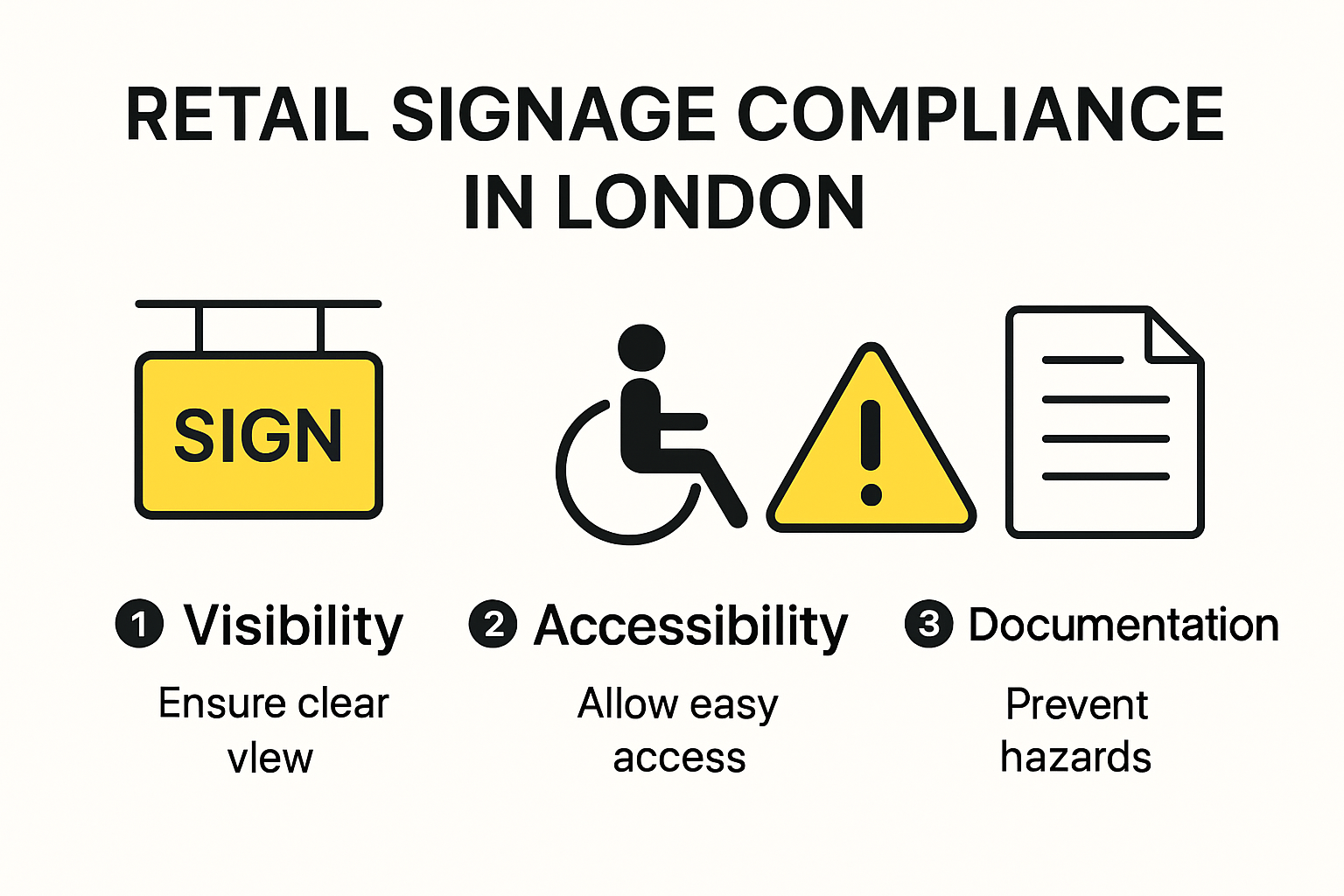
Retail signage compliance is a critical aspect of business operations in London, encompassing a complex framework of legal requirements that businesses must navigate carefully. The landscape of regulatory standards continues to evolve, demanding meticulous attention from business owners to ensure their signage meets all necessary legal and safety guidelines.
Legal Framework for Retail Signage
The regulatory environment for retail signage in London involves multiple layers of compliance. According to the UK Government’s Retail Goods Marking Regulations, businesses must adhere to strict guidelines that govern how products and promotional materials are displayed. These regulations aim to protect consumers by ensuring clear, accurate, and transparent information is presented through signage.
Key compliance areas include visibility standards, safety requirements, and informational accuracy. The Furniture and Furnishings (Fire) (Safety) (Amendment) Regulations 2025 specifically impact retail environments, mandating that signage related to product safety and fire regulations must be prominently and clearly displayed.
Practical Compliance Considerations
Businesses must pay careful attention to several critical aspects of signage compliance. Accessibility is paramount, with regulations requiring that signage be easily readable and understandable for all customers. This includes considerations for font size, colour contrast, and placement. Additionally, businesses must ensure that promotional signage complies with updated guidelines on product promotions, particularly those related to food and beverage products.
Specific requirements vary across different retail sectors. Food establishments must display nutritional information, while clothing retailers need to provide clear sizing and material composition details. Each industry has unique signage compliance standards that businesses must carefully follow to avoid potential legal complications.
Consequences of Non-Compliance
Failing to meet retail signage requirements can result in significant consequences. Businesses may face substantial fines, legal penalties, and potential closure notices if they do not adhere to the established guidelines. Moreover, non-compliance can damage customer trust and potentially lead to reputational harm.
To navigate these complex requirements effectively, businesses should consider consulting comprehensive sign design guidelines that provide up-to-date information on current regulations. Regular reviews and updates of signage can help ensure ongoing compliance and avoid potential legal issues.
Navigating retail signage compliance requires a proactive approach. Business owners must stay informed about the latest regulatory changes, invest in proper signage design, and maintain a commitment to transparent and accurate information presentation. By understanding and implementing these requirements, London businesses can create an environment of trust, safety, and professionalism that benefits both the business and its customers.
Key Legal Rules for London Businesses
Navigating the legal landscape of retail signage in London requires a comprehensive understanding of multiple regulatory frameworks that govern business communications and visual representations. The complexity of these regulations demands careful attention from business owners to ensure full compliance and avoid potential legal complications.
Planning and Advertisement Regulations
The Town and Country Planning (Control of Advertisements) Regulations play a crucial role in defining how businesses can display signage. According to Visit Britain’s official guidance, businesses must obtain express consent from local planning authorities for fully illuminated signs. Non-illuminated signs may have deemed consent, but are still subject to strict size and placement limitations.
These regulations are particularly stringent in conservation areas and historic districts of London, where visual aesthetics and architectural preservation are paramount. Businesses must carefully consider the design, size, and positioning of their signage to comply with local planning requirements. Explore our comprehensive guide to sign design to understand these nuanced requirements.
Price Marking and Consumer Protection
The Price Marking (Amendment) Order 2025 introduces significant changes to how prices are displayed in retail environments. Official government publications indicate that businesses have until April 2026 to fully implement these new transparency requirements. This regulation aims to provide consumers with clear, accurate pricing information, mandating that businesses display prices in a manner that is easily readable and unambiguous.
Additionally, the Health and Care Act 2022 imposes specific restrictions on advertising products high in fat, sugar, or salt (HFSS). Government guidelines outline a comprehensive approach to limiting promotional materials for such products, including a 9 pm watershed for advertising and restrictions on paid online promotions.
Compliance and Enforcement
Enforcement of these regulations is taken seriously by local authorities. Businesses found in violation may face substantial penalties, including:
- Immediate removal of non-compliant signage
- Significant financial fines
- Potential legal proceedings
- Damage to business reputation
To mitigate these risks, businesses should adopt a proactive approach to signage compliance. This involves:
- Regular reviews of existing signage
- Staying informed about regulatory changes
- Consulting with local planning authorities
- Investing in professional signage design that meets legal requirements
Understanding and implementing these legal rules is not just about avoiding penalties. It represents a commitment to transparency, consumer protection, and professional business practices. London businesses that prioritize compliance demonstrate their dedication to operating ethically and professionally in a complex regulatory environment.
Businesses must recognize that signage is more than a marketing tool – it is a critical communication channel that must adhere to strict legal standards. By investing time and resources in understanding these regulations, businesses can create signage that is not only visually appealing but fully compliant with London’s comprehensive legal framework.
Best Practices for Signage Installation in 2025
Signage installation in 2025 demands a sophisticated approach that balances aesthetic appeal, regulatory compliance, and technological innovation. London businesses must navigate a complex landscape of design requirements, environmental considerations, and technical specifications to create effective and legally compliant signage.
Design and Location Considerations
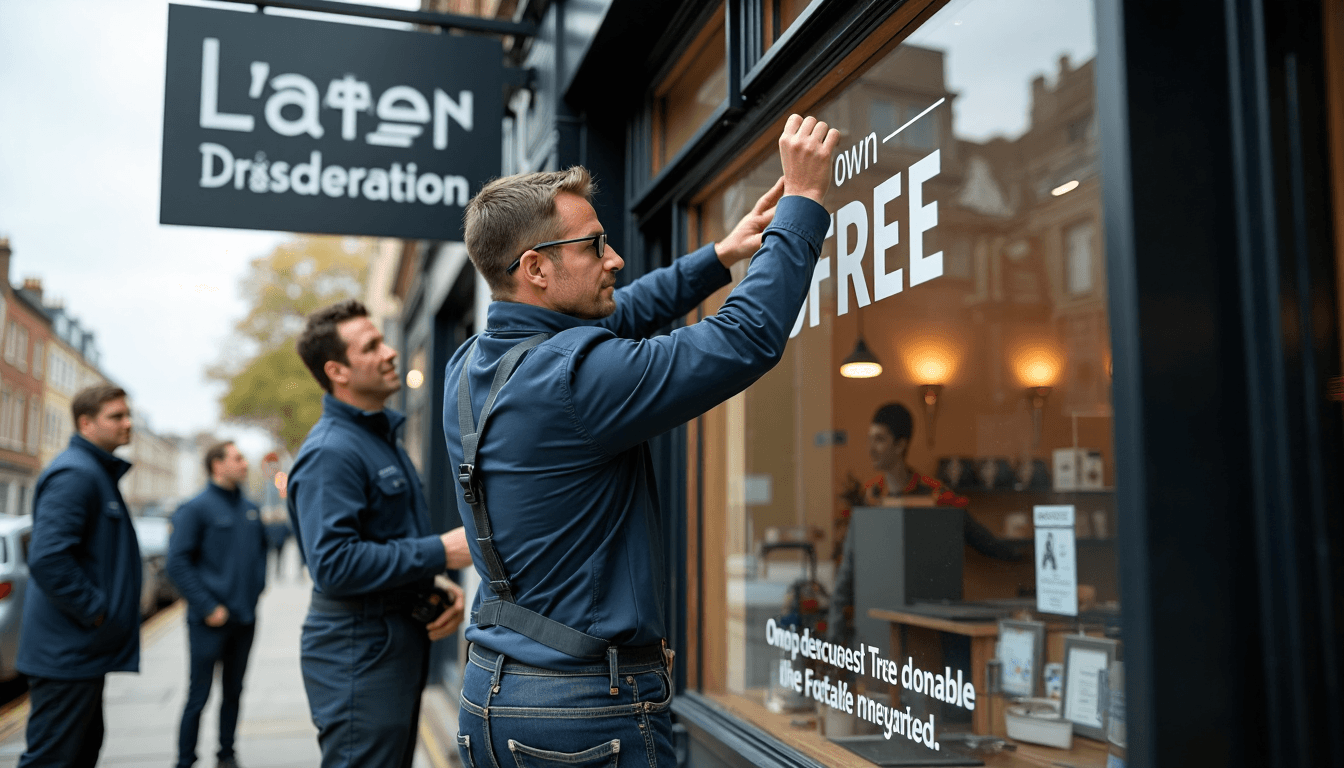
The UK Government’s National Design Guide provides critical guidance for businesses considering signage installation. Successful implementation requires careful consideration of architectural context, local environmental characteristics, and urban design principles. Businesses must assess how their signage integrates with the surrounding streetscape, particularly in historic or conservation areas.
The Royal Borough of Kensington and Chelsea’s Shopfront Design Guide emphasizes the importance of maintaining visual harmony with existing architectural elements. This means selecting sign materials, colours, and mounting techniques that complement the building’s original design while meeting modern business communication needs. Learn more about professional sign installation techniques to ensure optimal integration and compliance.
Sustainability and Technical Specifications
In 2025, signage installation goes beyond mere visual communication. The City of London Corporation’s Planning for Sustainability guidelines mandate a holistic approach to signage that considers environmental impact. This includes selecting energy-efficient illumination, using sustainable materials, and minimizing the carbon footprint of installation processes.
Technical specifications are increasingly complex. Businesses must consider factors such as:
- Structural integrity and mounting safety
- Weather resistance
- Energy efficiency of illuminated signs
- Adaptability to digital and smart signage technologies
- Accessibility for maintenance and potential future upgrades
Below is a summary table outlining key sustainability and technical considerations London businesses should address when installing signage:
| Consideration | Description |
|---|---|
| Structural Integrity | Ensure signs are securely mounted and withstand environmental stress |
| Energy Efficiency | Use LED lighting and low-power components to reduce energy use |
| Sustainable Materials | Select materials with low environmental impact and high durability |
| Weather Resistance | Ensure signs are protected from rain, wind, and UV exposure |
| Digital/Smart Compatibility | Allow for content updates and integration with smart technologies |
| Maintenance Accessibility | Design signage for easy cleaning, repairs, and updates |
Compliance and Professional Installation
Professional installation is crucial to meeting regulatory requirements. Businesses should work with certified signage professionals who understand:
- Local planning regulations
- Structural building constraints
- Electrical safety standards
- Accessibility requirements
- Heritage conservation guidelines
The installation process requires meticulous planning. This includes obtaining necessary permissions, conducting site surveys, preparing mounting surfaces, and ensuring precise alignment and secure attachment. Incorrect installation can lead to safety risks, regulatory violations, and potential removal of signage.
Emergent technologies are transforming signage installation. Digital and smart signage solutions offer unprecedented flexibility, allowing businesses to update content remotely and adapt to changing marketing needs. However, these technologies also introduce additional compliance considerations related to digital display regulations and energy consumption.
Businesses must adopt a forward-thinking approach to signage installation. This means viewing signage not just as a marketing tool, but as an integral part of the business’s architectural and brand identity. By prioritizing professional installation, regulatory compliance, and sustainable design, London businesses can create signage that is not only visually compelling but also technically sophisticated and environmentally responsible.
Common Compliance Mistakes and How to Avoid Them
Navigating the complex landscape of retail signage compliance requires meticulous attention to detail. Even well-intentioned businesses can inadvertently fall into regulatory traps that compromise their legal standing and potentially expose them to significant financial penalties.
Placement and Visibility Errors
Label Source research highlights that improper sign placement remains one of the most frequent compliance violations. Safety signs must be strategically positioned at eye level and in unobstructed areas to ensure maximum visibility and effectiveness. Businesses frequently make critical errors such as:
- Mounting signs too high or behind furniture
- Placing signs in poorly lit areas
- Obscuring signs with other marketing materials
- Failing to maintain clear sightlines
To help businesses avoid common placement and visibility mistakes, the following table outlines typical errors and recommended solutions:
| Common Error | Impact | Recommended Solution |
|---|---|---|
| Mounted too high or behind furniture | Reduced visibility, non-compliance | Install at eye level in open areas |
| Placed in poorly lit locations | Difficult to read, safety risks | Ensure proper (natural/artificial) lighting |
| Obscured by marketing materials | Important info hidden from view | Keep sightlines clear of obstructions |
| Unmaintained clear sightlines | Lower effectiveness, regulatory breach | Conduct regular visual audits |
To mitigate these risks, businesses should conduct regular visual audits of their signage, ensuring that every sign is positioned for optimal readability and accessibility. Check out our comprehensive guide to professional sign installation to understand best practices in sign placement.
Regulatory Information and Documentation
According to Glendining Compliance Experts, failing to display mandatory information is a significant compliance pitfall. Businesses with more than five employees are legally required to prominently display health and safety law posters. Other common documentation mistakes include:
- Outdated safety information
- Incomplete regulatory notices
- Missing emergency contact details
- Inadequate multilingual signage in diverse business environments
Businesses must establish a systematic approach to maintaining current regulatory documentation. This involves regular reviews, prompt updates, and a comprehensive understanding of changing legal requirements.
Accessibility and Inclusive Design
The Equality Act 2010 mandates that businesses design signage with accessibility as a primary consideration. Typical violations in this area include:
- Insufficient colour contrast
- Fonts that are difficult to read
- Signs positioned at heights unsuitable for wheelchair users
- Lack of alternative communication methods
Comprehensive accessibility means considering diverse user needs. This includes creating signs with high visual contrast, using clear typography, providing multiple communication formats, and ensuring physical accessibility for individuals with mobility challenges.
Below is a checklist table summarising key accessibility compliance points businesses should review:
| Accessibility Requirement | Compliance Status (Yes/No) |
|---|---|
| High colour contrast | |
| Clear and legible font | |
| Height suitable for wheelchair users | |
| Alternative formats available | |
| Multilingual where needed |
Addressing these compliance mistakes requires a proactive, systematic approach. Businesses should:
- Conduct quarterly compliance audits
- Train staff on regulatory requirements
- Invest in professional signage consultation
- Stay informed about evolving legal standards
- Prioritize clarity and accessibility in all signage design
Compliance is not merely about avoiding penalties but demonstrating a commitment to professional standards, customer safety, and inclusive business practices. By understanding and systematically addressing common signage compliance mistakes, London businesses can create environments that are not only legally sound but also welcoming and accessible to all customers.
Frequently Asked Questions
What are the legal requirements for retail signage in London?
Retail signage in London must comply with various regulations, including visibility standards, safety requirements, and consumer protection laws. Businesses must ensure their signage is accessible and provides clear information about products and services.
What are the consequences of non-compliance with signage regulations?
Failing to comply with signage regulations can result in significant fines, legal penalties, and potential removal of non-compliant signage. Moreover, non-compliance can damage a business’s reputation and erode customer trust.
How can businesses ensure their signage is accessible to all customers?
To ensure signage accessibility, businesses should follow the Equality Act 2010, focusing on high colour contrast, clear typography, and appropriate positioning for visibility. Additionally, providing information in multiple formats can help cater to diverse customer needs.
Why should businesses invest in professional signage installation?
Investing in professional signage installation ensures compliance with local regulations, maintains structural integrity, and incorporates up-to-date technology. Certified professionals help navigate complex legal requirements and contribute to the overall effectiveness and safety of signage.
Take the Stress Out of Retail Signage Compliance in 2025
Staying compliant with London’s strict new signage rules is no easy task. The risk of costly fines, confusing planning regulations, and the need for clear, accessible information often leaves business owners feeling anxious about whether their signs are truly up to standard. If you are worried about proper placement, legality, or just getting it right the first time, you are not alone. Many local companies face the same challenges described throughout this guide.

Why risk facing a compliance notice or having to redo your signs at great expense? Let your next project be stress free by working with experts who deliver fully compliant, beautifully designed, and professionally installed signage. Discover the reassurance that comes with a trusted partner. Visit PromoSigns to explore custom solutions that help you comply with the latest regulations, or see our step-by-step installation process for transparent, worry-free upgrades. Ready to protect your business and impress your customers? Get in touch now to secure your compliant signage before inspections increase.
Recommended
- Retail Sign Design Tips 2025: Essential Guide for London Businesses – PromoSigns.co.uk
- Signage for Office Interiors: 2025 Guide for London Businesses – PromoSigns.co.uk
- Types of Shop Signs for London Businesses: The 2025 Guide – PromoSigns.co.uk
- Event Signage Checklist 2025: Essential Guide for London Businesses – PromoSigns.co.uk
- Office Signage Ideas for London Businesses and Events: 2025 Trends – PromoSigns.co.uk
- Custom Sign Design Process for London Businesses: 2025 Guide – PromoSigns.co.uk
